A salvage title means a state or insurer has recorded serious prior damage or a total-loss event. It does not prove that the car is unsafe today, but it also does not certify that the repair was done correctly. A U.S. buyer should treat the brand as a prompt for deeper checks, not as a discount that explains everything.
The minimum sensible process is to obtain a National Motor Vehicle Title Information System report, compare it with the current state title, commission an independent structural and mechanical inspection, confirm insurance and financing before paying, and check the VIN for open safety recalls. If any part of that chain is unavailable, the price cannot compensate for the missing evidence.
What a salvage title actually tells you
Title terminology is set by states, so the exact words and the path back to road use vary. Common brands include salvage, junk, flood and rebuilt or revived salvage. The federal NMVTIS database preserves brand history reported by state motor-vehicle agencies and also receives information from insurers, salvage yards, junk yards and auto recyclers.
That history matters because a vehicle can move between states. A paper title in the seller's hand may not show the whole sequence as clearly as the national record. NMVTIS says a brand applied by a state remains in the vehicle's NMVTIS history, which helps expose attempts to make a damaged car appear clean after retitling elsewhere.
A rebuilt or revived brand usually means the state allowed the repaired vehicle to be registered again after its required process. It is not a nationwide engineering certificate. California, for example, requires specific title, identity and safety-system documents for a revived salvage vehicle. Another state may use different inspections and forms. Always read the rules of the state that issued the current title and the state where you intend to register the car.
What NMVTIS can and cannot prove
An NMVTIS report covers five core indicators: current state of title, brand history, odometer information, total-loss history and transfers to junk, salvage or recycling businesses. It is the right first report for title risk because those data come from legally required reporting channels.
It is not a complete repair file. The system itself warns that a report does not replace an independent inspection and may not include damage that was never declared a total loss or branded by a state. A clean report therefore means that no relevant record was returned through those channels; it does not mean the body has never been repaired.
Use the report to build questions:
- Which state first applied the brand, and on what date?
- Was the event recorded as collision, flood, fire, theft recovery or another category?
- Does the odometer sequence make sense?
- Do the seller's invoices identify the parts and repair facility?
- Does the VIN on the dashboard, door label, title and report match exactly?
Our VIN guide explains where the 17-character number appears and what it can identify. Do not rely on a photo sent by the seller; read the VIN from the vehicle during the inspection.
The inspection needs to go beyond a normal test drive
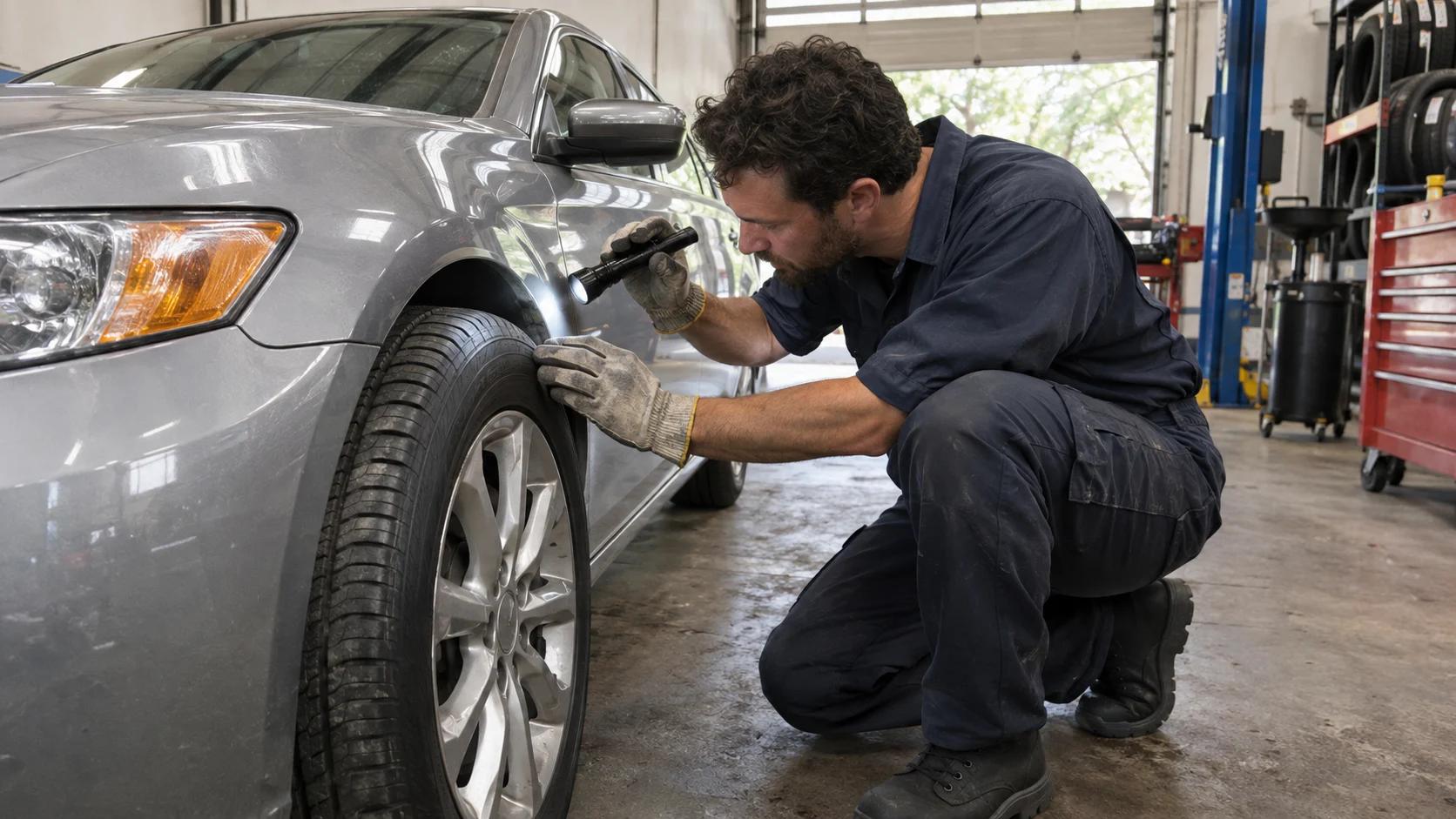
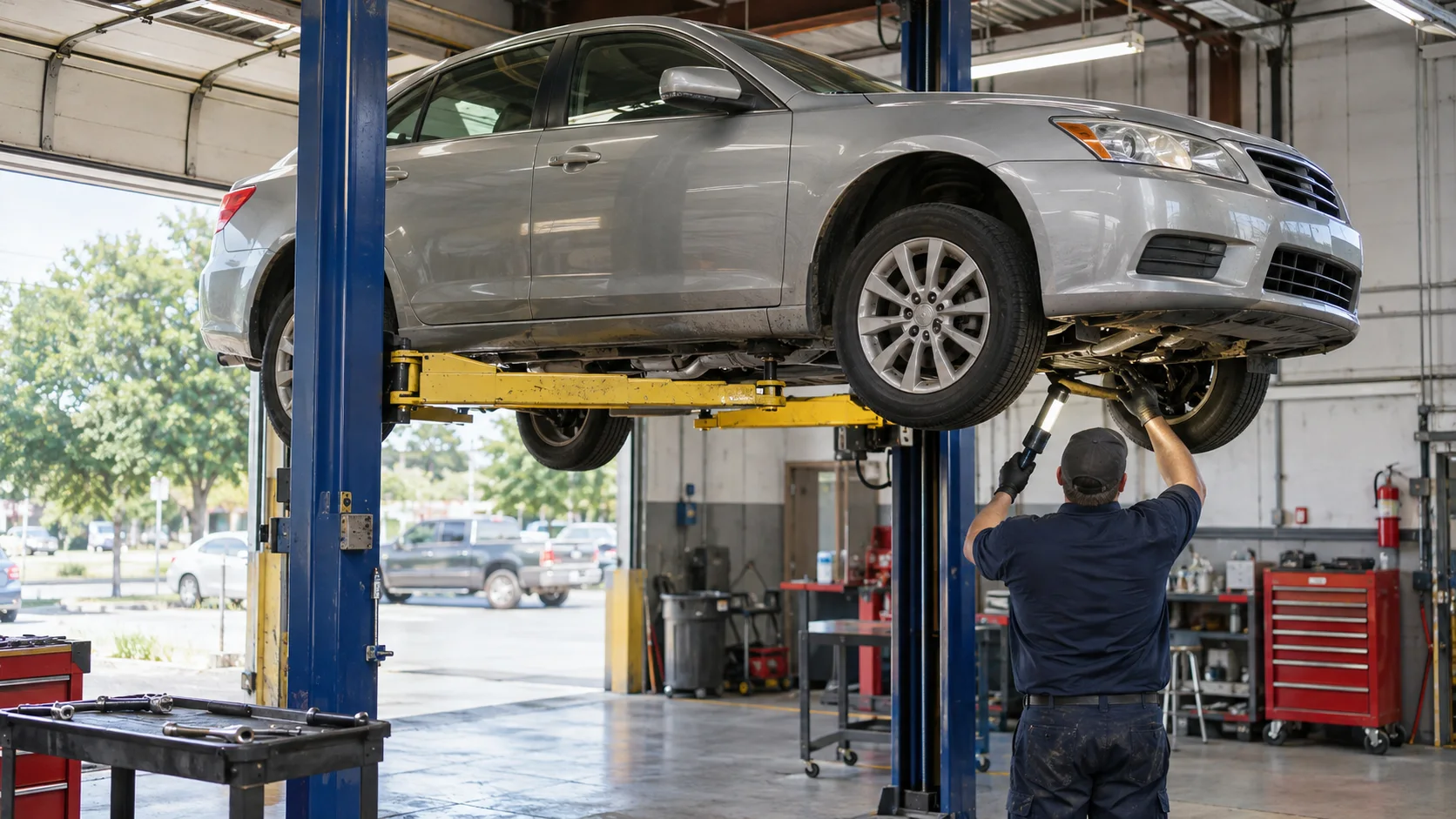
A pre-purchase inspection for a branded car should include structure, restraint systems and water damage, not just brakes, tires and warning lights. Ask a body-repair specialist or qualified independent shop to put the car on a lift and document the findings.
The inspection should look for uneven welds, buckled floor or frame sections, mismatched seam sealer, non-factory fasteners, corrosion inside connectors, water lines under trim, deployed or substituted airbags, damaged seat-belt pretensioners and poor alignment. A wheel-alignment printout can reveal geometry problems, but it cannot by itself prove that the structure is correctly repaired.
Scan every control module, not only the engine computer. Clearing a warning light shortly before a sale does not repair a restraint or chassis fault. If the seller will not allow trim to be lifted where reasonably accessible, diagnostic codes to be read or the underside to be photographed, record that refusal as missing evidence.
Check recalls separately
Vehicle-history reports and recall databases answer different questions. NHTSA's VIN and license-plate lookup shows certain unrepaired safety recalls, but it does not display recalls already completed, every newly announced campaign before VIN lists are finalized, or all recalls older than 15 years.
Run the VIN through NHTSA even if the history report mentions no recall. Then ask a franchised dealer to confirm completion status when the lookup is incomplete or the car is an imported model. Recall repairs are generally the manufacturer's responsibility; collision repairs are not.
Insurance, financing and resale come before the offer
Do not assume a rebuilt car can receive the same coverage as a clean-title example. Insurers may limit comprehensive or collision coverage, require photographs or an appraisal, or decline the risk. Lenders may also apply different loan-to-value rules or refuse branded-title vehicles.
Get a written insurance quote using the exact VIN before agreeing to buy. If financing is needed, obtain lender approval for that VIN and title status rather than a generic preapproval. The same brand will remain relevant at resale, so compare the asking price with other branded cars, not only clean-title retail listings.
A practical go-or-no-go rule
Proceed only when the title history is consistent, the repair documentation explains the damage, an independent specialist finds no unresolved structural or safety defect, the car can be registered in your state, and insurance is confirmed in writing. Walk away when the seller minimizes the brand, withholds the VIN, cannot explain the repair or pressures you to skip an inspection. A salvage-title car is a documentation purchase first and a price negotiation second.