The Kia Stonic does not try to reinvent the small crossover. It does not need to. For the 2026 facelift Kia kept the known formula and modernised exactly the areas where the model had started to show its age: exterior design, cabin technology and the engine range.
The result is a Stonic that looks much closer to Kia’s newer models but remains essentially a simple, compact, easy everyday car.
We tested the version that probably makes most sense for buyers who want a well-equipped Stonic: 1.0 T-GDi mild-hybrid with 115 hp and 7DCT automatic.
That raises the key question: in a market where you can choose a Ford Puma, Renault Captur, Nissan Juke, Skoda Kamiq, Seat Arona or even a Dacia Sandero Stepway, does the Kia Stonic still have enough arguments?
Kia Stonic 2026: what changed?
The Stonic is not an all-new generation but a substantial facelift of the existing model.
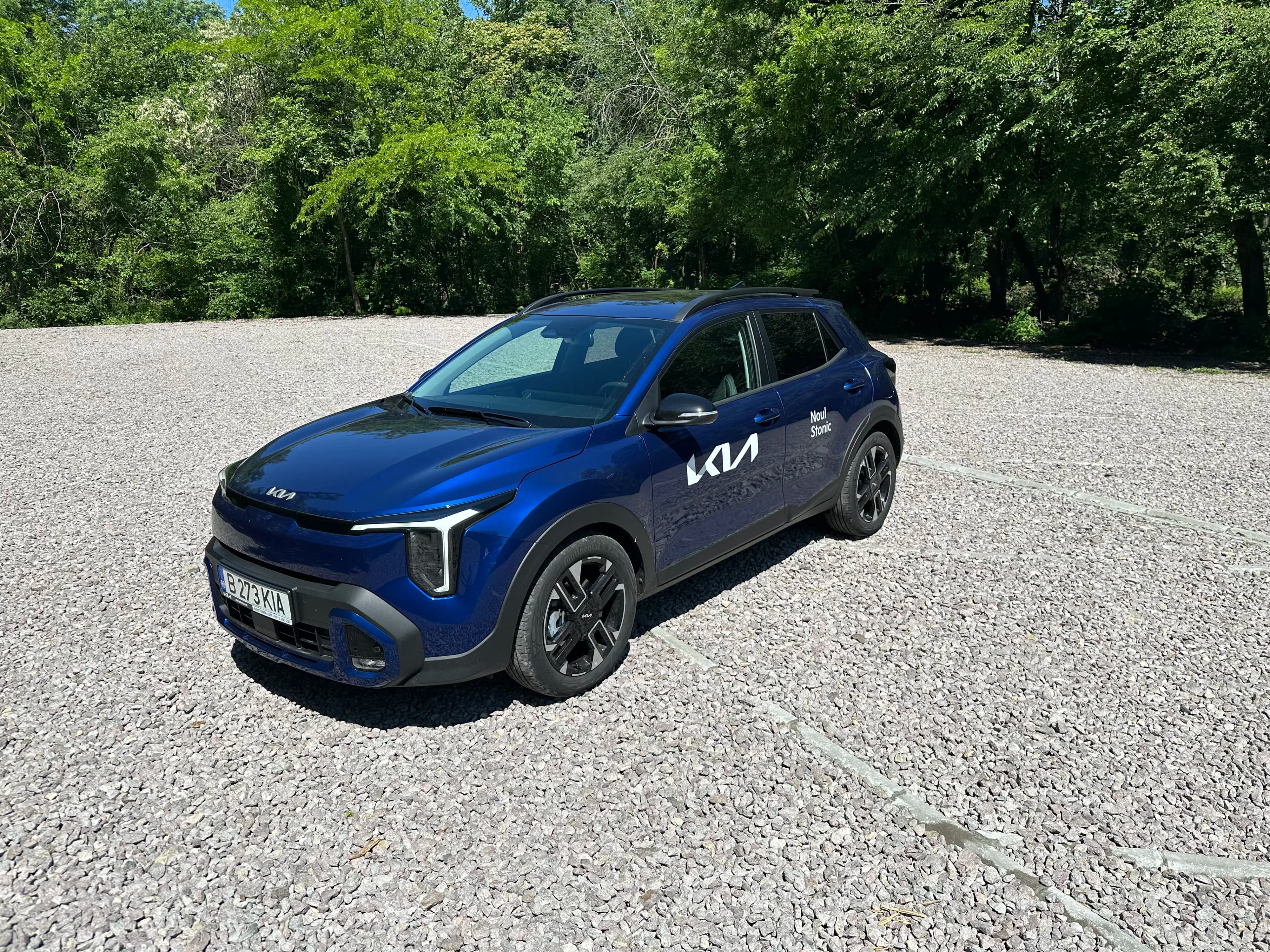
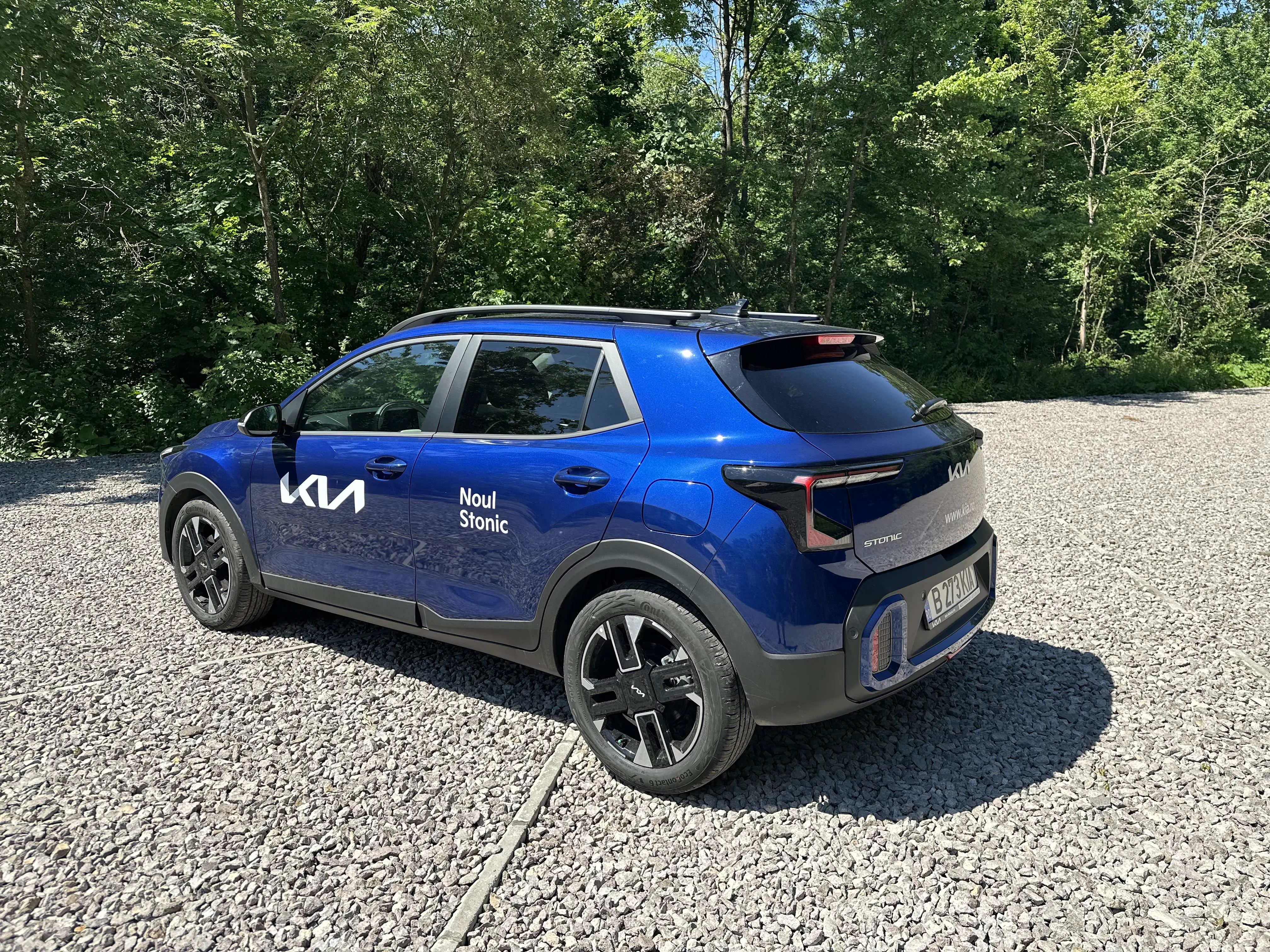
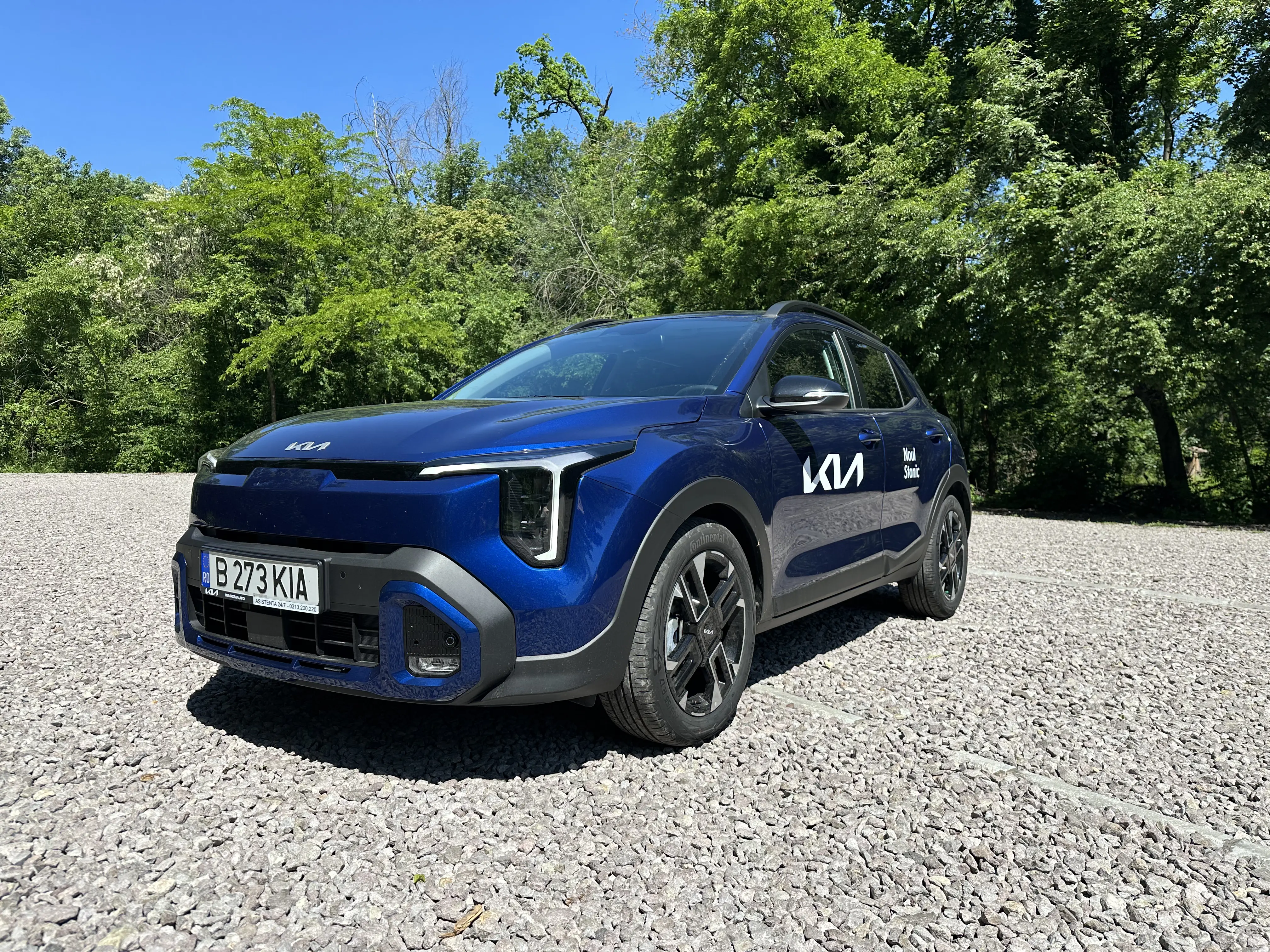
The most obvious change is the front end. Kia adapted the design to the visual identity used on its recent models, and the difference from the Stonic we knew is large enough for the car to feel much fresher.
In reality dimensions stay right for the B-SUV segment. The Stonic is about 4.17 metres long, 1.76 metres wide and has a 2.58-metre wheelbase.
In other words, small enough for Bucharest but large enough that you do not feel you simply bought a hatchback with plastic cladding.
The new light signature and bumper graphics add personality, and GT Line is clearly the version you pick if exterior looks weigh heavily in the purchase decision.
From some angles the Stonic even tries to echo Kia’s newer electric SUVs — and it works surprisingly well.
Interior: where the facelift is felt most
If the exterior was updated, the cabin change matters even more.
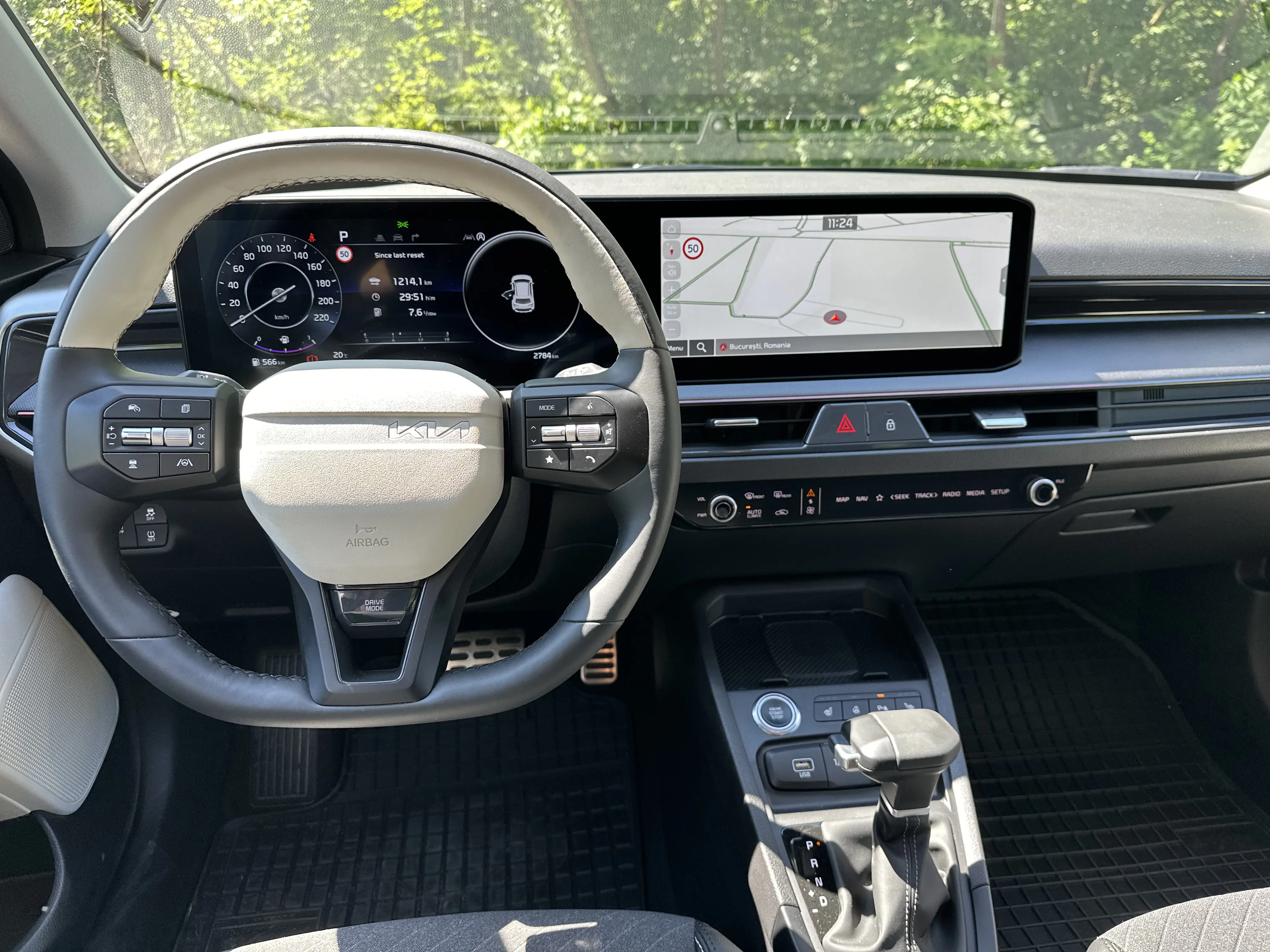
The dashboard now feels much closer to what we find on Kia’s current generation. On upper trims two 12.3-inch screens sit in a panoramic assembly that changes the whole interior mood.
The steering wheel is new, multimedia graphics are modern and the centre stack looks significantly more sophisticated than before.
There is also the multi-function touch panel seen on other Kia models, switching between climate and multimedia commands.
It looks spectacular, though I still prefer dedicated physical climate controls.
Not everything became premium overnight.
Lower on the dashboard and on the doors you still find plenty of hard plastic. The Stonic remains a cost-conscious small crossover and it shows.
The upside is assembly feels solid. Materials are not luxurious but seem built to last.
How spacious is the Kia Stonic?
Up front, two adults have enough space even on long journeys.
The driving position is slightly higher than in a classic hatchback, but the Stonic does not try to convince you that you are in a true SUV. The relatively low seating position is one reason the car feels so natural in corners.
Rear space is more limited.
Four adults can travel without problems, but a fifth passenger should be seen as a short-trip solution.
Boot volume is 352 litres, rising to about 1,152 litres with the bench folded.
That is not a class record.
For shopping, a couple’s luggage or a family with one child it is enough. For holidays with two children and a pushchair you start playing Tetris.
The 115 hp 1.0 T-GDi MHEV is the right pick
Kia offers several engines for the Stonic, but the 115 hp mild-hybrid is the one I would consider.
It is a 998 cc turbo three-cylinder assisted by a 48 V mild-hybrid system. On the tested version maximum power is 115 hp and torque reaches 200 Nm.
The figures are not spectacular, but the Stonic is a relatively light car.
0–100 km/h takes about 10.8 seconds and top speed is around 182 km/h.
What matters more is behaviour between 30 and 100 km/h.
The engine has enough torque for urban traffic and normal overtakes on national roads. The mild-hybrid system helps getaways and lets stop-start work more naturally.
You do not feel you are driving a hybrid in the classic sense. You cannot cover whole kilometres on electric power alone, and the 48 V system’s main job is lower consumption and sharper engine response.
The 7DCT changes the car’s character
The seven-speed dual-clutch automatic suits the Stonic very well.
In town it shifts discreetly and removes the main drawback of a small turbo with a manual: constant gear changes to keep the engine in the right rev band.
It is not perfect.
At very slow manoeuvres you can sometimes feel typical dual-clutch behaviour, but in normal driving shifts are quick and smooth enough.
In congested Bucharest traffic, the combination of 115 hp and 7DCT is probably the most sensible Stonic configuration — and one of those cases where paying extra for the automatic is worth it.
How does the new Kia Stonic drive?
At the wheel you quickly remember that under the crossover body there is hatchback DNA.
The Stonic changes direction quickly and does not feel heavy. Steering is very light — an advantage in town — and compact dimensions make parking extremely simple.
You do not get much feedback through the wheel, but that is not the car’s purpose.
On a mountain road the Stonic holds the line and controls body roll decently. It is not a Ford Puma and does not especially encourage you to hunt the next bend, yet it feels more agile than the crossover silhouette suggests. Top Gear notes the same mix of quick steering, agility and hatchback-like character.
Suspension is firmer than you might expect.
On good asphalt there is little to complain about, but short bumps and potholes can reach the cabin clearly, especially on large wheels.
That is one reason I would not sacrifice comfort just for oversized wheels.
How does it feel on the motorway?
115 hp is enough for motorway work too.
At 130 km/h the car can keep pace without trouble and the 7DCT keeps the engine in a reasonable rev range.
For bursts you need calibrated expectations.
If you want to accelerate hard from 100 to 140 km/h the one-litre engine has to work and you will hear the three cylinders. Physics cannot be negotiated away just because the engine cover says turbo and mild-hybrid.
For normal use it is sufficient.
For someone who mainly lives on the motorway with four people and luggage, I would look at a larger model.
Kia Stonic 1.0 T-GDi 115 hp consumption
Consumption depends enormously on traffic.
In a very congested urban test, Autocritica recorded figures above 10 l/100 km, while outside the city consumption dropped to about 5.9–6.6 l/100 km.
Autolatest measured about 7.5 l/100 km in urban use — showing how much results can vary with traffic and style.
That is exactly the behaviour you should expect from these small turbo engines.
On national roads you can achieve very good figures.
In Bucharest, on an afternoon when you cover 8 km in an hour, not even a mild-hybrid system can work miracles.
Realistically, for mixed use, 6–7 l/100 km is a reasonable target if you are not exclusively in very heavy urban traffic.
Kia Stonic 2026 price in Romania
Here things get interesting.
At the time of writing Kia Romania shows a promotional starting price of €19,917 incl. VAT for the new Stonic after a €1,500 discount. List price for the 1.0 T-GDi Urban is €21,417.
The current range includes, among others:
| Version | Power | Transmission | List price |
|---|---|---|---|
| 1.0 T-GDi Urban | 100 hp | Manual | €21,417 |
| 1.0 T-GDi MHEV Urban | 115 hp | Manual | €22,367 |
| 1.0 T-GDi Urban DCT | 100 hp | 7DCT | €22,849 |
| 1.0 T-GDi MHEV Urban DCT | 115 hp | 7DCT | €23,800 |
| 1.0 T-GDi MHEV Trend DCT | 115 hp | 7DCT | €26,394 |
| 1.0 T-GDi MHEV GT Line DCT | 115 hp | 7DCT | €29,222 |
Prices include VAT and can vary with dealer promotions.
The tested GT Line version thus gets close to the psychological €30,000 threshold before options — and that is the Stonic’s biggest problem.
At roughly €20,000–24,000 the car makes a lot of sense.
At €29,000–31,000 you inevitably start looking at larger cars — including elsewhere in Kia’s own range.
What do you get in return?
One traditional Kia argument remains warranty.
The Stonic gets the manufacturer’s 7-year or 150,000 km warranty, transferable under certain conditions to the next owner.
For someone planning to keep the car six or seven years, that is an advantage I would not ignore.
The Stonic also seems built on a fairly simple philosophy: less showroom glamour in materials, but many components meant to survive daily use.
Kia Stonic vs Dacia Sandero Stepway
The comparison is inevitable in Romania.
The Sandero Stepway stays cheaper and offers a lot of space for the money.
The Stonic answers with a more tech-heavy interior, a more refined 115 hp turbo mild-hybrid in the configuration we tested, 7DCT and the seven-year warranty.
If price is the absolute criterion, Dacia is hard to beat.
If you want a more sophisticated car technologically and value the long warranty, the Kia price gap becomes easier to justify.
Kia Stonic vs Ford Puma, Renault Captur and Skoda Kamiq
Against the Ford Puma the Stonic is not as fun to drive and the boot is not as impressive.
The Captur offers a more versatile cabin and an interesting electrified engine range.
The Kamiq is probably the more mature pick for buyers who prioritise space and comfort over design.
The Stonic hits back with compact dimensions, ease of use, much improved design and Kia warranty.
The problem is that the B-SUV segment is so competitive that almost every model has a very clear strength.
The Stonic is good at many things rather than outstanding at one.
That is not necessarily bad.
What we liked about the Kia Stonic 2026
- Much more modern exterior design
- Updated interior
- 115 hp engine is enough for most situations
- 7DCT works well in town
- Dimensions ideal for urban traffic
- Good consumption outside the city
- 7-year/150,000 km warranty
- Overall feeling of a solid, easy car
What we did not like
- Interior materials still hard in many areas
- 352-litre boot does not impress
- Suspension can feel firm on poor asphalt
- Rear visibility is not outstanding
- Well-equipped GT Line versions become expensive
- Rivals that are roomier or more enjoyable to drive exist
Is the Kia Stonic worth buying in 2026?
Yes, if you want a compact petrol crossover that is easy to drive in town, with automatic transmission, modern technology and a very long warranty.
Choose the configuration carefully, though.
For me the sweet spot is 1.0 T-GDi MHEV 115 hp with 7DCT in a mid trim.
The 115 hp engine suits the car better than the 100 hp unit, and the automatic makes a real difference in urban use.
GT Line looks great and adds equipment, but if the final price seriously passes €30,000, the equation gets complicated — because at that money the Stonic no longer competes only with other B-SUVs but with cars from the class above.
Verdict
The Kia Stonic 2026 is the kind of facelift that shows a car does not need reinventing to become relevant again.
The exterior looks much better, the interior takes an important tech leap, and the 115 hp 1.0 T-GDi mild-hybrid with 7DCT is a successful combination for daily use.
It is not the roomiest crossover in the segment, nor the most comfortable or the most exciting to drive.
But it does very few things badly — and in a car you may drive daily for years, that can matter more than it seems.
The Kia Stonic remains a small, pragmatic crossover that is easy to live with. Just watch how many options you tick, because the best Stonic version is not necessarily the most expensive.
Rating: 8/10
Frequently asked questions about the Kia Stonic 2026
How much does the Kia Stonic 2026 cost in Romania?
At the time of writing Kia shows a promotional starting price of €19,917 incl. VAT after a €1,500 discount. List price for 1.0 T-GDi Urban is €21,417.
Which engine do we recommend for the Kia Stonic?
Among available versions, the 1.0 T-GDi mild-hybrid with 115 hp offers the best compromise between performance and consumption.
What consumption does the Kia Stonic 1.0 T-GDi 115 hp return?
Outside the city it can drop towards about 6 l/100 km, while in urban traffic consumption can range from roughly 7–8 l/100 km to over 10 l/100 km in severe congestion.
How large is the Kia Stonic boot?
The boot holds 352 litres, rising to about 1,152 litres with the bench folded.
How much power does the Kia Stonic mild-hybrid have?
The tested 1.0 T-GDi MHEV version develops 115 hp and 200 Nm.
What is the Kia Stonic 115 hp 0–100 km/h time?
The mild-hybrid version with 7DCT automatic reaches 100 km/h from rest in about 10.8 seconds.
Is the Kia Stonic a full hybrid?
No. The electrified version uses a 48 V mild-hybrid system that assists the petrol engine but does not allow sustained electric running like a full hybrid.
What warranty does the Kia Stonic have?
Kia offers 7 years or 150,000 km under manufacturer conditions.
Is the Kia Stonic good for the city?
Yes. Length of about 4.17 metres, light steering, good forward visibility and 7DCT automatic make it well suited to urban use.
Who are the Kia Stonic’s main rivals?
They include the Dacia Sandero Stepway, Ford Puma, Renault Captur, Nissan Juke, Peugeot 2008, Skoda Kamiq and Seat Arona.