Opel and Leapmotor have signed the formal cooperation agreement for a new electric C-segment SUV expected to go on sale in 2028. Opel chief executive Florian Huettl and Leapmotor founder and chief executive Zhu Jiangming signed the deal on 20 November 2026, moving the project beyond the intention and feasibility stage announced in May.
The vehicle will be sold as an Opel across continental Europe and as a Vauxhall in the United Kingdom. That badge distinction matters: Vauxhall is the UK identity for the same Stellantis brand operation, while Romania, Germany, France, Italy, Spain and other continental markets use Opel. The car has no public model name, price or complete specification.
What the agreement actually confirms
Development is already under way through joint project hubs in Rüsselsheim, Germany, and Hangzhou, China. Opel says the vehicle will use core Leapmotor components while adding Opel design, cabin ergonomics, chassis engineering, advanced lighting and seating technology.
That wording rules out a simplistic description of the project as a rebadged Leapmotor. It also makes clear that this is not a wholly independent Opel architecture. The electric foundations and other key components will come from the Chinese partner's technology ecosystem, while Opel is responsible for the brand-specific elements that customers see, touch and experience.
In May, Opel said the partnership could cut development time to less than two years. The November announcement confirms that the teams are working on the car and that an official agreement now exists. It does not provide a precise start-of-production date. Sales are “expected” in 2028, with no confirmed month or order-book opening.
A new model rather than a replacement
Opel describes the vehicle as a new entry in the C-SUV segment. It will complement the Mokka, Frontera and Grandland rather than replace one of them. The company has not published its length or wheelbase, so its exact position between those products cannot yet be established.
The C-SUV category is central to Europe's family-car market, which explains why Opel is using a joint development programme to enter quickly. The likely commercial argument is affordability, but no target price has been announced. Stellantis has said that competitive components sourced through the Leapmotor International ecosystem should help improve affordability for European customers. That is an industrial objective, not a promised list price.
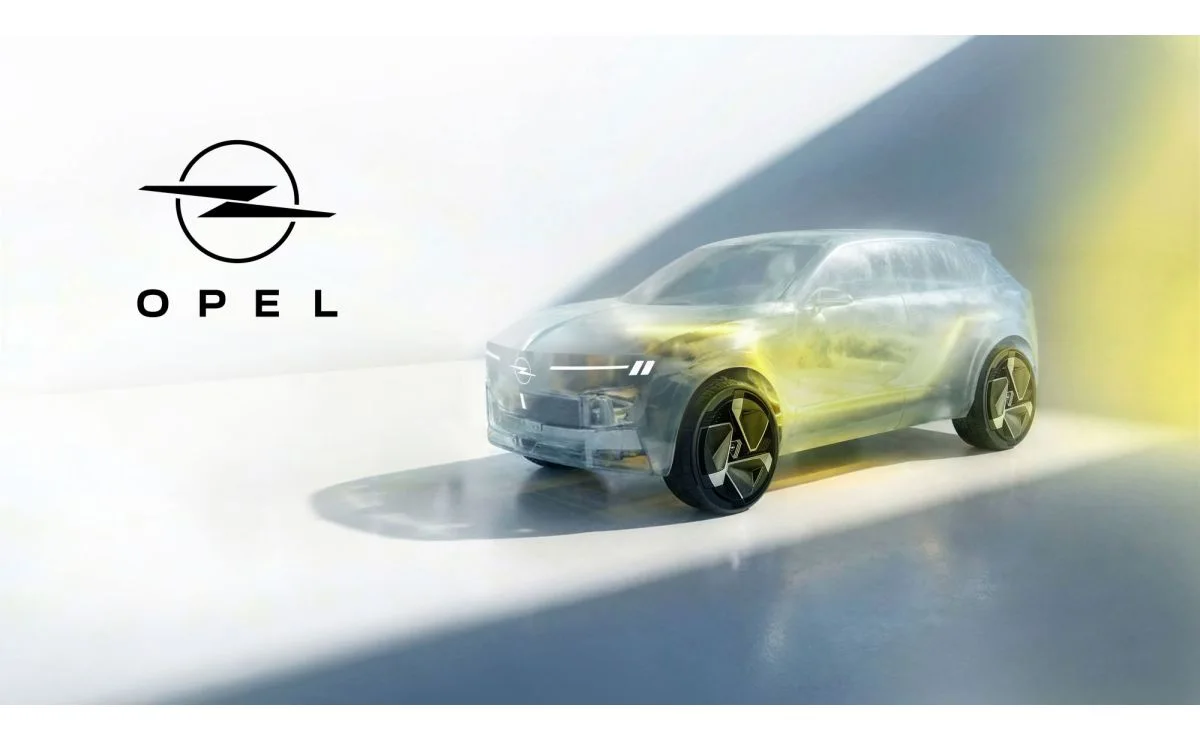
The official image is also deliberately limited. It shows an SUV-shaped vehicle under a translucent, stylised surface with Opel's front signature. It is a project teaser, not a photograph of an undisguised production car. Details such as lamps, bumpers, door construction and interior equipment may change, and dimensions cannot be measured reliably from the rendering.
Built at Opel's Zaragoza home
The new SUV will be manufactured at Stellantis's Figueruelas plant in Zaragoza, Spain. The factory has produced the Opel Corsa since 1982, with more than 10 million Corsas built there according to Stellantis. The current site also produces the Peugeot 208 and Lancia Ypsilon.
This is one of the clearest changes since May. The earlier release said the new line and a possible 2028 production start were under evaluation. The signed agreement now states that the newcomer will be built in Zaragoza. The exact investment, annual capacity and proportion of locally sourced parts remain undisclosed.
European assembly does not mean every component will originate in Europe. Opel explicitly says the car will use core Leapmotor components, while Stellantis has also referred to European supply-chain capabilities. The battery supplier, cell chemistry, motor source and local-content percentage have not been confirmed.
Why Stellantis and Leapmotor are working together
Stellantis acquired an approximately 21% stake in Leapmotor in October 2023. The companies also established Leapmotor International, owned 51% by Stellantis and 49% by Leapmotor, with exclusive rights to sell and manufacture Leapmotor products outside Greater China.
By May 2026, Stellantis said the joint operation had expanded to more than 850 sales and service points in Europe and recorded over 40,000 European shipments during 2025. Stellantis gains access to rapidly developed electric technology and a broader purchasing base. Leapmotor gains European factories, retail networks and regional industrial experience.
For the Opel project, the partnership is presented as a way to combine development speed with brand-specific engineering. Huettl says the Rüsselsheim and Hangzhou teams connect two technology ecosystems. Zhu says the companies can use complementary strengths to make advanced electric mobility available in Europe and beyond.
Those are executive claims about the programme. They do not establish how the finished vehicle will drive, how efficient it will be or whether its software will meet European expectations. Those questions require final specifications and independent testing.
What buyers still need before 2028
The announcement does not include battery capacity, WLTP range, charging power, a 10–80% charging time, motor output, acceleration, towing capacity, boot volume, warranty or pricing. It also does not confirm trim levels or whether every European market will launch at the same time.
Romanian and other continental customers should therefore read this as confirmation of an Opel project, not as an orderable product. In Britain it will wear Vauxhall branding, but describing it as a Vauxhall everywhere would be inaccurate. The key next steps are the production design reveal, homologated efficiency figures and market-by-market price lists.
The deal is strategically significant because it formalises a method that may shape later Stellantis products: Chinese electric components, European brand engineering and European assembly. Whether that combination delivers the promised affordability will only become testable once Opel publishes the car and its price.