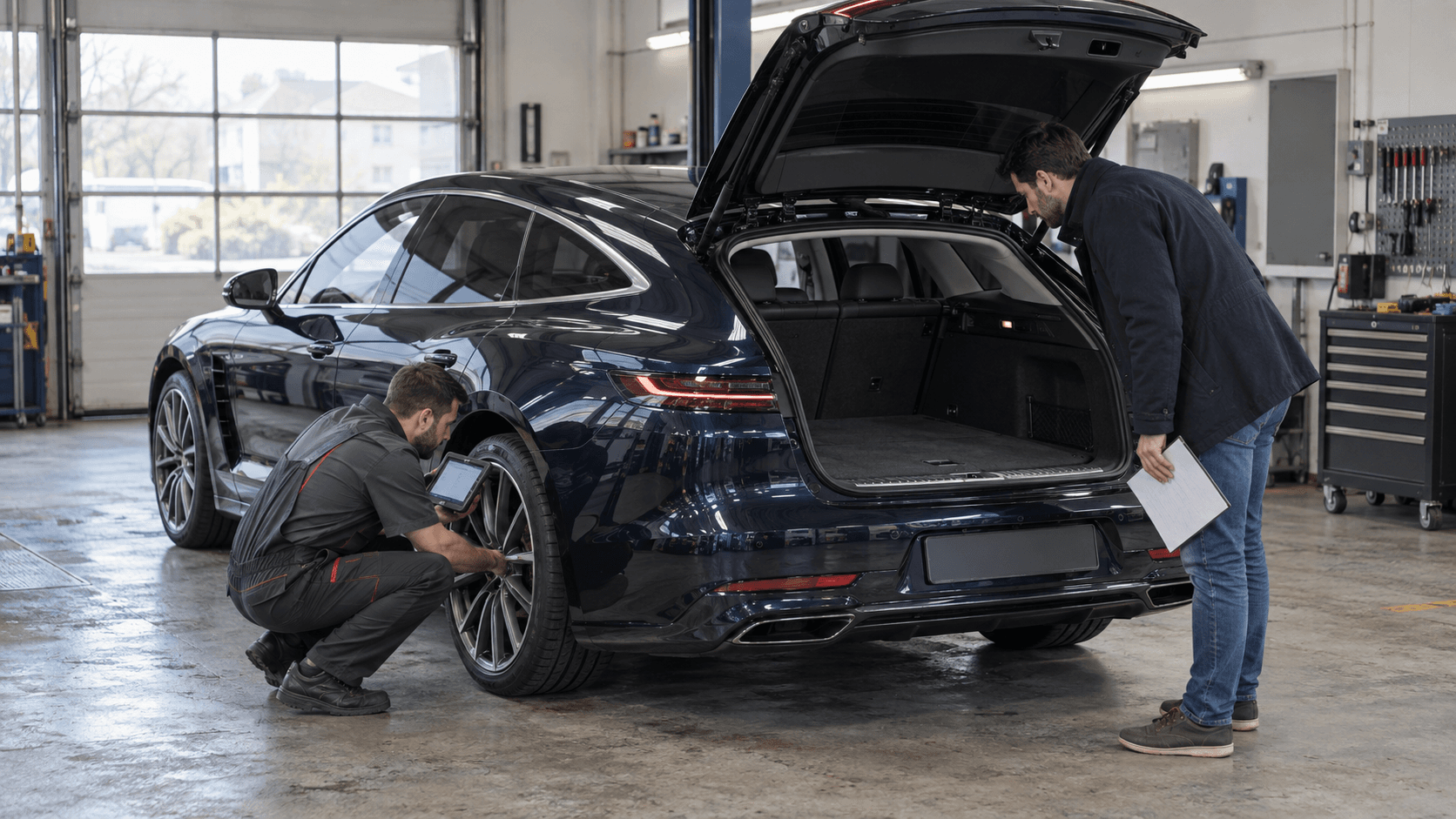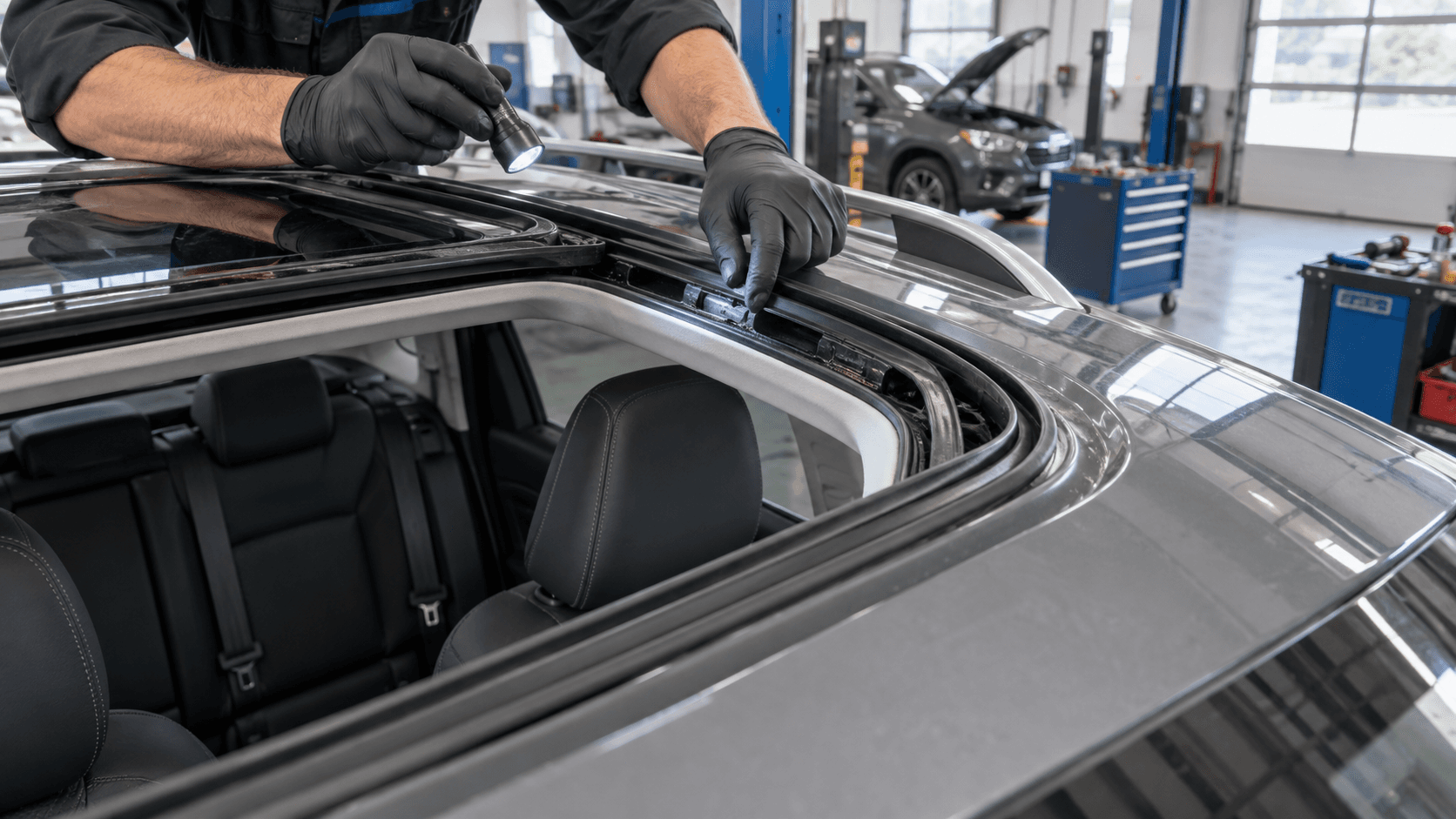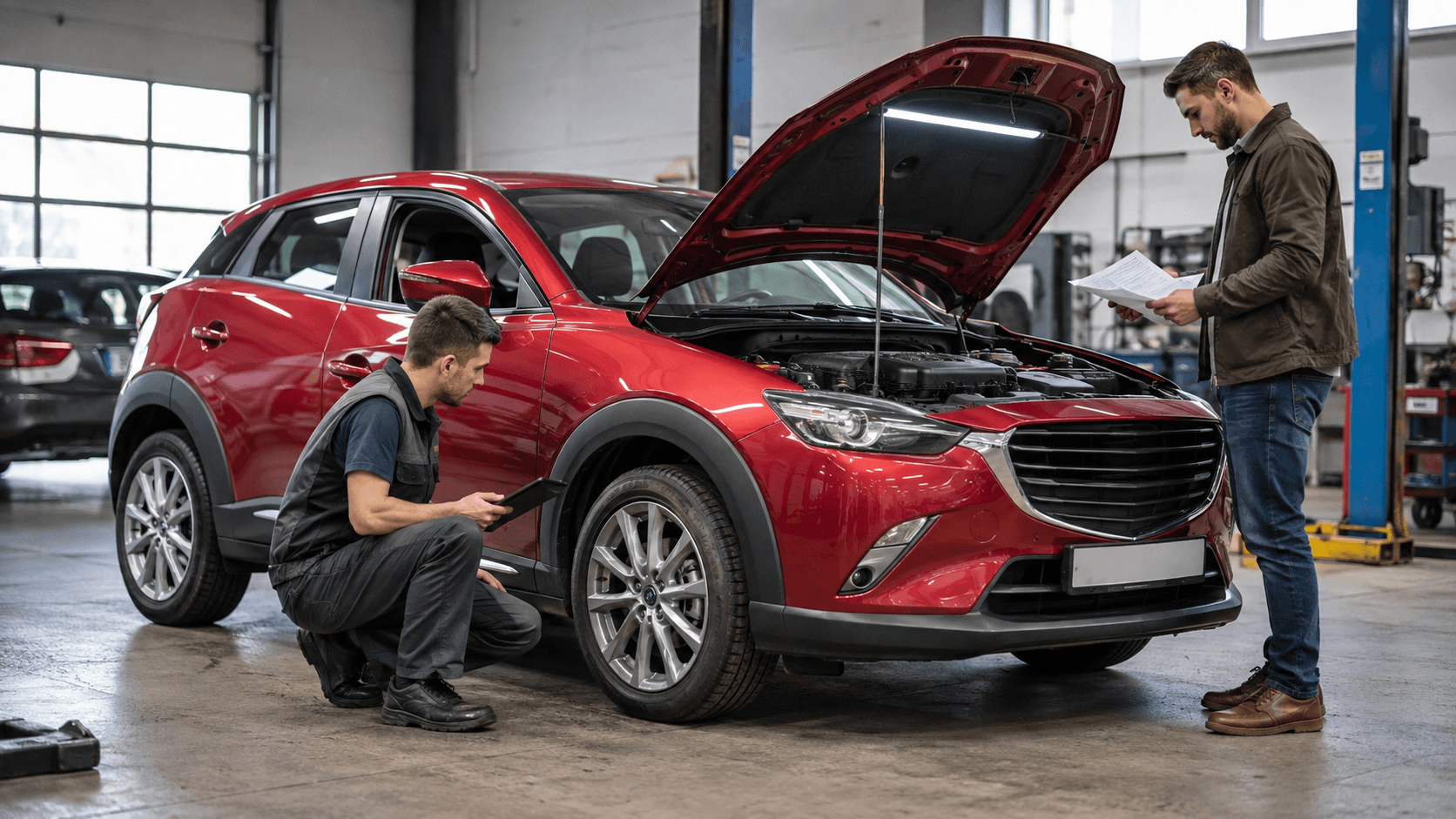
Illustrative image; the car does not represent a specific example or brand.
Used Mazda CX-3 in 2026: what to check on Skyactiv-G, Skyactiv-D, automatic, AWD and space
The short answer
A used Mazda CX-3 is worth considering in 2026 if you want a small SUV with a higher driving position, naturally aspirated petrol engines, relatively conventional gearboxes and a useful offer between city cars and larger crossovers. Do not buy it for looks alone. In space, CX-3 is closer to Mazda2 than to a compact SUV, and used examples need a careful check of engine, gearbox, body, suspension and history.
Short checklist:
- identify year, engine, gearbox, drivetrain and equipment from the VIN;
- on 2.0 Skyactiv-G, check servicing, oil consumption, coils, idle and leaks;
- on 1.5 and 1.8 Skyactiv-D, check DPF, EGR, injectors, turbocharger, oil and the real usage pattern;
- on automatic, test D/R selection, shifts from cold and hot, a slope and slow driving;
- on AWD, check identical tyres on both axles, noises, the propshaft and differential;
- inspect wheel arches, sills, floor, tailgate and underside for impacts and corrosion;
- try the rear seat and boot before calling it a family car;
- do not buy without diagnosis, a test drive and verifiable history.
Practical rule: CX-3 is a good choice when you want a small, taller car that is pleasant to drive. It becomes the wrong choice when you need lots of space, when the diesel has only done short trips, or when you pay too much for a version with no clear history.
Why Mazda CX-3 needs its own guide
The Carboratory archive mentioned CX-3 in material about Japanese brands or alternatives to Duster, but not a dedicated guide for a buyer searching directly for “used Mazda CX-3”. The supply is still visible enough for its own article.
At the time of research on 5 September 2026, the CautiMasina page for Mazda CX-3 for sale showed 327 listings, with examples from 2015 onwards, petrol and diesel engines, manuals or automatics and some all-wheel-drive versions. On Autovit, the Mazda CX-3 page showed 39 listings, and the results included 2.0 petrol cars, 1.5 or 1.8 diesels, automatic versions and AWD.
This is exactly the kind of model where the listing title can oversimplify reality. “Automatic CX-3” does not say whether the engine is petrol or diesel. “4x4” does not say whether the tyres were changed correctly. “Skyactiv” is not a substitute for invoices.
What Mazda CX-3 is
Mazda CX-3 was launched in Europe in 2015 as a B-segment small SUV, built in the same product area as Mazda2, but with more ground clearance, a crossover body and different technical options. Mazda UK’s launch release listed 2.0 Skyactiv-G engines of 120 hp or 150 hp, 1.5 Skyactiv-D diesel of 105 hp, front- or all-wheel drive and Skyactiv-Drive manual or automatic transmissions.
The 2018 update brought changes to comfort, suspension, sound insulation, an electric parking brake on some versions and the 1.8 Skyactiv-D diesel of 115 hp in place of the old 1.5. Mazda UK then also mentioned the 121 hp and 150 hp petrol versions, plus Euro 6d-Temp approval for the updated range.
For a buyer in Romania, that means at least four situations must be separated:
- CX-3 2015-2018 with 2.0 Skyactiv-G;
- CX-3 2015-2018 with 1.5 Skyactiv-D;
- facelift CX-3 with 2.0 Skyactiv-G 121/150 hp;
- facelift CX-3 with 1.8 Skyactiv-D.
Do not buy only by the year on the registration document. Build date, first registration, market of origin and engine code can change the relevant checks.
2.0 Skyactiv-G: naturally aspirated, but not without checks
For many buyers, the petrol version is the simplest direction. The 2.0 Skyactiv-G engine is naturally aspirated, does not have the turbo of a modern small petrol engine and fits the idea of an urban-extra-urban crossover. “Naturally aspirated” still does not automatically mean no costs.
At the viewing, check:
- cold starting;
- idle;
- linear acceleration;
- oil leaks;
- oil-change history;
- spark plugs and coils;
- sensors and stored faults;
- operating temperature;
- noises from the timing drive;
- oil consumption between services, if there are mentions.
Insist on invoices, not on the promise that “a petrol Mazda has no problems”. A CX-3 used often in town, with infrequent servicing and oil changed late, can have wear you will not see in the first ten minutes of a test.
Skyactiv-D: the diesel needs the right routes and diagnosis
Diesel can look attractive on consumption, especially on examples with a lower price and high mileage. On CX-3, however, diesel must be judged by the car’s real usage. A small diesel used on a long commute can make sense; one used almost only in town can bring problems with DPF, EGR, intake, injectors or the turbocharger.
On 1.5 Skyactiv-D and 1.8 Skyactiv-D, check:
- cold starting;
- smoke on acceleration;
- oil history;
- oil level and quality;
- DPF and regenerations;
- EGR and intake;
- injectors;
- turbocharger;
- power loss;
- emissions warning lights;
- history of long journeys;
- NOx at ITP.
Do not treat diesel as the default economical choice. If you do short trips in town, the cost of an emissions-system repair can cancel the fuel saving. For urban use, a checked petrol car can be more suitable even if it uses more fuel.
Skyactiv-Drive automatic: how to test it
CX-3 can also be found with a Skyactiv-Drive automatic transmission. It is a six-speed automatic, different in feel from a CVT or a DSG. That does not exempt it from a check, especially on imported cars or cars used in town.
The test should be done in two stages: from cold and after warming up.
From cold:
- start the engine and wait a few seconds;
- select R, then D, without rushing;
- watch for delays, knocks or vibration;
- pull away gently, without sudden throttle;
- check parking manoeuvres.
When warm:
- test shifts on gentle acceleration;
- accelerate moderately on a safe stretch;
- check downshifts;
- stop and restart on a slope;
- listen for noises and watch for any shocks.
Ask for the transmission-maintenance history applicable to the VIN. Do not rely on general phrases such as “the oil is for life”. The life of a gearbox in a brochure is not the same as the life of a car that has spent years in traffic, heat and frequent starts.
AWD: check whether all-wheel drive was maintained correctly
Some CX-3s have all-wheel drive. For drivers who go in winter on mountain roads, country roads or frequent slopes, AWD can be useful. For town, it can be only extra weight, consumption and cost.
On an AWD version, check:
- whether all tyres have the same size, brand and similar wear;
- vibration on acceleration;
- noises in tight turns;
- leaks at the differential;
- propshaft and joints;
- oil history for the secondary driveline;
- underside impacts;
- whether the car towed or often went on rough roads.
All-wheel drive does not compensate for poor tyres. A CX-3 with AWD and unsuitable tyres can be weaker in winter than a 4x2 with good tyres.
Body, rust and the underside
CX-3 is a small crossover, so many examples have been used in town, on kerbs, parking ramps and uneven roads. Others have come from countries with salt on the roads in winter. Both scenarios need an inspection on a lift.
Inspect:
- sills;
- wheel arches;
- door edges;
- tailgate;
- boot floor;
- spare-wheel or puncture-kit area;
- suspension mounts;
- undershields and plastics underneath;
- radiators and the front crossmember;
- wing and bonnet bolts;
- paint thickness.
A resprayed bumper is not a disaster. An unexplained structural repair, damaged chassis rails or water in the boot changes the discussion completely. If the car smells of damp, lift the carpet and check the low areas.
Space: try it before you buy
CX-3 looks like an SUV, but it does not offer the space of a CX-5 or a compact SUV. For one person, a couple or a family with moderate needs, it can be enough. For older children, a pushchair, holiday luggage and frequent long trips, it must be tried without assumptions.
At the viewing:
- set the driver’s seat to your real position;
- then sit in the rear seat;
- fit the child seat, if you use one;
- check rear-door opening;
- put the objects you often carry in the boot;
- check the load sill;
- see whether the rear seat folds easily;
- check noises and plastics in the boot.
Do not buy a CX-3 as a “family car” only because it is an SUV. It can be a very good city car and a decent weekend car, but the space has to be enough in real life.
Interior and equipment
Mazda emphasised the driving position and simple controls, and that still feels good on many examples. On a used car, the interior also shows how the car was used.
Check:
- steering-wheel wear;
- the gear selector;
- the driver’s seat;
- upholstery;
- window switches;
- climate control;
- the MZD Connect system;
- camera and sensors;
- the head-up display, if fitted;
- seat heating;
- mirrors;
- the audio system;
- all keys.
The screen, camera, sensors and controls must be tested in practice. A car with lots of equipment, but with faults or poorly replaced parts after an accident, is not automatically better than a simpler car with clear maintenance.
Safety and Euro NCAP
Euro NCAP assessed Mazda CX-3 in 2015 at 4 stars: 85% for adult occupant protection, 79% for children, 84% for pedestrians and 64% for Safety Assist. These results give context for the generation, but they say nothing about the condition of a specific example.
On a used car, check:
- airbags and warning lights;
- belts and pretensioners;
- ISOFIX;
- brakes;
- tyres;
- geometry;
- headlights;
- windscreen;
- sensors and cameras;
- any recalls or campaigns by VIN.
A safety rating does not repair a crashed car. If there are traces of frontal or side impact, ask for an inspection on a lift and a body report.
What budget to keep after purchase
Do not buy a CX-3 with all the money available. Even though the model is small, some parts, tyres, transmission work, sensors and services can cost more than you expect.
Keep money for:
- a full service;
- diagnosis;
- tyres;
- brakes;
- a 12 V battery;
- fluids and filters;
- an automatic-gearbox check;
- DPF/EGR check on diesel;
- geometry;
- suspension repairs;
- paperwork, RCA, vignette and transfer.
For a CX-3 bought for €9,000-15,000, a reserve of €1,000-1,500 after purchase is healthier than choosing the cheapest example available. For an automatic, AWD or richly equipped version, the reserve needs to be larger.
Frequently asked questions
Is a used Mazda CX-3 worth it in 2026?
Yes, if you want a small SUV that is pleasant to drive and you do not need the space of a compact SUV. Look for an example with a clear history, a clean diagnosis and an inspection on a lift.
Which engine is more suitable on Mazda CX-3?
For town and moderate mixed mileage, 2.0 Skyactiv-G is usually the simpler choice. Skyactiv-D diesel makes sense mainly for long journeys and constant kilometres, with DPF, EGR and history checked.
Is the CX-3 automatic a good choice?
It can be, if it shifts smoothly from cold and hot, has no shocks, does not delay excessively into D/R and has documented maintenance. The test in slow traffic and on a slope is mandatory.
Is AWD worth it on Mazda CX-3?
It is worth it if you often drive on slippery roads, slopes, mountain areas or light unpaved roads. For town, a 4x2 with good tyres can be enough and cheaper to maintain.
Is Mazda CX-3 enough for a family?
It depends on the family. For two adults and moderate luggage it can be enough. For children, child seats, a pushchair and frequent long trips, try the rear seat and boot before you pay.
Verdict
A used Mazda CX-3 is a good choice for a buyer who wants a small crossover, with a higher driving position, naturally aspirated petrol available and a driving feel closer to a small car than to a heavy SUV. It is less suitable if you need lots of space or if you want minimum costs regardless of the example.
Choose the engine by the route, not by the advert. Petrol is simpler for town, diesel needs long journeys and history, the automatic must be tested methodically, and AWD should be bought only if you use it. The best CX-3 is not the cheapest or the shiniest, but the one that passes the technical check and leaves you money for the first jobs after purchase.