If you want a naturally aspirated petrol car in Britain for about £10,000, search for the right engine, generation and history before you search for a badge. A Honda Jazz 1.4 i-VTEC, Mazda2 1.5 Skyactiv-G, Suzuki Swift 1.2, Toyota Yaris 1.33, Ford Fiesta 1.25 Duratec, Hyundai i10 1.2 and Volkswagen Group 1.0 MPI city cars can all fit the brief. They do not fit it equally well, and some examples will be too old, too rusty or too expensive to put right.
The sensible budget is less than £10,000 for the car itself. Keep money aside for tyres, brakes, a first service, insurance, vehicle tax and an independent inspection. A naturally aspirated engine removes a turbocharger from the list of parts to worry about; it does not remove cooling, ignition, exhaust, clutch, gearbox or corrosion risk.
What counts as a naturally aspirated car
The engine draws air without a turbocharger or supercharger. That usually gives progressive throttle response and a simpler intake system, but small engines make their useful power higher in the rev range. A 1.25 Fiesta or 1.0 MPI can feel relaxed in town and busy on a motorway slip road. That is a driving characteristic, not a defect, but it should influence the choice.
Read the V5C, VIN plate and service invoices rather than trusting an advert title. A Fiesta 1.25 Duratec is not a 1.0 EcoBoost. A Yaris 1.33 is not a Yaris 1.0. A Jazz i-SHIFT is an automated manual, not a conventional torque-converter automatic. Confirm engine capacity, power, fuel system, Euro standard and gearbox before paying for a history check.
Seven UK-market choices
Honda Jazz Mk2 1.4 i-VTEC or early Mk3 1.3 i-VTEC
The second-generation Jazz uses the 1,339cc 1.4 i-VTEC in UK listings, while early third-generation cars use the 1.3 i-VTEC. Both are naturally aspirated petrol engines, but the generation matters: the later car feels more modern and the older one often offers better value. The Jazz’s folding rear seats and tall cabin are the reason to buy it. It is useful for a small family, not merely easy to park.
Prioritise a manual. If you consider i-SHIFT, drive it repeatedly from a standstill, in reverse and on an incline. Hesitation, clutch judder or actuator warnings can turn a cheap-looking car into an uneconomic one. Start the engine cold and look for blue smoke after idling. Check the air-conditioning compressor, electric windows, rear-seat mechanisms and dashboard warning lamps.
Lift the boot floor and inspect for damp, then examine rear arches, sills, subframes and the jacking points. Compare pedal, bolster and steering-wheel wear with the recorded mileage. A Jazz with complete invoices and a dry cabin is a better prospect than a lower-mileage car with a vague history. Budget for age-related suspension, brakes and a clutch rather than assuming Honda ownership means zero repairs.
Mazda2 DJ 1.5 Skyactiv-G
The DJ Mazda2 launched in Britain with a 1.5-litre Skyactiv-G naturally aspirated petrol engine. It is a direct-injection unit, so it should not be treated as mechanically identical to an older port-injected city car. The light body and willing engine suit country roads, and the manual gearbox is normally the most transparent choice at this price.
Ask for evidence of regular oil changes and have the car scanned before purchase. On a cold start, it should settle to a stable idle without warning lights, misfire or excessive mechanical noise. Look underneath for corrosion around sills, subframes, suspension mounts, brake lines and exhaust heat shields. Check the lower doors and tailgate seal, then inspect the boot for water.
On the road, it should brake straight and track straight after braking. Uneven tyre wear can indicate alignment, worn suspension or accident damage. Routine service parts are not unusual, but injection components and model-specific body parts may cost more than Fiesta parts. That is why the Mazda2 needs a larger contingency reserve than its purchase price alone suggests.
Suzuki Swift Mk3 1.2 VVT or K12C Dualjet
The Swift’s engine changes with age. Earlier Mk3 cars commonly use the K12B 1.2 VVT; later cars can use the K12C 1.2 Dualjet. Confirm the code, power output and emissions classification from the VIN and V5C. The Swift is light and enjoyable in town, but its modest torque means an overtaking plan is part of the ownership experience when the car is loaded.
Inspect sills, wheel arches, floorpan and jacking points, especially on cars that have lived near the coast or on salted winter roads. Listen at cold start for abnormal chain noise, and check the oil level, auxiliary belt, exhaust, wheel bearings, dampers and clutch. Water in the boot and non-working switches are good reasons to test everything rather than relying on a short seller-led drive.
A manual Swift is usually the lower-risk buy. An automatic can be right for a city user, but only with a complete service trail and a smooth warm test. The car’s low weight keeps fuel and tyre costs reasonable; it also means a badly repaired crash or bent suspension can affect the whole driving experience.
Toyota Yaris XP130 1.33 Dual VVT-i
The third-generation Yaris 1.33 is a 1,329cc naturally aspirated petrol engine and a stronger mixed-use choice than the 1.0 if dual carriageways are part of the routine. Some cars have Toyota’s Multidrive S CVT. A CVT can sound busy under acceleration by design, but take-up should be smooth, with no shudder, delay or vibration when manoeuvring.
Check the coolant level and water-pump area, air conditioning, 12-volt battery, brakes and underbody. Inspect both ends of the car for previous repairs and look closely at sills and subframes. Imported cars deserve a VIN and mileage check even if the cabin looks immaculate. Ask for invoices, not just a stamped booklet, and compare service dates with MOT mileage entries.
The Yaris is easy to place in town and generally has good parts support. That does not justify paying a premium for a tired example. Tyres, brakes and suspension can consume the apparent Toyota premium immediately, so price the first year as an individual car rather than a badge.
Ford Fiesta Mk7 1.25 Duratec
The 1.25 Duratec is the naturally aspirated Fiesta to look for; the 1.0 EcoBoost and turbocharged 1.6 cars are different propositions. The large UK supply makes it easy to find a manual hatchback, but also creates many ex-driving-school, fleet and short-trip cars. The Fiesta’s steering and chassis remain useful on narrow roads, while the engine is adequate rather than quick.
Check the clutch bite, gear selection, steering, front suspension and air conditioning. Look at sills, floor, subframes and jacking points for corrosion or poor lifting. Inspect the spare-wheel well and boot trim for water. The engine should start cleanly from cold and idle evenly. Confirm the manufacturer-specified belt service from paperwork; a quiet engine does not prove the belt is safe.
The Fiesta’s independent-garage and parts network is a real ownership advantage. It is not a reason to accept warning lights, a slipping clutch or repeated MOT advisories. A common model gives you the power to keep looking until the history and condition match the price.
Hyundai i10 Mk2 1.2 MPI
The second-generation i10 1.2 MPI suits an urban buyer who values compact dimensions and straightforward petrol power. Listings sometimes use “1.2” loosely, so verify the actual engine and gearbox. Its short body is easy to park and running costs can be modest, but sustained motorway work is noisier and less relaxed than in the larger cars here.
Inspect clutch hydraulics, brakes, suspension, exhaust, cooling fan and battery. Check carpets for damp, all four windows, the heater and the air conditioning. Look underneath for corrosion in the sills, rear axle area and floor, particularly on coastal cars. On the drive it should stop without pulling, track straight and select reverse without graunching.
City use can create high clutch, brake and steering wear despite low annual mileage. Read the MOT history for recurring advisories and compare it with the seats, pedals and tyres. Hyundai specialists make routine servicing accessible, but a cheap i10 that needs clutch, tyres and brakes is no longer cheap.
Škoda Citigo, SEAT Mii or Volkswagen up! 1.0 MPI
These related city cars use Volkswagen Group 1.0 MPI engines in several outputs. They share a basic mechanical idea, not identical equipment or condition. Choose the best-documented car, then confirm engine output, gearbox, airbags and service history. A manual is the safe default. ASG automated-manual cars need a careful test for clutch take-up, hesitation and poor shifts.
Check the rear hatch seal, carpets and spare-wheel area for water. Inspect steering play, front suspension, brake lines, tyres, clutch slip and the underside. A three-cylinder tremor or sound can be normal; an uneven idle, misfire or warning lamp is not. Short urban trips make oil, brakes, battery and clutch history more important than a glossy trim level.
Shared parts support is useful, and the cars are exceptionally easy to manoeuvre. They are not ideal for a family with frequent motorway luggage. If the brief is city commuting and occasional longer trips, the best example can be rational; if the brief is full-load motorway work, spend the same money on a larger car.
MOT, tax and clean-air zones
The official MOT history is one of the UK’s best used-car tools. Use the registration to see tests, recorded mileage, failures and advisories. GOV.UK says the MOT checks important legal safety and environmental items but does not cover the condition of the engine, clutch or gearbox. A fresh pass therefore supports the paperwork; it is not a mechanical warranty. Have the car independently inspected.
For cars in Great Britain, the first MOT is normally due by the third anniversary of registration and then annually. Northern Ireland has different testing arrangements and records, so treat an NI-registered car as a separate paperwork case. Check the V5C, VIN, outstanding finance, insurance write-off history and recalls. The seller should let you see the car cold and verify its identity before money changes hands.
Vehicle tax is not transferred with the previous owner. GOV.UK requires the buyer to tax the car before driving it, even if the rate is zero. The amount depends on registration date and the relevant emissions rules, so use the official registration-based service rather than repeating the previous keeper’s direct-debit amount. Add insurance and the next MOT to the first-year calculation.
London’s ULEZ is not a generic “petrol cars are fine” rule. Petrol cars generally need to meet Euro 4, but confirm the exact registration with Transport for London before buying. Other clean-air and congestion zones have different hours, charges and exemptions. A car that works for one city may be inconvenient for another. Check the places you actually visit, not just where the seller lives.
Inspection and ownership checklist
- Get the registration, VIN, V5C details, service invoices and two keys before travelling.
- Check MOT mileage, failures, advisories and the next test date; investigate repeated faults.
- See the car cold. All dashboard lamps should illuminate at ignition and go out appropriately after starting.
- Scan engine and body modules before codes can be cleared. Treat a recently cleared system as a warning.
- Inspect paint depth, panel gaps, fasteners, glass dates, welds and boot-floor alignment for crash repairs.
- Put the car on a lift and examine sills, subframes, brake pipes, exhaust, leaks, driveshafts and jacking points.
- Drive through town, over a rough surface, on a faster road and through firm braking; test reverse and every gear.
- Run the heater, air conditioning, demister, windows, locks, lights, infotainment and safety systems.
- Confirm the engine, Euro standard and gearbox match the clean-air zones and routes you need.
- Price the first service, tyres, brakes, belt or chain work, tax, insurance and inspection before offering.
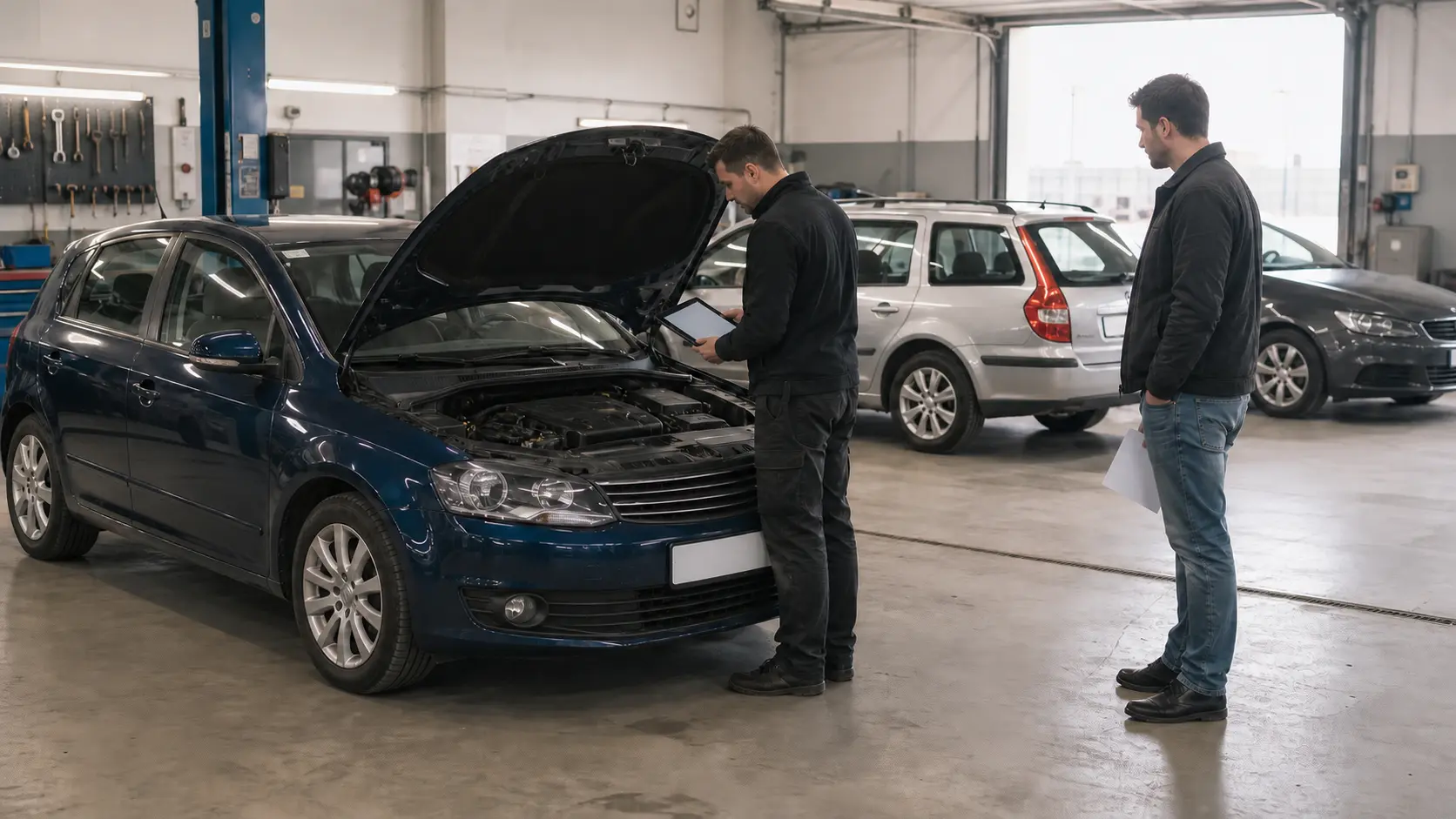
Do not let the seller warm the engine before you arrive. If the seller refuses a lift, diagnostic scan or independent inspection, leave. Write registration, VIN, mileage, price, date and known defects into the receipt. Separate a parking scrape from structural corrosion, steering play or weak brakes; the latter are safety costs, not bargaining theatre.
Which car fits which buyer?
For a London commuter, begin with a confirmed Euro 4-or-newer Yaris, Jazz, Mazda2 or Swift and use TfL’s checker. For a new driver, the i10 or Citigo is easy to place and not intimidating. For a small family, the Jazz’s cabin is the decisive advantage. For mixed roads, the Mazda2 and Fiesta have more composure than the smallest city cars. For parts availability, Fiesta, Yaris and the Volkswagen Group trio are easy to support.
For frequent motorway work, favour the healthiest 1.3–1.5-litre car and accept that a turbo or larger engine may suit the real route better. For a short urban commute, the lightest car with the best corrosion record often costs less than a larger, faster model. For a buyer who wants an automatic, budget for a specialist inspection of the transmission rather than assuming a small automatic is low-risk.
The naturally aspirated brief makes most sense when predictable throttle response, modest mileage and a trusted independent garage matter more than low-rev torque. It is not a virtue in itself. Buy the individual car that fits the legal zones, journey pattern and reserve fund, then keep enough money for the work the inspection identifies.