
The 10 lei threshold has been crossed
Standard petrol prices moved above 10 lei per litre in all of the Romanian networks covered by the latest weekend analysis. Profit.ro reported that OMV Petrom, Rompetrol, MOL and Socar increased prices by 6 bani per litre on Saturday. The lowest price mentioned in that analysis was 10.03 lei per litre at Lukoil.
This is a snapshot of observed station prices, not a national price fixed by the government. Pump prices can differ by city, location, station ownership, product grade and payment conditions. Premium petrol is a separate product, while partner stations can apply a different price from a directly operated site of the same network.
The practical meaning is that the last network still quoted below 10 lei in the analysis no longer kept the national market below that psychological threshold. Differences between networks can still be measured in bani, but every small increase matters to drivers who refuel frequently or operate a fleet.
What a six-bani increase means at the pump
A 6-bani-per-litre increase adds 3 lei to a 50-litre refuelling and 3.60 lei to a 60-litre refuelling. The calculation assumes that the full increase is passed to the customer and ignores loyalty discounts, vouchers or fleet agreements. It also does not mean that every station had the same price before or after the change.
The minimum figure reported by Profit.ro was 10.03 lei per litre. At that price, 50 litres cost 501.50 lei before any discount. A price of 10.09 lei per litre would make the same quantity cost 504.50 lei. The difference is 3 lei, exactly the effect of adding 6 bani to every litre.
A national headline should not be confused with a guaranteed price at every pump. The analysis covers the networks and stations checked by the publication. A driver should verify the station’s displayed price, the fuel grade and the card conditions before calculating the final bill.
The official weekly reference
The European Commission publishes a Weekly Oil Bulletin covering consumer prices for petroleum products across EU countries. National data are submitted on Wednesdays and subscribers normally receive the bulletin on Thursday. The edition dated 1 October 2026 includes Romania and separates prices with taxes from prices without taxes.
The European bulletin is a weekly reference, not a live map of every Romanian station. A Saturday pump price can therefore differ from the national value reported for that week. The bulletin is useful for comparing countries and tracking broad movements, while station-level data are more relevant when choosing where to refuel in a particular city.
The two measurements answer different questions. The pump analysis shows what a consumer may see at selected stations on a specific day. The Commission’s data provide a harmonised national reference collected on a defined timetable. Neither source should be treated as a complete record of every price change during the week.
What is included in the price
The final petrol price includes more than the wholesale cost of the product. It can include the international product quotation, refining, transport, storage, station operation, commercial margin, excise duty and value added tax. Exchange-rate movements can also affect imported crude, products or equipment. A change in one component does not necessarily produce an identical change at every network.
The excise component is set under the tax framework, while the retail price is set by the operator within the market conditions that apply to the station. A higher pump price can increase the tax amount calculated as a percentage of the price through VAT, but that does not identify the company’s margin. Precise conclusions about margins require cost and sales data that are not contained in a daily price report.
The current story does not prove why each network moved by 6 bani on the same day. Possible factors include product quotations, competition, stock replacement and commercial timing, but only the companies or a detailed market investigation could attribute the decision to one cause.
Why station prices are different
Large networks do not face identical operating conditions at every location. A motorway station has different traffic and land costs from a neighbourhood station. A site operated by a partner may use a different commercial arrangement from a company-owned site. Local competitors can also influence the price displayed on the sign.
For a private driver, a 5- or 10-bani difference may not justify a separate detour. The extra fuel used to reach a cheaper station can consume part of the saving. For a fleet using hundreds or thousands of litres each month, the same difference becomes easier to measure. At 1,000 litres, 6 bani per litre represents 60 lei before contractual discounts.
The sensible comparison is therefore the total cost of the trip, not only the number on the sign. The same fuel grade, the same payment method and the same date should be used when comparing stations.
The effect on a typical driving budget
A car consuming 7 litres per 100 km uses about 49 litres over 700 km. At 10.03 lei per litre, the fuel cost for that distance would be approximately 491.47 lei before discounts. At 10.09 lei, it would be approximately 494.41 lei. The difference, about 2.94 lei over 700 km, comes from the 6-bani increase alone.
A driver covering 15,000 km per year at 7 litres per 100 km would use roughly 1,050 litres. A 6-bani increase would add about 63 lei per year in that simplified scenario. The result changes with mileage, consumption, traffic and the use of discounts. A heavier car or a vehicle with higher consumption experiences a larger cost per kilometre.
These examples are not forecasts for every vehicle. Official consumption figures are laboratory values, and real consumption depends on temperature, road speed, traffic, tyre pressure, load and driving style. The price threshold is the same, but its effect on a household budget differs from one driver to another.
Petrol is not the same as every fuel
The reported change concerns standard petrol. Diesel, premium petrol and LPG have different supply chains, taxes and demand patterns. A petrol price cannot be used to estimate the cost of operating a diesel car or a vehicle converted to LPG. The correct comparison uses the same fuel type and the same volume.
Fleet and business calculations may also treat VAT and deductibility differently, but those accounting rules do not lower the amount displayed at the pump. Loyalty programmes can reduce the effective price after a transaction, yet the undiscounted station price remains the relevant reference for a transparent market comparison.
What to watch next
Pump prices can change again after a single daily adjustment. One simultaneous movement by several networks does not by itself reveal the full reason for the decision or prove a particular profit margin. A complete explanation would require international quotations, exchange-rate data, refining costs, stock levels, taxes and the timing of purchases.
The confirmed point from the latest analysis is narrower: standard petrol moved above 10 lei per litre across the Romanian networks covered, after a reported 6-bani weekend increase, and Lukoil was quoted as having the lowest price at 10.03 lei per litre. The European Commission provides a weekly national benchmark, but it does not set the retail prices charged by Romanian stations.
Sources
- European Commission — Weekly Oil Bulletin
- Romanian Ministry of Finance — excise duty table
- Wikimedia Commons — GasStationPump2.jpg, CC0
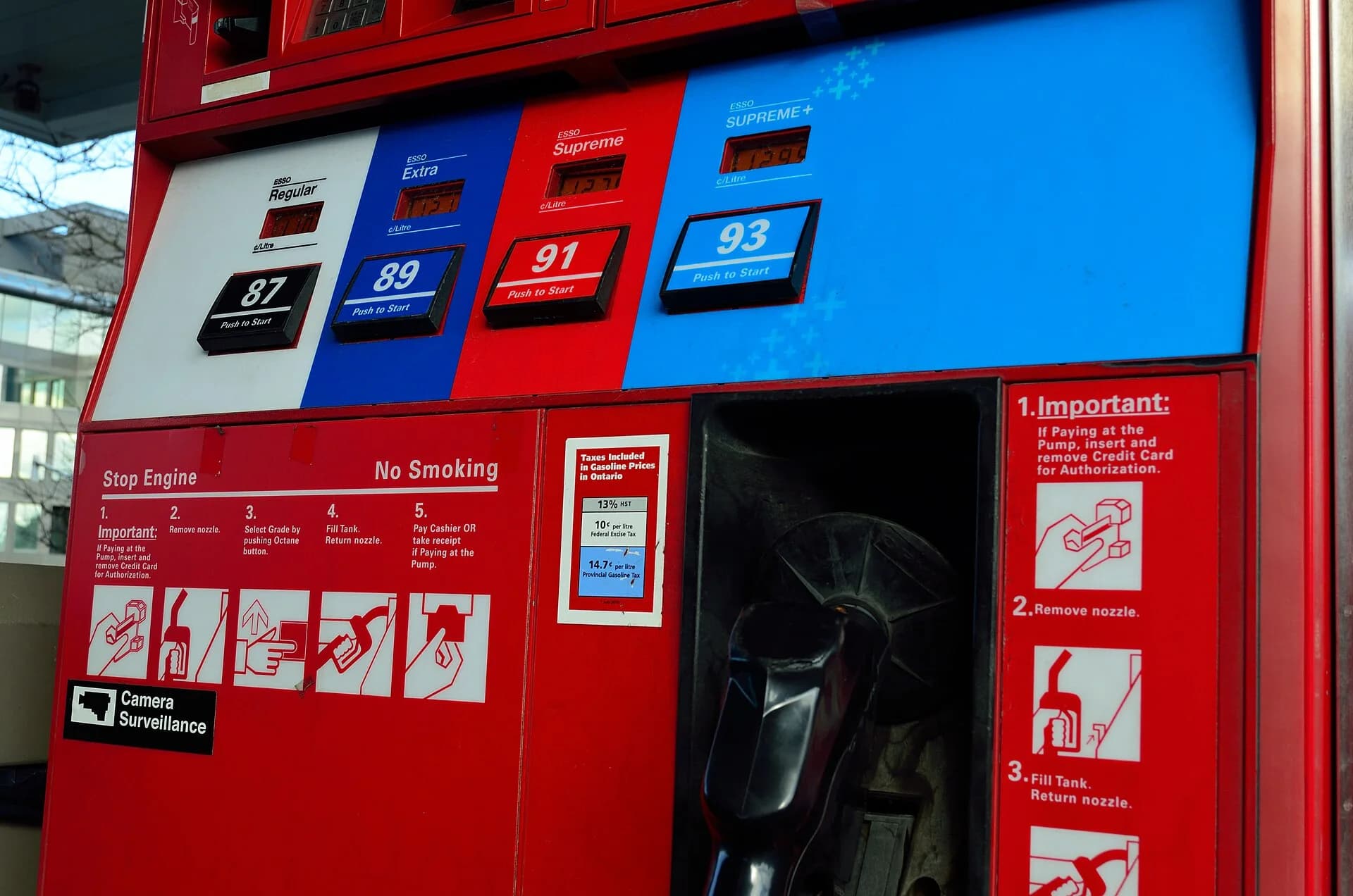
Image: fuel pump photographed by Raysonho @ Open Grid Scheduler / Grid Engine and dedicated to the public domain under CC0. Local WebP asset: /resources/blog/fuel-prices-romania-2026.webp.



