China is preparing a tougher test for the latest wave of car design ideas. The Ministry of Industry and Information Technology, together with the public-security, ecology and market-regulation authorities, published a draft notice on 10 October covering innovative vehicle design and research testing. The proposal is open for comments and is not yet a final regulation.
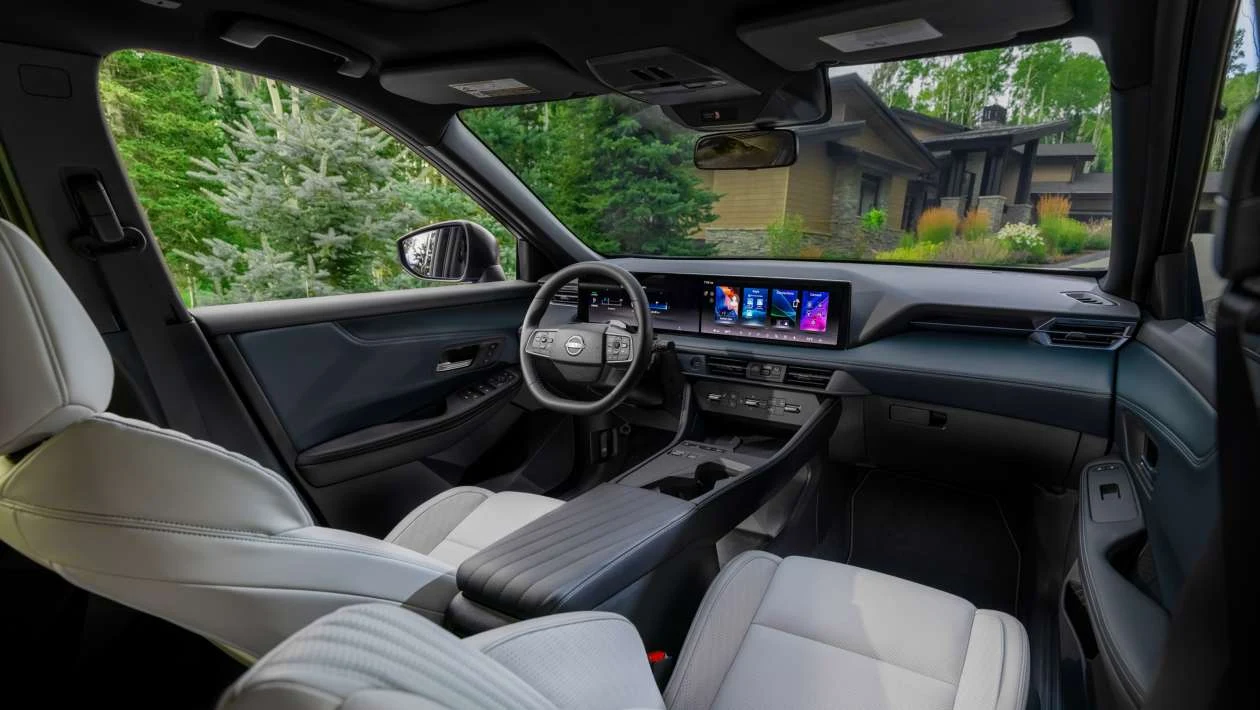
Illustrative image. Photo source: Nissan.
The draft is aimed at a familiar problem in the modern car industry: a feature can look convincing at a motor show or in a launch video long before it has proved reliable through years of daily use. China’s proposal would require manufacturers to provide more technical information, perform wider safety and environmental assessments and retain physical safeguards for functions that could matter in an emergency.
This is not a ban on every touchscreen
Reports describing the proposal as a touchscreen ban need an important qualification. The draft does not remove central displays, navigation screens or digital menus from cars. Its clearest restrictions concern folding and flexible displays. It also says that safety-related controls, including emergency escape and emergency braking controls, must retain physical controls and clear markings.
The wider summaries of the draft include functions such as lights, wipers and demisting among the controls that should remain easy to find and operate. A manufacturer may still use a screen for climate settings, navigation or vehicle personalisation, but the driver should not be forced to search through software for a control that may be needed immediately. Physical buttons, switches or another dedicated control can provide a backup if a screen freezes, a software system fails or the driver cannot see the display clearly.
That distinction matters for European readers. A car with a large fixed touchscreen is not automatically prohibited by the Chinese proposal. The regulatory concern is the combination of critical functions, hidden or virtual controls and insufficient validation. The final text could also change during consultation.
Folding and flexible displays would be excluded
Folding and flexible screens promise more display area without permanently occupying the same amount of dashboard space. In a vehicle, however, they introduce hinges, moving surfaces, cable routing, touch layers and software dependencies. The more complex the mechanism, the more situations have to be covered by testing: cold weather, heat, vibration, repeated opening, dust, moisture and impact.
The Chinese draft puts these screens on a red-line list. It is part of a wider approach that asks whether a design idea has been tested as a safety-critical component rather than merely demonstrated as a novelty. A display that fails may initially be a comfort problem. If the same interface controls the vehicle’s warnings, demisting or emergency functions, the consequences are more serious.
The proposal also refers to other unusual ideas, including some forms of virtual buttons, new human-machine interfaces, powered suction doors, yoke-style steering controls and seats that can create a bed or rotate while the vehicle is moving. Not every item is treated in exactly the same way, but the principle is consistent: an unusual design requires a documented safety case before it reaches series production.
Fully hidden door handles are also targeted
The draft repeats China’s separate move against fully hidden door handles. MIIT has said that the mandatory GB 48001-2026 standard for door-handle safety will take effect on 1 January 2027. It requires a mechanically operable exterior and interior handle for each door, with enough exterior operating space for a person to use it.
The reason is straightforward. A vehicle can lose electrical power after a collision or fire, and an electrically deployed handle may fail in freezing conditions or after damage to its wiring. Occupants and rescuers need a manual release that does not depend entirely on the car’s battery or software.
This does not necessarily mean that every future handle must look like a conventional pull handle. Manufacturers can still design aerodynamic or discreet components, provided the mechanism leaves a usable mechanical operating area. A handle that opens only after an electric motor deploys it would not deliver the redundancy the standard is intended to provide.
MIIT’s public explanation says the transition for existing approved products runs to 1 January 2029. That is separate from the consultation draft and should not be read as an immediate ban on every car already on the road.
One year of environmental testing and 30,000 km
The official summary gives unusually concrete validation targets. New products would need comprehensive reliability and durability testing, structural-reliability testing and software-function reliability testing. Environmental-adaptation validation would last at least one year and include two winters and one summer. Reliability validation would cover at least 30,000 kilometres.
Those figures currently belong to a draft proposal. They are not a final technical rule until the consultation ends and the document is adopted. If retained, they would change the development timetable for cars that use new interfaces, moving seats, unusual steering controls or other novel systems. Manufacturers would need evidence covering the interaction between hardware, software and the vehicle’s structure instead of relying on an over-the-air update to correct an unresolved design weakness.
What changes for new and existing products?
According to the published summaries, new applications involving innovative designs from 1 January 2027 would have to report additional technical parameters and submit stronger safety and environmental assessments. Products that have already been approved would need to provide additional parameters and verification material by 1 July 2027. If a safety risk is identified after the deadline, production could be stopped and a recall could be required.
Those dates belong to the consultation draft and can be amended. They also describe approval and production oversight, not a rule that automatically makes every existing car illegal. The first visible impact should be on new models and major revisions now being engineered for the Chinese market.
A wider change in car design
China is not abandoning large displays or innovation. The message is that novelty must be supported by redundancy, physical access to safety functions and long-term evidence. For manufacturers, the result may be more tactile controls, manually releasable doors, fixed screens and more documentation before a launch.
For buyers, that could make future cabins less dependent on a single central display. A physical switch will not replace every touchscreen menu, but it can ensure that a driver can still operate an essential function when the interface is slow, damaged or difficult to read. There is no confirmation that Europe will adopt the same restrictions. The immediate fact is narrower: China has published a draft, and the final rules have not yet been issued.