7 new electric cars under €30,000 in Romania in 2026
The Dacia Spring offer was rechecked on 9 September 2026. For the other models, ask for confirmation of price and availability before ordering.
Short answer
On 18 August 2026, seven new electric cars had on official Romanian websites a recommended, list, promotional or stock price under €30,000: Dacia Spring, BYD Dolphin Surf, Hyundai Inster, MG4 Urban, Citroën ë-C3, Citroën ë-C3 Aircross and Renault 5 E-Tech electric.
Spring is the strictly urban choice and has four seats. Dolphin Surf, Inster and ë-C3 offer small dimensions but more useful commuting range. MG4 Urban is the family option with the highest official range in this selection. ë-C3 Aircross brings boot space and SUV bodywork, and Renault 5 relies on a compact format and 11 kW three-phase AC charging.
The prices are not directly comparable, though. Dacia displays a commercial discount with a deadline, MG publishes a specific stock example, and Citroën has price lists. For Hyundai we used the recommended price, not the Remat offer that expired on 31 July. We did not subtract a hypothetical eco-voucher.
| Model and reference version | Displayed price incl. VAT | Battery | Combined WLTP range | Best suited first for |
|---|---|---|---|---|
| Dacia Spring Extreme electric 100 | €17,121 promotional | check in the configuration | 225 km | town, second car, short commute |
| BYD Dolphin Surf | from €18,990 | 30 or 43.2 kWh, depending on version | 220-322 km | town and commuting |
| Hyundai Inster Highway 97 hp | €22,143 recommended | 42 kWh | 327 km | town, commuting, flexible interior |
| MG4 Urban Excite, stock example | €22,680 | 54 kWh nominal | 416 km | only car, mixed use |
| Citroën ë-C3 YOU! | €23,110 list | 44 kWh | 320 km | town, commuting and regional roads |
| Citroën ë-C3 Aircross YOU | €25,900 list | 44 kWh | up to 300 km | family, luggage, higher driving position |
| Renault 5 E-Tech electric techno | €29,600 recommended | 40 kWh, urban range | 315 km | town, commuting and mixed use |
WLTP range is a homologation figure, not a promise of the distance you will get in winter on the motorway. Temperature, speed, heating, wind, relief, tyres and vehicle load can cut the real distance. For each model, ask for a written offer with the version, battery, AC charger, DC power and included cables.
1. Dacia Spring: the cheapest, but conceived first for town
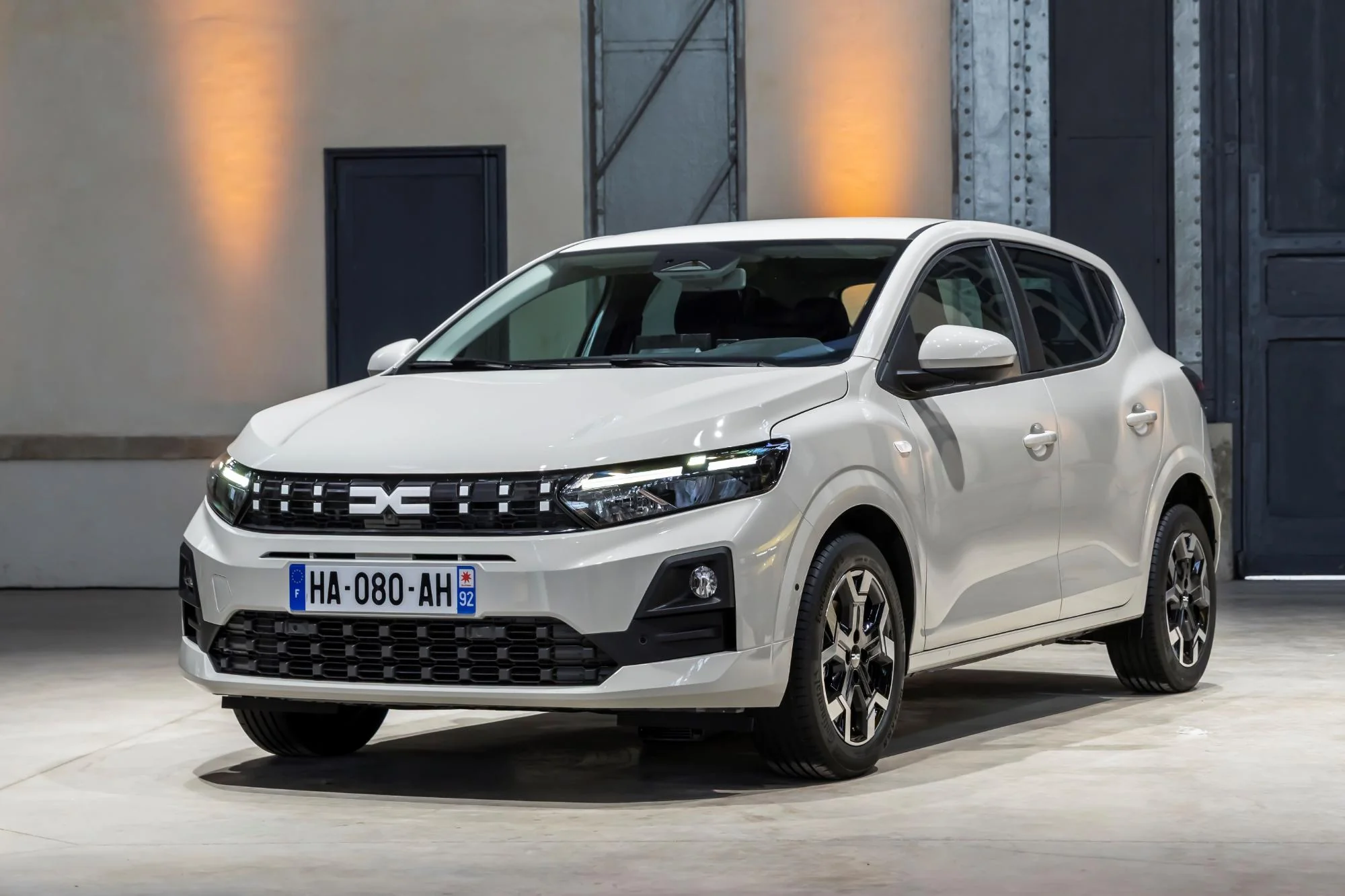
On 9 September Dacia listed Spring Extreme electric 100 at €17,121 including VAT, through an offer for private customers valid until 30 September 2026. The official note shows that the sum includes a commercial discount of €3,429 and an €850 pack made up of the adaptor for 40 kW DC fast charging, V2L and the Mode 2 cable. It is not a neutral list price, so ask for the full calculation for the available car.
The Dacia page lists 225 km combined WLTP range, 315 km in the urban cycle, four seats and 308 litres of boot. The 100 hp output is new compared with older Springs. The light body and small size favour it in traffic and parking, not on a fast long trip.
Before ordering, check:
- whether the final price keeps the €3,429 discount and what conditions must be met by 30 September 2026;
- whether the example has DC fast charging, a Mode 2 cable and a V2L adaptor;
- seat count: Spring remains a four-seater;
- charging time at the socket or wallbox you will use;
- comprehensive-insurance cost and traction-battery conditions.
Spring makes sense if most days mean 20-80 km, you have a predictable charging solution and you accept the limits of an urban car. For weekly motorway use, compare ë-C3, Inster, MG4 and Renault 5 directly.
2. BYD Dolphin Surf: a low price and two batteries that must not be mixed up
BYD Romania listed Dolphin Surf “from €18,990”. The European model exists with a 30 kWh battery for Active and 43.2 kWh for Boost and Comfort. The official combined-range interval is 220-322 km, and DC charging power differs between versions.
That is the distinction that matters in the offer. An entry price must not automatically be tied to the 322 km range. Ask for the trim name and the technical sheet of the concrete configuration. The larger-battery version may be more suitable as an only car, but it can exceed the budget after colour, accessories or other options.
Dolphin Surf is 3,990 mm long and has a declared boot of 308 litres. BYD includes a suite of assistance systems and an LFP Blade battery, but the exact equipment list must be checked for the car ordered in Romania.
The right questions for the dealer are:
- Does the €18,990 price belong to the Active version, and is the car in stock?
- Is the battery 30 or 43.2 kWh?
- What WLTP range is listed for the configuration?
- Does the car charge AC at 11 kW three-phase, and what DC power does it have?
- Are the Mode 3 cable, V2L and a heat pump included?
3. Hyundai Inster: the most flexible of the very small models
Hyundai listed Inster Highway with a 42 kWh battery and 97 hp at a recommended price of €22,143 including VAT. The Remat offer on the same page expired on 31 July 2026, so we did not use it. The dealer can set its own price, and the importer warns that tariffs and equipment can change.
The technical sheet lists 327 km combined range for the 42 kWh version. Inster with the 49 kWh battery reaches 370 km in some trims, but starts from another price. Both batteries can be charged from 10% to 80% in about 30 minutes under the manufacturer's stated conditions.
The practical advantage is the interior. The rear seats can slide, and boot volume varies between 238 and 351 litres depending on their position. Inster has four seats, though, not five. For a couple or a family with one child, the flexibility can be worth more than a large fixed boot; for three passengers on the rear bench, the model should be dropped from the list.
Compare Highway 42 kWh separately with Highway 49 kWh. The difference is not only range: check price, motor power, wheels, heat pump and equipment that uses energy in winter.
4. MG4 Urban: the longest range on the list, but the price is for one example
The official MG stock platform listed an MG4 Urban Excite, year 2026, with a 54 kWh nominal battery and 160 hp at €22,680 with deductible VAT. The page states explicitly that the price is informative and not contractual. It is an offer for one example, not proof that any MG4 Urban can be ordered at the same sum.
The car sheet lists 416 km combined WLTP range, 87 kW maximum DC power and 52.8 kWh usable capacity. The boot is presented as 577 litres, but the figure includes a 98-litre underfloor compartment; compare the usable shape and volume in reality with ë-C3 Aircross, not only the number in the table.
The stock page also contains an obviously inconsistent label: the car is named electric and has a 54 kWh battery, but the “fuel” field appears as petrol. That error is exactly why you should receive in writing the VIN, pro-forma invoice and technical specification, even if the offer comes from the importer's site.
MG4 Urban is the model to analyse if you want a single car for a family and mixed use. Confirm before a deposit:
- whether the €22,680 unit is still available;
- the final price with transport, preparation, colour and registration;
- nominal and usable battery;
- AC and DC charging power;
- heat pump, battery preconditioning and V2L;
- the warranty applying to the car and battery.
5. Citroën ë-C3: a clear list price and a 44 kWh battery
The Citroën list valid from 5 May 2026 sets ë-C3 YOU! at €23,110 including VAT. Plus and Max cost €24,960 and €26,760, before paint and options. Those sums are easier to compare than a stock offer, because the document clearly separates version and equipment.
All three trims use the 113 hp motor and the 44 kWh LFP battery. Combined WLTP range is 320 km, and fast charging from 20% to 80% is stated at 26 minutes on a 100 kW station. The 11 kW AC charger is optional and cost €440 including VAT in the list consulted.
That option must be clarified before ordering. If you have three-phase power at home or often use 11 kW AC stations, the slower standard charger can become a limitation. Also ask for the exact equipment list for YOU!: the document shows manual air conditioning, rear sensors and a smartphone holder instead of a richer multimedia configuration.
ë-C3 is more suitable than Spring for regional roads and a long commute, but the 320 km range remains a WLTP figure. Make a separate calculation for the winter route, with a safety margin and without planning to arrive at 0%.
6. Citroën ë-C3 Aircross: family space under the €30,000 threshold
Citroën ë-C3 Aircross YOU with the 44 kWh battery cost €25,900 including VAT in the list for May 2026 production. The YOU version with the 54 kWh battery was also under the ceiling, at €28,000, but the main list uses the cheapest variant to keep the comparison consistent.
The model has five seats, 460 litres of boot and declared ground clearance of 193 mm. The 44 kWh battery offers up to 300 km WLTP, while the 54 kWh variant reaches up to 400 km. Both use the 113 hp motor and accept 100 kW DC charging; the 11 kW AC charger appears as a €440 option.
Aircross is the family choice on this list, but it comes with two compromises. It is heavier and official consumption is higher than ë-C3, and the YOU version has basic equipment: the rear windows are manual, and the multimedia system must be read carefully in the list. Do not assume a larger body automatically includes more equipment.
Compare two concrete configurations: YOU 44 kWh at €25,900 and YOU 54 kWh at €28,000. The €2,100 difference buys extra range, but you must check whether delivery time, mass, charging time and your use justify the larger battery.
7. Renault 5 E-Tech electric: under €30,000 in the 120 hp techno version
Renault listed Renault 5 E-Tech electric techno with a 120 hp motor and the urban-range battery at €29,600 including VAT. The configuration has 315 km combined WLTP range, an 11 kW AC charger and DC charging of up to 80 kW.
The page also mentions the Five version at €25,000, but marks it separately as soon available for orders. For that reason, the comparison uses the techno version shown among those available, not the theoretically lower price. The 150 hp version with the comfort-range battery exceeds the threshold, at €31,450.
Renault 5 makes sense if you want a compact hatchback, 11 kW AC charging included in the presented configuration, and you accept using almost the whole budget for the car. At €29,600, colour, accessories, wallbox, insurance and winter tyres can quickly take the total cost over €30,000.
Before ordering, ask for written confirmation of the 40 kWh battery, 315 km range, 80 kW DC power and delivery time. Do not confuse this version with the 52 kWh battery and 430 km range, which belong to the more expensive variant.
How to choose by route, not by the longest range
Under 60 km a day, almost only in town
Spring, Dolphin Surf Active and Inster 42 kWh are enough on paper for range. The real difference comes from seats, space, charging and safety. Spring and Inster have four seats. Dolphin Surf must be checked by version, because the entry battery does not offer the range maximum of the line-up.
An 80-150 km commute and charging at home
Inster 49 kWh, ë-C3, Renault 5 and MG4 Urban offer a more comfortable margin. Calculate the full route on a cold day, not only the outbound distance. If you have three-phase power, check the AC charger: 11 kW is standard on some models and optional on others.
Family and a single car
MG4 Urban and ë-C3 Aircross are the starting points. Try child seats, the pushchair and luggage. A large boot in litres can have a high floor, separate compartments or an opening that limits bulky objects.
Regular long trips
MG4 Urban has the highest official range in the selection. Renault 5, ë-C3 and Inster can do long trips, but they need more frequent stops. Spring remains the least suitable choice for the motorway. For comparisons above this budget, see also the electric cars with the longest range available in Romania.
What the written offer must contain
- The model, trim, motor power and configuration code.
- Gross capacity and, if communicated, usable battery capacity.
- The WLTP range of the configuration, not the range maximum of the line-up.
- AC charger power and maximum DC power.
- Included cables: Mode 2 for a socket and Mode 3 for a wallbox or station.
- Presence of a heat pump and battery preconditioning.
- Price including VAT, colour, options, transport and delivery preparation.
- The commercial discount, finance or eco-voucher, each on a separate line.
- Validity period and the conditions under which the price can be changed.
- Delivery time and year of manufacture.
- General warranty and battery warranty, with time, kilometre and capacity limits.
- Service costs and service intervals.
Do not sign after a screenshot with “from”. Ask for an identifiable pro-forma, and for a stock car request the VIN before a deposit.
Checklist before you order a new EV
- You have measured the daily route and the longest winter route.
- You can charge legally and predictably at home, at work or nearby.
- The electrical installation has been assessed by a licensed electrician.
- You have asked for a separate price for wallbox, protections, cable and fitting.
- You have checked whether the car has four or five seats.
- You have tried the child seat, pushchair and boot.
- You have confirmed the battery and range of the offered version.
- You have checked AC, DC charging and battery preconditioning.
- You have requested a comprehensive-insurance quote before a deposit.
- You have included winter tyres and any extra wheels in the budget.
- You have read the battery-warranty conditions, not only the duration in years.
- You have checked the service network and estimated time for parts.
- You have done a test drive on an urban route and at national-road speed.
- You have calculated total cost without assuming Rabla is guaranteed.
- The written offer specifies delivery time and deposit refund.
For infrastructure, read how much a wallbox and its installation cost in Romania. If it is your first EV, the guide on preparing a long trip explains stop planning. For the difference between homologation and daily use, see also myths about electric-car range.
Frequently asked questions
Which is the cheapest new electric car on the list?
Dacia Spring had the lowest verified price on this list: €17,121 for a promotional offer valid until 30 September 2026. The price included a commercial discount and €850 of charging equipment, so it must be reconfirmed through a written offer.
Which has the longest range under €30,000?
The MG4 Urban example at €22,680 was presented with 416 km combined WLTP range. It is a concrete stock unit, though, and the price has no contractual value. Among the price lists, ë-C3 Aircross 54 kWh reaches 400 km and cost €28,000 in YOU trim.
Is there a new family EV under €30,000?
Yes. MG4 Urban has a compact-hatchback format, and Citroën ë-C3 Aircross offers five seats and 460 litres of boot. Check the space with the family's objects and do not buy only on the declared litre figure.
Is it worth choosing the smallest battery for the price?
Only if the real route fits comfortably in winter range and you can charge predictably. A small battery cuts price and mass, but can force more frequent stops and limit resale flexibility. Compare the cost of the larger battery with the real number of long trips per year.
Can I use the prices in the article without the Rabla programme?
The Citroën prices and the recommended Hyundai price were treated without subtracting an eco-voucher. Dacia uses an explicit commercial discount, BYD displays a “from” price, MG shows a stock unit, and Renault publishes the recommended price of the version. Ask the dealer to separate the car price, commercial discount, finance and any public aid.
How much range should I keep as a reserve?
There is no universal percentage. For the usual route, build a margin that covers cold, wind, a diversion and an unavailable station. On a long trip, plan the stop before the battery reaches a level that forces you to depend on a single station.
Is AC charging or DC fast charging more important?
It depends on use. For overnight charging at home, AC power and the home installation are decisive. For the motorway, the DC charging curve and battery preconditioning matter, not only the published peak power.
Official sources consulted
- Dacia Romania: Spring, price, range and offer conditions
- BYD Romania: Dolphin Surf and starting price
- BYD: European Dolphin Surf configurations, batteries and range
- Hyundai Auto Romania: Inster prices
- Hyundai Auto Romania: Inster specifications
- MG Motor Romania: the MG4 Urban stock unit and its specifications
- Citroën Romania: ë-C3 price list and technical sheet
- Citroën Romania: ë-C3 Aircross price list and technical sheet
- Renault Romania: versions, prices and technical data Renault 5 E-Tech electric