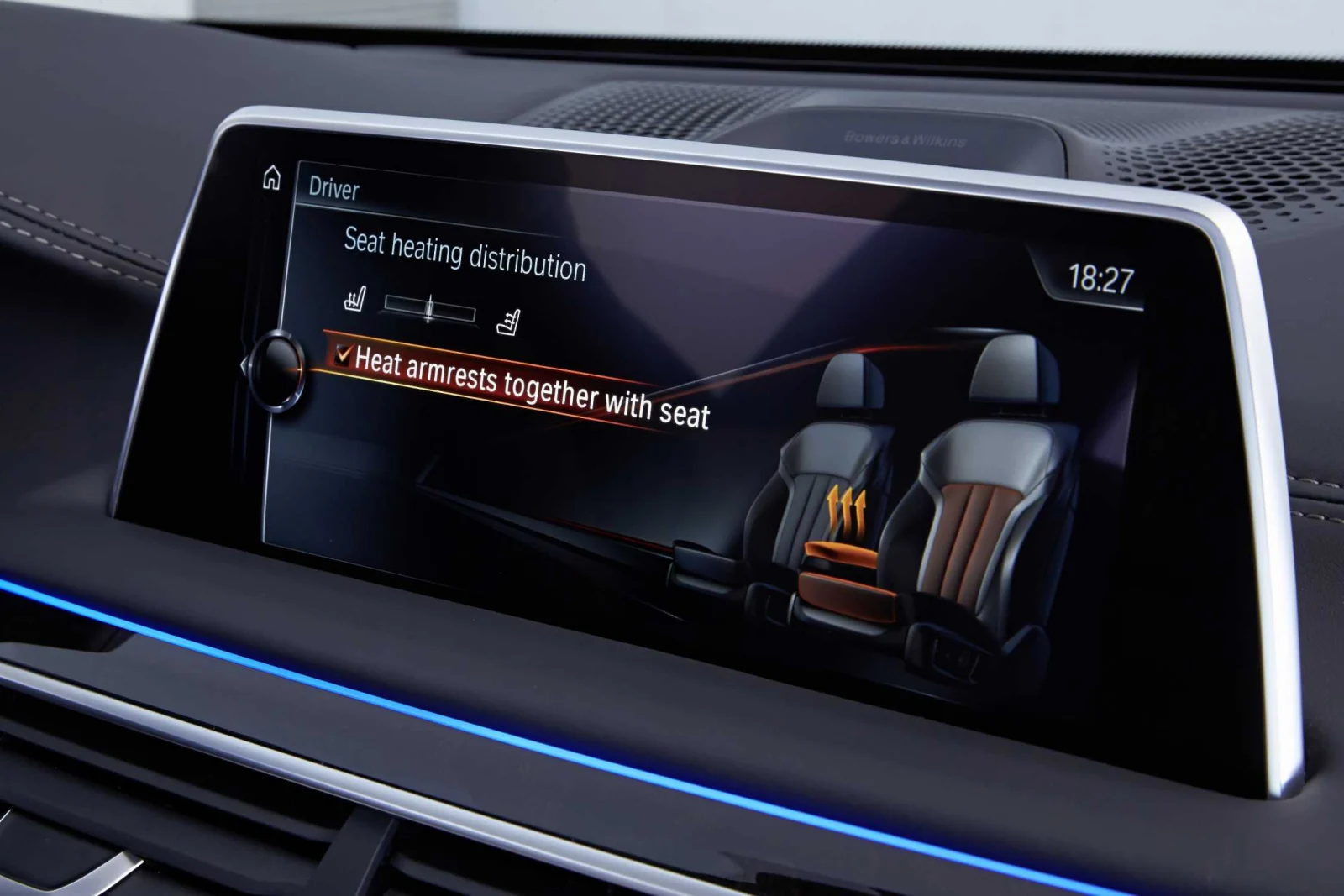
Audi has filed a German patent application for a row of physical switches that can fold out from behind the lower edge of a fixed touchscreen. When the hardware is stowed, the same functions remain available as a matching strip of virtual controls on the display. The proposed system tries to preserve a clean dashboard without making the driver rely exclusively on glass controls.
The document is published as DE102025118944A1. It is an application, not confirmation of a production feature. Audi has not named a vehicle, a launch date, a market or a price for the mechanism. A patent can reserve an engineering approach even if the applicant never puts it into a customer car.
The screen stays still while the buttons move
The central display is fixed in the dashboard. A hinged bar carrying physical controls sits behind its lower edge and is driven into an operating position below the screen. The mechanism can then return the bar to its concealed position.
This arrangement avoids moving a large display. The filing explains that relocating a screen becomes more difficult as its size and mass increase, while packaging around the dashboard and restraint systems also has to be considered. Moving a smaller control strip is presented as the alternative.
The application describes several triggers. The bar can deploy when the vehicle starts, in response to a voice request or after a recognised gesture. A control on the interface can also switch between the two forms. These are proposed operating modes, not a finished specification for a showroom model.
A digital twin keeps the layout consistent
When the physical switches are hidden, the touchscreen displays a virtual strip with the same functions in the same sequence. Audi describes this as a digital counterpart to the hardware. The intention is that a command occupies a familiar position whether the user touches the display or deploys the real keys.
Once the bar folds out, the virtual row can disappear and release the lower part of the screen for other content. One worked example involves a media player using the extra display area. That example illustrates interface packaging; it does not establish that a driver would be allowed to watch video while the car is moving.
The document does not set out a final assignment for every key. It therefore does not confirm that a production version would operate climate, audio, drive modes or any specific vehicle function. Drawings in a patent establish the concept and its possible embodiments, not the final menu of an Audi model.
What the patent does not prove
There are no published production targets for opening speed, service life, resistance to dust or spilled liquid, noise or repair procedures. The application also does not answer what happens if the motor or hinge cannot deploy the controls. Those questions would need to be resolved through development and validation before series production.
A moving bar introduces a motor, joints and position sensing to a task that a fixed switch panel can perform with fewer parts. It could create a more adaptable cabin and recover display space, but it could also add cost, mass and a new repair item. With no durability data in the public filing, neither a reliability benefit nor a reliability problem can be claimed.
Crash integration is another limit. Dashboard components have to coexist with structural requirements and restraint systems. The filing discusses the packaging benefit of leaving the large screen fixed, but a production part would still need homologation and model-specific testing.
How it fits Audi's declared design direction
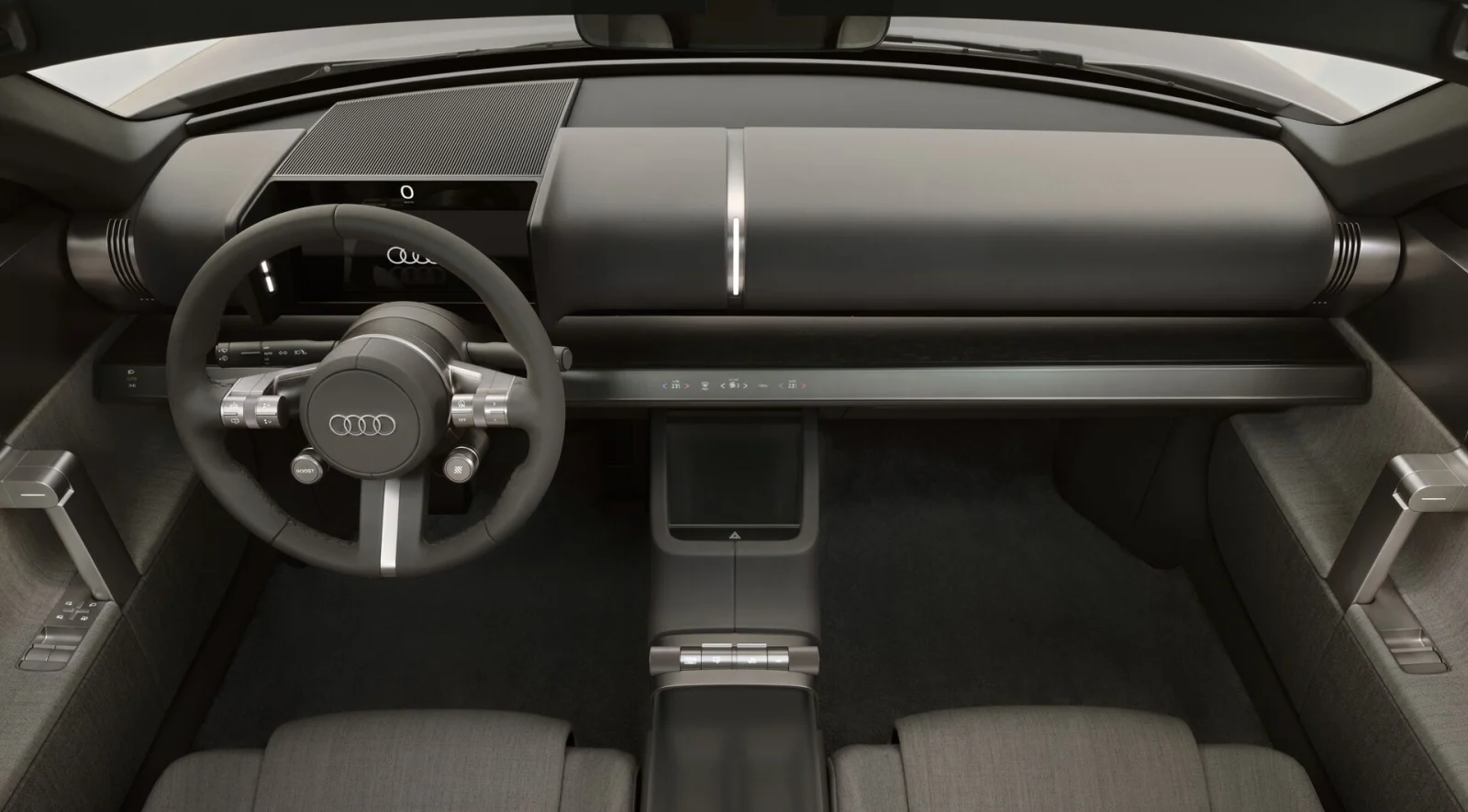
Audi presented the Concept C in September 2025 as the first expression of its new design philosophy. The electric two-seat roadster uses anodised-aluminium physical controls on the steering wheel and centre console. Its 10.4-inch centre display remains out of sight until it is required, an approach Audi describes as keeping digital elements close but not dominant.
Concept C is not the vehicle shown in this patent. Its display moves, whereas DE102025118944A1 keeps the screen fixed and moves a separate control bar. The connection is philosophical rather than a confirmed component programme: both try to combine tactile operation with an uncluttered cabin.
Audi says Concept C previews a future production sports car and will influence other models. It has not said that the retractable buttons will appear in that car. Treating the filing as a specification for the production version would turn an unconfirmed possibility into a claim the manufacturer has not made.
What buyers should look for if it reaches production
The useful test would not be whether the buttons create a dramatic reveal. Drivers would need to know whether frequently used functions can be found by touch, how quickly the bar is available after startup and whether essential controls remain accessible if the mechanism stays closed.
Key shape, spacing, illumination, operating force and feedback would determine whether the hardware improves usability. The on-screen and physical layouts would also have to remain genuinely aligned; otherwise the promised muscle memory would be lost when switching between them.
For current Audi buyers, the filing changes nothing. Equipment should be checked against the relevant market configurator, order document and vehicle identification number. A patent application is not a promise of a later software or hardware upgrade.
Audi's proposal is best read as an attempt to reconcile two competing priorities: the visual simplicity favoured by interior designers and the tactile certainty many drivers expect from common controls. Whether that compromise survives engineering, cost and product planning remains unknown until Audi makes a separate production announcement.