New York has enacted a law that prevents manufacturers, dealers and their agents from charging recurring fees for certain vehicle features after a car is sold or leased. The restriction applies when the necessary components were fitted at the point of sale and the feature can work after activation without continuing cost or support from the manufacturer, dealer or a third-party provider.
Governor Kathy Hochul signed Assembly Bill A.10411A on 23 November 2026. The measure, paired with Senate Bill S.9348A, is recorded as Chapter 414 and takes effect on the 90th day after becoming law, 21 February 2027. Its scope is narrower than the headline idea of a blanket ban on car subscriptions.
The two-part test for a prohibited subscription
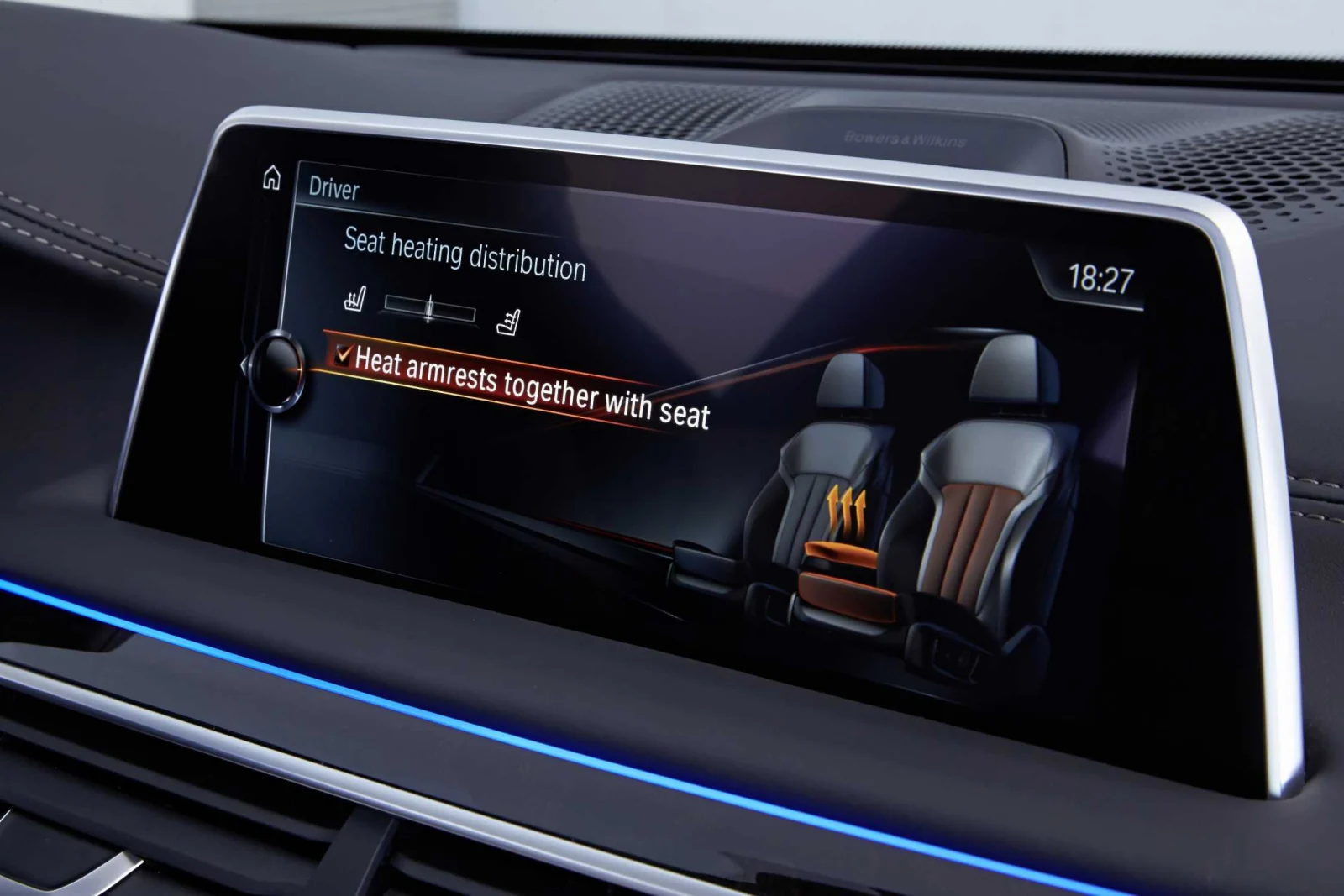
The statute defines a motor-vehicle feature as a convenience or safety function included on a vehicle and expressly names heated seats as an example. A fee is prohibited only when both statutory conditions are met. First, the feature must use components and hardware already installed when the customer buys or leases the car. Second, it must be capable of operating after activation without ongoing expenditure or support by the supplying businesses.
That test targets a specific commercial arrangement: the customer possesses the physical equipment, but software keeps it unavailable unless a weekly, monthly or annual payment continues. The law does not say that every component physically present in a car must be activated free of charge. A manufacturer could still price equipment into the initial vehicle specification or, subject to other law, offer a permanent purchase. The restriction concerns the recurring post-purchase charge described in the statute.
Payments under a retail instalment agreement or the lease contract for the vehicle itself are excluded from the definition. The legislation therefore does not change how the purchase price can be financed. It regulates a separate subscription for access to a feature.
Connected services remain chargeable
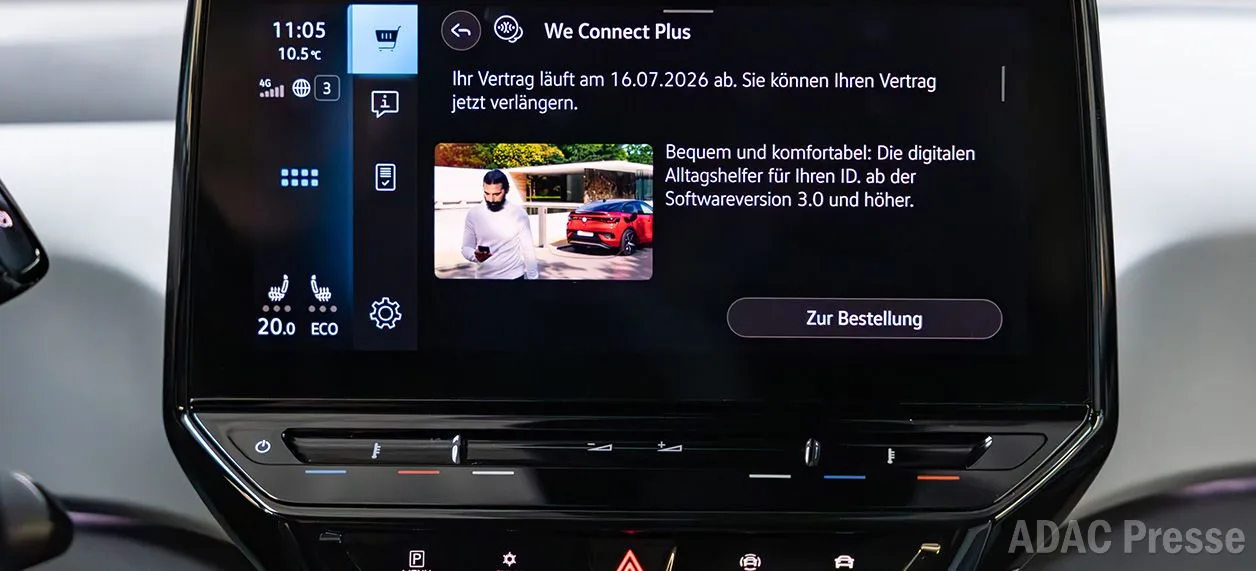
The exemptions explain why the law should not be reported as the end of paid software in cars. It does not apply to navigation-system updates, infotainment features, satellite radio, in-vehicle Wi-Fi, telematics, roadside assistance, software-dependent driver-assistance or driver-automation features, or connected services that rely on cellular or other data networks for continued operation.
A subscription can therefore remain permissible when it funds data transmission, current map material, cloud processing, an assistance centre or another service that continues to incur costs. The presence of pre-installed sensors or a communications module does not on its own settle the issue. The nature of the continuing service and the wording of the exemptions also matter.
Software updates are not banned either. Dealers and manufacturers remain able to supply them. However, the state provision cannot be used to charge a consumer for an update that remedies a safety defect when federal rules require that remedy to be supplied without cost. This keeps mandatory safety work separate from optional digital products.
The dividing line may still produce disputes. A consumer may see a local function that needs no external infrastructure, while a manufacturer may identify continuing software maintenance or technical support. New York's Department of State is authorised to issue rules needed to implement and enforce the section, which may clarify such cases after the effective date.
Civil penalty and legislative record
Non-compliance can lead to a civil penalty of up to $250 per point of sale for each violation. The dollar figure is the statutory ceiling in New York law, not a consumer price or an estimate of the value of the affected feature.
The Senate approved the bill by 57 votes to three on 4 June 2026. William Magnarelli sponsored the Assembly measure and James Skoufis sponsored its Senate counterpart. The bill was delivered to the governor on 13 November and signed ten days later.
The enacted text assigns rule-making and enforcement provisions to the Department of State. Earlier material and summaries can differ on administrative wording, so the active A amendment and the recorded Chapter 414 action are the relevant references for the final measure.
What the law could change for carmakers
For a vehicle sold across the United States, a manufacturer now has several choices. It can make a New York-specific offer, include a feature in the purchase price, sell access in a form that is not a prohibited recurring service, or leave the feature unavailable. The law does not compel a company to activate all fitted hardware for every owner.
That distinction matters when considering possible consequences. A ban on one billing method does not guarantee a lower vehicle price. Hardware and development still have costs, which a manufacturer may recover in the initial price or in an option package. What changes is the ability to keep charging after sale for the narrow category of functions that meet the two-part test.
Nor does the New York statute automatically govern cars sold in Europe. European buyers continue to depend on the contract, local consumer law and the terms attached to the particular connected service. A feature offered permanently in one market may be bundled, unavailable or subscription-based elsewhere.
What buyers should check
The practical lesson extends beyond one state. An equipment list should distinguish permanent vehicle functions from time-limited digital access. Buyers should ask whether an activation follows the car or the user's account, whether it transfers to a second owner, which services expire after a trial period and what happens when mobile-network support ends.
Used-car buyers face an additional risk because photographs can show screens, sensors and controls without proving that the corresponding licences remain active. A VIN-based equipment check and a live demonstration are more informative than the presence of hardware alone. The sales contract should record any promised access term.
New York's new rule makes one question unusually clear: is a recurring payment supporting an ongoing service, or is it only keeping the owner away from equipment already installed in the vehicle? The answer determines whether the fee falls within this particular law, while the exemptions preserve a large market for connected-car services.