
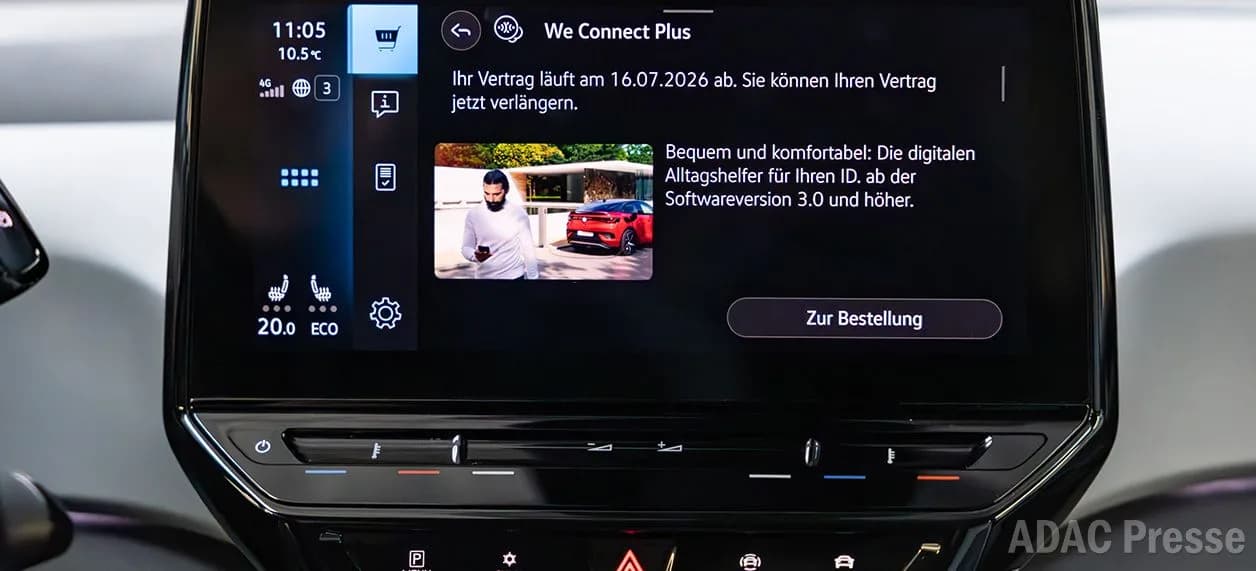
Buying a car no longer always ends when the finance contract is signed or the keys are handed over. Some manufacturers sell connected services and software features on monthly or annual plans. The fee may cover a real continuing service, such as mobile data, live traffic or cloud processing. In other cases, it activates equipment that is already fitted to the vehicle. Those two models look similar in an app, but they have different implications for value, cancellation and second-hand ownership.
What the subscription is actually paying for
The easiest category to understand is the connected service. Live navigation requires traffic data, map updates and servers. Remote locking, vehicle status and remote climate control need a modem, a cellular network, account authentication and software that routes the request between the app and the car. A Wi-Fi hotspot needs a data plan. Roadside assistance and theft alerts may also rely on a call centre or an external service provider.
The second category is a software licence attached to local hardware. A vehicle may contain a heated seat element, a camera, a radar or a more powerful control unit, while the manufacturer decides which functions are active on a particular build. The customer pays to enable the function for a defined period or, in some cases, permanently. The criticism is strongest when the recurring bill appears to unlock a physical component with no obvious cloud cost.
The difference should be visible in the sales paperwork. “Hardware preparation” does not mean that the feature is active. A trial period does not mean that the feature is included for the life of the car. Buyers need the service name, the duration, the price at renewal and the result of cancellation.
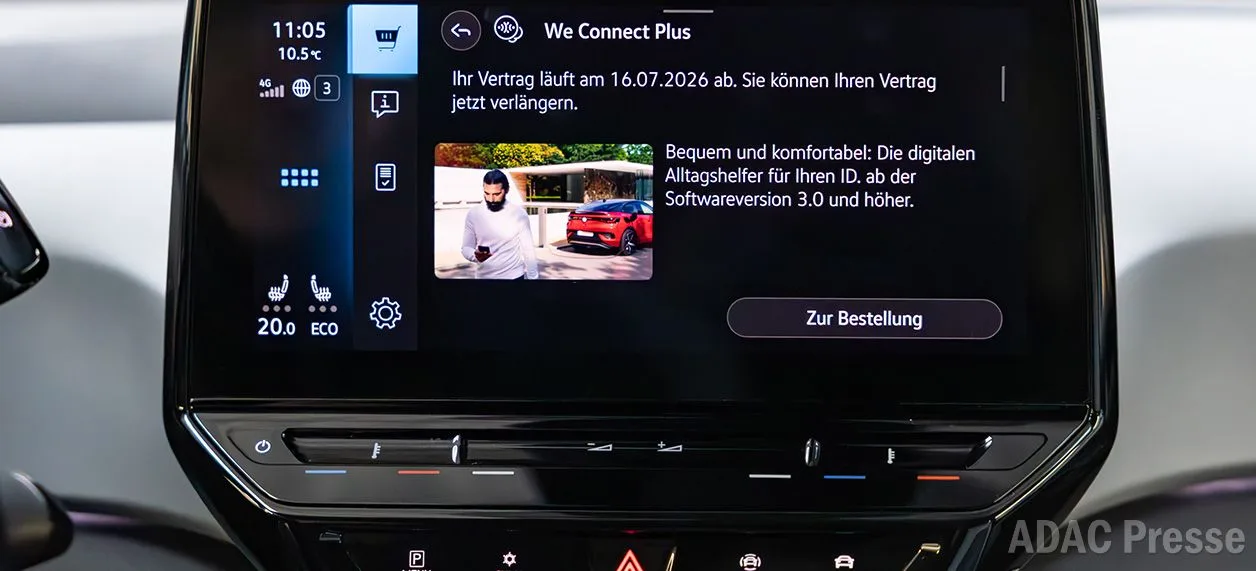
Image: ADAC, connected-service subscription interface. Commercial reuse rights were not independently confirmed.
Why manufacturers are testing recurring payments
The traditional new-car business collected most revenue at the time of sale. A connected vehicle can create additional revenue throughout its ownership. Ford’s Connected Services pages explain that availability and pricing vary by model year, vehicle and trim, while eligible services can be viewed, purchased and cancelled through the app. Some vehicles have included trials followed by monthly or annual renewal.
Standardised hardware is another reason. If several trims share cameras, antennas and control modules, a manufacturer can reduce the number of factory configurations and use software to manage the customer offer. That may simplify logistics, but it does not automatically lower the price of the vehicle. The hardware may also support future services that do not exist at launch.
Over-the-air updates make the model easier to operate. Ford describes wireless updates as a way to refine software and add experiences without a workshop appointment. An update and a subscription are not the same thing: the update can be supplied without a separate fee, while access to a service can still require an active plan.
Recurring revenue is also easier to forecast than one-off option sales. A customer who pays for a navigation package, a security service or a driver-assistance plan creates a relationship that continues after delivery. The business case is stronger when the service has continuing data, hosting or support costs. It is harder for customers to accept when the payment seems to sit between them and hardware they believed they had bought.
What BMW, Ford and Mercedes-Benz show
BMW illustrates the distinction between local functions and digital services. BMW UK release notes stated that equipment such as seat heating, steering-wheel heating, High Beam Assistant and Driving Assistant Plus could appear in the ConnectedDrive Store for a fee when the relevant hardware was not already included in the vehicle configuration. BMW now also markets Digital Premium as a monthly or annual subscription with apps and additional BMW Maps functions. The first example resembles a software unlock; the second is more clearly a digital service package.
Ford groups several services into packages. Its Connectivity Package may include a Wi-Fi hotspot, connected navigation, streaming apps and voice assistants, depending on vehicle and trim. Ford says a one-time purchase may be available on some vehicles, while customers who do not choose it can receive an included period and then be billed monthly or annually. The company also lists limits involving an activated modem, compatible networks and compatible devices.
Mercedes-Benz uses the Digital Extras name. Its store asks customers to check availability by VIN and lists packages for remote access, navigation, security and entertainment. Terms can be monthly, 12 months or 36 months, and some extras require specific equipment already fitted to the car. A subscription therefore cannot turn any vehicle into a fully equipped version; it can only control access to functions that the vehicle is technically capable of providing.
What happens after cancellation
The answer depends on the contract. When connected navigation expires, offline routing may remain while live traffic and automatic map updates stop. When a remote-services plan expires, the app may no longer lock the doors or report the car’s status. A software-enabled local feature may return to its standard state while the physical component stays in place.
The second-hand market makes this harder to inspect. A listing can show the large display, cameras or upgraded seats without stating which licences are active. Ask the seller or dealer to run a VIN-specific check and show expiry dates. A permanent purchase may stay with the vehicle, while a monthly plan can end before the sale. A service linked to the previous owner’s account may need to be unpaired and activated again.
Connectivity is also dependent on external networks. Ford warns that compatible network availability and evolving cellular technology can limit or prevent features. A car imported from another market may have a working modem but lack the local service, data plan or legal approval needed for the same function.
How to calculate the real cost
Separate the vehicle’s permanent equipment from trial periods and renewable services. For every feature you care about, record the monthly price, annual price, length of the included period, one-time activation option and the function left after cancellation. A €20 monthly plan costs €960 over four years before any price change. A seasonal service may be cheaper as a short-term plan. A feature used every day may be cheaper to buy permanently, if that option exists.
Read the renewal terms, not only the introductory offer. Check whether the plan renews automatically, whether the price can change and how cancellation works. Ask whether the next owner receives the benefit. Confirm the cellular provider, the compatible smartphone and the markets where the service is supported. A feature advertised in the United States or Germany may not be available in Romania in the same form.
The European Data Act adds another layer to the discussion. The European Commission says connected-product users should have access to certain data generated through their products and related services. The rules do not make every software feature free, but they make ownership, data access and the role of the manufacturer more important questions for connected-car buyers.
The practical questions to ask
Before ordering, ask for a written list of permanent equipment, free trials and paid digital extras. Request the price including VAT in your market. Ask when the trial starts, whether cancellation can be completed in the app and what survives when the plan ends. For a used car, check the VIN-specific service screen rather than relying on a brochure or a photograph of the dashboard.
Subscriptions are not automatically unreasonable. Live traffic, cloud services, cellular data and staffed assistance continue to cost money after a car leaves the factory. The problem is a lack of clarity about the boundary between a service and a component. The realistic ownership cost is the purchase price plus the licences needed for the functions that the driver actually wants to keep using.


