BMW is in talks with the US government about tariff relief after completing a $1.7 billion electric-vehicle investment in South Carolina. That sum was approximately €1.55 billion at the European Central Bank reference rate published on 19 November 2026. The investment and production milestones are confirmed; a tariff concession is not. No rate, formula, eligible model list or decision date has been made public.
BMW has an argument, but not an announced deal
The American International Automobile Dealers Association, summarising Automotive News reporting, says BMW is discussing more favourable tariff treatment with the federal government. Robert Engelhorn, president and CEO of BMW Manufacturing in Spartanburg, said the plant's business model depends on exports and that the company is in close contact with Washington.
The available reporting does not identify the mechanism BMW wants. It could involve a credit, an offset tied to US assembly, different treatment for parts or another arrangement, but none of those possibilities has been confirmed by BMW or the administration. There is also no disclosed value for the requested relief. Describing the South Carolina investment as having already bought an exemption would therefore be inaccurate.
Economic reports put BMW's annual US tariff bill above $1 billion. BMW's Woodruff announcement does not provide an audited breakdown by imported model, component or duty category, however. A vehicle assembled in South Carolina may still contain imported parts, while cars built in Germany or elsewhere enter under a different customs calculation. The amount attributable to each flow depends on origin rules and the tariff instrument in force.
The $1.7 billion programme began in 2022
BMW announced the investment in October 2022. Of the total, $1 billion — about €910 million at the cited ECB rate — was assigned to preparing Plant Spartanburg for battery-electric vehicles. A further $700 million, roughly €637 million, funded a new high-voltage battery assembly plant in nearby Woodruff.
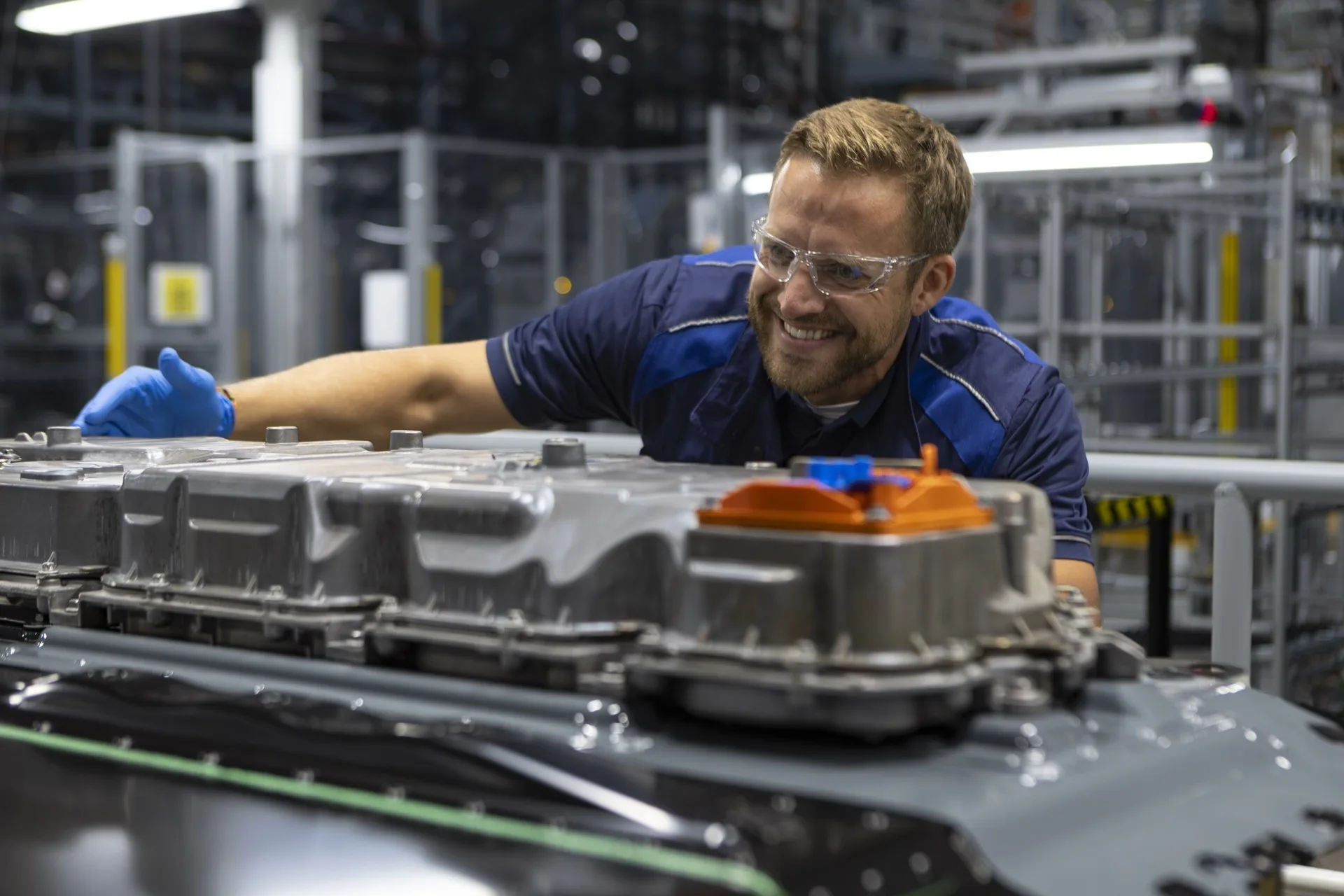
The company marked completion of the programme in June 2026. Plant Woodruff started series production of Gen6 batteries on 13 November. It sits about 24 km from Spartanburg, shortening the trip between pack assembly and vehicle installation. Woodruff does not manufacture battery cells. Suppliers provide the cylindrical cells, which are checked, clustered and incorporated directly into packs using a cell-to-pack design.
More than 300 employees work alongside about 250 robots at the new plant. BMW says every finished battery receives a complete end-of-line inspection. The manufacturer claims its Gen6 round cells provide more than 20 per cent higher energy density, reduce charging time by up to 30 per cent and raise range by 30 per cent compared with the previous cell generation. Those are technology-level manufacturer comparisons, not independently tested figures for every vehicle.
The iX5 starts BMW's US electric production
The BMW iX5 is the first fully electric BMW assembled in the United States. Production at Spartanburg begins in late 2026, using battery packs from Woodruff. BMW plans to assemble at least six fully electric models in the US by 2030 while retaining the plant's ability to build combustion-engine and plug-in hybrid vehicles. The new X5 family is also intended to include a future hydrogen fuel-cell derivative.
Spartanburg is BMW's largest production site worldwide and the global centre for its X models. It built 412,799 vehicles in 2025. About half of current output is exported to nearly 120 countries. BMW says the site has exported almost three million vehicles with a cumulative value above $113 billion since production began.
That two-way flow is central to the company's case. BMW builds large numbers of SUVs in the United States for customers elsewhere, yet imports US-market cars that Spartanburg does not produce, including models from the 3 Series and 4 Series ranges. Duties can therefore affect the imported side of the business even while the factory supports American employment and exports.
BMW also says its operations across the country support more than 120,000 jobs and contribute $43.3 billion annually to the US economy. A University of South Carolina study cited by the company attributes 55,327 jobs and $36.1 billion in annual economic impact within South Carolina to BMW's manufacturing activity. These are company-presented economic-impact findings, separate from the tariff negotiation itself.
What tariff relief could mean for customers
A customs reduction would not automatically produce an equal cut in showroom prices. BMW could use any benefit to absorb costs, protect margins, fund incentives or avoid later increases. Retail pricing also reflects transport, exchange rates, specification, inventories and dealer strategy. Until the terms exist, there is no defensible per-car saving to calculate.
For European customers, the immediate effect is less direct than for American buyers of imported BMWs. Spartanburg nevertheless exports many X models, so changes in trade costs can affect where production is allocated and how vehicles move between markets. BMW has not announced a Romanian or wider European price adjustment connected with these US talks.
The next meaningful development would be an official US decision setting out eligible vehicles or components, the calculation period and any connection between local output, exports and imports. For now, the factories are tangible: the $1.7 billion programme is complete, Woodruff is building batteries and Spartanburg is starting the iX5. The tariff benefit remains an unresolved request.