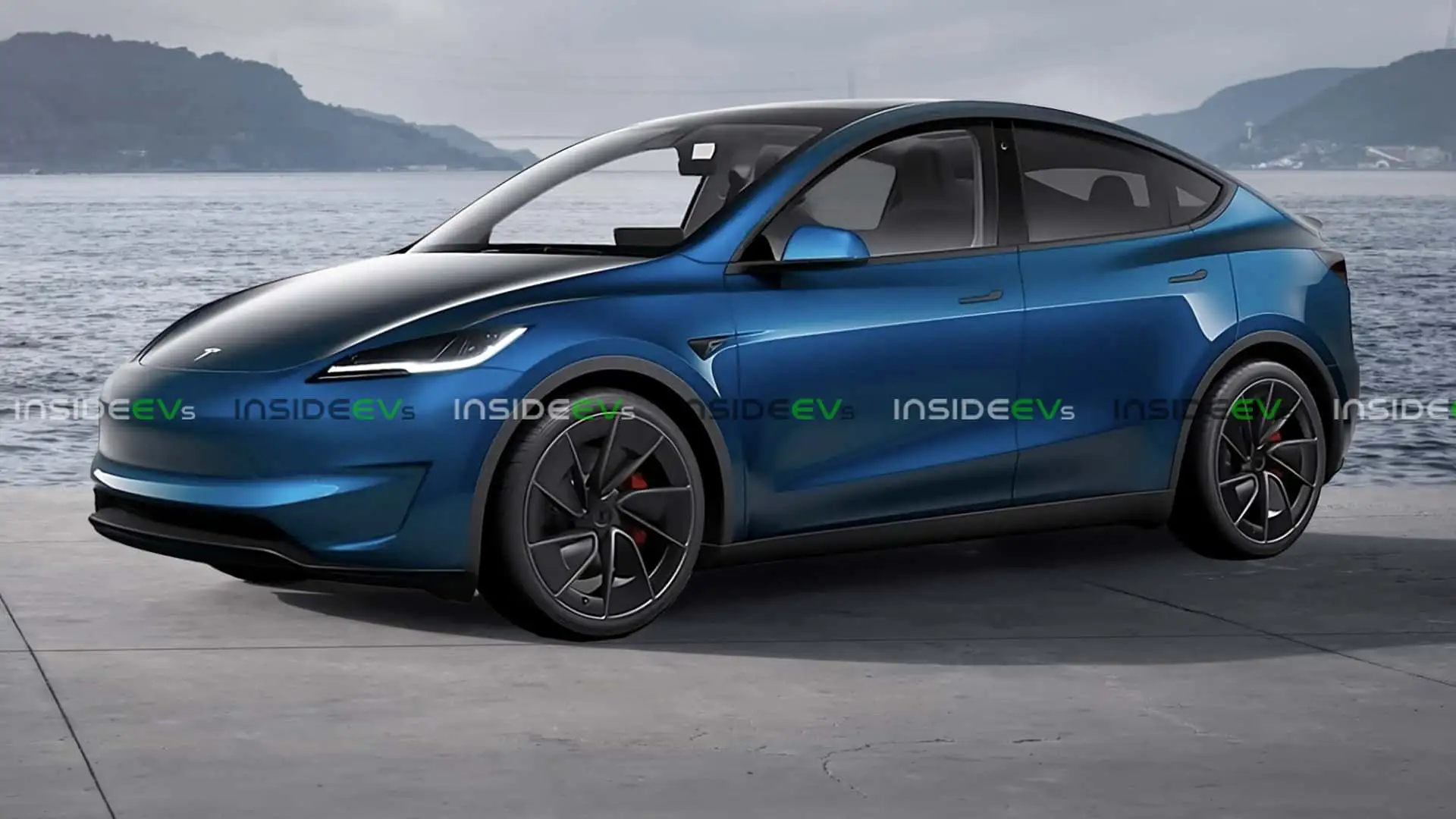
Tesla’s Model Y was Europe’s best-selling individual car in September 2026, according to preliminary Dataforce registration figures. The electric SUV recorded 40,971 registrations across the European market covered by the dataset. Tesla’s Model 3 followed with 25,057 registrations, while the Volkswagen Golf ranked third with 18,088.
The figures cover the European Union, the United Kingdom, Iceland, Norway and Switzerland. Dataforce’s database was approximately 98 per cent complete when the figures were reported, so the order should be treated as preliminary. The European Automobile Manufacturers’ Association had scheduled its official September passenger-car release for 22 October 2026, after this early ranking was published.
A Tesla one-two at the top
The two Tesla models were not separated by a small margin. Model Y registered 22,883 more cars than the Volkswagen Golf, while Model 3 was 6,969 units ahead of the German hatchback. The Model Y result was up 55 per cent from September 2025. Model 3 registrations more than doubled year on year, rising 106 per cent in the preliminary comparison.
Those percentages describe registrations, not orders or production. A registration is recorded when a vehicle enters a national registration system. It can reflect deliveries to private buyers, company fleets, leasing customers or other channels, and the timing of registrations can vary between countries. The data therefore shows what entered the market during September, but does not by itself explain every reason behind the increase.
The result also shows why monthly Tesla figures can be volatile. The company delivered 66,035 vehicles under the Tesla brand in the same European dataset. Model Y alone therefore represented a large share of the brand’s monthly registrations, with Model 3 providing most of the balance. AutoWeek’s comparison placed Tesla ahead of the total September volumes recorded for Opel and Ford as individual brands, at 38,071 and 36,579 registrations respectively.
That is a comparison between one model and an entire brand, so it should not be read as a conventional product-versus-product result. It does illustrate the scale of Tesla’s September peak. It also makes clear why a brand total and a model ranking must be kept separate when reading registration tables.
Volkswagen Golf remains the leading conventional model
The Volkswagen Golf was third overall with 18,088 registrations. It was the highest-ranked model outside Tesla’s two-car lead in the preliminary table. The Golf’s position matters because it provides a useful reference against which the unusually large Tesla totals can be measured: the electric models were not merely leading a battery-electric subcategory, but the combined European model ranking for the month.
The sixth-placed Jaecoo 7 added another element to the September picture. The Chinese SUV recorded 15,470 registrations in the dataset and entered the reported top 10. A single model’s result does not establish a brand’s long-term market position, especially when a market includes different launch schedules and stock conditions. It does show that newer Chinese products are now appearing in the same monthly conversation as established European nameplates.
September was not the same as the year-to-date market
The monthly ranking should not be confused with the European table accumulated through August. ACI’s Automobil Club magazine, citing Dataforce, reported Dacia Sandero as the year-to-date leader after the first eight months of 2026, with 145,424 registrations. Renault Clio followed with 128,941, while Tesla Model Y was fifth with 126,395.
That distinction is important. Tesla’s September result was large enough to change the annual order once it is added, but the final year-to-date positions cannot be known from the preliminary monthly table alone. Sandero and Clio built their totals across eight months; Model Y’s September result is one additional month in a longer series.
The powertrain context also comes from a different period. ACEA’s latest available EU release, covering January through August, put battery-electric cars at 21.7 per cent of new-car registrations. Hybrid-electric cars accounted for 36.6 per cent, plug-in hybrids for 10 per cent, and petrol and diesel together for 29 per cent. These figures cover the EU rather than the wider EU-plus-EFTA-and-UK geography used for the preliminary model ranking.
What the final data should clarify
The next useful check is the completed dataset. Countries that had not yet reported at the time of the preliminary calculation can change individual model totals and, in a close ranking, potentially alter positions. ACEA’s scheduled release will also provide the official EU-wide market context for September, although its aggregate tables are not identical to the Dataforce model table.
The second question is whether Tesla can repeat the volume in the final quarter. September was a strong month for both Model Y and Model 3, but a three-month trend is more informative than a single peak. October and November registrations will show whether the September result reflected sustained demand, delivery timing, or a combination of both.
For European buyers, the ranking is a market indicator rather than a buying recommendation. It does not show local prices, waiting times, equipment, insurance costs or ownership experience. It does show that, in the preliminary September data, two Tesla models occupied the first two positions, the Volkswagen Golf was third, and the Jaecoo 7 had reached the top 10.
Image: Tesla press image reused from an existing verified local asset. Commercial reuse and campaign licensing should be confirmed by the publisher before paid distribution.