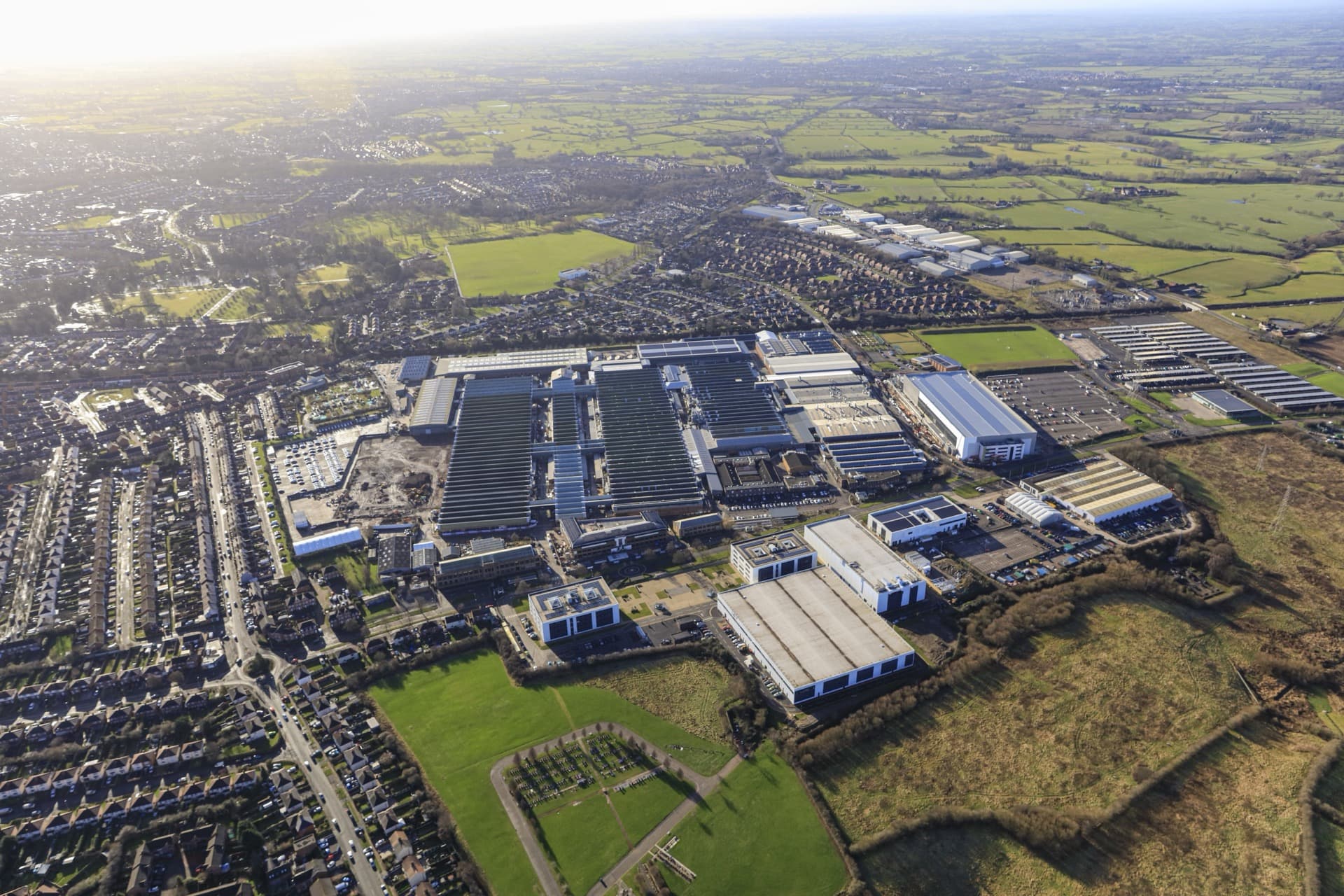
The Supervisory Board unanimously approved Future Plan 2030. Photo source: Volkswagen Group
Volkswagen approves its 2030 plan: 50,000 fewer jobs and a model range cut by half
The Supervisory Board of Volkswagen Group has unanimously approved Future Plan 2030, a restructuring programme that changes the scale of production, the number of models, investment and the organisation of Europe’s largest carmaker.
The plan targets a 9% operating margin in 2030 and involves about 50,000 fewer jobs worldwide, including management roles. The company presents this adjustment as necessary beyond programmes already agreed, which covered another roughly 50,000 jobs at Volkswagen, Audi, Porsche and the software division CARIAD.
Volkswagen has not yet published how the new cuts will be split by country, brand and plant. Measures that require employee agreement will be negotiated with their representatives.
The main figures in Future Plan 2030
| Objective | Announced target |
|---|---|
| Planned annual sales | 9 million vehicles |
| Operating margin in 2030 | 9% |
| Corresponding operating result | about €31 billion |
| Administrative expenses | €37 billion |
| Investment and R&D in 2027–2031 | €135 billion |
| Range reduction by 2035 | about 50% |
| Reduction in offer complexity | about 75% |
| Additional staffing adjustment | about 50,000 jobs |
| Estimated overcapacity in Europe | more than 500,000 vehicles a year |
The sums and volumes are targets, not guaranteed results. Individual investment projects and research budgets will be validated separately in the group’s next formal planning round.
Fewer models and far fewer combinations
Volkswagen wants to cut the number of models in the group portfolio by about half by 2035. In parallel, the number of equipment variants and available combinations is due to fall by around 75%.
The company is aiming for higher volumes for each remaining model, lower development and production costs and better economies of scale. No list of models that will disappear has been published, and the percentage refers to the whole group, not only the Volkswagen brand.
The portfolio includes brands with very different positions, among them Volkswagen, Škoda, SEAT, CUPRA, Audi, Porsche, Bentley and Lamborghini. Reducing overlap can affect both low-selling models and body, powertrain or equipment versions that add cost without enough volume.
Two technology directions, for the West and China
Future Plan 2030 does not provide a single global architecture for all markets. Volkswagen says platforms, electronic architectures, assistance systems and software will be concentrated according to the requirements of the western and eastern hemispheres.
That wording confirms the regionalisation of development. In China, where launch cadence and digital ecosystems differ from Europe’s, the group already works with local partners. For Europe and North America, safety requirements, data protection, connectivity and buyer preferences lead to other configurations.
The aim is to eliminate parallel technical structures where they do not add value, without trying to impose the same solution on incompatible markets.
Four German plants do not have future production secured
The group estimates that its European network has capacity more than 500,000 cars a year above demand. By the end of June 2027 a new plan for the production structure in Europe must be drawn up.
Volkswagen says it cannot currently secure a competitive production allocation for the plants in Emden, Zwickau, Hanover and Neckarsulm, staged between 2031 and 2034. The company is examining alternative uses for these factories.
This is not yet a formal closure decision. It does mean, however, that the plants do not have enough car projects guaranteed after the dates mentioned, and their future will depend on negotiations, costs and possible new activities.
From capacity for 12 million to a target of 9 million
Before the pandemic, Volkswagen had invested in a network able to produce about 12 million vehicles a year. The group says it has already removed capacity equivalent to two million units, and the new target is to size the business for about nine million vehicles a year.
The gap shows that the plan does not rest on a rapid return to historic volumes. Management starts from a relatively stable sales scenario and is trying to extract higher profitability from a smaller structure.
For 2030, the group is aiming for an operating result of about €31 billion and a 9% margin. By comparison, Volkswagen indicated for the first half of 2026 a margin of about 3.8%, which shows the scale of the improvement it is pursuing.
€135 billion of investment, but a narrower portfolio
Between 2027 and 2031, Volkswagen intends to allocate €135 billion to investment and research and development. Capital will be concentrated on products, technologies and activities considered essential to the car business.
At the same time, the portfolio of holdings and secondary businesses is due to be reduced by about a third. Assets without a sufficient strategic or financial contribution may be sold or reorganised, and real-estate properties will be reassessed.
The plan also includes simpler management structures, clearer responsibilities, faster decisions and a common system for evaluating and bonus-paying managers.
What the plan could mean for Romania
Volkswagen does not operate its own car-assembly plant in Romania, so the announcement about the four German factories has no direct effect on local production. The group does, however, have a significant commercial presence through Volkswagen, Škoda, Audi, CUPRA, SEAT and Porsche, and suppliers in Romania form part of the European automotive industry chain.
For Romanian buyers, the most visible effect may be a simpler offer: fewer niche models, fewer engine and equipment combinations and a greater emphasis on cars that can be sold in high volumes. There is not yet a list that would identify the models to be withdrawn from Romania.
For suppliers, a cut in European capacity may mean lower volumes on certain projects, but investment in new platforms, software and electrification may create other contracts. The impact will depend on how models are actually allocated and on decisions taken in the coming years.