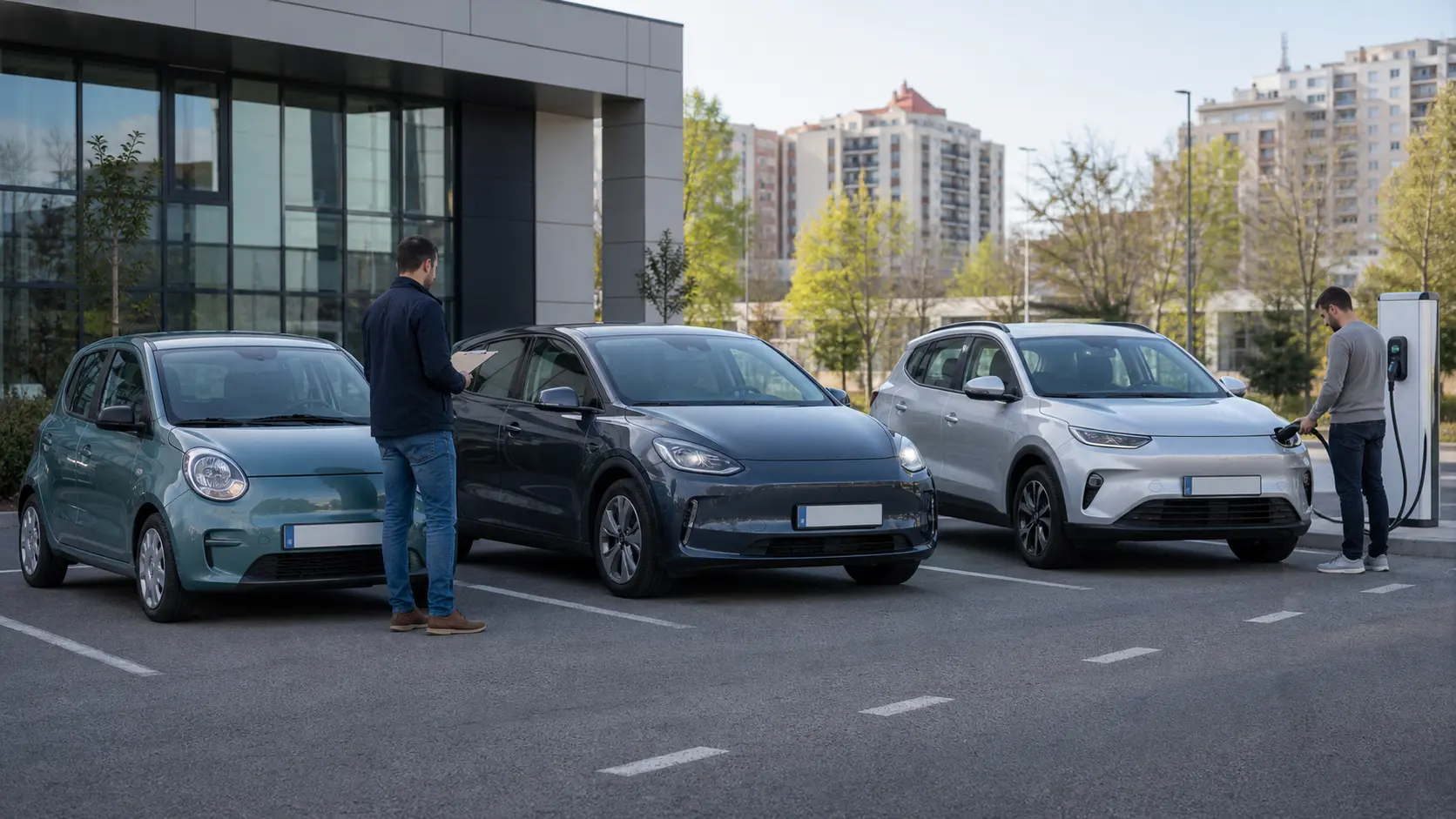
The UK version of a €50,000 family-SUV shortlist needs a sterling ceiling. For this guide, the working limit is £50,000 on the road, including VAT and the manufacturer’s stated delivery or registration charges where the price list includes them. That is not the same as a monthly finance payment or a headline price after a deposit contribution. A car can be under the limit in one trim and over it after paint, a panoramic roof, larger wheels and a driver-assistance pack.
The ten cars below are sold through the UK manufacturer or dealer network in versions that can fit the limit. Availability changes quickly, so every buyer should save the national price list or online configurator page used for the quotation. The shortlist is deliberately mixed: five-seat crossovers, larger family cars, one seven-seat option, hybrids, plug-in hybrids, petrol cars and an electric model. They do not serve the same family.
What a family should measure first
Boot volume is only a starting point. Check whether the manufacturer measures to the parcel shelf, whether the floor has a useful lower position and whether a pushchair can pass through the tailgate opening without being folded twice. Measure the width between wheel arches. A deep boot can still be awkward if a weekly shop slides below the reach of a child’s car seat.
The second test is the rear bench. Fit the actual rear-facing seat behind the taller parent, then try a second seat beside it. Check the ISOFIX guides, buckle access and whether the front seat can still recline. A nominal five-seat SUV may be comfortable for two children but unsuitable for three across. A seven-seat SUV may have a useful third row for children while leaving little room for luggage when all seats are raised.
Safety scores need a date and a test configuration. Euro NCAP results are not interchangeable across years, and standard equipment can differ between markets. Read the UK specification sheet, then check the car’s current rating and the behaviour of lane and speed assistance systems during a test drive.
1. Škoda Kodiaq: the family-space option
The Kodiaq is the clearest choice here for families who genuinely need seven seats. Škoda UK lists the range from £39,045, with five- and seven-seat versions and selected plug-in hybrid derivatives. The exact on-the-road price depends on the trim, seats, powertrain and options. The seven-seat layout should be treated as flexible family capacity rather than a promise of a large luggage compartment with every seat occupied.
Its strengths are access, a long cabin and the ability to move the second row to balance legroom and luggage. Before ordering, sit in the third row and fold the middle seats from the position a child will use. Check whether the child can reach the belt, whether a booster interferes with the folding mechanism and whether the tailgate clears the garage. Larger wheels may look attractive but can make replacement tyres and ride quality more expensive.
Choose the Kodiaq if school runs, grandparents and holiday luggage are all part of normal use. If the third row is used once a year, a smaller SUV plus occasional rail or taxi travel may be cheaper to own.
2. Kia Sportage: a broad range with clear UK pricing
The current Kia UK price guide gives the Sportage a useful reference point. Petrol versions start at £31,395 on the road, while the listed hybrid range begins at £34,895; the published guide also includes plug-in hybrid versions below £50,000 in several trims. The guide separates VAT, first registration fee, delivery, vehicle excise duty and the P11D value, which makes it more useful than a single “from” number.
Sportage suits a two-child family that wants a conventional cabin and a choice of petrol, hybrid or plug-in power. The hybrid is the easier answer for mixed urban driving when there is no home charger. The PHEV is worth considering when daily mileage is short and charging is routine. A plug-in SUV that is rarely charged is heavier and may cost more without delivering its intended benefit.
Kia’s seven-year/100,000-mile warranty is subject to its terms and maintenance requirements. Ask the dealer for the service schedule, exclusions and transfer conditions. The GT-Line S can approach the budget once paint and accessories are added, so compare a mid-grade car with the safety equipment you actually need rather than shopping by trim name.
3. Hyundai Tucson: the compact family default
The Tucson occupies the same practical territory as the Sportage. UK availability and pricing should be checked on Hyundai’s configurator because powertrains and grades are revised. Petrol, hybrid and plug-in hybrid versions have all been offered in the UK range, but the model and trim shown in a search result may not be the one available to order.
Tucson works well for a family with two children, especially where the car must fit an urban parking space as well as a motorway holiday. Bring the pushchair to the dealer. Check the width of the rear doors, the angle of the seat base and whether a rear-facing seat obscures the driver’s view. For a PHEV, inspect the boot floor and charging equipment; official boot figures can vary by powertrain.
The right Tucson is the one with the correct safety and parking equipment, not necessarily the most powerful engine. Price insurance before signing. A high-spec hybrid can be more expensive to insure and replace at tyre time than the base model suggests.
4. Toyota RAV4: hybrid use without a home charger
The RAV4 is usually near the top of this budget. Toyota UK provides the model page and price list for the current plug-in range; use the official on-the-road figure for the exact grade, because registration charges, options and CO₂-related tax can affect the total. A used or nearly-new RAV4 may widen the choice, but the battery warranty and service history must be documented.
The self-charging hybrid is a good fit for drivers who cover urban and regional miles but cannot install a wallbox. It does not need external charging. A PHEV is a different proposition: its electric running is valuable when the owner can charge at home or work. Compare the rear bench with your seats and check the boot after fitting the charging cable and luggage organiser.
RAV4 ownership is not only about fuel. Budget for comprehensive insurance, 18- or 19-inch tyres depending on grade, servicing and roadside cover. The car’s size is manageable on the road but less convenient in older multi-storey car parks.
5. Dacia Bigster: maximum room for a lower entry price
The Bigster is a five-seat family SUV sold in the UK as part of Dacia’s range. Dacia UK’s configurator is the appropriate place to check the cash price, grade, engine and delivery position. Do not convert the Romanian price or a continental promotion into a UK recommendation: VAT, specification, finance and registration charges are market-specific.
Bigster’s appeal is straightforward. It offers more body and luggage space than the smaller Duster without asking the buyer to spend the whole budget. Petrol, hybrid and, depending on the current UK line-up, electrified variants should be compared for annual mileage and charging access. A basic trim may leave the owner adding equipment that is standard on a more expensive rival, so compare the final quote rather than the starting figure.
Take the family’s pushchair and check the loading lip. Inspect the rear vents, USB points, seat-back pockets and the location of the ISOFIX points. Dacia’s simpler specification can be a benefit for long-term ownership, but tyre noise, seat comfort and the quality of driver assistance need to be judged on the road.
6. Nissan Qashqai: easy to place on a UK driveway
The Qashqai remains a useful middle-ground SUV for a family that wants a compact footprint with a higher driving position. Nissan UK’s configurator and price list should be used for the current grade and e-POWER or mild-hybrid availability. A specification that appears under £50,000 can cross the ceiling with optional paint, a technology pack or dealer accessories.
Qashqai’s appeal is its familiarity and manageable width. It is easier to place on a narrow street than the Kodiaq and more comfortable for longer trips than many small crossovers. Test the rear doors against the parking bay and confirm that a rear-facing seat does not make the front passenger unusable. The boot may be enough for a compact pushchair and weekly shopping, but a full holiday load requires a trial.
7. Honda CR-V: a larger hybrid with a service question
Honda UK sells the CR-V in hybrid and plug-in hybrid forms, with the exact price and specification listed by the national site. Some versions can sit close to or above the limit once on-the-road charges and options are included, so a written quotation is essential. The CR-V is worth considering for families who spend many hours on motorways and want generous rear-seat space.
The hybrid avoids the need for a wallbox, while the PHEV is useful only if charging is part of the routine. Check how the rear seat folds, the boot opening height and the price of a replacement tyre. Honda’s dealer network is smaller than that of some high-volume brands in parts of the UK; map the nearest authorised service point before buying.
8. Volkswagen Tiguan: a configurable five-seater
The Tiguan is the compact-to-medium option for buyers who want a broad choice of equipment and powertrains. Volkswagen UK’s online builder is the only reliable way to see whether a chosen engine and trim stay under £50,000. A car with a long option list may no longer be a budget purchase even when the base model is.
The sliding rear bench can help balance child-seat legroom and luggage. Check whether your car has three usable rear positions or simply three belts. Plug-in versions need a boot and cable inspection; petrol and mild-hybrid cars need a service and fuel-cost estimate based on your driving rather than the brochure’s combined figure.
9. Renault Austral: efficient family space without seven seats
The Austral is a five-seat alternative for buyers who do not need a third row. Renault UK’s configurator should be checked for the current mild-hybrid or full-hybrid grades and the on-the-road total. The sliding rear bench is useful, but moving it forward for boot capacity can reduce the space available for a rear-facing seat.
The Austral is best assessed as an everyday family car: school traffic, supermarket loading and weekend motorway work. Test the infotainment, camera visibility and warning systems. Ask what is covered by the service plan and whether the quoted price includes the connected-services period shown in the offer.
10. Kia EV3: an electric family car for a home-charging household
The EV3 is a compact electric SUV. Kia UK lists the model and its grants or offers separately; the buyer should record the exact battery, trim, on-the-road price and delivery date. An electric car under £50,000 can still be costly if public charging is the main energy source or if home installation is difficult.
For a family, the questions are practical: can the pushchair fit without using the front storage, is there enough rear-seat width, and can the home charger be installed at the parking space? Plan longer journeys using the car’s charging curve, motorway chargers and winter conditions. A claimed range is a test-cycle figure, not a guarantee at 70 mph with a full load and a roof box.
UK tax, grants, charging and servicing
Vehicle Excise Duty must be checked using the current GOV.UK rules and the vehicle’s first-registration date. The expensive-car supplement can apply to cars above the relevant list-price threshold during the applicable period, even when the purchase price is reduced by a promotion. Company-car users need a separate Benefit-in-Kind calculation. The dealer’s P11D figure is not the same as the private buyer’s cash cost.
The former plug-in-car grant is not a general private-car discount. Current support, if any, should be checked on GOV.UK and with the manufacturer. For an EV or PHEV, obtain a home-charger quotation, ask about the supplied cable, and compare the public charging tariff with the petrol or diesel alternative. Service plans can make monthly costs predictable, but read mileage limits and consumables.
A test-drive checklist that matters
Bring the child seats, pushchair and one holiday bag. Fit the rear-facing seat, move the front seat to the parent’s position, then load the boot. Try the tailgate in a garage. Check the view over the shoulder, not only the camera. On a mixed route, listen for tyre noise and note how the gearbox responds in traffic. Ask to see the exact car’s equipment list and the date of the price sheet.
Verdict
Kodiaq is the strongest option for genuine seven-seat use. Sportage, Tucson, Qashqai and Tiguan are the sensible middle ground for two children. Bigster offers the most space for a lower entry price, while RAV4 and CR-V suit high-mileage families that want hybrid power without depending on charging. EV3 is credible where home charging is available. The best purchase is the model that still fits after tax, tyres, insurance, service and the family’s real luggage are included.
UK primary sources and price checks
- Kia UK Sportage price guide — on-the-road prices, VAT, delivery, VED and P11D.
- Škoda UK Kodiaq range — grades, seats and starting price.
- Toyota UK RAV4 — current model and price-list link.
- Dacia UK Bigster — UK cash-price check.
- Nissan UK — Qashqai configurator and offers.
- Volkswagen UK — Tiguan configuration and pricing.
- GOV.UK vehicle tax — current VED rules.
- Euro NCAP — dated safety results and test protocols.