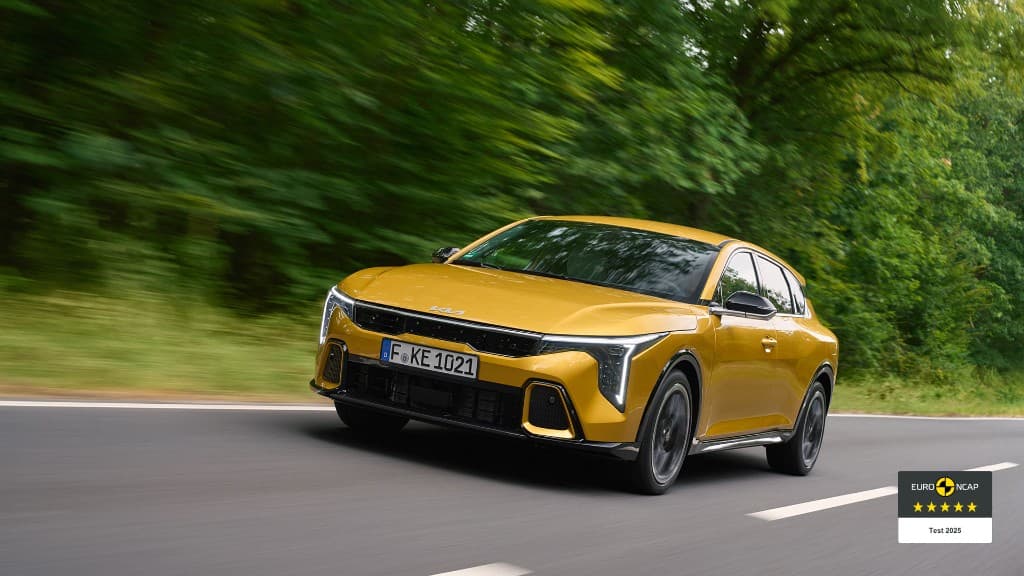
A “hybrid” label in an advert does not confirm the technology or the battery’s condition. Illustrative image; the cars do not represent specific models or brands.
7 used full-hybrid cars under €15,000 in Romania in 2026
The short answer
With a budget of at most €15,000, the shortlist starts with Toyota Auris Hybrid, Toyota Yaris Hybrid, Toyota Prius, Lexus CT 200h and Hyundai Ioniq Hybrid. Kia Niro Hybrid and Renault Clio E-Tech Hybrid can fall under the cap, but they usually sit closer to the budget limit and take patience to find.
There is no “reliable” model independent of the individual car. On a used hybrid, what matters is the traction-battery report, service history, battery cooling, the 12 V battery, accident damage and how the transmission behaves. Toyota and Lexus use a hybrid transaxle with a power-split device, sold as e-CVT; Ioniq and Niro have a six-speed dual-clutch gearbox; Clio uses a clutchless multi-mode transmission. The tests are not the same.
On 30 August 2026, the public CautiMasina filter for listings in Romania tagged “hybrid” and priced at a maximum of €15,000 showed 2,189 aggregated results. The figure does not mean 2,189 verified full hybrids: even the first page contained duplicates and cars that were clearly miscategorised. Treat the inventory as a starting point, then confirm the technology, VIN, paperwork and the physical car.
| Model to watch | Relevant system in this budget | Transmission | Who it suits | Risk to check separately |
|---|---|---|---|---|
| Toyota Auris Hybrid | 1.8 Hybrid, 136 hp | hybrid e-CVT | family compact, city and commuting | battery, cooling, fleet history |
| Toyota Yaris Hybrid | 1.5 Hybrid, 100 hp; rarely the 116 hp generation | hybrid e-CVT | city, parking, short commute | urban wear, 12 V battery, accident damage |
| Toyota Prius | 1.8 Hybrid, 136 hp or 122 hp, depending on generation | hybrid e-CVT | efficiency, space, mixed mileage | taxi/ride-hailing, mileage, catalytic converter |
| Lexus CT 200h | 1.8 Hybrid, 136 hp | hybrid e-CVT | a better-finished compact | Lexus costs, suspension, accident damage |
| Hyundai Ioniq Hybrid | 1.6 GDi, 141 hp | 6-speed DCT | commuting and efficient long trips | clutches, DCT actuation, software updates |
| Kia Niro Hybrid | 1.6 GDi, 141 hp | 6-speed DCT | small family, access and boot space | DCT, HEV/PHEV/EV distinction |
| Renault Clio E-Tech Hybrid | 1.6, 140 or 145 hp | clutchless multi-mode | city, a newer car | software, mode transitions, thin supply |
Power and specification must be checked in the car’s documents. Model year, market of origin and range updates can change the figures.
What full hybrid means and how to separate it from mild hybrid or PHEV
A full hybrid (HEV) can move the car on electric power alone and can run electrically for short stretches without plugging in. The battery charges through energy recovery and with help from the petrol engine. It must not be confused with the tens of kilometres of electric range of a plug-in hybrid.
A mild hybrid uses the electric motor mainly for assistance, recovery and starting. It does not usually propel the car on its own in the same conditions as a full hybrid. A PHEV has a charging port and a larger battery. If the advert only says “hybrid”, check the full powertrain name and the codes in the papers.
The quick questions are:
- Is there a charging port? If yes, it is a PHEV, not the HEV in this list.
- What is the exact engine code and the power in the CIV?
- Is there a written report for the battery and hybrid system?
- What transmission does that configuration use?
- Has the VIN been checked for history and technical campaigns?
For choosing between technologies, the guide full hybrid or plug-in hybrid explains the differences in use.
1. Toyota Auris Hybrid: the starting point for a family compact
Auris Hybrid is one of the most logical searches in this budget because it combines Toyota’s 1.8-litre, 136 hp system with a conventional compact body. There are hatchback and Touring Sports versions; the estate is worth watching if you need boot space, but do not assume every “Auris” result has the right body or engine.
On the Auris, Toyota used a hybrid e-CVT transaxle, with no conventional clutch, torque converter or CVT belt. Engine speed can rise under acceleration without road speed climbing at the same rate; that is not, by itself, a fault. Mechanical noises, vibration, warning lights or interruptions do, however, need investigation.
At the viewing:
- ask for the Hybrid Health Check report, if it exists, with VIN, date and mileage;
- check the battery air intake and cooling fan, especially after use with pets or a lot of dust;
- test a cold engine, regenerative braking and a sustained acceleration after warm-up;
- inspect the 12 V battery, brakes and tyres separately from the traction battery;
- check whether the car worked in a fleet, ride-hailing or courier work;
- on Touring Sports, inspect the tailgate, boot floor and signs of water ingress.
The Toyota Hybrid Service programme describes Hybrid Health Check as a check of the whole system, followed by a written report. An old certificate shows the condition on the test date; it does not replace the inspection on the day of purchase.
2. Toyota Yaris Hybrid: good in town, but many examples have lived only in town
Yaris Hybrid is the most compact choice on the list. Under €15,000 you will mainly find the generation with a 1.5-litre engine, nickel-metal hydride battery and e-CVT transaxle, launched in Europe with a total output of 100 hp. The next generation uses a 1.5-litre, 116 hp system with a lithium-ion battery in the initial European specification; examples that come under the cap need close attention to price, history and accident damage.
The size helps with parking, but repeated urban use can leave other traces: repaired sills and bumpers, kerbed wheels, uneven tyre wear, corroded brakes and a worn interior. A low annual average does not guarantee an easy life.
Check:
- generation and exact power from the papers;
- HHC history and annual services, not mileage alone;
- the 12 V battery and that all control units start without warnings;
- climate control, because cabin cooling and hybrid-system operation must be tested when warm;
- geometry, wheels and paint in areas exposed to urban parking;
- rear-seat space and the boot with the objects you use daily.
Toyota states in documentation for the first-generation Yaris Hybrid the 1.5-litre engine, NiMH battery and CVT transmission. The generation launched in 2020 moved to the 116 hp system. Do not mix parts, batteries or procedures between generations.
3. Toyota Prius: very efficient, with a higher risk of commercial use
Prius offers more space than Yaris and a body shaped for consumption. In this budget the third generation can appear, with a 1.8-litre, 136 hp system, and the fourth generation, with 122 hp. The generation change alters the platform, battery, safety and price; do not buy “a Prius” without establishing the exact year and version.
The model has often been used as a taxi or for alternative transport in many markets. That does not automatically condemn the car, but it does require a check of real wear. Look at the steering wheel, pedals, driver’s seat, handles, seatbelts and rear bench. Compare those traces with mileage, invoices, inspection history and RAR Auto-Pass.
Check separately:
- taxi, fleet or ride-hailing history in the country of origin;
- the hybrid battery and differences between blocks, using the procedure for that generation;
- battery cooling, which can collect dust and lint after high mileage;
- oil consumption, leaks and the engine cooling-system history;
- the catalytic converter’s condition and signs of a replacement or a theft;
- brakes, bearings and suspension after many kilometres in town.
Toyota describes the fourth-generation Prius as the first Prius built on the TNGA platform. The sheet for the 2020 model lists the 1.8-litre engine, hybrid automatic transmission and 122 hp. For the third generation, confirm the 136 hp configuration separately from the documentation for that year.
4. Lexus CT 200h: Toyota hardware, Lexus costs
CT 200h uses a 1.8-litre, 136 hp full-hybrid system and e-CVT, close to that of the Auris. The body is lower, the finish more careful, and the suspension and wheels can change the ownership experience. The premium badge does not make the battery easier to assess, nor body parts cheaper.
The model suits someone who wants a well-insulated compact and does not need a large rear seat or boot. On F Sport equipment, check wheel size, tyres and ride over bumps before paying a deposit. A price identical to an Auris does not mean identical costs after purchase.
Ask for quotes by VIN for:
- brakes, dampers, control arms and bearings;
- headlights, sensors, body parts and calibration after accident repairs;
- tyres in the homologated size;
- the 12 V battery and any stored electronic faults;
- a Lexus/Toyota check of the hybrid system.
Lexus lists for the 2019-range CT 200h the 1.8-litre engine, 136 hp total output and e-CVT transmission. Those figures say nothing about the condition of a ten-year-old example; the inspection report remains decisive.
5. Hyundai Ioniq Hybrid: efficient for commuting, with a DCT to test separately
Ioniq Hybrid changes the transmission type. The system combines the 1.6 GDi engine with an electric motor, a 1.56 kWh lithium-ion polymer battery and a six-speed dual-clutch gearbox. Total output is 141 hp. Do not treat the transmission as a Toyota e-CVT.
The aerodynamic shape and wheelbase suit commuting and mixed roads. The hatch helps loading, but the split rear window and low stance need to be tried. The stock can mix Ioniq Hybrid, Plug-in and Electric; only the first is the HEV described here.
The DCT test must be done:
- with the car cold, in forward and reverse;
- on a gentle pull-away on a slope;
- in slow traffic, with repeated stops;
- under progressive acceleration and downshifts;
- after warm-up, repeating the slow manoeuvres;
- with diagnosis for the transmission, hybrid system and recently cleared faults.
Hyundai confirms in the European Ioniq sheet the 141 hp system, 1.56 kWh battery and 32 kW electric motor. Technical documentation specifies a 6DCT transmission. Ask for invoices for clutch work, actuation, fluid and software updates.
6. Kia Niro Hybrid: more practical, but close to the ceiling
First-generation Niro Hybrid uses the same basic idea as Ioniq: 1.6 GDi engine, 1.56 kWh lithium-ion polymer battery, 32 kW electric motor and a six-speed DCT, for 141 hp. The body is taller and more practical for a family, but good prices often approach €15,000.
Niro was sold as Hybrid, Plug-in Hybrid and Electric. Confirm the version in the papers; battery capacity and the presence of a charging port remove the confusion. A listing with “Niro hybrid” and unclear photos is not enough.
At inspection check:
- the DCT cold and hot, in the same regimes as Ioniq;
- the hybrid battery, cooling and the 12 V battery;
- suspension and geometry, including tyre wear;
- the boot floor and signs of rear repairs;
- all cameras, sensors and assistance systems;
- the terms of any remaining warranty, confirmed by VIN and history.
The official Kia Niro technical sheet for Europe publishes 141 hp, the 1.56 kWh battery and the six-speed DCT. A Niro priced well below comparable cars must be explained by year, mileage, history and mechanical condition, not treated automatically as a bargain.
7. Renault Clio E-Tech Hybrid: the newest, but also the rarest under the cap
Clio E-Tech Hybrid arrived in Romania in 2020 with a 140 hp system: a 1.6-litre petrol engine, two electric motors, a 1.2 kWh battery and a clutchless multi-mode transmission. Later versions are presented at 145 hp. Under €15,000, examples must be selected carefully because the model is newer than Auris, Prius or CT.
The transmission is neither a DCT nor a Toyota e-CVT. The system combines ratios for the petrol engine and for the electric motor. Engine speed, engine start and mode changes depend on load, temperature and battery level. Strong jolts, error messages or repeatable delays must be documented and checked in a workshop familiar with E-Tech.
Check:
- that the offer is E-Tech Hybrid, not TCe mild hybrid and not an LPG version;
- software updates and technical campaigns by VIN;
- a cold start, manoeuvres, a slope and acceleration after warm-up;
- the 12 V battery, hybrid system and complete service history;
- frontal damage and camera or radar calibration;
- rear space and the boot, smaller than on Niro.
Renault Romania describes Clio E-Tech Hybrid 140 with the 1.2 kWh battery, two electric motors and a clutchless multi-mode gearbox. The current page for Clio full hybrid E-Tech lists the 145 hp version; the car’s papers establish the specification that was bought.
How to check a full hybrid’s battery
The charge indicator on the dashboard is not a health test. A few minutes of electric running in a car park does not measure usable capacity. The system keeps the battery in a controlled window, and temperature, terrain and load quickly change the displayed level.
Ask a workshop that knows the model for:
- a scan of all modules before faults are cleared;
- a battery test using the manufacturer’s procedure;
- a check of differences between blocks or modules, where diagnosis exposes them;
- inspection of temperatures, the air intake and the cooling fan;
- a check of the orange cables and high-voltage system insulation;
- a separate 12 V battery test;
- a report with VIN, mileage, date and results;
- an urban and extra-urban road test, cold and after warm-up.
The report must be read in context. A passed test does not automatically confirm the petrol engine, transmission, brakes, body or history. The guide on checking a used full-hybrid car details the procedure.
How to choose the model by use
For the city and easy parking
Yaris Hybrid is the starting point. Clio E-Tech can be newer and more modern inside, but it will be rarer under the cap. Try the rear seat and boot; a small car is not automatically suitable for a family.
For family and commuting
Auris hatchback or Touring Sports offers the classic compromise. Ioniq suits mixed roads and commuting, provided the DCT passes the test. Niro has better access and a more practical body, but the buyer should keep money for a service and any consumables after purchase.
For comfort and finish
Lexus CT 200h has a more carefully finished cabin, but the space does not turn it into a large family car. Ask for Lexus quotes before a deposit. Auris can use similar hardware with costs that are easier to compare.
For efficiency and space, with a verifiable history
Prius makes sense when the commercial history is transparent. An example with high mileage but coherent invoices can be easier to assess than one with low mileage and years of gaps. Do not pay before you check origin and previous use.
The €15,000 budget should not all go on the listing price
Keep a reserve for inspection, paperwork, insurance, the immediate service, tyres and the repairs written in the report. We do not publish a universal sum: a set of tyres, headlights or the suspension of a CT can cost differently from a Yaris, and a DCT problem is not budgeted like a routine service.
Before a deposit, ask in writing for:
- a quote for a full service and all fluids due;
- a quote for brakes, tyres and geometry;
- the cost of fixing each fault found on diagnosis;
- the cost of work on battery cooling;
- confirmation of open technical campaigns by VIN;
- the lead time and price of parts that are not available immediately.
Viewing checklist
- The VIN is identical on the body, in the papers and on the diagnostic report.
- The powertrain is a full hybrid, not a mild hybrid or PHEV.
- Generation, power and transmission match the papers.
- The seller kept the car cold until you arrived.
- There are no warning lights for the hybrid system, engine, brakes or safety.
- A full diagnosis was read before faults were cleared.
- The traction battery has a report with VIN, date and mileage.
- The battery air intake and cooling have been inspected.
- The 12 V battery was tested separately.
- The petrol engine starts without unexplained noises or vibration.
- The DCT was tested cold and hot on Ioniq and Niro.
- The E-Tech transmission was tested in several regimes on Clio.
- Brakes, suspension and the underside were checked on a lift.
- Tyres have homologated sizes and even wear.
- Paint thickness and body joints have been measured.
- Airbags, seatbelts, cameras, radar and sensors have no faults.
- There is proof of calibration after relevant repairs.
- Climate control works cold and after the car has warmed up.
- The interior is consistent with the declared mileage.
- Both keys and the declared accessories are available.
- Technical campaigns have been checked by VIN.
- RAR Auto-Pass, invoices and mileages corroborate each other.
- The workshop issued the defect list and quotes before a deposit.
- The budget still has money for a service, tyres and repairs.
The RAR Auto-Pass certificate is obtained from the official RAR website. Registrul Auto Român states that the document is issued exclusively by the institution and is focused on mileage history. It does not replace a mechanical inspection and does not, by itself, confirm the hybrid battery.
Frequently asked questions
What is the best used full-hybrid car under €15,000?
Toyota Auris Hybrid is the starting choice for a buyer who wants a practical compact. Yaris is better suited to the city, Ioniq to commuting, and Niro to access and space. The example with a complete history and a good inspection is preferable to a better-regarded model that is unclear.
Which hybrid is better for the city?
Toyota Yaris Hybrid is the easiest to park. Renault Clio E-Tech is a newer alternative if a correct example appears under the cap. Check urban wear, the 12 V battery, climate control and parking damage.
Are Toyota e-CVT and Hyundai/Kia DCT the same thing?
No. Toyota and Lexus use a hybrid transaxle with a power-split device, called e-CVT. Hyundai Ioniq and Kia Niro use a six-speed dual-clutch gearbox. The DCT must be tested for pull-aways, slopes, manoeuvres and slow traffic.
Does a full hybrid need to be plugged in?
No. The battery charges through energy recovery and with help from the petrol engine. If the car has an external charging port, it is a plug-in hybrid or an electric car, not the HEV described here.
How long does a full-hybrid battery last?
There is no duration that applies to every car. Age, temperature, cooling, use and maintenance matter. Ask for the test according to the brand’s procedure and a report identified by VIN; mileage alone does not establish battery condition.
Is Lexus CT 200h worth it instead of a Toyota Auris?
CT offers better finish and insulation, but it is lower, less practical and can have more expensive consumables or body parts. Compare quotes by VIN and do not spend the entire budget on the purchase price.
How do I check whether a Prius was a taxi?
Compare RAR Auto-Pass, history from the country of origin, invoices and inspections with wear on the steering wheel, pedals, seats, seatbelts and rear bench. Ask the seller in writing about previous use and check whether equipment or wiring has been removed.
Is an old Hybrid Health Check enough?
No. The report describes the condition at the date and mileage recorded. Ask for a current check and a full inspection of the car. A hybrid system without faults does not automatically confirm the body, brakes, suspension or transmission.
Official sources consulted
- Toyota Romania: Hybrid Health Check and the hybrid-system report
- Toyota: European Auris Hybrid documentation
- Toyota: first-generation Yaris Hybrid, NiMH battery and CVT transmission
- Toyota: 116 hp Yaris Hybrid launched in 2020
- Toyota: European archive of fourth-generation Prius
- Lexus: 136 hp CT 200h specification and e-CVT transmission
- Hyundai: Ioniq Hybrid technical data
- Kia: European Niro Hybrid technical sheet
- Renault Romania: Clio E-Tech Hybrid 140 launch
- Registrul Auto Român: RAR Auto-Pass certificate