The useful UK question is not “which hybrid is the most reliable?” It is “which powertrain suits my mileage, and can I prove that the particular car was maintained?”. A Toyota Corolla Hybrid with a complete dealer record may be a sensible commuter. A Corolla with missing invoices, taxi use and a weak 12-volt battery is a different purchase. A 48-volt Ford Puma or Kia Sportage mild hybrid is not a cheaper version of a full hybrid, and a plug-in BMW 330e is not automatically economical simply because its official CO₂ figure is low.
This is a country-specific shortlist, not a ranking. I use dependable in a narrow, testable sense: the system has a service path in Britain, common faults can be diagnosed, and the seller can provide evidence. Owner surveys measure reported experience. The UK MOT checks roadworthiness at a point in time; it does not certify traction-battery capacity. Manufacturer battery-care schemes describe warranty eligibility, not an independent reliability result. Those limits matter more than a colourful table of badges.
First identify the kind of hybrid
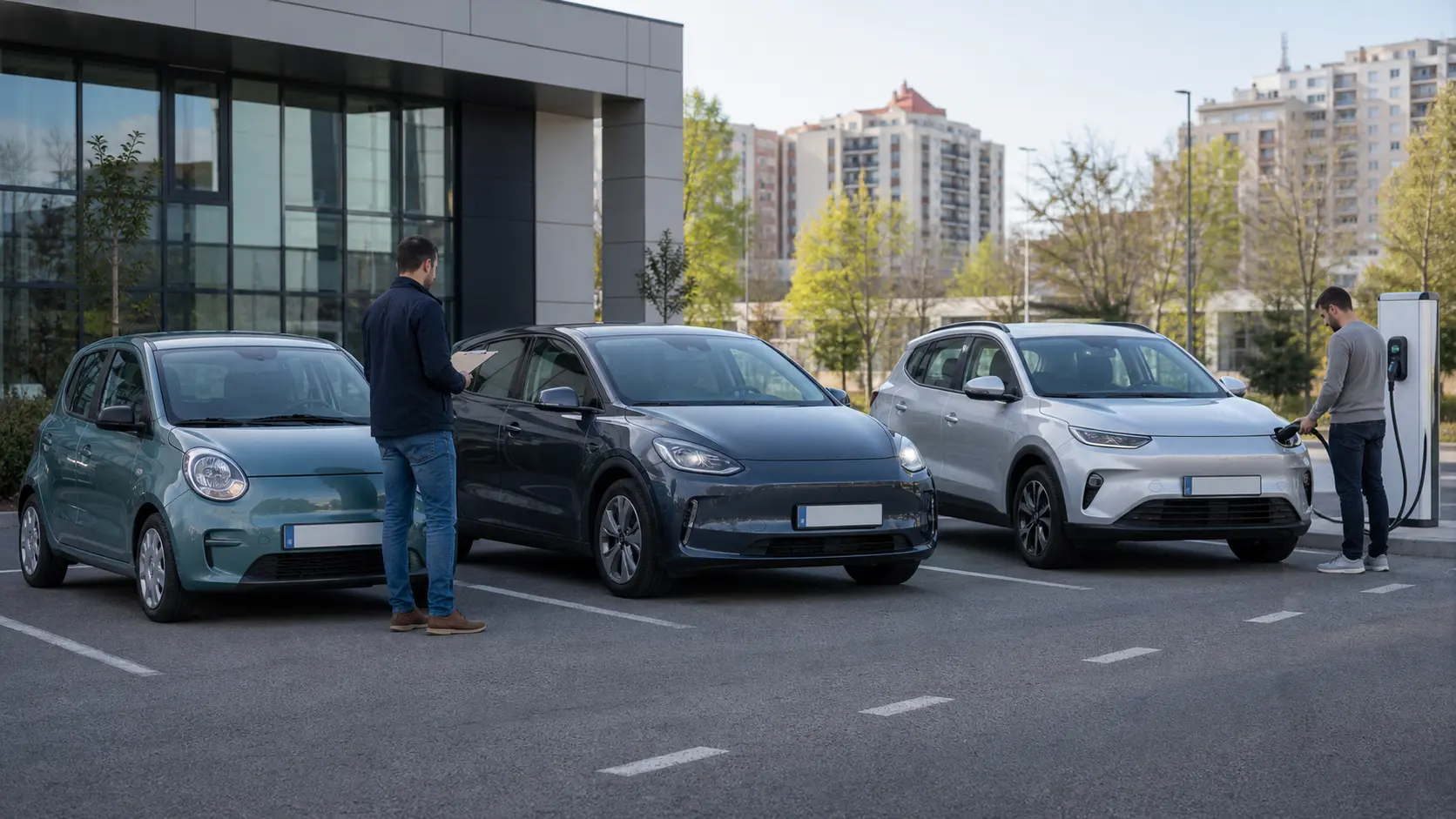
A full hybrid, or HEV, recovers energy under braking and charges its relatively small traction battery from the engine and regenerative braking. It cannot be plugged in. Toyota Yaris, Yaris Cross, Corolla, C-HR and RAV4 Hybrid, Honda Jazz and HR-V e:HEV, Renault Clio E-Tech and Kia Niro Hybrid are familiar UK examples. Some use an electrically controlled planetary transmission usually called e-CVT; others use a dual-clutch transmission. Those systems should not be inspected in the same way.
A mild hybrid, or MHEV, normally uses a 12- or 48-volt starter-generator. The combustion engine still provides the propulsion. The electrical system assists starting, coasting or acceleration but normally cannot drive for a meaningful distance. Suzuki Swift and Vitara, Ford Puma, Kia Sportage, Hyundai Tucson and many BMW, Mercedes-Benz, Volkswagen and Audi models are sold in MHEV forms. The high-voltage battery risks are lower, but the starter-generator, converter, software and auxiliary battery still matter.
A plug-in hybrid, or PHEV, has a larger battery, an external charging socket, an electric motor and a combustion engine. Kia Niro PHEV, Hyundai Tucson Plug-in, Mitsubishi Outlander PHEV, Toyota Prius Plug-in, BMW 330e and Mercedes-Benz C 300 e are plausible used-car candidates. Buy this format only if you can charge at home or work. Otherwise you carry extra mass, use the engine more often and may never approach the official test result.
A UK shortlist to investigate
For urban driving, start with the Toyota Yaris Hybrid, Honda Jazz e:HEV and Renault Clio E-Tech. Look for a cold start, a clean MOT history and a battery-health report rather than a claimed brand reputation. An ex-private-hire or taxi car is not automatically bad: high mileage may have been paired with disciplined servicing. It should, however, be priced and inspected as commercial-use stock. Check seat bolsters, rear doors, charging sockets, boot trim and the steering wheel for a consistent wear story.
For family use, the Toyota Corolla Hybrid and Touring Sports, Kia Niro Hybrid, Hyundai Ioniq Hybrid and Honda HR-V are useful comparisons. The Corolla’s e-CVT should not be confused with a belt CVT. The Ioniq and some Niro generations use a DCT, where clutch take-up, fluid history and low-speed manoeuvring deserve special attention. A quiet ten-minute test drive is not enough: include a cold start, a hill, reverse, stop-start traffic and a firm acceleration run.
For an SUV, investigate the Toyota C-HR, RAV4 Hybrid, Honda CR-V e:HEV, Hyundai Tucson Hybrid and Kia Sportage Hybrid. Check the cost of tyres, insurance, suspension components and, on four-wheel-drive versions, the rear electric motor and underbody cabling. For a PHEV, the Niro PHEV, Outlander PHEV and Tucson Plug-in make more sense when the owner can show regular charging. A PHEV that spent its life with an empty battery is not disqualified, but its use profile changes the inspection priorities.
What Car?’s owner survey can be a useful UK signal because it asks owners about faults and repair consequences, but it is not a controlled failure-rate experiment. For that reason these models are presented as candidates commonly supported in Britain, not as first-to-last winners. Compare model year, engine, gearbox and body style before transferring any evidence.
The battery inspection
Ask for the registration and VIN before travelling. Use the official recall checker or a franchised dealer to identify outstanding safety campaigns. Check the GOV.UK MOT history for dates, mileage, advisories and repeat brake or suspension faults. The MOT result is not a battery certificate. A car can pass its emissions-related checks and still have a traction battery with poor capacity or a cooling fan that needs attention.
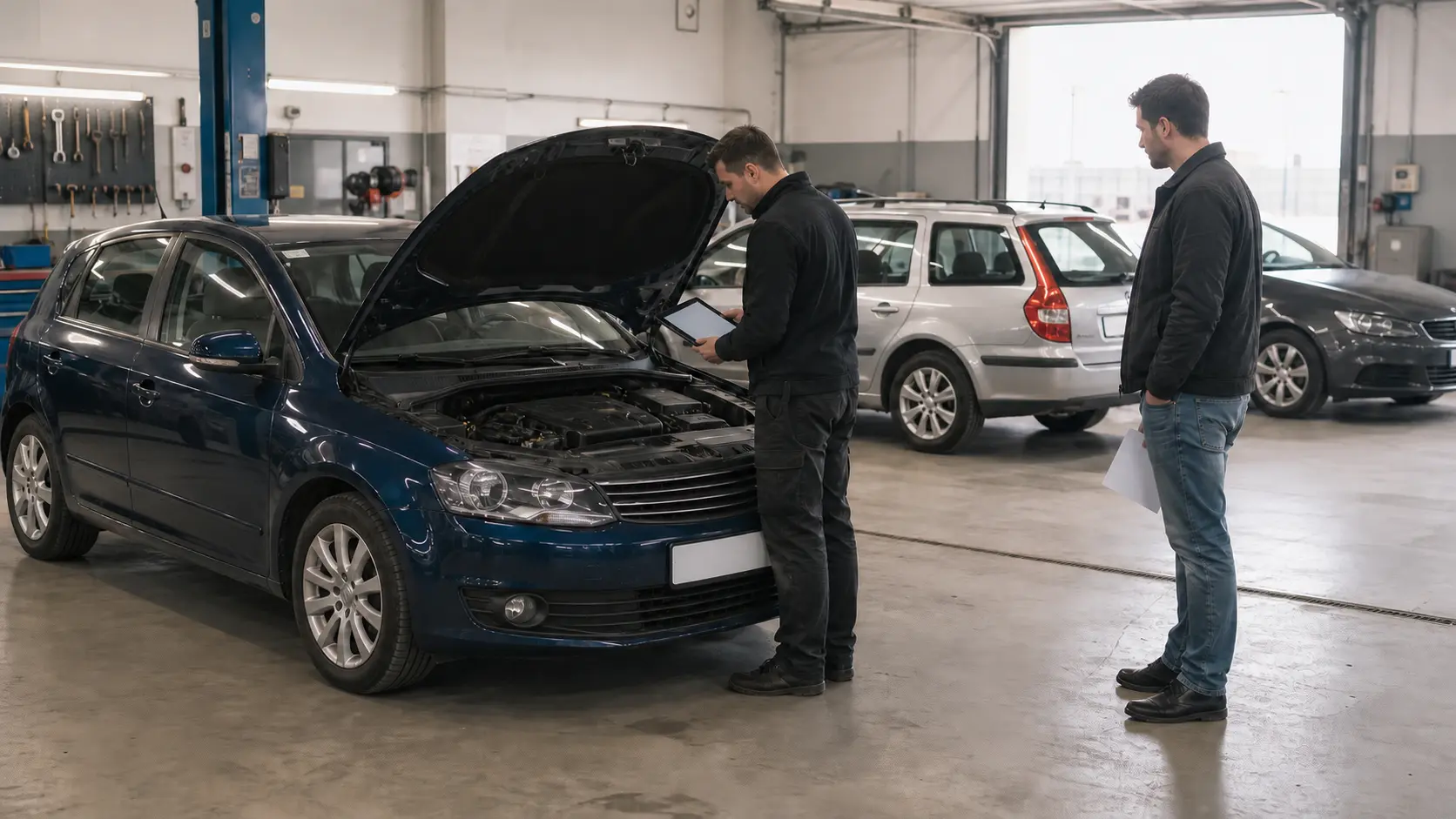
Pay for a hybrid inspection with a workshop that can read manufacturer-level codes and record module data. The report should identify the diagnostic equipment, state of charge and temperature, and distinguish a functional test from a simple scan. Look for module imbalance, recorded isolation faults, unusual battery temperature, blocked air inlets and evidence of water ingress. On a PHEV, test the charge port, cable, onboard charger and AC charging session. Do not describe dashboard electric range as a Carboratory measurement: weather, heating and driving route change it.
Inspect the 12-volt battery separately. A weak auxiliary battery can create a confusing collection of warning messages and prevent a hybrid from entering READY mode. That possibility does not justify clearing codes or fitting a new battery before diagnosis. Ask what was replaced, when and why. If the seller has installed second-hand battery modules, request the invoice and test results; a repair may be sound, but it should not be called a new battery.
Gearboxes, cooling and brakes
An e-CVT planetary arrangement has no conventional stepped shifts. Listen for mechanical noise, bearing rumble, leaks and inverter warnings. A DCT should engage reverse and first gear without a long pause, judder or repeated clutch slip. A PHEV automatic may combine clutches, electric machines and software that are not shared with the petrol version. Get the exact maintenance schedule from the VIN, including transmission fluid requirements. “Sealed for life” is not a substitute for evidence when a car has high mileage or towing duty.
Examine the engine, inverter and battery cooling circuits: hoses, pump noise, coolant level, radiator faces and the battery air filter. A sweet smell, dried residue or mixed coolant colours deserves a written diagnosis. On a repaired crash car, inspect the battery tray and orange high-voltage cables without touching them. A dealer or qualified hybrid technician should do any isolation test.
Regeneration means the friction brakes may be used less. Discs can corrode on their inner faces while the pads look acceptable. The GOV.UK MOT manual includes brake and emissions-related checks, but an MOT is not a full pre-purchase examination. A road test should include gentle and firm braking; a lift should cover discs, calipers, flexible hoses, lines, undertrays and tyre-age markings. Use the brakes regularly and safely during ownership, as the manufacturer’s manual permits, rather than assuming regeneration will keep them healthy.
Taxi, fleet and motorway evidence
London private-hire use changes the meaning of mileage. A 160,000-mile Corolla with invoices, correct intervals and motorway history may be less risky than a 70,000-mile car that sat idling in short urban trips. Ask whether the car was a taxi, private-hire vehicle, rental car, driving-school car or company fleet vehicle. Check the V5C keeper history, invoices, tyre wear, seat rails, boot floor, door hinges and rear-seat condition. A seller who says “never used commercially” should be able to support that statement.
For motorway drivers, do not assume an HEV will deliver its city advantage at 70 mph. Compare total cost with an efficient petrol or diesel car, including servicing, tyres and insurance. For repeated short trips, an HEV can suit better than a diesel, but a PHEV only makes financial and emissions sense when charged. The official WLTP figure is a comparable laboratory result, not a promise for your route.
MOT, ULEZ, clean-air zones and tax
The GOV.UK hybrid tester guidance warns that the combustion engine can start unexpectedly and identifies the high-voltage system. Use a garage familiar with hybrid safety. The MOT manual says hybrids and mild hybrids are treated specially for emissions testing, while warning lights and general roadworthiness still matter. Verify the current MOT rules and the vehicle’s exact record at GOV.UK.
London’s ULEZ operates across all London boroughs and requires the vehicle to meet its emissions standard or pay the charge. Other English Clean Air Zones have their own rules. Check the registration with the official government or local authority tool before buying; “hybrid” alone does not guarantee a discount or exemption. A PHEV may have a favourable classification in one scheme and no benefit in another. Vehicle Excise Duty and company-car taxation depend on registration date, list price, CO₂ and usage; use HMRC and DVLA information for the exact car rather than an advert.
Documents before the deposit
Minimum evidence is the VIN, recall status, MOT history, V5C, two keys, service invoices, finance settlement, mileage trail, charging cable where relevant, battery report and an independent inspection. Confirm the seller’s identity and the vehicle’s finance status. On an imported car, ask for the foreign registration history, conformity paperwork and proof of VAT or customs position. On a used PHEV, record the charging test in the inspection report.
For a new or nearly new car, read the warranty exclusions. A battery promise may cover a defect or a capacity threshold only under specified conditions. A used-car warranty may exclude the battery, inverter or gearbox despite advertising “hybrid cover”. Put the exact covered components in writing.
Practical recommendation
Without regular charging, begin with Yaris, Jazz, Corolla, Niro Hybrid or a well-documented HEV SUV. With a home charger and short daily trips, consider a Niro PHEV, Outlander PHEV or Tucson Plug-in after a charge-system inspection. Choose an MHEV when you want conventional petrol-car behaviour with some recuperation, not electric driving. Reject any example whose seller will not provide the VIN or permit independent diagnosis.
Sources and method
The UK sections use GOV.UK for MOT scope, hybrid safety and clean-air guidance, the Mayor of London for ULEZ, and an owner survey for reliability evidence. Official guidance describes legal tests; it does not establish a ranking. The shortlist reflects models commonly supported in Britain, with model year and powertrain still requiring separate verification.
A disciplined UK viewing
Arrange the appointment with the car cold and allow time for paperwork. Confirm READY status, then operate heating, air conditioning, lights, demisting and the parking brake. Include reversing, low-speed manoeuvres, a hill and firm acceleration. An e-CVT may hold engine revs under load; warning lamps, judder, burning-clutch smell, isolation messages or reduced power need diagnosis. Record temperature, mileage and dashboard messages before the scan.
Price the next 24 months: fluids, brake discs, tyres, insurance, Vehicle Excise Duty, MOT, charging equipment and a possible 12-volt battery. Ask for recall and software-update records. “Battery tested” is not the same as a new battery, and a used-module repair must have an invoice and defined warranty. If two cars share a badge, prefer the example with consistent mileage, MOT history, invoices, cold-start behaviour and an independent report over the one with the higher trim.
Ask the workshop to record the VIN, mileage, temperature, stored codes, 12-volt condition and the components actually tested. For a PHEV, include the charge socket, cable, onboard charger and isolation protection. Ask the seller about short cold trips, long storage, towing, motorway use and commercial work; the same mileage creates different wear patterns. Put important answers in the order or invoice.
After purchase, establish a baseline with a scan, fluid check, tyre-age check, brake inspection and service schedule. Keep the battery report with the V5C and purchase documents. Use the friction brakes safely and regularly as the handbook allows, keep battery air inlets clear and never improvise work on orange high-voltage cables. For a PHEV, confirm that the home socket or wallbox is suitable for sustained charging rather than relying on an extension lead.