
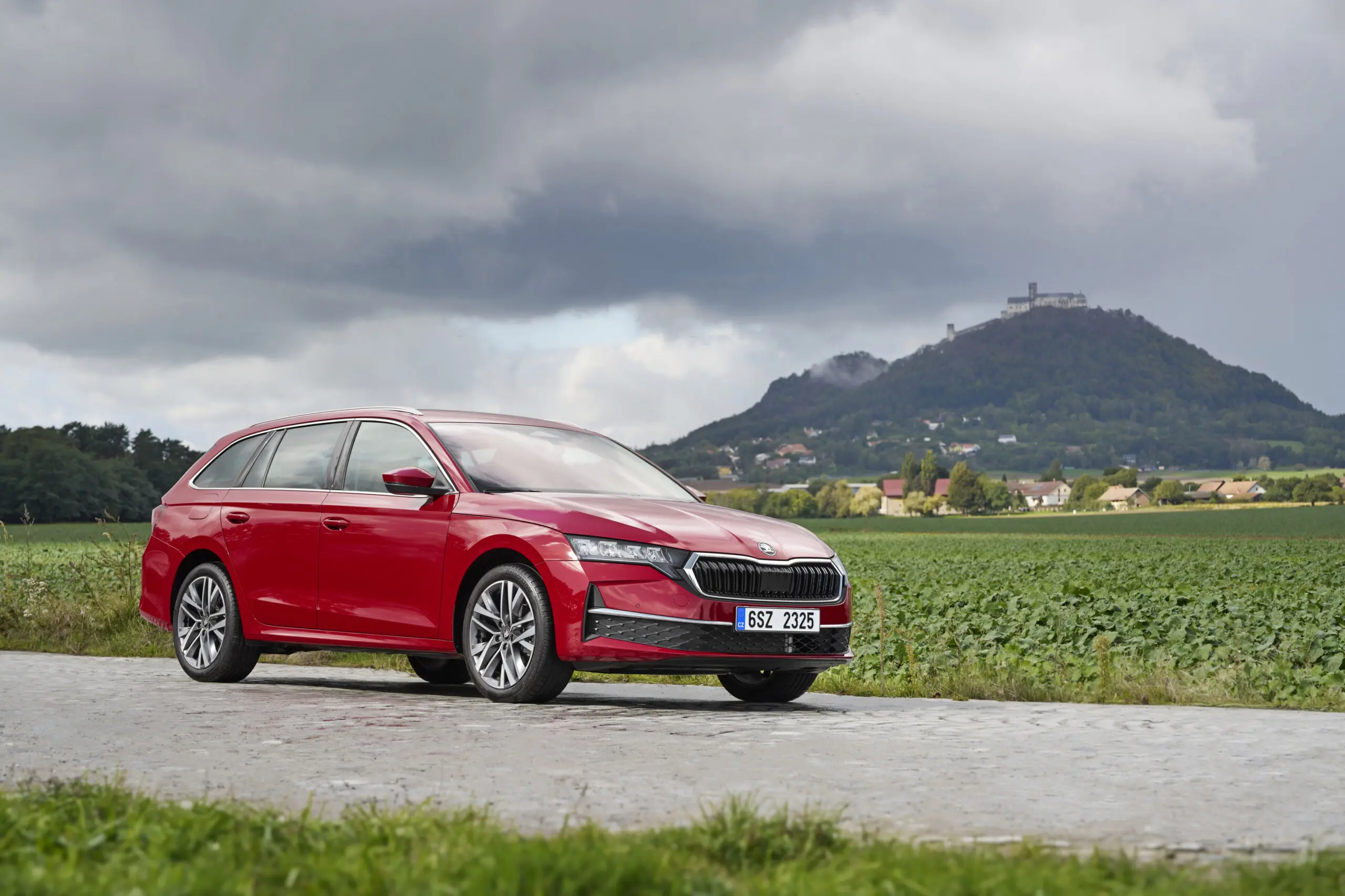
The Škoda Octavia has become the first model in the brand’s range to receive a full-hybrid powertrain. The new system combines a 1.5 TSI evo2 petrol engine with two electric motors, a single-speed automatic transmission and an automatic clutch that can connect the combustion engine mechanically to the front wheels. It is offered in both hatchback and estate body styles.
Škoda is launching two system-output versions: 100 kW and 125 kW. The car can drive on electric power over short distances, but the traction battery does not need to be charged with a cable. It is replenished by the petrol engine or through regenerative braking, while the control system chooses the most suitable operating mode automatically. Orders open in October 2026, with the first customer deliveries scheduled for December.
How the series-parallel system works
The Octavia’s full hybrid uses a series-parallel layout. The larger electric motor is the traction motor: it drives the front wheels and recovers energy during braking. The second electric motor mainly acts as a generator and also starts the petrol engine.
In all-electric mode, the traction motor uses energy stored in the battery to move the car without starting the combustion engine. Škoda says the Octavia can cover up to approximately two kilometres in this mode, depending on conditions. This is intended for short, low-speed situations such as urban traffic, manoeuvring and brief movements, rather than for long-distance electric travel.
In series-hybrid mode, the petrol engine drives the generator, which produces electricity for the traction motor. The manufacturer says this mode is used mainly at speeds of up to around 60 km/h, when the battery state of charge falls below a defined level or when the driver requests stronger acceleration.
In parallel-hybrid mode, the clutch connects the petrol engine mechanically to the driven wheels through a single fixed gear ratio. The electric motor can support the combustion engine. This mode is used above approximately 60 km/h and during steady driving, when a direct mechanical connection is more efficient. All transitions between electric, series-hybrid and parallel-hybrid operation are automatic.
Two output levels
The 100 kW version uses a 1.5 TSI petrol engine producing 96 kW. The 125 kW model uses a 1.5 TSI engine with a maximum output of 110 kW. The electric motors are identical in both versions, and both have an electronically limited top speed of 180 km/h.
Škoda has not yet published 0–100 km/h acceleration, WLTP fuel consumption or CO₂ figures in the launch announcement. It has also not provided a separate output figure for the traction motor. The 100 and 125 kW figures are system outputs and should not be read as the output of one individual motor.
The traction battery has a gross energy content of 1.6 kWh and sits beneath the rear seats. The vehicle automatically maintains its state of charge between 40 and 90 per cent. This leaves room for recovered braking energy and for rapid electric assistance when needed. There is no external charging socket, so the system does not require a wallbox or a public charging station.
The petrol tank holds 40 litres. Total driving range will depend on real-world fuel consumption, traffic and how often regenerative energy can be recovered. The main practical difference from a plug-in hybrid is that the driver does not have to plan charging stops for the traction battery.
Boot space and body styles
The hatchback provides 460 litres of luggage space, increasing to 1,400 litres with the rear seats folded. The Octavia estate offers 485 litres in its normal configuration and up to 1,540 litres with the rear seats down. These figures keep the full hybrid relevant to buyers who choose the Octavia for family use, luggage and regular long-distance travel.
The battery is located under the rear bench rather than in the luggage compartment. Škoda has not yet stated whether kerb weight differs substantially between the two power outputs or between the hatchback and estate. Towing capacity and detailed axle-load data are also not included in the initial release.
Trims, equipment and deliveries
The full-hybrid powertrain is available for the Octavia hatchback and estate in Selection and Sportline trim levels. Compared with versions powered only by combustion engines, standard equipment adds a 13-inch infotainment display, a 10-inch Virtual Cockpit and a HYBRID badge on the tailgate.
Orders open in October 2026 and first customer deliveries are planned for December. The international announcement does not provide a market-specific price, a Romanian equipment breakdown or the difference compared with the existing mild-hybrid versions. Those details must be confirmed through local Škoda sales channels.
Within the wider Octavia range, the new full hybrid sits between mild-hybrid systems and plug-in hybrids. A mild hybrid mainly assists the combustion engine, while a plug-in hybrid has a larger battery and can be charged externally. The new Octavia can power itself electrically for short periods without depending on charging infrastructure.
For urban driving, the electric mode can reduce combustion-engine use in slow traffic and during short manoeuvres. On faster roads, the system can use the parallel mode and the mechanical connection between the 1.5 TSI engine and the front wheels. The driver does not have to choose between these strategies manually.
The full-hybrid Octavia therefore broadens the model’s powertrain range without changing its basic hatchback and estate format. Its relevance will depend on the final price, fuel consumption and local availability, none of which were included in the first international announcement. The technical concept itself is clear: two electric motors, a 1.5 TSI engine, 100 or 125 kW and no plug-in charging.


