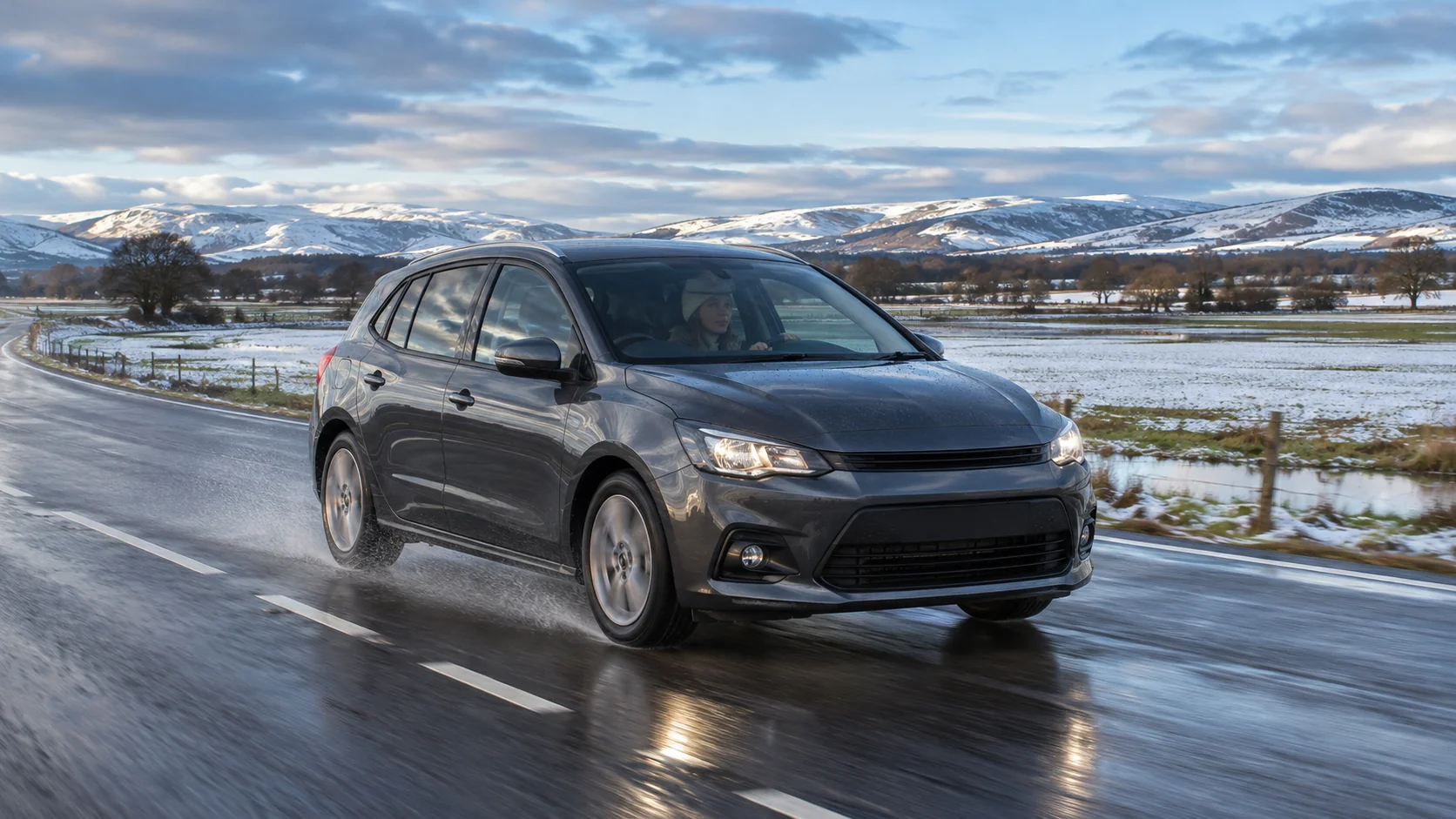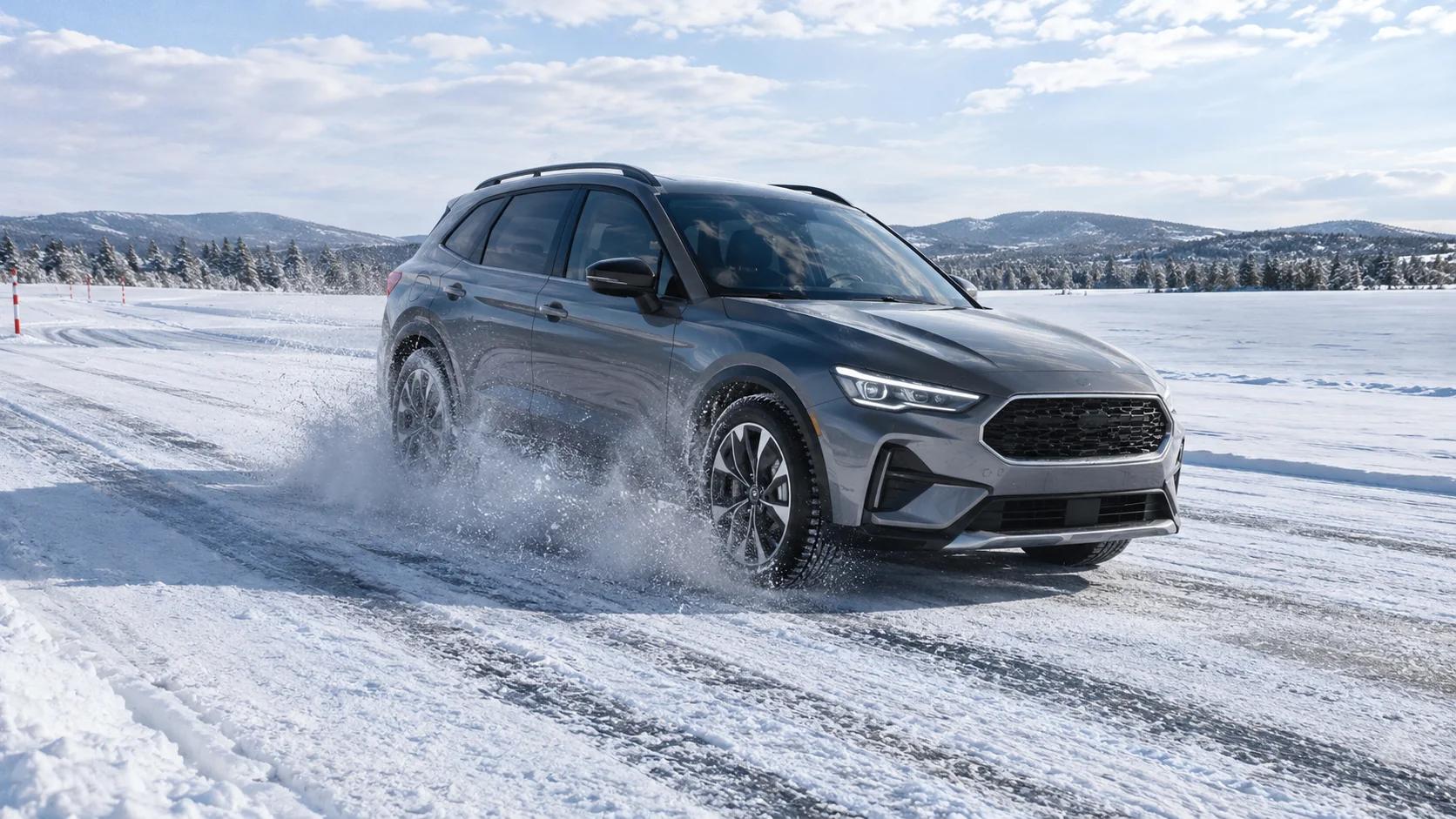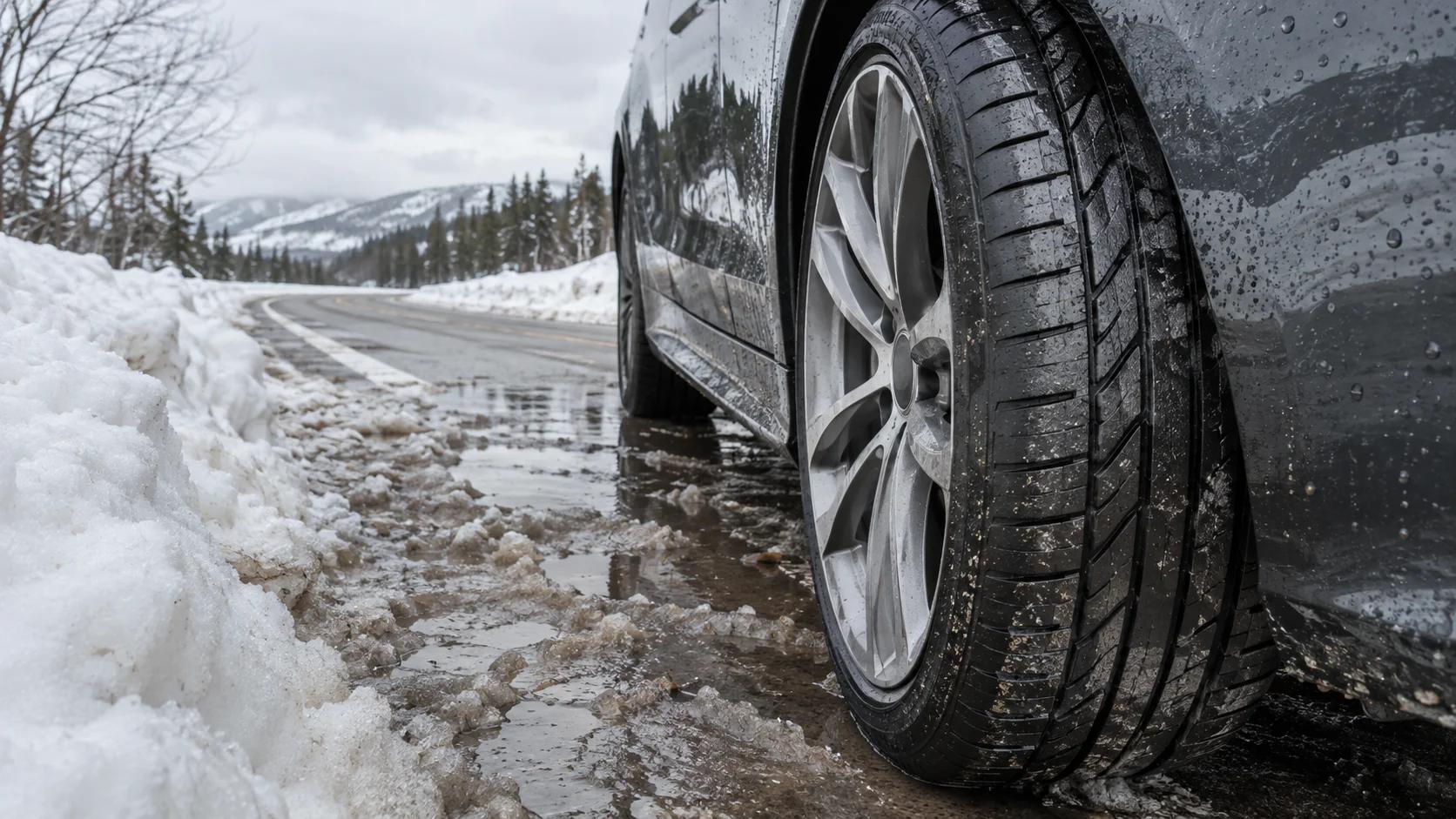
Snow can arrive during a journey that began on clear roads. With summer tyres fitted, treat the first signs of accumulation as a route decision, not a test of driving skill.
Before continuing
Check whether snow or ice covers the road ahead, whether the route climbs, and whether conditions are worsening. Avoid bridges, untreated side streets and steep inclines where practical. If there is a safe place to stop, arrange a tyre change, recovery or another journey plan. Do not stop where you obstruct traffic or put yourself at risk.
While moving to safety, use gentle steering, acceleration and braking, leave a much larger gap and keep speed low enough to stop within the visible clear distance. Do not depend on traction control to pull the car through deep snow. Continental notes that summer tyres lose cold-weather flexibility and have poor traction on snow.
Local rules matter. Romania, for example, requires winter-compatible tyres on public roads covered with snow, ice or black ice, regardless of calendar date. RAR says tyres marketed as all-season can meet its national requirement when marked M+S, M.S. or M&S. Rules elsewhere differ, so check the country and any mountain-road signs before travel.
Once safely parked, inspect the tyres before a future journey. A suitable set must have the correct size and load rating for the car, and enough tread for the planned conditions. The European Alpine symbol identifies tyres that have passed a defined snow-grip test; it is useful when choosing a winter-capable set.
Sources: Continental; Romanian Police; RAR; European Commission.