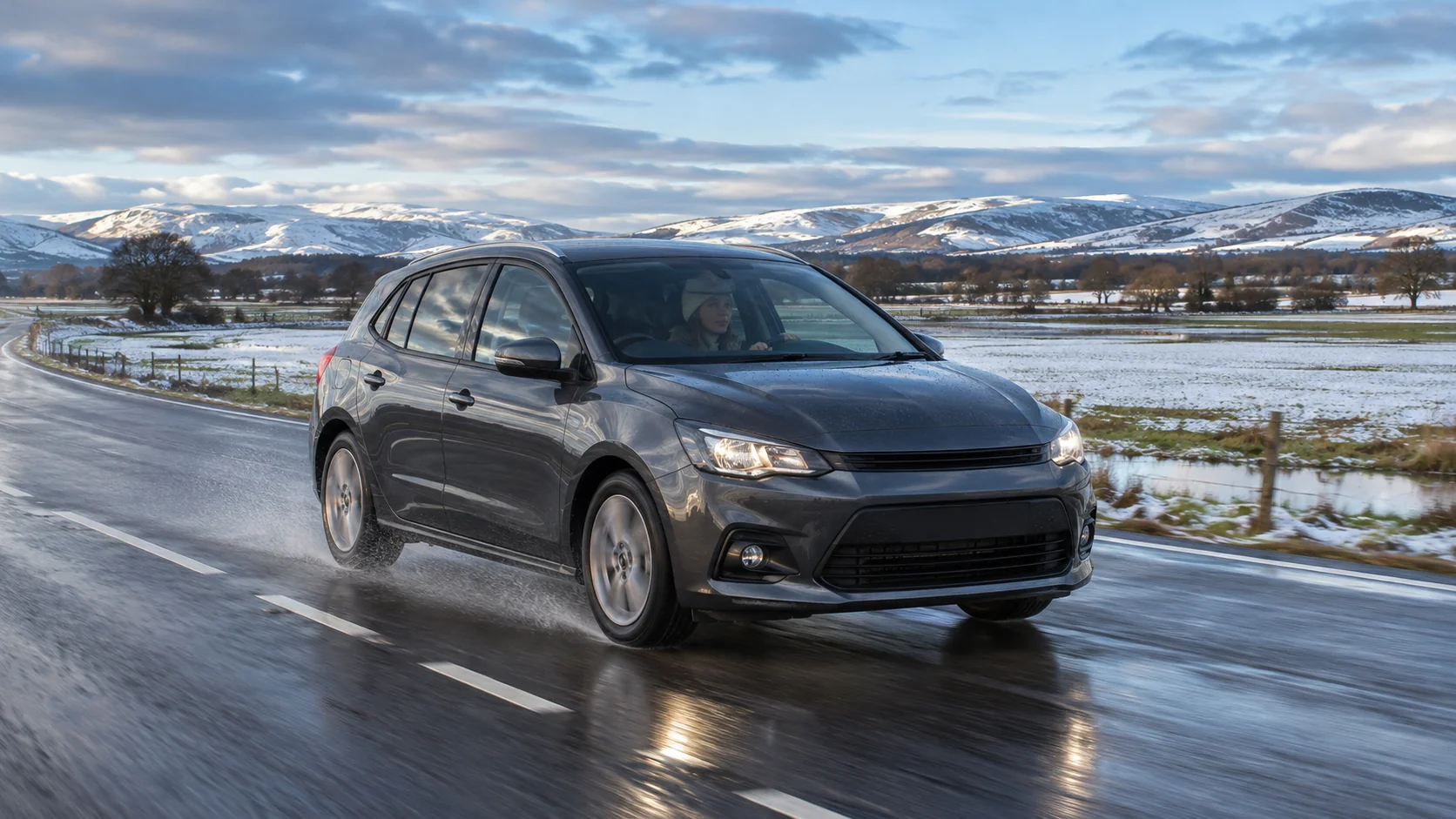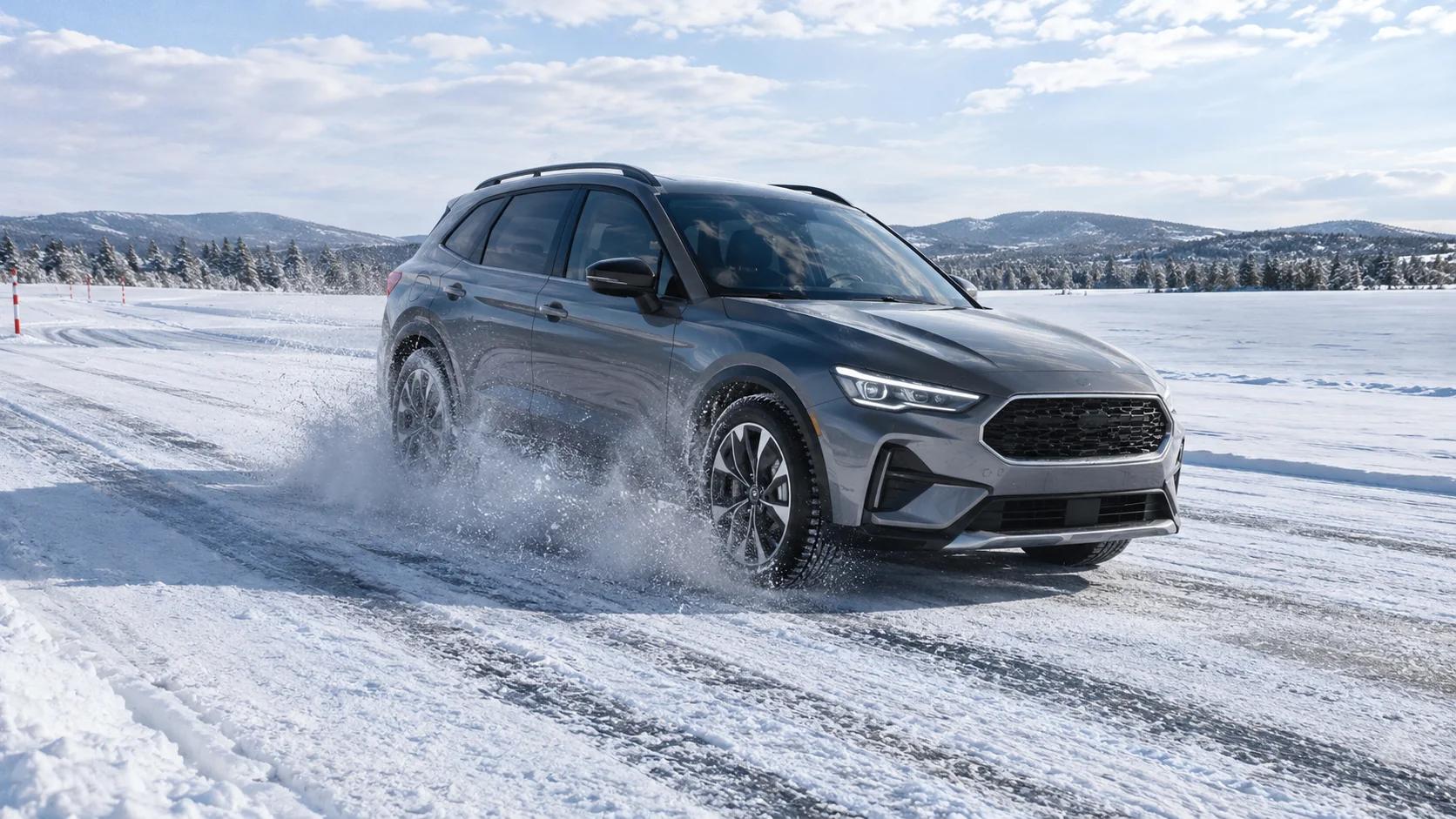
Summer tyres can lose enough grip on snow that starting, steering and stopping all become difficult. The first warning may be wheelspin at a junction; the serious one is a car that travels far beyond the place where the driver expected it to stop.
The braking gap
In an ADAC comparison using 175/65 R14 tyres, a car braking from 50 km/h on snow at an asphalt temperature of −3 °C stopped in 29.1 m on winter tyres and 63.1 m on summer tyres. Those are results from one setup, not a universal multiplier. Tyre model, wear, snow condition and vehicle all matter. Yet the gap is large enough to change the outcome at a pedestrian crossing.
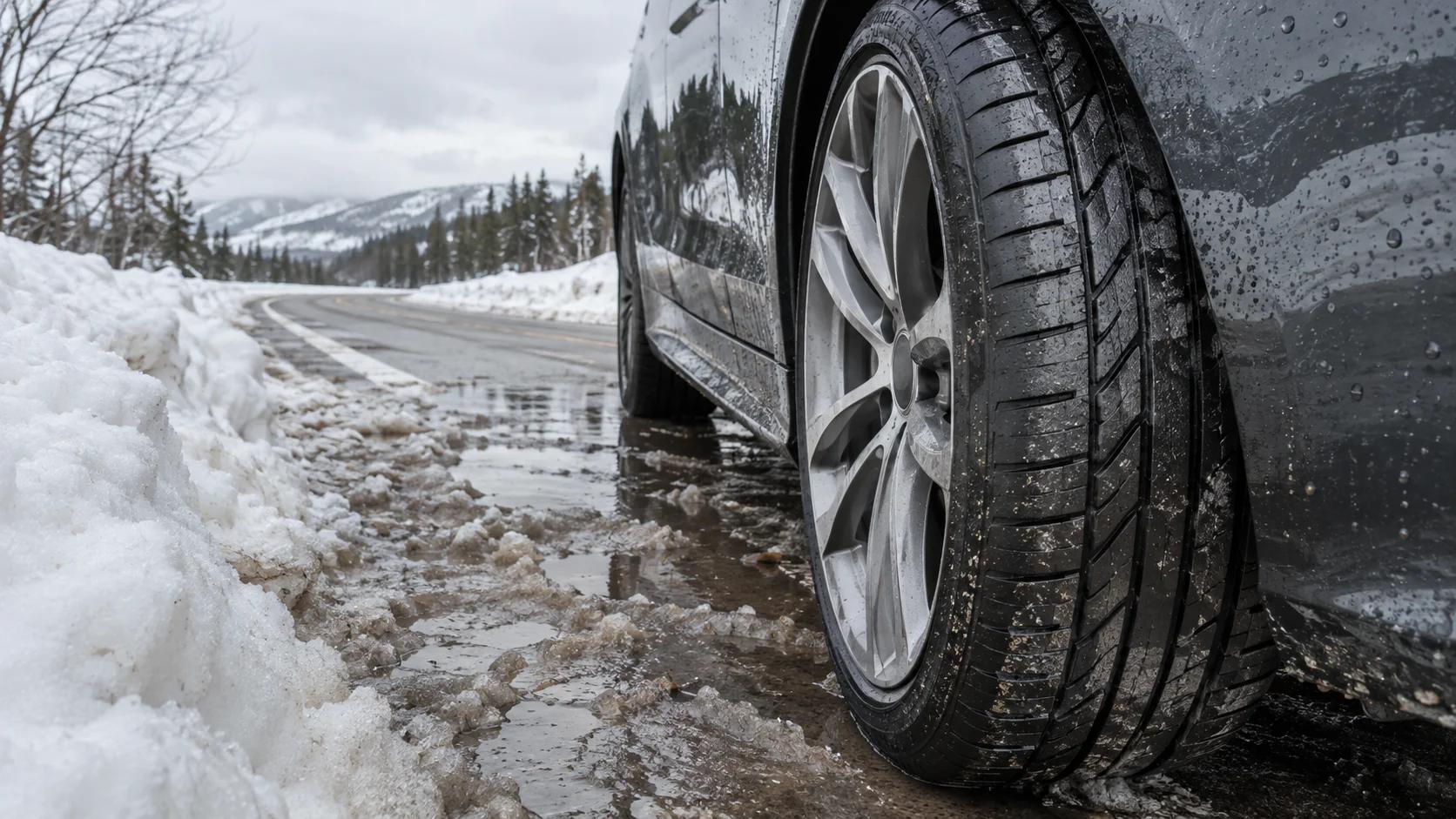
Summer tyres use tread blocks and compounds designed for warmer roads. Continental explains that the compound stiffens in the cold, while the tread has less ability to work through snow. A vehicle can therefore spin its driven wheels when pulling away and slide when braking or turning. All-wheel drive may help it move, but it cannot supply the missing braking grip.
If snow catches you before a tyre change
Avoid setting off if a snow-covered route is likely. If conditions deteriorate while you are already driving, slow smoothly, leave substantial space, avoid abrupt steering and stop somewhere safe. Check local legal requirements before continuing: winter-tyre rules differ by country and sometimes by road condition.
The useful decision is made before the trip. Fit tyres appropriate to the worst conditions you are likely to meet, and check the tread, pressure and correct size. A cautious driver still needs grip to respond to another road user's mistake.
Sources: ADAC braking comparison; Continental technical guidance.