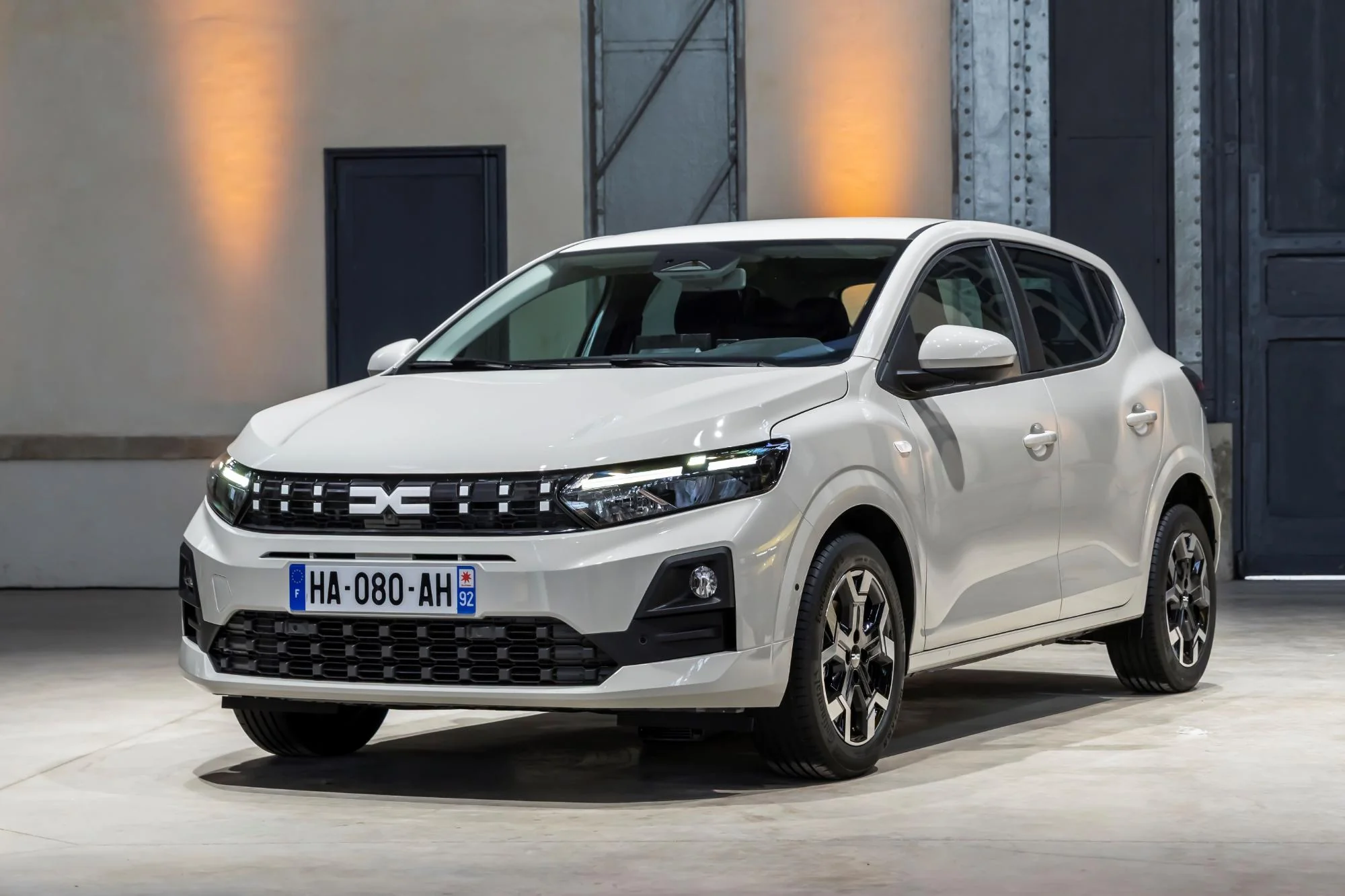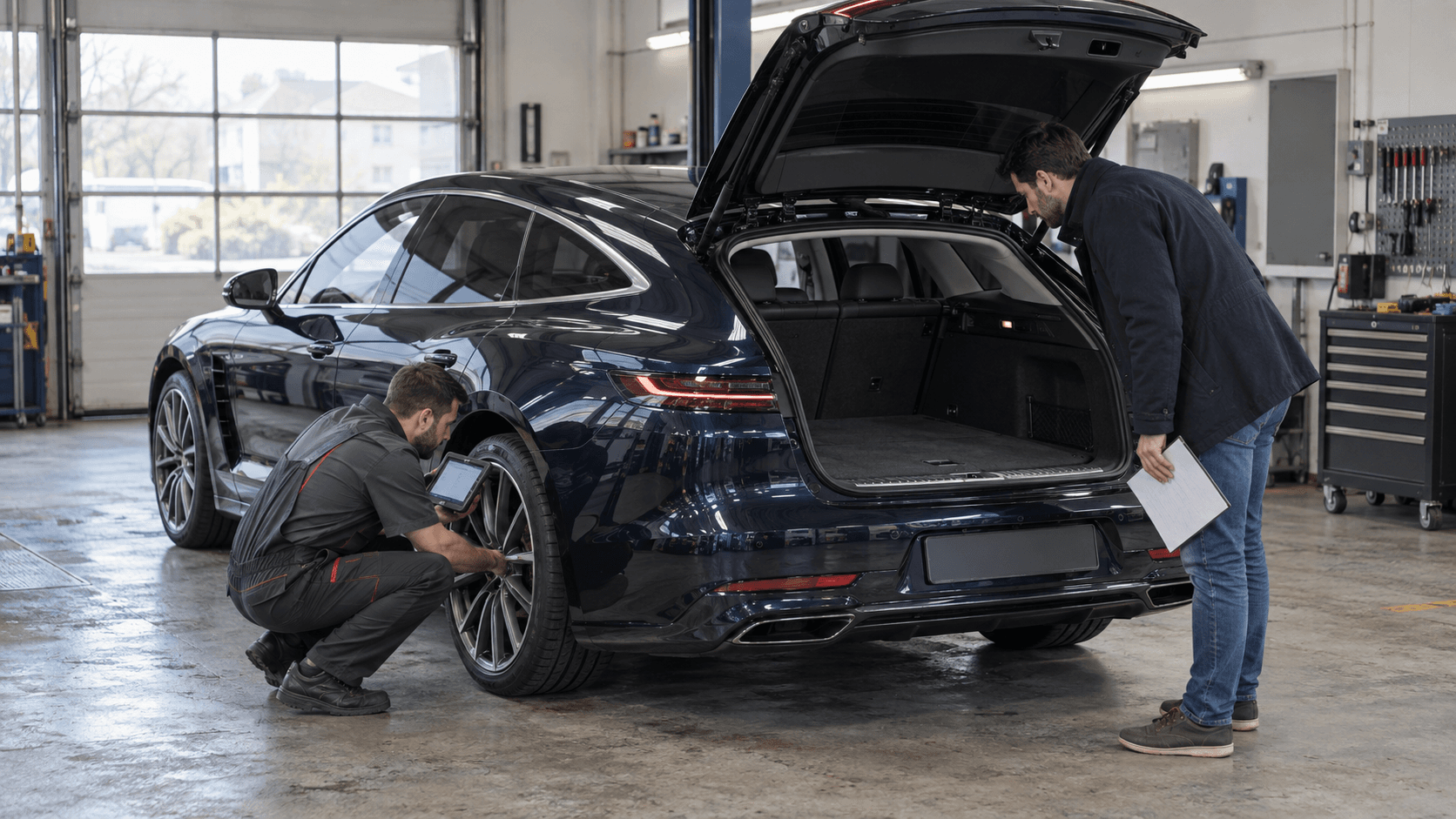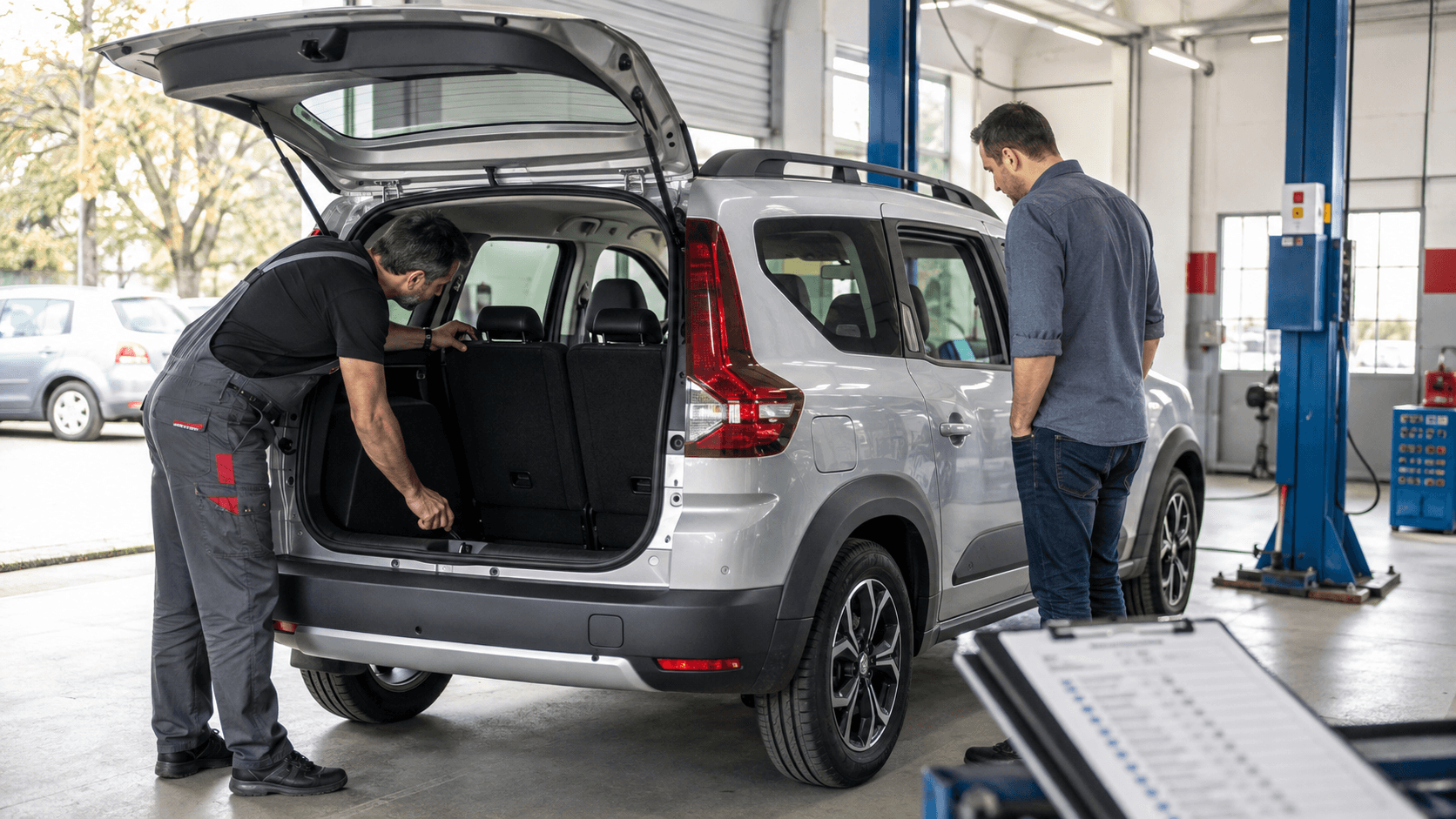
Illustrative image; the car does not represent a specific example or brand.
Used Dacia Jogger in 2026: what to check on ECO-G, Hybrid, 7 seats and safety
The short answer
A used Dacia Jogger is worth considering in 2026 if you need a simple family car with lots of space, predictable costs and a choice of petrol, LPG or full hybrid. It is one of the few relatively affordable options with up to 7 seats, but it should not be bought only because it is a Dacia and looks “cheap at any price”.
Short checklist:
- check by VIN whether the car has 5 or 7 seats and which exact powertrain it has;
- on ECO-G, inspect the LPG system, tank, servicing, petrol/LPG switching and any smells;
- on TCe, listen to a cold start, watch idle, oil consumption and service history;
- on Hybrid, test electric starts, mode changes, the automatic gearbox and the traction battery via diagnosis;
- check the third row: mounts, belts, head restraints, floor, access and wear;
- inspect the boot, tailgate, sills and underside for impacts or signs of hard work;
- test the brakes, suspension and steering with the car loaded, not only with the driver;
- read the history carefully, because some examples may have been fleet cars, ride-sharing, taxis or intensive family transport;
- do not ignore the Euro NCAP rating and the safety equipment actually fitted to the car in front of you.
Practical rule: Jogger is a good choice when you buy it for real utility and inspect it as a car that has worked. It becomes a poor choice when you pay almost new-car money for a used example with no clear history, only because it has 7 seats.
Why Dacia Jogger needs its own guide
The Carboratory archive had tests, round-ups and mentions of the Dacia Jogger, but not a dedicated guide for a buyer searching directly for “used Dacia Jogger”. Market interest is visible all the same.
At the time of research on 6 September 2026, the CautiMasina page for Dacia Jogger for sale showed 1,723 available results, with petrol, LPG and hybrid examples, including cars from 2022-2026. Another CautiMasina page for Dacia Jogger 2026 showed 360 listings, many with very low mileage and prices close to a new-car offer.
That changes how a used car should be compared. On Jogger, the question is not only “does it have 7 seats?”, but “what do I actually get compared with a new car, with warranty, a Rabla offer and a specification I choose myself?”.
What the Dacia Jogger is
The Dacia Jogger is the family car that has, in practice, replaced several older roles: a simple estate, an affordable MPV, a 7-seater and a budget crossover. It is not a classic SUV and should not be judged as a 4x4. It is a long, practical car, with more ground clearance than an ordinary estate and an emphasis on space.
For the Romanian market, the important variants are:
- TCe petrol, with a manual gearbox;
- ECO-G petrol + LPG;
- Hybrid, with an electrified automatic transmission;
- 5-seat versions;
- 7-seat versions;
- simple trims, Expression, Extreme or Journey, depending on year and market of origin.
On the Dacia Romania website, the 2026 Jogger range is presented with ECO-G 120, TCe 110 and hybrid 155 engines. For Hybrid 155, Dacia states a combined output of 158 hp, a 1.8-litre combustion engine, two electric motors, a 1.4 kWh battery and an electrified automatic gearbox. For ECO-G 120, Dacia mentions a 1.2-litre turbo three-cylinder and, in the new range, the option of a dual-clutch automatic gearbox.
On the used market, however, not every example is from the updated range. That is why the first step is to identify the exact year, engine, gearbox, number of seats and market of origin.
ECO-G: attractive running costs, but check the LPG system
For many Romanian buyers, Jogger ECO-G is the natural variant. It costs less to refuel than straight petrol, keeps relatively accessible mechanics and suits a family car that covers a lot of miles. LPG still needs its own checks.
At the viewing, inspect:
- whether the system is factory-fitted or was added later;
- the LPG tank date and related documents;
- LPG-specific servicing;
- switching between petrol and LPG;
- cold starting;
- idle on both fuels;
- gas smells around the car or in the cabin;
- visible hoses, injectors, vaporiser and pipes;
- spark-plug and LPG filter history;
- whether the car loses power or hesitates on acceleration.
Do not buy an ECO-G only because it “runs cheap”. If the system has not been maintained, or if the car has been driven heavily laden, the saving at the pump can be spent quickly on deferred repairs.
TCe petrol: simple, but not immune to wear
The TCe petrol engine suits families who mix their journeys, do not want LPG and are not looking for an automatic. On a used car, the check should be the same as for any small turbo engine.
Watch for:
- cold starting;
- metallic noises or unusual ticking;
- unstable idle;
- smoke on acceleration;
- oil leaks;
- service history;
- the real oil-change interval;
- spark plugs;
- the turbocharger;
- cooling;
- consumption reported by the owner.
A car used mostly in town, on short trips with infrequent servicing, can look fine outside and still have premature wear. Ask for invoices, not only dashboard photos and a verbal promise.
Hybrid: test the gearbox, battery and how it actually works
Jogger Hybrid is attractive for buyers who want an automatic and low consumption in town. The full-hybrid system can run electrically often in urban traffic, and Dacia says the car starts in electric mode. On a used example, those transitions are exactly what you need to test.
On the test drive, check:
- starting without unnatural vibration;
- the switch between electric and combustion;
- regenerative braking;
- response from gentle pull-aways;
- noises at low speed;
- shifts of the electrified automatic gearbox;
- climate control;
- dashboard messages;
- average consumption on an urban route;
- warranty history and repairs.
Do not assume that because the battery is small it “does not matter”. Even if it is not a pure electric-car battery, any hybrid system should be checked with diagnosis and a complete vehicle history.
5 seats or 7 seats: the difference matters more than it looks
Jogger can be bought with 5 or 7 seats, and the difference changes how useful the car is. Some families need the third row every day. Others use it a few times a year and would be better off with a simpler boot and a lower price.
On a 7-seat version, check:
- whether the third row is fully present;
- seat mounts;
- belts;
- head restraints;
- boot floor;
- folding mechanism;
- access to the third row;
- legroom;
- ventilation and passenger comfort;
- wear on the side plastics;
- any luggage impacts.
Do the test with the people who will use the car. On paper, 7 seats sound excellent. In real life, you need to see whether there is room for children, child seats, school bags, luggage and shopping at the same time.
Boot, tailgate and signs of heavy use
Jogger is bought for space, so the boot is one of the best places to read the car’s history. A car used carefully by a family looks different from one that has often carried cargo, tools or heavy bags.
Inspect:
- the load sill;
- the carpet;
- the floor;
- the spare-wheel or puncture-kit area;
- water leaks;
- weatherstrips;
- the tailgate;
- tailgate struts;
- side plastics;
- traces of hooks, nets, brackets or dividers;
- noises over bumps.
Do not automatically reject a car with normal family wear. Do reject a car whose wear does not match the mileage, where the seller avoids explanations, or where the boot area shows serious impacts.
Suspension, brakes and steering: test it as a loaded car
Jogger has a practical role. That means it may be used with four or five people, luggage, bicycles, boxes, a pushchair or holiday kit. On a used example, suspension and brakes need a careful check.
At a workshop, ask for inspection of:
- dampers;
- springs;
- bushes;
- drop links;
- wheel bearings;
- front and rear brakes;
- brake lines;
- discs;
- pads;
- the parking brake;
- geometry;
- tyres.
On the test drive, go over a rough road as well, not only a boulevard. Listen for knocks, squeaks, vibration and noises from the rear. A 7-seater with tired suspension can feel acceptable empty, but feels poor when loaded.
Safety: read the Euro NCAP rating correctly
Euro NCAP published its Dacia Jogger assessment in March 2022. The scores stated by the organisation were 70% for adult occupant protection, 69% for children, 41% for vulnerable road users and 39% for Safety Assist. Euro NCAP explained that the absence of some assistance systems and of some third-row equipment influenced the result.
What does that mean for a buyer?
It does not mean Jogger is useless as a family car. It means you must check what equipment the chosen example actually has, and not assume every version offers the same assistance. On a used car, real safety also depends on the condition of the tyres, brakes, airbags, belts, body and electronic systems.
Check:
- airbag warning lights;
- belts at every seat;
- ISOFIX;
- head restraints;
- brakes;
- tyres;
- headlights;
- windscreen;
- sensors and cameras;
- damage history;
- any campaigns or recalls by VIN.
For children, actually try the child seats and boosters. Not every combination of seats, belts and space works equally well in every row.
Import, fleet or family: three different histories
On the used market, a Jogger can come from very different scenarios:
- a family car bought new in Romania;
- an imported car with low mileage;
- a car used for intensive transport;
- a fleet car;
- a ride-sharing or commercial-use car;
- a near-new example brought from European stock.
Each scenario needs different questions. On a family car you check the interior, seats, traces of children, boot and service history more closely. On a fleet car you check mileage, routes, invoices, wear on pedals, steering wheel and driver’s seat. On an import you check documents, VAT, RAR, damage and mileage consistency.
Do not buy without:
- a checked chassis number;
- registration document or equivalent papers;
- service book or invoices;
- a history report;
- an inspection on a lift;
- diagnosis;
- a test drive;
- a clear contract.
When a used Jogger is worth buying
A used Dacia Jogger is worth buying if:
- you genuinely need the space;
- you find a clear gap versus the price of a new car;
- the history is complete;
- the powertrain matches your journeys;
- the car does not have disproportionate wear;
- you get the equipment you need, not only a cheap specification;
- you keep a budget for a service and tyres.
It is not worth it if:
- the price is too close to a correctly specified new car;
- the seller cannot explain the history;
- the third row is incomplete or damaged;
- the LPG system has problems;
- the hybrid has faults or odd behaviour;
- the car has worked hard but is presented as “almost new”;
- you buy 7 seats even though you will not use them.
Budget after purchase
Even with a Dacia, buying does not end when you pay for the car. Keep money for:
- a full service;
- filters;
- oil;
- spark plugs, if the history is unclear;
- an LPG check, where relevant;
- hybrid diagnosis, where relevant;
- tyres;
- geometry;
- brakes;
- insurance;
- vignette;
- any family accessories: boot tray, mats, child seats, organisers.
For a family car, a slightly more expensive example with a clear history and normal wear can be better than the cheapest Jogger on the list.
Frequently asked questions
Is a Dacia Jogger a good used family car?
Yes, if you need space, reasonable costs and up to 7 seats. Check the third row, history, suspension, brakes and powertrain, though. Do not buy on boot size and price alone.
ECO-G or Hybrid: which should I choose?
ECO-G makes sense if you cover many kilometres and have easy access to LPG. Hybrid makes sense if you want an automatic and drive a lot in town. For few journeys and a tight budget, a checked simple petrol version can be enough.
Is a 7-seat Jogger worth it if I rarely use the third row?
Only if you have a real occasional need for the extra seats. If you mainly want a large boot, also check the 5-seat version or estate/SUV alternatives.
What do I check first on a used Jogger?
Start with the VIN, history, number of seats, powertrain and servicing. Then do diagnosis, a lift inspection and a test drive focused on brakes, suspension, gearbox and LPG or hybrid operation.
Does the Euro NCAP rating matter?
Yes, but it should be read together with the equipment on the actual car. The rating describes the generation’s context, not the condition of a used car. Airbags, belts, brakes, tyres and damage history still have to be checked.