If you can hear the washer pump on a freezing morning but no liquid reaches the windscreen, the jets or hoses may be frozen. Do not keep pressing the switch. Move the car to a frost-free place if possible, let the system thaw, then check that it sprays and holds fluid before relying on it in traffic. A missing spray can also mean an empty reservoir, blocked jet or electrical fault, so the weather alone is not a diagnosis.
First, make the windscreen safe to see through
Scrape or de-ice the full windscreen before setting off. Do not expect a weak washer system to clear an icy screen. RAC warns against pouring hot water over the glass because a rapid temperature change can damage it. Check that the wiper blades are not stuck to the screen before operating them; forcing frozen blades can damage the blades or mechanism.
The washer matters after the initial de-icing too. A car ahead can throw salty water and grime onto the glass within minutes. Without a working spray, the wipers may leave a dirty film in the driver's sightline. If this happens on the road, stop at a safe place to clean the screen. Waiting until the next stop while visibility worsens is a poor bet.
Thaw the circuit, then test it briefly
RAC advises allowing frozen washer jets to thaw and checking the fluid concentration afterwards. A warm, frost-free parking place is more reliable than repeatedly running the pump. The AA cautions that keeping a pump running with no fluid emerging can blow a fuse. A short test after thawing is enough to establish whether the spray has returned.
Look at the washer-fluid level before and after the test. If the reservoir was completely frozen, ADAC says expansion of the ice can damage the reservoir or pump. A wet patch, a rapidly falling level or a pump that remains silent after the vehicle has warmed up needs proper inspection. Do not immediately top up a visibly leaking reservoir and assume the problem is solved.
Why a fresh bottle may not fix the jets immediately
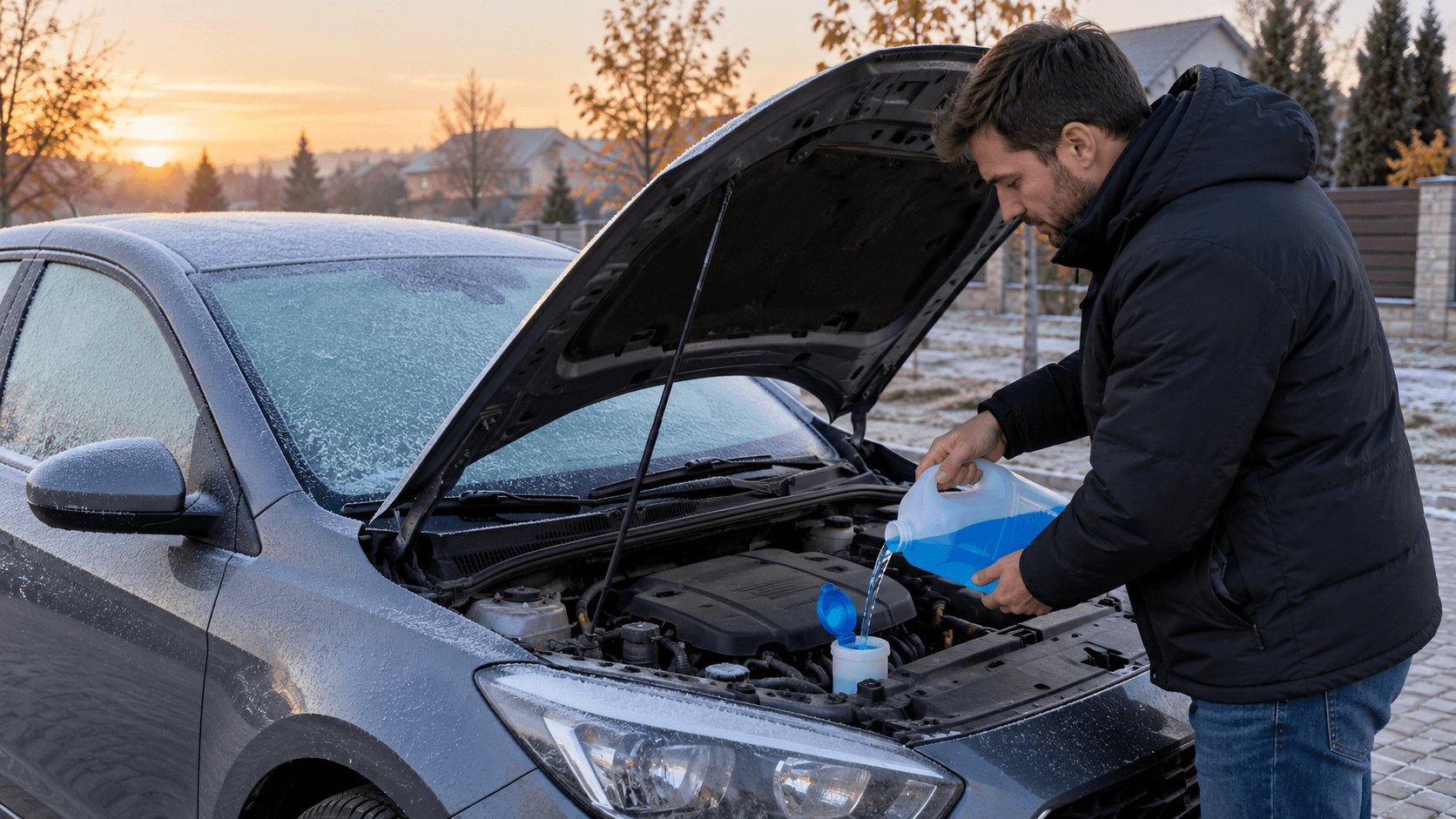
New winter screenwash in the reservoir does not instantly replace the old liquid sitting in the hoses. Once the circuit is thawed and working, briefly run the washers to bring the protected mixture through to the jets. ADAC recommends using up the summer mixture as fully as practical before refilling, because an unknown amount of water or summer cleaner weakens the new product's stated frost protection.
Use a ready-mixed winter fluid as supplied, or dilute concentrate to the ratio printed on its bottle. The protection rating on the container describes that product at its specified concentration, not whatever mixture results from pouring it into a half-full tank. Pick a rating that covers the expected overnight low and colder destinations. ADAC suggests protection to about −20 °C as a practical winter target; it also warns that excessive concentrate can leave a film on the glass.
Our guide to leaving summer screenwash in the car explains the wider risks to the tank, pump and visibility. Once the jets work again, test the spray pattern before the next journey rather than waiting for a dirty windscreen on the road.
Image: illustrative generated scene; it does not show a diagnosed frozen washer system.