In most California private-party car sales, the seller must provide a passing Smog Check that is still valid when ownership is transferred. The certificate is sent electronically to the DMV and remains valid for 90 days. A buyer should still obtain the vehicle inspection report and verify the result by VIN before paying.
The rule is not universal. Electric vehicles, motorcycles, certain older vehicles and some family transfers are exempt. Newer gasoline and hybrid vehicles also have a change-of-ownership exemption. The right decision starts with the vehicle's model year, powertrain and type of transfer—not with a seller's promise that it “passed last year.”
The seller normally supplies the certificate
California's Bureau of Automotive Repair says a private seller must have the vehicle pass before sale and give the buyer a copy of the inspection report. The DMV also lists a smog certification among the documents normally required to register a vehicle bought from a private party.
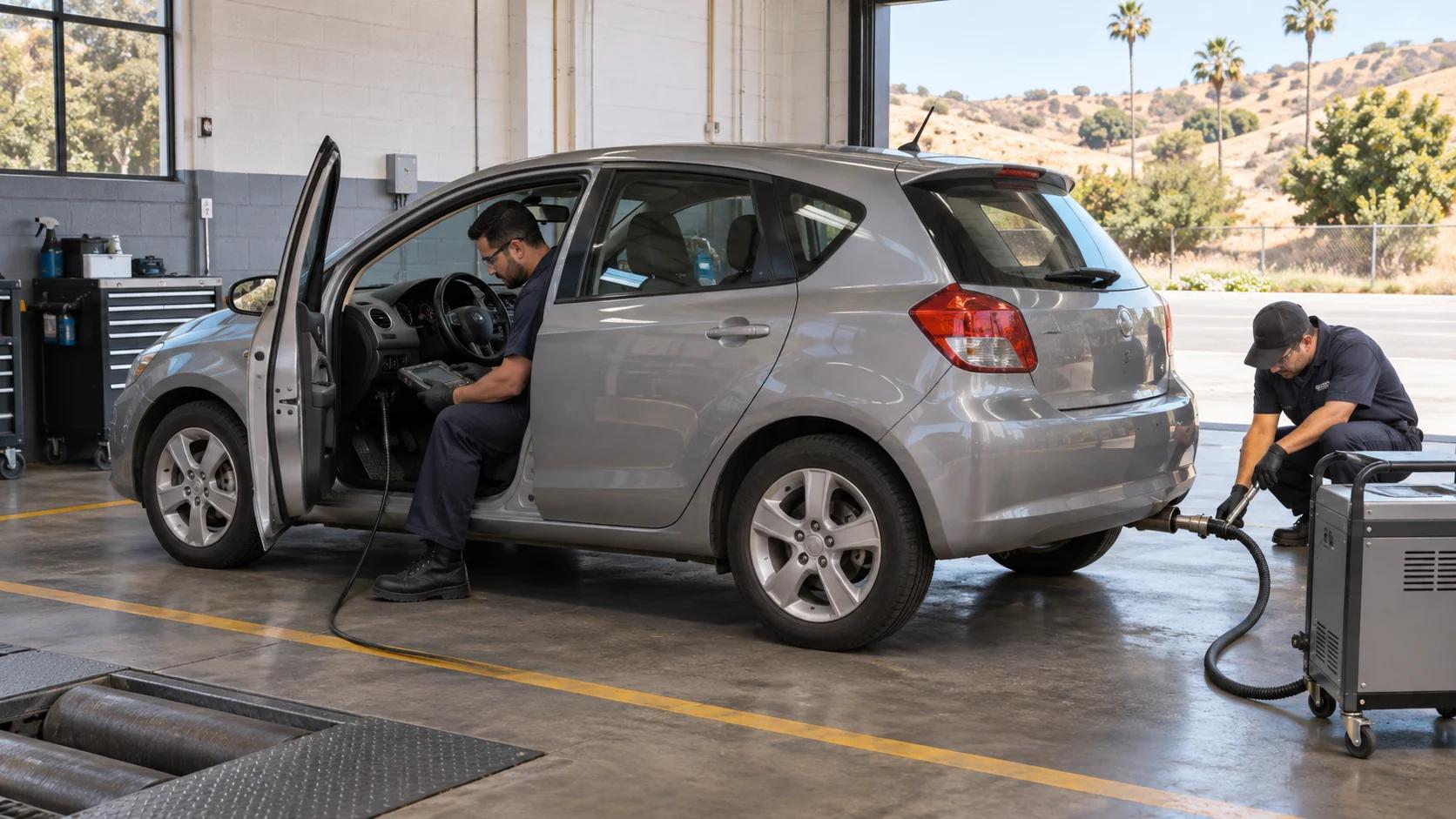
The station transmits the certificate to DMV electronically. The paper vehicle inspection report remains useful because it identifies the tested vehicle, date and outcome. Ask for it before signing the title, then compare its VIN with the VIN on the dashboard, door label and title.
A verbal agreement that the buyer will “smog it later” shifts a predictable registration problem onto the buyer. If a non-exempt vehicle cannot pass, DMV may not complete the transfer even though money and keys have changed hands.
A passing certificate lasts 90 days
The certificate is valid for 90 days. It can be used for the transfer if DMV receives the application within that window. A recent registration-renewal test may therefore satisfy the sale requirement, but only if its certificate is still valid.
Do not calculate from a repair invoice or the day the seller says the test occurred. Use the official inspection date. The Bureau of Automotive Repair's online history tool accepts a VIN or license plate; VIN is safer because plates can change. Records update daily.
If the certificate will expire before the transfer paperwork is submitted, require a new test. California gives the buyer 10 days after a private purchase to transfer ownership, while the seller must report the transfer within five days. Leaving only one or two days on a certificate creates needless risk.
Which vehicles are exempt?
For a change of ownership, the main exemptions listed by California authorities include:
- gasoline, hybrid and alternative-fuel vehicles four model years old or newer;
- gasoline vehicles from model year 1975 or earlier;
- diesel vehicles from model year 1997 or earlier;
- diesel vehicles above 14,000 lb gross vehicle weight rating (6,350 kg);
- vehicles powered solely by electricity;
- motorcycles and trailers;
- qualifying transfers between specified immediate family members.
The four-model-year exemption is specific to ownership changes. It is not the same as the eight-model-year exemption used for biennial registration renewal. For an exempt newer vehicle, DMV applies a smog transfer fee instead of requiring an inspection.
Do not assume a plug-in hybrid is treated like a battery-electric car. California includes hybrids among vehicles subject to Smog Check once they are outside the relevant model-year exemption.
What if the car fails?
A failed vehicle needs emissions repairs and another inspection before it can produce a passing certificate. The seller should resolve that before completing a normal private sale. The official report will state the failure and identify the inspection components involved, but it is not a repair estimate.
An illuminated check-engine light will cause a failure. Recently disconnected or replaced batteries can also leave readiness monitors incomplete; BAR advises driving for a week or two to allow them to reset. Modified or non-approved engine software can cause a failure as well.
Those points matter during a pre-purchase inspection. A seller who clears diagnostic codes immediately before a viewing may temporarily extinguish the warning light while also resetting the monitors. Ask the inspecting technician to check readiness status rather than relying only on the dashboard.
The test is not a full mechanical inspection
A passing Smog Check confirms compliance with the emissions inspection at that time. It does not certify the brakes, tires, crash structure, cooling system, transmission or title history.
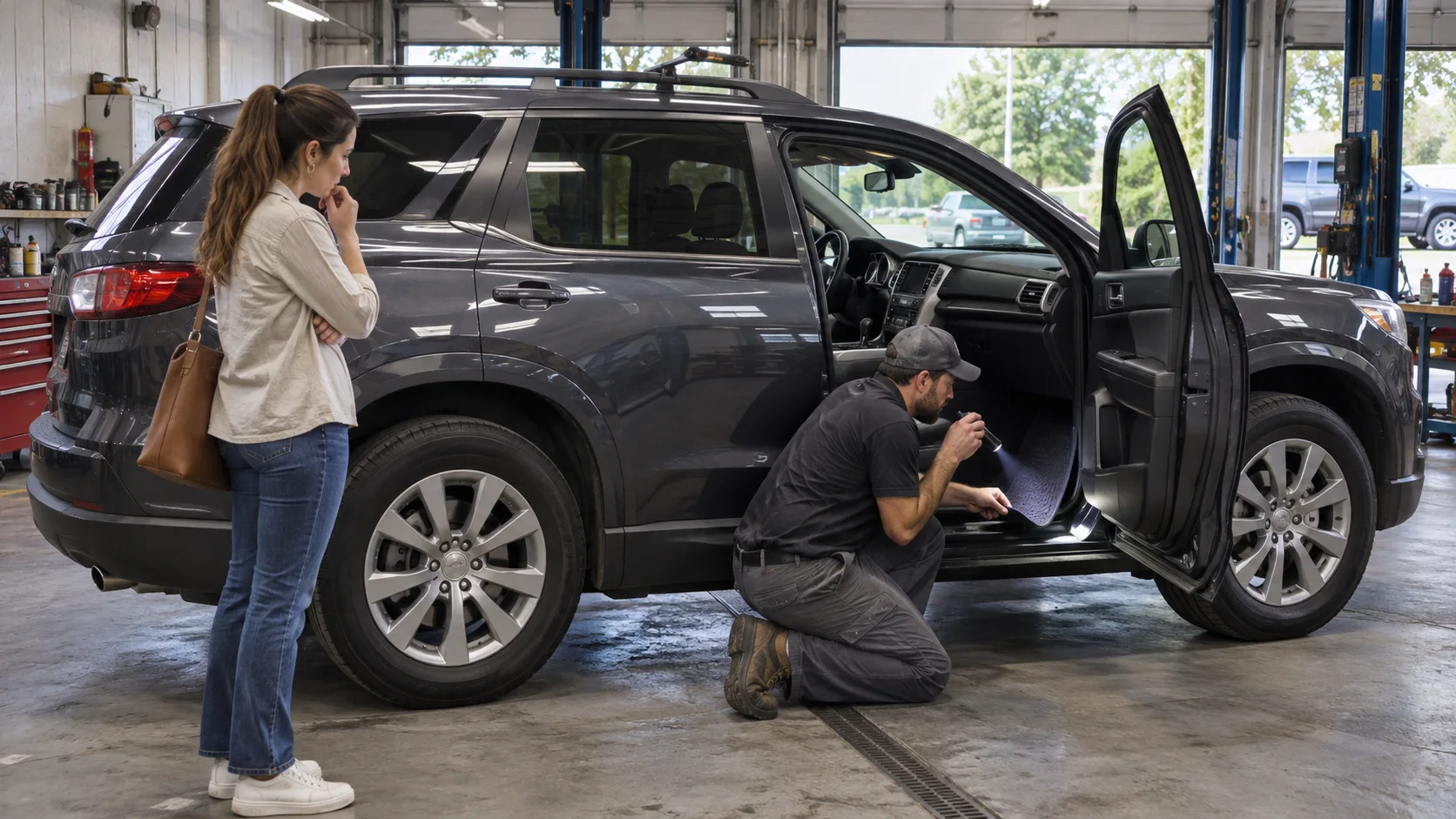
Arrange a separate mechanical inspection. Review title and ownership documents, check for open recalls, and inspect for water or collision damage. Our guide to open recalls on used cars explains how recall status differs from an emissions result, while the flood-damage guide covers signs a smog test will not reveal.
A practical buyer-seller checklist
Before the sale, the seller should confirm whether the vehicle is exempt, obtain the test when required, keep the inspection report and submit the Notice of Transfer and Release of Liability after the sale.
The buyer should verify the VIN, official test history and certificate date; confirm that the title names the actual seller; complete the transfer within 10 days; and budget tax and DMV fees separately. If an exemption is claimed, identify its precise basis before paying.
The decision rule is simple: for a non-exempt California private sale, do not complete payment without a passing result that will remain valid through the transfer. A low price does not compensate for a car that cannot be registered.