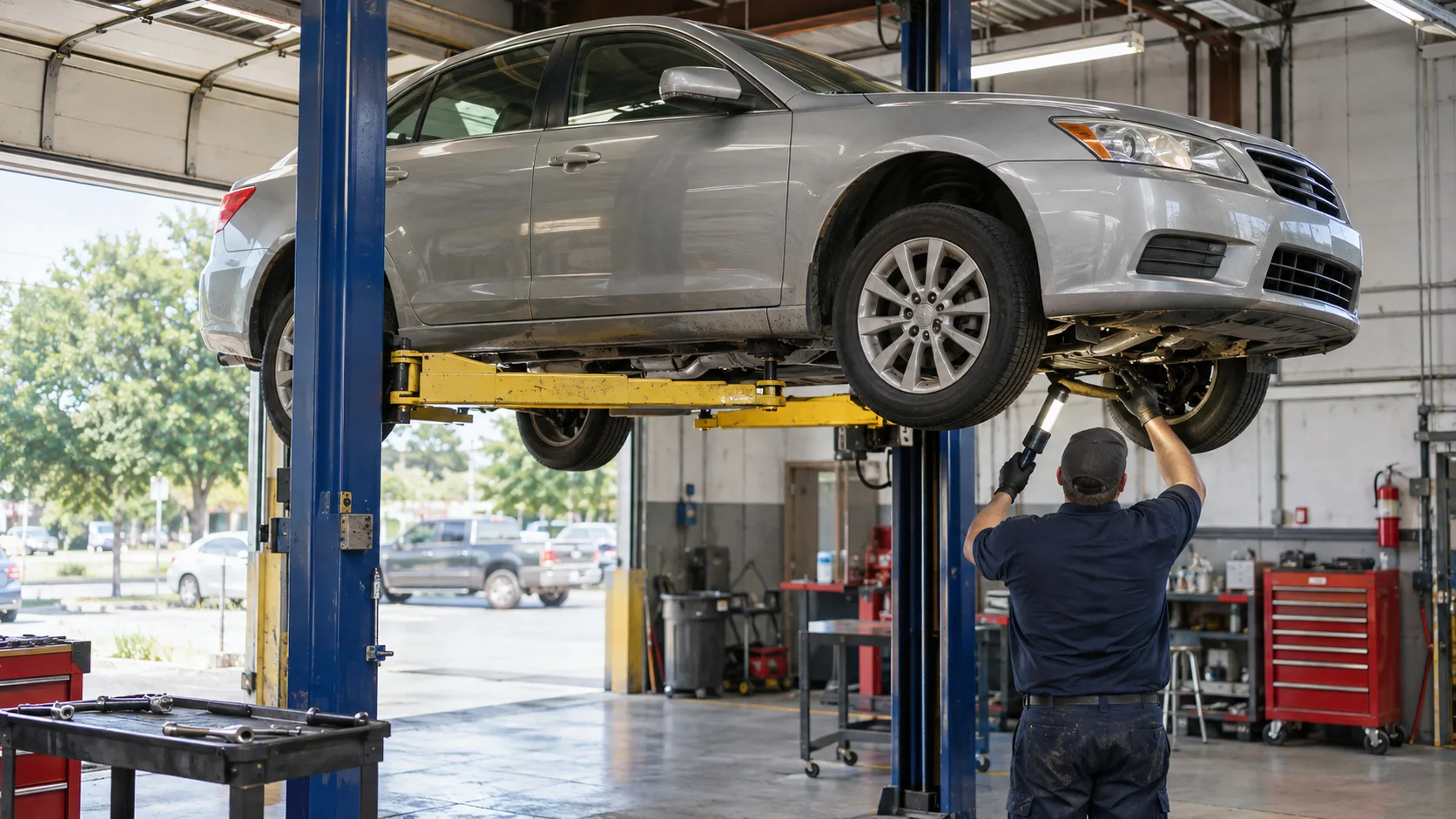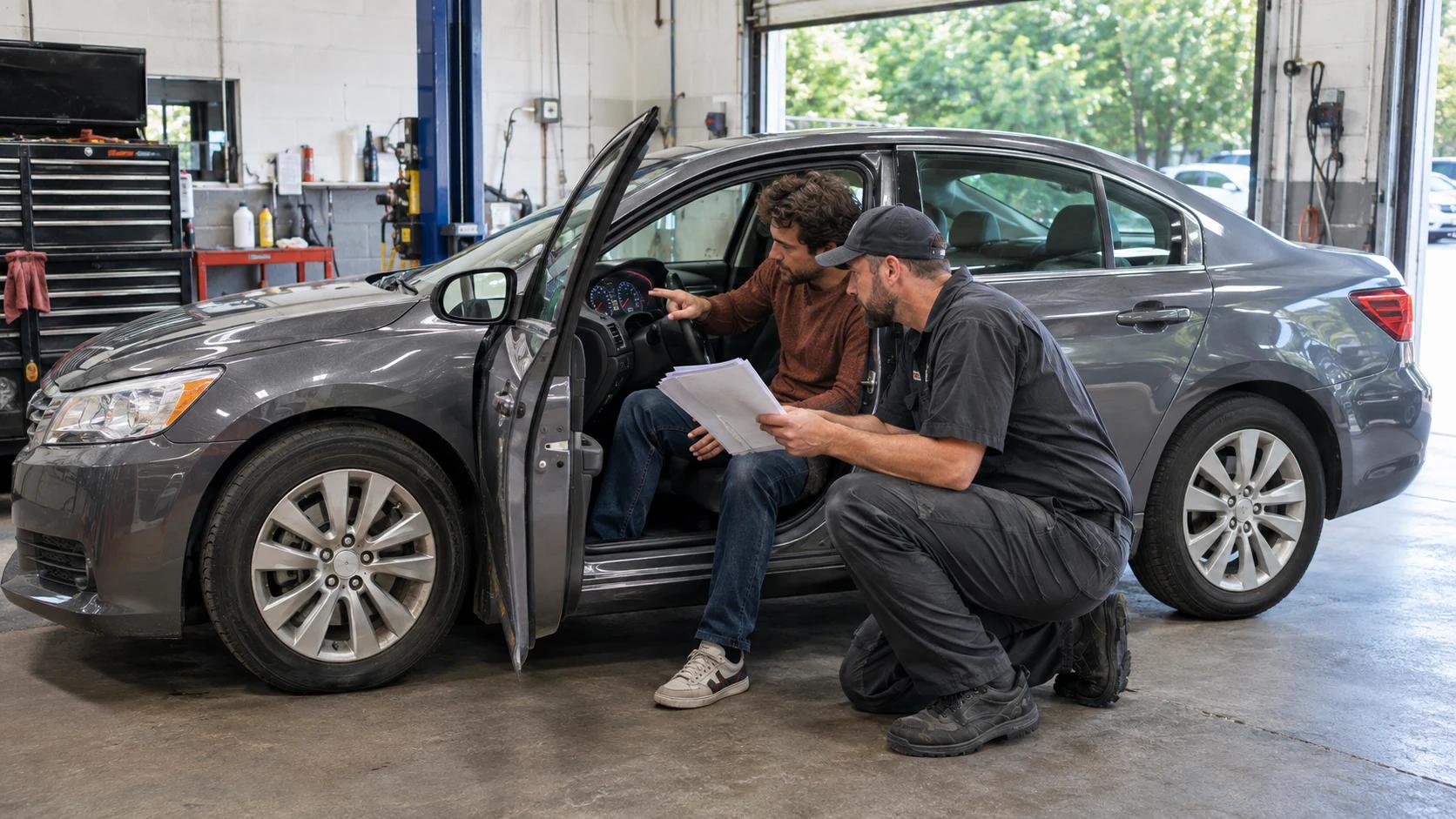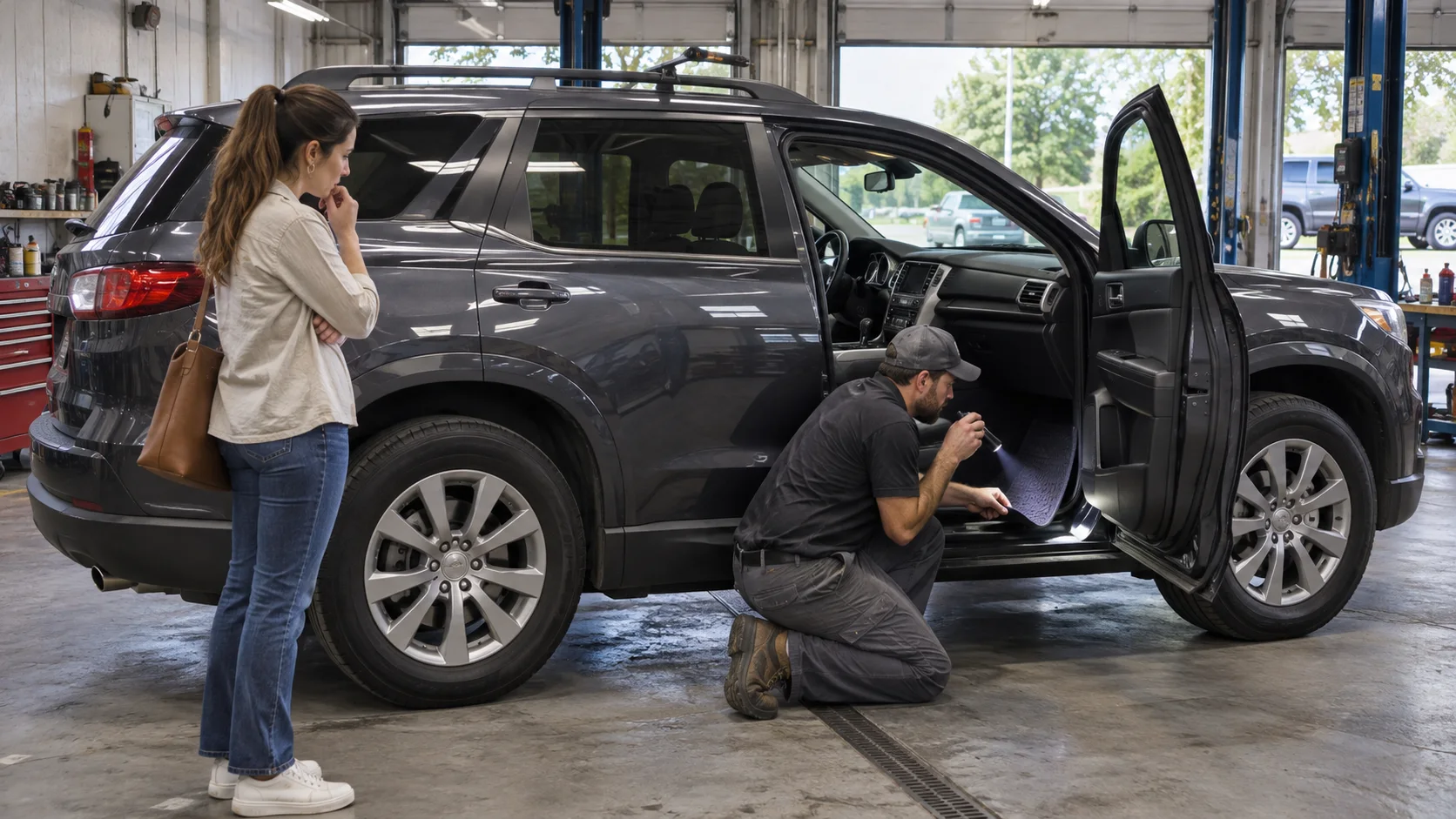
A used car can look dry and still carry expensive flood damage. Before paying a deposit, compare the title and total-loss history with an inspection of the cabin, electrical system and hidden metalwork, then have an independent mechanic examine the car. A missing flood brand does not prove that the vehicle stayed out of water.
Floodwater can reach wiring, control modules, connectors and airbag sensors. Corrosion may develop after the cabin has been cleaned and the car has returned to service. The buying decision therefore needs two separate checks: what the records disclose and what the physical car shows.
Check the title history before visiting the car
Ask for the VIN before arranging an inspection. Run it through an approved National Motor Vehicle Title Information System provider and read the current title, brand history, reported total-loss history, salvage history and latest reported odometer information.
NMVTIS retains brands reported by states, including labels such as flood, salvage and junk. That matters when a damaged car is moved across state lines. The Department of Justice also warns that state procedures and reporting practices differ. An NMVTIS report is not a repair history, and it cannot show damage that was never reported to the system.
Use the link in the report to request the current state's full title record when the history is unclear. Compare the VIN on every document with the VIN visible on the car. A recently issued duplicate title, a sequence of quick interstate transfers or a seller who will not provide the VIN deserves an explanation before the inspection proceeds.
The Federal Trade Commission also points buyers to the National Insurance Crime Bureau's free VINCheck database. Its limitation is important: the database can identify certain insured vehicles reported as flood damaged or salvage, but an uninsured loss may not appear.
If the records show a flood, salvage or rebuilt brand, use the additional registration, financing and insurance checks in our salvage-title guide. A rebuilt title confirms a legal status under the issuing state's rules; it does not certify the quality of every repair.
Inspect the places a quick detail can miss
NHTSA and the FTC identify several physical warning signs. Look underneath removable floor mats and, with the seller's permission, at the edges of the carpet. Check the trunk floor, spare-wheel well, glove box and the area below the dashboard for silt, water lines or dirt that does not match the rest of the cabin.
Use smell as a prompt for more inspection, not as proof. Musty odors can indicate moisture or mildew. A strong deodorizer in an otherwise ordinary used car can also be an attempt to mask a problem. New carpet or mismatched upholstery in an older vehicle needs a dated invoice and a credible reason.
Other useful checks include:
- rust or green-white corrosion on seat rails, fasteners and electrical connectors;
- fogging or trapped moisture inside lamps and instrument lenses;
- brittle or discolored wiring below the dashboard;
- mud in door cavities, speaker housings or the spare-wheel well;
- inconsistent replacement dates for carpet, sound insulation and interior trim.
Normal surface rust underneath an older car is not the same as flood exposure. The warning is a pattern: corrosion or silt inside protected cabin areas, combined with unexplained interior replacement and an incomplete history.
Test every electrical function
Operate the exterior lights, power windows, locks, seat motors, climate control, infotainment system, cameras, parking sensors and driver-assistance warnings. Start the car from cold if possible and watch the instrument panel for warning lamps that fail to illuminate during the normal self-check or remain on afterward.
A fault-free dashboard is not a clean bill of health. Codes can be cleared, and water-related resistance or corrosion may be intermittent. An independent shop should scan all available modules, inspect accessible connectors and charging hardware on an EV or plug-in hybrid, and look for signs of water entry without dismantling safety-critical high-voltage parts.
Do not accept a seller-selected inspection if you cannot speak directly with the technician. The inspection order should state that concealed water damage is a concern. Ask the mechanic to document findings in writing and photograph any corrosion, silt or non-original wiring.
Put the evidence in one timeline
Combine the title record, NMVTIS report, insurance or auction disclosures, service invoices and physical inspection. A vehicle advertised in a dry inland state may still have arrived from a storm-affected area months earlier. Geography is a clue, not a verdict.
The strongest case to continue is a consistent title trail, no undisclosed total-loss record, dry protected areas, original-looking connectors and an independent inspection with no water evidence. One unexplained contradiction changes the decision: pause until the seller supplies records that resolve it.
Walk away if the seller blocks a VIN check, refuses an independent inspection, offers only a duplicate title without context or explains corrosion with an unsupported story. A lower price cannot make unknown damage to restraint, braking or electrical systems measurable after the sale.