The US House Select Committee on China has opened a bipartisan investigation into Mercedes-Benz’s Chinese shareholders, technology partnerships and use of Chinese-made parts in vehicles built or sold in the United States. Mercedes-Benz has been asked to produce records and answer roughly two dozen questions by 1 December 2026. The inquiry is not a finding of wrongdoing and does not ban the company or any of its cars.
Republican committee chairman John Moolenaar and ranking Democrat Ro Khanna announced the investigation on 17 November. Their letter is addressed to Mercedes-Benz Group chief executive Ola Källenius and Mercedes-Benz North America chief executive Jason Hoff. It also requests an in-person oversight meeting with company leadership and tells the manufacturer to preserve relevant documents and electronic communications.
The ownership numbers are public
Mercedes-Benz’s own shareholder page lists BAIC Group with 9.98% of registered capital and Li Shufu with 9.69% through Tenaciou3 Prospect Investment Limited. Together, those known positions amount to 19.67%. The figures are based on voting-rights notifications and are dated 30 June 2026. Kuwait Investment Authority is listed separately with 5.33%, while the company reports 962,903,703 shares in issue.
The committee describes BAIC as a Chinese state-owned enterprise and argues that the nature of the two large positions raises questions about influence and information access. It also says their share of votes cast at individual shareholder meetings may be higher than their combined share of capital. These are claims and concerns set out by lawmakers, not conclusions reached by a court or a regulator after examining Mercedes-Benz’s records.
Mercedes-Benz told Reuters that it had received the letter and would cooperate. The company said it operates independently under its Board of Management and that its shareholders have no management-board seats or management authority. It also said it has long supported measures intended to protect US national security. The investigation will test those assurances against corporate agreements and other documents requested by the committee.
Contracts, code and components are in scope
The request goes well beyond a list of shareholders. Lawmakers want copies of relevant agreements involving BAIC, Li Shufu and other China-based entities. The committee specifically identifies technology relationships with Hesai, Tencent and Momenta, alongside other Chinese automotive and software companies.
Its questions cover possible influence by Beijing over strategic decisions, technology-sharing arrangements, access to proprietary Mercedes-Benz research and development, and communications with Chinese government officials. The committee also wants to know which Chinese-made components are fitted to vehicles manufactured or sold in the United States. A model-by-model or system-by-system answer could matter because a modern car combines connectivity hardware, cloud services, software and sensors from many suppliers.
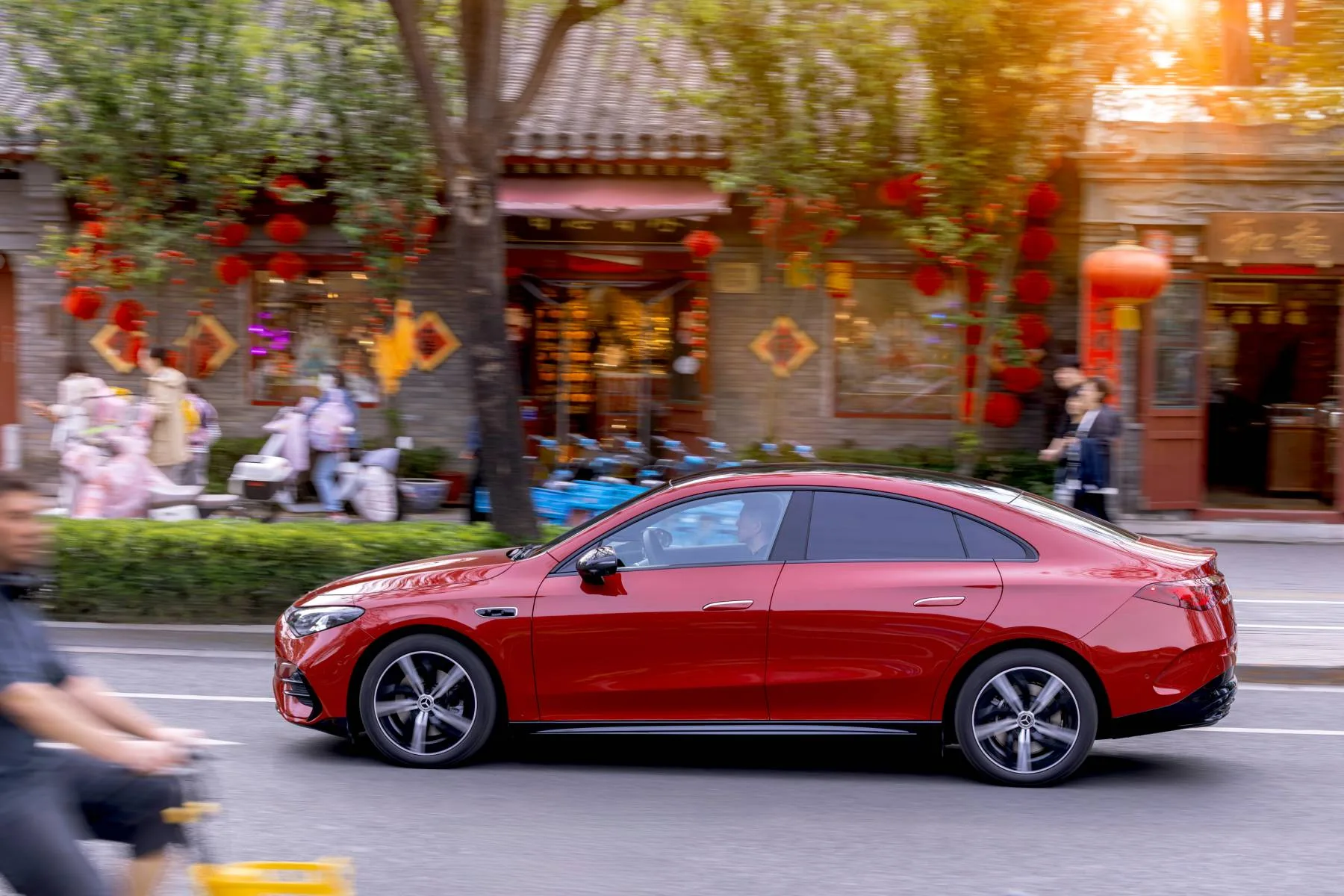
Mercedes-Benz openly develops market-specific technology in China. The manufacturer says MB.DRIVE ASSIST PRO launched there with the new CLA at the end of 2025. The SAE Level 2 package uses 27 sensors and still requires continuous driver supervision. Mercedes-Benz has also described a local Tencent cloud partnership supporting automated-driving systems. Those disclosed projects do not prove improper access or a prohibited transfer. They do explain why lawmakers are seeking the contracts, security boundaries and allocation of control rather than relying only on the names of shareholders.
A House inquiry and a Senate bill are different processes
The investigation arrives while Congress is debating the Connected Vehicle Security Act of 2026. The Senate-reported text of S. 4429 would restrict connected vehicles, covered software and connectivity hardware associated with designated foreign adversaries, including China. One ownership and control test discussed in the bill uses a threshold above 15% for covered-country equity, voting rights, board representation or other indications of control.
Mercedes-Benz’s two disclosed Chinese positions exceed 15% when added together. That arithmetic does not settle the legal question. Separate financial holdings do not automatically establish coordinated control, and the bill has not become law. Republican senator Bernie Moreno, one of its sponsors, has said the final measure will ensure that Mercedes-Benz is not barred from the US market. Similar discussions concern Volvo Cars, which is majority-owned by Geely.
The distinction is important. The House committee is gathering evidence about one manufacturer and may use the answers to inform legislation. The Senate proposal would establish general rules and procedures. Neither action currently prevents an American dealer from selling a Mercedes-Benz, nor does it order owners to disable connected services.
Existing US rules already target connected technology
The Commerce Department adopted a final rule in January 2025 covering certain vehicle-connectivity hardware and automated-driving software with a sufficient link to China or Russia. The Bureau of Industry and Security cited risks including access to sensitive data and remote manipulation. Software restrictions mainly begin with model-year 2027 vehicles, while hardware restrictions generally reach model year 2030, with declarations and authorisation processes built into the regime.
The new congressional inquiry has a wider corporate focus. It combines ownership, research contracts, suppliers, components and contacts with government officials. That could result in requests for more detailed supply-chain declarations or safeguards even if no single component is found to breach the existing Commerce rule.
Mercedes-Benz also has a substantial physical presence in the United States. Its Alabama operation builds SUVs, and its South Carolina site produces vans. The inquiry therefore is not simply about blocking a finished vehicle imported from China. Any broad rule that catches the German manufacturer could affect American production, dealers and suppliers, which helps explain why lawmakers are discussing exemptions and authorisation pathways.
What the 1 December deadline does and does not mean
The immediate event is a document deadline, not a product deadline. The committee has not identified a Mercedes-Benz model that transmits driver data to Chinese authorities, and it has not published evidence of an unlawful technology transfer. Owners face no recall, software shutdown or new compliance step because of the letter.
Practical consequences depend on what Mercedes-Benz supplies and what Congress does next. Lawmakers could pursue further hearings, request narrower technical records or adjust pending legislation. Any future obligations might involve tracing components, restricting access to data, reviewing contracts or addressing ownership. Until then, the verified position is limited: the investigation is active, Mercedes-Benz says it will cooperate, and the requested response is due on 1 December 2026.
Image: Mercedes-Benz Media. Official MB.DRIVE ASSIST PRO press photograph from China, converted locally to WebP for publication.
Sources
- House Select Committee on China — investigation announcement, 17 November 2026
- Mercedes-Benz Group — shareholder structure at 30 June 2026
- US Government Publishing Office — Connected Vehicle Security Act of 2026
- US Bureau of Industry and Security — connected-vehicle supply-chain rule
- Mercedes-Benz Media — MB.DRIVE ASSIST PRO in China and official photograph
- Reuters — Mercedes-Benz response and legislative context