
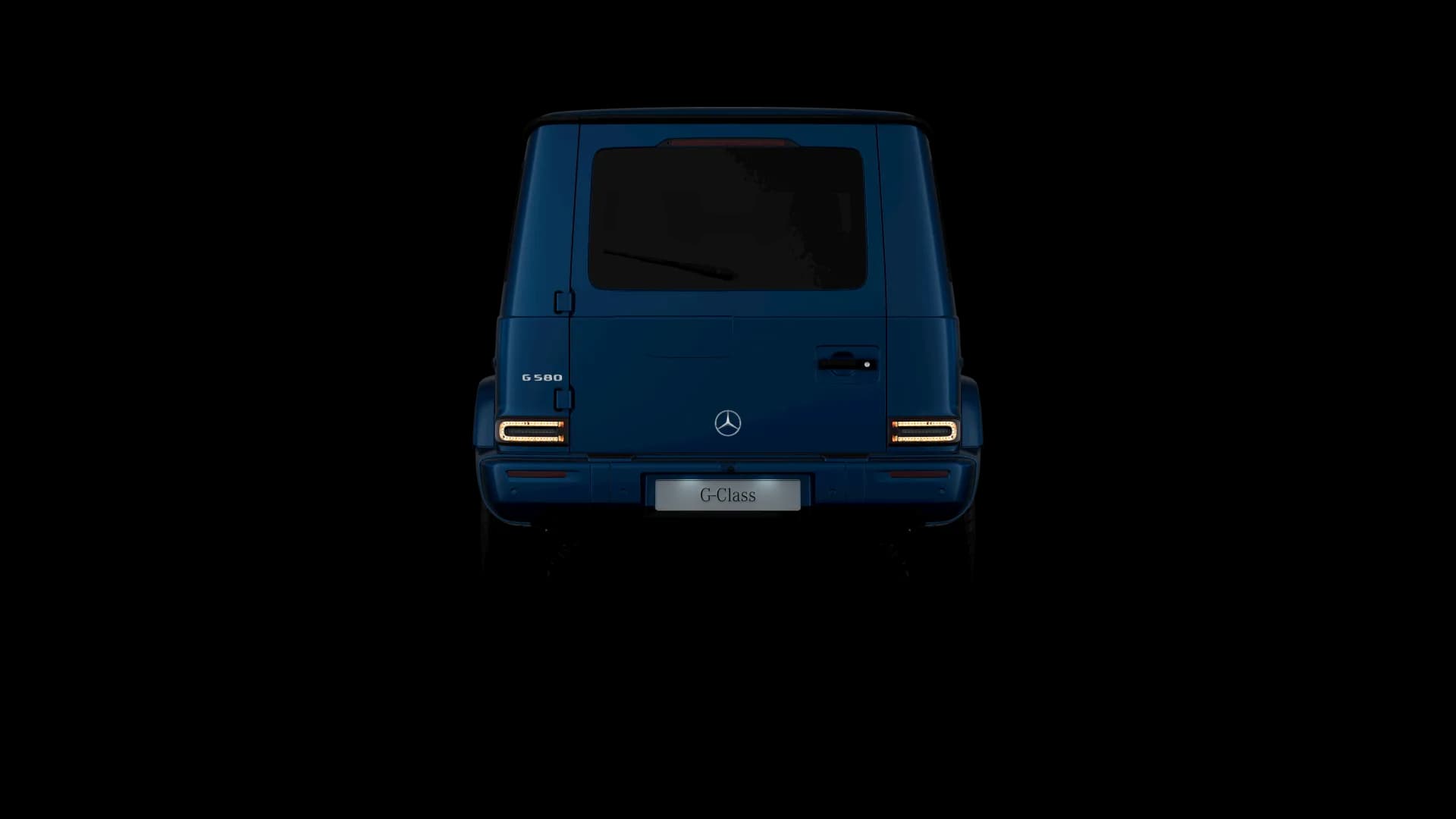
A proposed US law aimed at Chinese vehicle technology could also affect Mercedes-Benz because Chinese groups together hold nearly 20 percent of the German automaker. The bill would prohibit or restrict connected vehicles associated with China and other designated foreign adversaries, while its ownership test would apply when more than 15 percent of a manufacturer is linked to a covered country.
That creates an unusual test case. Mercedes-Benz is a German company with a long manufacturing history in the United States. It builds SUVs in Alabama and operates a van plant in South Carolina. The bill’s stated target is the security and industrial influence of Chinese vehicle companies, but the proposed ownership language could reach a non-Chinese automaker with Chinese shareholders.
What the bill would do
The Government Publishing Office has published the Senate-reported version of the Connected Vehicle Security Act of 2026. The proposal would prohibit the importation, manufacture, sale, resale or introduction into US interstate commerce of certain connected vehicles from January 1, 2027. It would also restrict covered software from that date and connected-vehicle hardware from January 1, 2030.
The bill lists China, Russia, Iran and North Korea as covered countries. Its definition of a connected vehicle is broad. It includes a mechanically powered vehicle primarily made for public roads that integrates networked hardware and automotive software able to communicate through cellular, satellite, Wi-Fi, dedicated short-range communication or another wireless connection. The definition is therefore not limited to battery-electric cars or vehicles with advanced automated driving systems.
One of the most important provisions concerns ownership and control. A vehicle manufacturer could be covered if more than 15 percent of its equity, voting interest, board representation or other indication of control is owned or controlled, directly or indirectly, by an entity organised under the laws of, or headquartered in, a covered country. That wording goes beyond a ban on Chinese brands selling cars in America.
Why Mercedes-Benz became the test case
Motor1 reports that Geely and Beijing Automotive together own nearly 20 percent of Mercedes-Benz. The German company also has a substantial US industrial footprint. Its Alabama operation builds SUVs for global markets, while its South Carolina plant produces vans. A rule based solely on the nationality of a controlling entity would not necessarily reach Mercedes; a rule based on a 15-percent ownership threshold could.
The distinction matters because a shareholder is not automatically the same as a controlling owner. Mercedes-Benz chief executive Ola Källenius has argued that the Chinese stakes are financial and passive. He said the investors are not acting in concert with Beijing and are not represented on the company’s board. Those comments describe Mercedes-Benz’s position, but they do not determine how Congress or regulators would interpret the bill.
The issue has also become part of a wider political argument. Senator Ted Cruz has accused General Motors of lobbying for the threshold in order to remove a rival from the US market. The accusation has not been independently verified. It shows, however, that the proposed limit is being debated as both a national-security rule and an industrial-policy measure.
Possible ways for Mercedes to avoid the threshold
Mercedes-Benz is lobbying to raise the ownership cap from 15 percent to 25 percent. If the rest of the bill remained unchanged, that would put the reported Chinese holdings below the proposed limit without requiring the company to change its shareholder structure.
Senator Bernie Moreno, one of the bill’s leading sponsors, has also discussed waivers that could allow Mercedes to continue operating while regulators review the company’s situation. The proposal includes authorisation procedures for transactions that would otherwise be prohibited when the Commerce Department concludes, on the basis of a written risk assessment, that they do not create an undue risk of data exfiltration, remote vehicle manipulation, damage to critical infrastructure or another national-security threat.
Not every senator supports a broad exception. Rand Paul has argued that a 15-percent line could sweep in Mercedes-Benz, Aston Martin and Lotus, even though they are not Chinese automakers. A waiver could resolve an individual case, but it would also make the law more dependent on administrative decisions after enactment.
According to Motor1, Senate sponsors moved the permanent vote to November, after the chamber returns from recess, rather than forcing a decision before the midterm elections. If the bill passed in its current form, Mercedes-Benz would have until 2030 to bring its ownership arrangement into compliance. That timetable remains conditional because the bill still needs to move through Congress and could be amended.
Software and hardware have separate deadlines
The legislation is not only about shareholders. It would prohibit the integration of covered software into connected vehicles from January 1, 2027. The hardware ban would start in 2030. The bill also says that renaming, rebranding, restructuring or altering a vehicle, software package or hardware item to evade the prohibition would not remove it from the scope of the law.
The proposal would sit alongside an existing Commerce Department rule. The Bureau of Industry and Security says that vehicle connectivity systems and automated-driving software or hardware with a sufficient nexus to China or Russia can create risks involving personal data, critical infrastructure and remote manipulation. Under that rule, software restrictions apply to model-year 2027 vehicles, while hardware restrictions apply to model year 2030, or January 1, 2029, for units without a model year. The rule also provides for declarations of conformity, general authorisations, specific authorisations and advisory opinions.
The Senate bill would be broader in some respects. It adds an explicit ownership and control test for manufacturers and lists Iran and North Korea alongside China and Russia. The existing Commerce rule focuses more directly on the origin and supply chain of covered vehicle technology.
What US buyers should expect
The proposal does not currently ban Mercedes-Benz in the United States. It is still under negotiation, and the 15-percent threshold, the possible waiver system and the 2030 compliance period could all change. Even if the bill passes, the practical effect would depend on the final statutory wording and the Commerce Department’s implementing procedures.
For consumers, a future law could affect which vehicles may be imported or sold, which software can be integrated and which components can enter the US supply chain. It would not automatically turn every Mercedes-Benz already on the road into a prohibited vehicle. The bill is aimed mainly at future commerce, covered technology and manufacturers that fall within its definitions.
The confirmed facts are narrower than some headlines suggest. Congress is considering a bill; the text includes a 15-percent ownership threshold; Chinese groups reportedly hold nearly 20 percent of Mercedes-Benz; and the Senate vote has been delayed. A final ban on Mercedes-Benz has not been enacted, and the final shape of the legislation is unknown.


