If the temperature is approaching 0 °C, summer screenwash or water left in the washer system can freeze once the liquid itself falls below its freezing point. The first obvious symptom may be a missing or weak spray from the jets. If the reservoir freezes solid, the tank and pump can be damaged. A forecast of exactly 0 °C does not mean every system will freeze that night: the mixture's composition, where the car is parked and the actual temperature of its components matter.
What can fail first?
The washer circuit has a reservoir, pump, hoses and narrow jets. Liquid that is insufficiently protected can stop flowing through any of them. ADAC notes that low antifreeze concentration particularly exposes the jets. It also warns that heated jets or a heated reservoir do not necessarily protect the hoses, which are usually unheated. You may hear the pump but see no spray, or get a brief uneven stream before it stops. Neither symptom proves which component has frozen; a blockage or an electrical fault can look similar.
The driving consequence is immediate. Spray from a salty, wet road can coat the windscreen, while the wipers smear it without enough cleaning fluid. RAC advises keeping the correct winter-strength mixture in the system so the reservoir, pipes and jets remain usable below freezing. Clear the whole screen before setting off, and stop somewhere safe if visibility deteriorates on the road.
Could the pump or reservoir break?
Yes, but damage is a possibility rather than an automatic result of one cold night. Water expands as it freezes. ADAC says a completely frozen reservoir may damage the reservoir or washer pump and recommends checking that the system is watertight after thawing before refilling. Volvo's XC60 manual likewise calls for antifreeze washer fluid in freezing conditions to prevent damage in the pump, reservoir and hoses.
Do not repeatedly hold the washer switch down when no fluid appears. That will not melt ice. The AA warns that running the pump without fluid coming out can blow a fuse. If the tank is frozen, let the vehicle thaw in a frost-free place; if it leaks afterwards or the pump remains silent, have it inspected.
What should you do before the first frost?
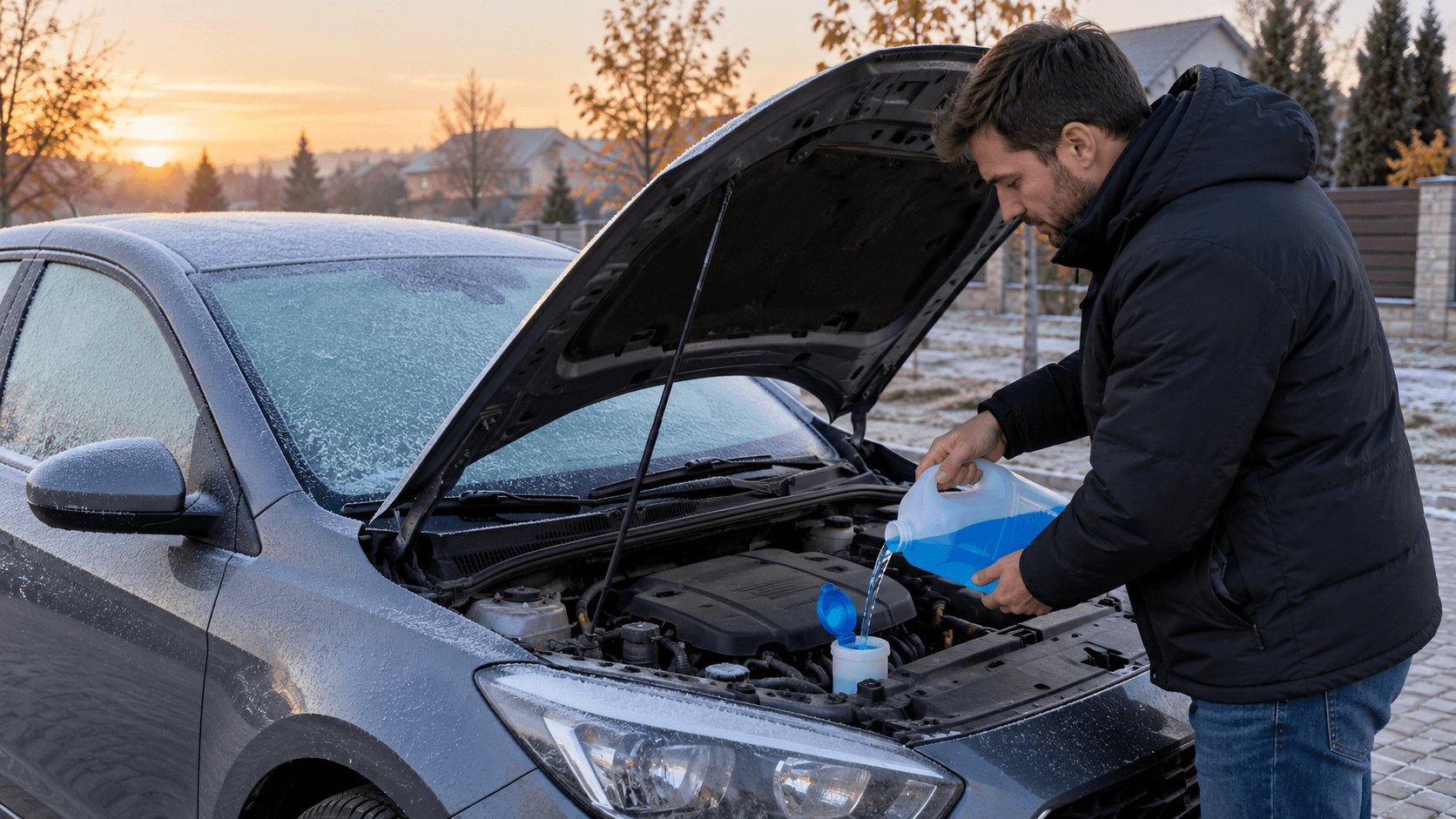
Check the bottle's label. A ready-mixed winter product is used as supplied; a concentrate must be diluted according to its own instructions. The protection temperature printed on a new bottle does not describe the unknown mix already in your car. ADAC recommends emptying the summer mixture as far as practical before refilling, because leftovers dilute the winter product. Operate the washers briefly after filling so the new fluid reaches the hoses and jets; a full tank alone does not replace the liquid already in those lines.
Choose protection for the coldest conditions you reasonably expect, including overnight parking and journeys to colder areas, not only the afternoon forecast. Follow the car manual if it specifies a fluid standard. ADAC suggests a mixture protected to around −20 °C as a practical winter target, but the correct dilution depends on the product. An over-concentrated mix can leave a stubborn film on the glass, so adding concentrate by guesswork is no solution.
If frost has already stopped the spray, clear the windscreen with a suitable scraper or de-icer before travelling. Do not pour hot water over the glass. Test the washer only after the system has thawed, and change the fluid before the next freeze.
Image: illustrative generated scene; it does not document a vehicle test.