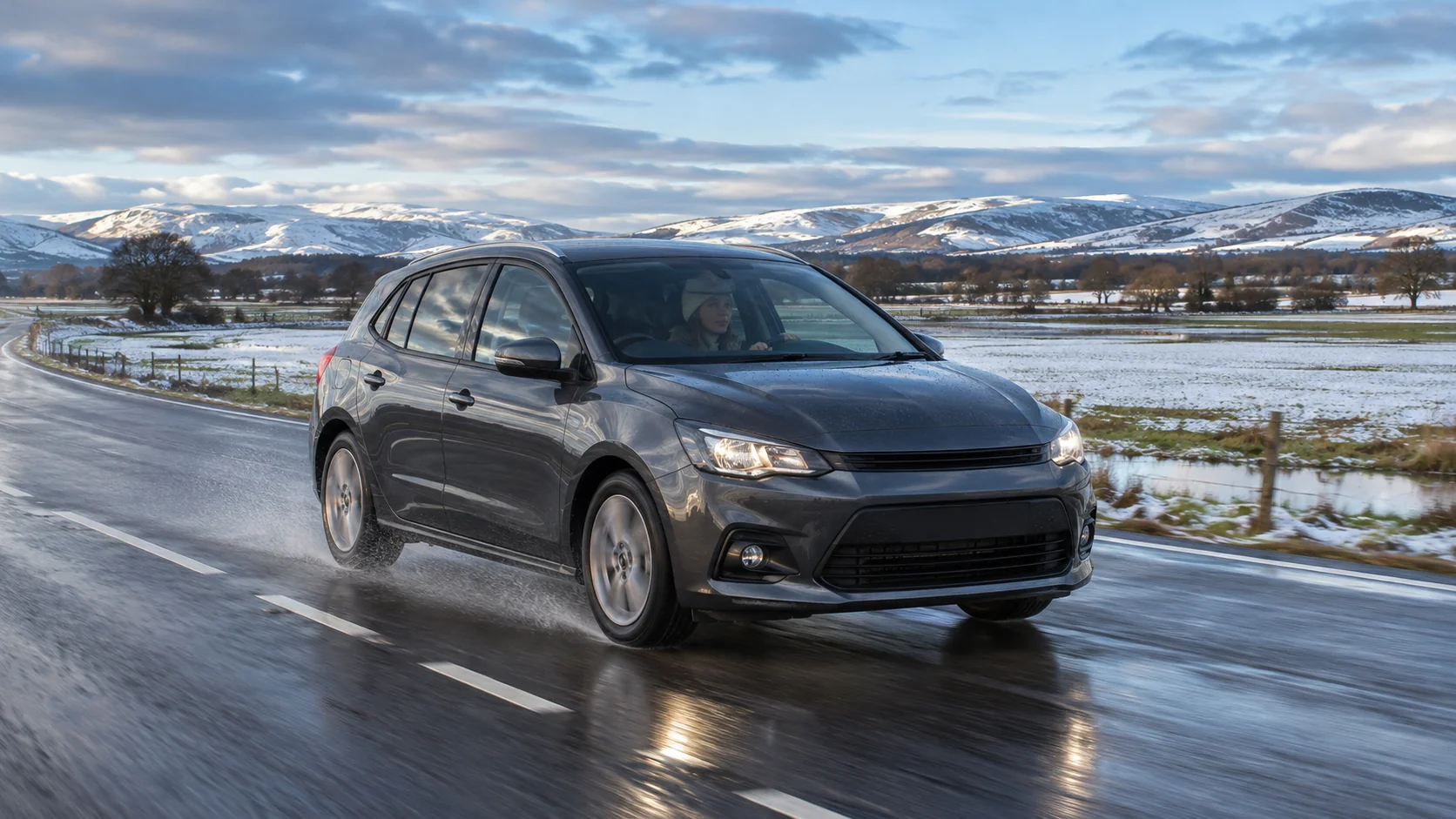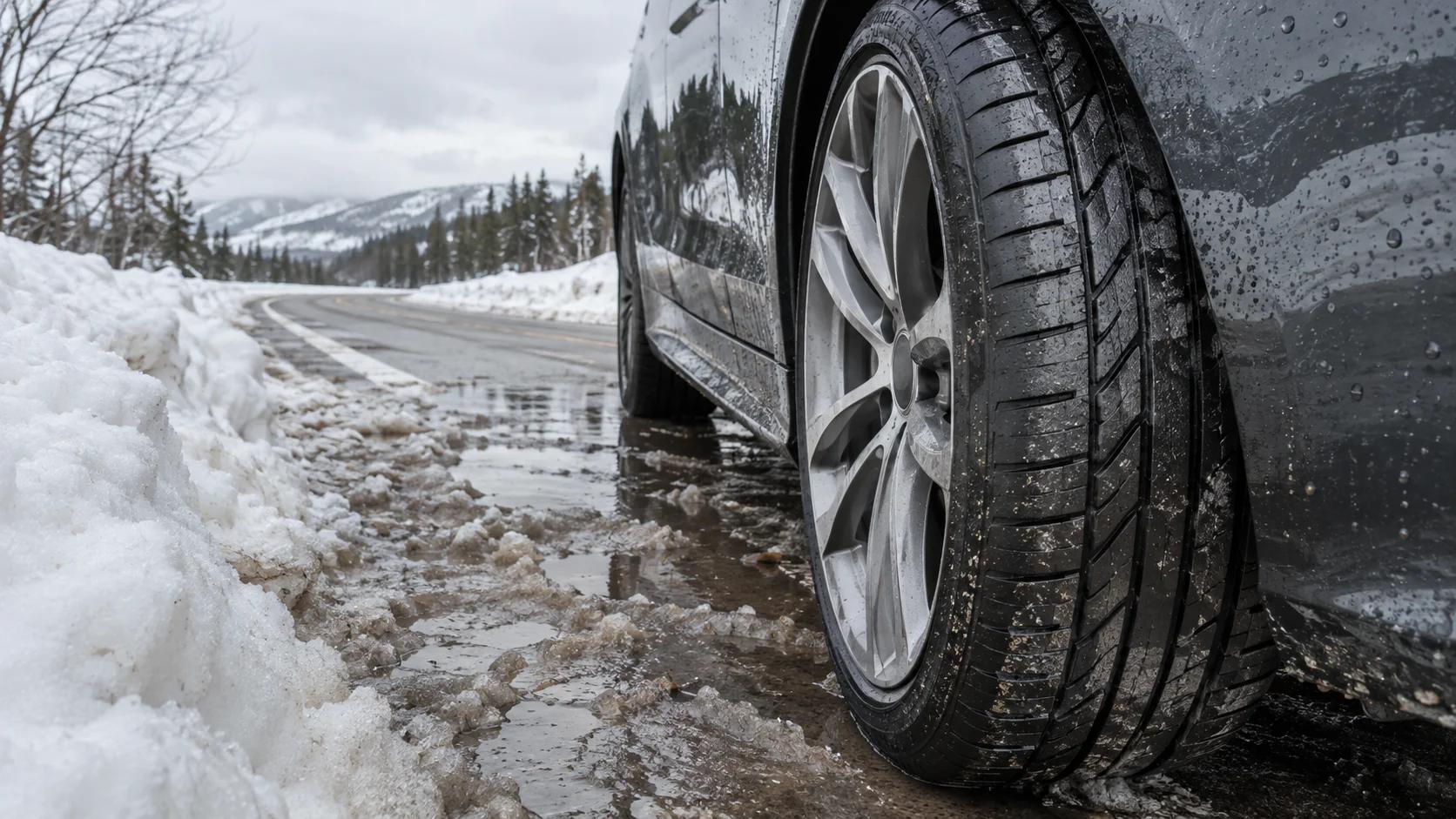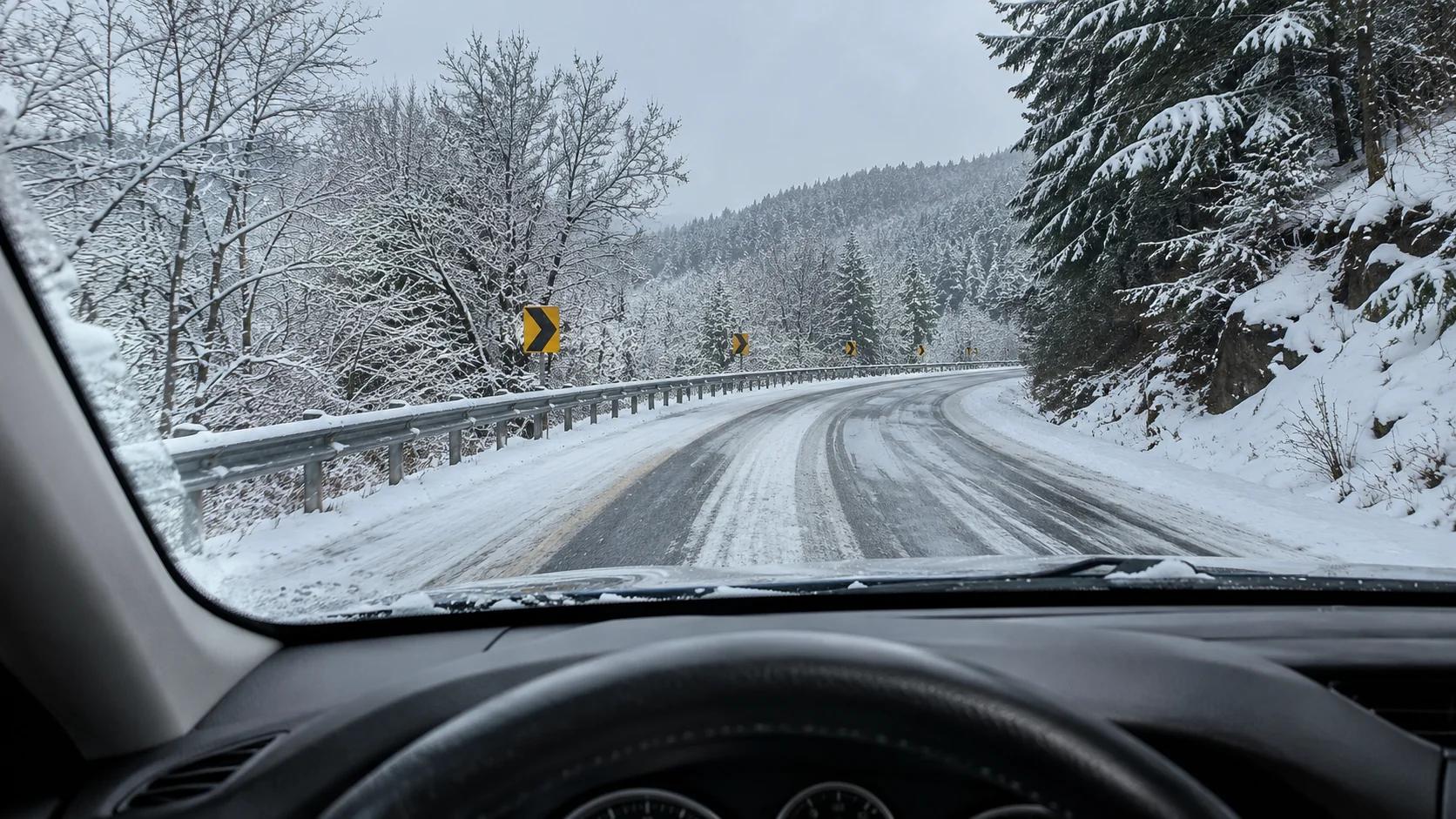
A car can feel manageable on a flat snowy street and fail as soon as the road climbs. Starting uphill requires the tyres to produce enough force to move the vehicle and overcome the slope. Summer tyres often cannot do that on packed snow.
Wheelspin is the obvious symptom. Traction control may reduce engine power to prevent a wheel from spinning, but it cannot manufacture friction. All-wheel drive can spread torque among more wheels and may help a car pull away. It does not remove the need to brake or turn on the same low-grip surface.
The downhill side is more serious. Gravity adds to the distance needed to stop, and a driver who has managed to climb may assume the return trip will be equally easy. Continental's guidance identifies poor acceleration and longer braking distances as consequences of summer tyres on snow. ADAC's flat-road test already found a large stopping gap: 63.1 m for a summer tyre against 29.1 m for a winter tyre from 50 km/h in one controlled comparison.
Do not use a hill as a trial to see whether the car can make it. If the route includes untreated inclines, fit winter tyres suited to the conditions before leaving. If you become stuck, avoid repeated high-rev wheelspin, which can polish the snow and make the surface more slippery. Move only when you can do so without endangering others, or request recovery.
Sources: Continental, summer tyres in winter; ADAC braking comparison.