Whether summer tyres are lawful on a snowy road depends on where you drive. Whether they offer enough grip is a separate, practical question.
Romania provides a clear example of a condition-based rule. Its police say winter tyres are required when a public road is covered with snow, ice or black ice, with no fixed calendar date. The Romanian Automotive Register says M+S, M.S. or M&S markings satisfy the national winter-use requirement, including on tyres sold as all-season. A marketing label alone is insufficient.
For travel across borders, do not assume that Romanian markings or dates answer another country's rule. Check the destination and transit countries, road signs and any mountain-route requirements. Tyre laws can specify markings, seasonal periods or conditions in different ways.
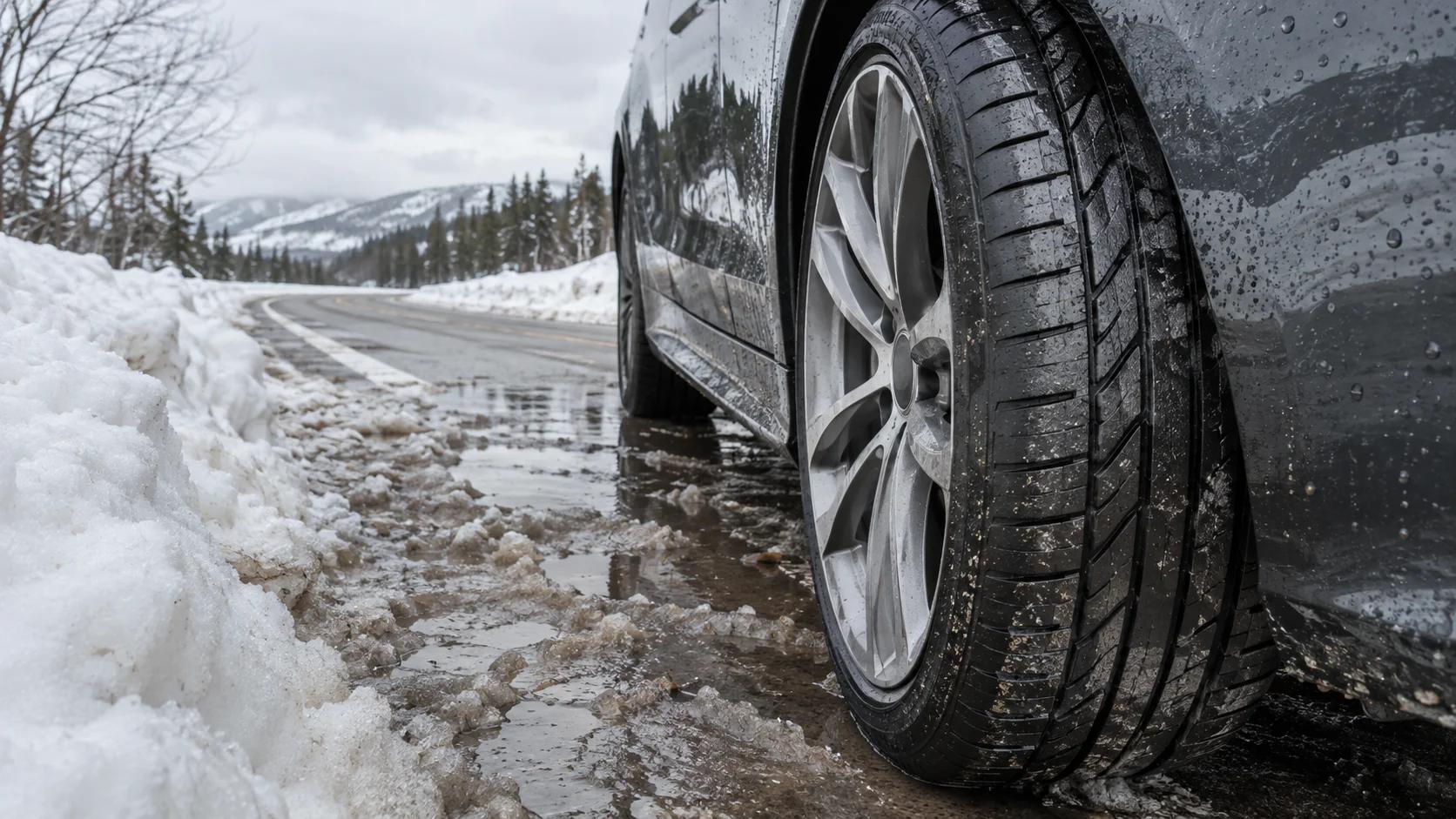
Even where a journey is technically legal, summer tyres can be an unsafe choice on snow. In one ADAC comparison, braking from 50 km/h took 63.1 m on a summer tyre and 29.1 m on a winter tyre. The European Commission says the Alpine, or 3PMSF, mark identifies tyres that meet a defined snow-grip test. That mark is a useful performance signal, although independent tests show that winter-capable tyre models still differ substantially.
Plan the tyre change around actual travel and likely weather. If snow is expected on the route, choose equipment for the road you will drive on, then check the applicable legal rule.
Sources: Romanian Police; RAR; ADAC comparison; European Commission.