The best used electric car in Britain is not necessarily the one with the longest advertised range. It is the car whose battery condition, charging standard, service record and running costs fit your roads and parking arrangement. A five-year-old EV bought for local commuting has a different job from a family car covering the M6 every week.
This is a UK buying guide, not a translation of a Romanian shortlist. It uses models commonly encountered in the British used market and treats each as a version-specific search. Battery size, motor output, charging equipment, warranty terms and software can change within one model. Ask for the registration number and VIN before travelling, then use the official DVLA and MOT services to check identity and history.
The ten-model shortlist
1. Nissan Leaf
The Leaf remains easy to find and can be sensible as a first used EV, particularly for urban driving. The key British-market question is its charging connector. Many older Leafs use CHAdeMO for rapid charging, while most newer alternatives use CCS. That does not make a Leaf unusable, but it can make motorway planning less convenient as networks evolve.
Ask for a proper battery-health report rather than relying on dashboard bars. Test the rapid-charge port, onboard AC charger and supplied cable. Check the MOT history for repeated advisories, tyre wear and suspension faults. A low-priced Leaf with a tired battery is not a bargain if it cannot cover your winter commute with a sensible reserve.
2. Renault Zoe
Zoe is a compact, efficient choice for towns and shorter commutes. Earlier cars can have different battery-ownership arrangements, so confirm in writing that the advertised price includes the traction battery and that no separate lease or account needs to be transferred. Do not assume the model year identifies the battery capacity.
Check the charging socket, cable, heating, air conditioning, brakes and tyre condition. A Zoe with AC charging but no rapid-charge option may be adequate for overnight home charging. It is less attractive if you expect frequent long motorway trips. A home survey of the proposed charging point matters more than a theoretical charging speed.
3. BMW i3
The i3 has a distinctive cabin and compact footprint that work well in British cities. Its narrow body makes parking easy, but the small boot and rear-door arrangement need a realistic family test. Battery sizes differ between early and later cars, and some have a range-extender engine, which changes servicing, insurance and running-cost questions.
Inspect the battery report, charging operation, suspension, 12-volt battery and unusual body panels. Check whether the car has been repaired after a structural impact and whether both charging cables are present. An i3 can be a strong urban choice when priced against its battery and equipment, not against a newer EV’s headline range.
4. Hyundai Kona Electric
Kona Electric is a useful all-rounder for a driver who wants a relatively compact car with more usable range than most early city EVs. On a used example, confirm the exact battery, recall work and warranty position using the VIN. Compare the motorway range you need with winter consumption rather than a brochure figure.
During the inspection, check AC and DC charging, the flap, heat-pump equipment if fitted, steering, tyres and underbody. Assess the rear seat and boot with normal luggage. Kona’s appeal is strongest when it replaces one car for commuting and occasional long trips, but the right example matters more than the badge.
5. Kia e-Niro
The e-Niro is often a sensible family used EV because it combines raised seating with useful range. Versions differ, so record the battery, motor and equipment before comparing listings. Ask a Kia retailer or independent EV specialist to confirm warranty coverage and outstanding technical campaigns.
Check charging with a real session if possible, not just the maximum figure in the advert. Inspect brakes for corrosion from light use, tyres for alignment wear, the climate system and every driver-assistance function. A complete service record is valuable when the car has covered high annual mileage.
6. Volkswagen ID.3
The ID.3 gives a family-friendly interior in a relatively short car. Early cars need a careful software check: infotainment, navigation, cameras, driver assistance, heating and phone integration should all work before purchase. Confirm updates with the seller and read the warranty paperwork rather than accepting a vague statement that the car is “up to date”.
Battery capacity and charging capability vary by version. Test the AC cable, DC port, charge timer and app access. Look at the MOT history, tyres and suspension, then take a drive that includes low-speed manoeuvres and faster roads. ID.3 is compelling for a driver who values interior space and predictable charging.
7. Tesla Model 3
Model 3 is attractive because of efficiency, software and long-distance charging options, but used examples can have very different histories. Check the registration, VIN, accident record, panel gaps, glass, wheels and underbody. A repaired car should come with photographs, invoices and a professional inspection; an app screenshot is not a structural assessment.
Test both charging methods, heat pump where fitted, air conditioning, cameras, lights, suspension and steering. Confirm which driver-assistance features transfer to the buyer. Insurance can vary sharply with repair history and performance version, so obtain a quote for the exact registration before paying a deposit.
8. MG4 EV
The MG4 is a relevant affordable family hatchback in the British used market. It offers a practical shape and several battery versions, which makes version identification essential. Look for evidence of software updates, charging reliability and remaining manufacturer warranty.
Check infotainment, driver-assistance calibration, heating, tyre wear and the underside. On a test drive, listen for suspension noises and ensure the car tracks straight. The MG4 may offer strong value, but residual values and insurance are not the same as those of a long-established premium model. Buy on condition and warranty, then keep every invoice for resale.
9. Peugeot e-208 / Vauxhall Corsa Electric
These small hatchbacks work well as urban and suburban cars. They are easier to place on narrow streets than a crossover and can be inexpensive to run if charged at home. Battery software, charging performance and small-car suspension need checking, especially on cars that have spent their lives on rough urban roads.
Ask for exact usable-battery information, test AC and DC charging, and inspect the underside for impact damage. Compare e-208 and Corsa Electric by equipment, warranty and insurance rather than assuming the badges make them identical. For motorway-heavy use, a larger car may be more comfortable even if official range is similar.
10. Jaguar I-Pace
The I-Pace brings a quiet, comfortable cabin and strong long-distance ability, but it is not a cheap car simply because it is used. Tyres, brakes, suspension, insurance and specialist repairs can cost more than on a hatchback. Verify battery warranty, software campaigns and charging behaviour with the VIN.
Inspect the body carefully, including the underside and battery protection, and request a full diagnostic report. Check cabin heating, screens, cameras, adaptive systems and charging timer. I-Pace makes sense for a buyer who wants a premium family car and can budget for it; it is a poor choice if the purchase price has consumed the repair reserve.
Battery health: what to ask for
Battery state of health is useful, but the test method matters. Ask for a dated report tied to the VIN, showing usable capacity, cell balance, stored faults and the tester’s method. A dashboard range estimate is influenced by recent driving, temperature, speed and heating use. It cannot establish original capacity by itself.
The inspection should include a cold start, an AC charge and, where supported, a DC session. Look for charging that repeatedly stops, a large drop in power, warning messages or a battery that reaches its limit unusually quickly. Ask whether the car spent years on a company fleet: high mileage is not automatically bad, but it should be matched by documented maintenance.
Do not use a single informal percentage as a universal rejection threshold. A result is meaningful alongside price, warranty left, annual mileage and winter range. Check the 12-volt battery as well; a fault there can immobilise an EV even when the traction battery is healthy.
Charging in Britain
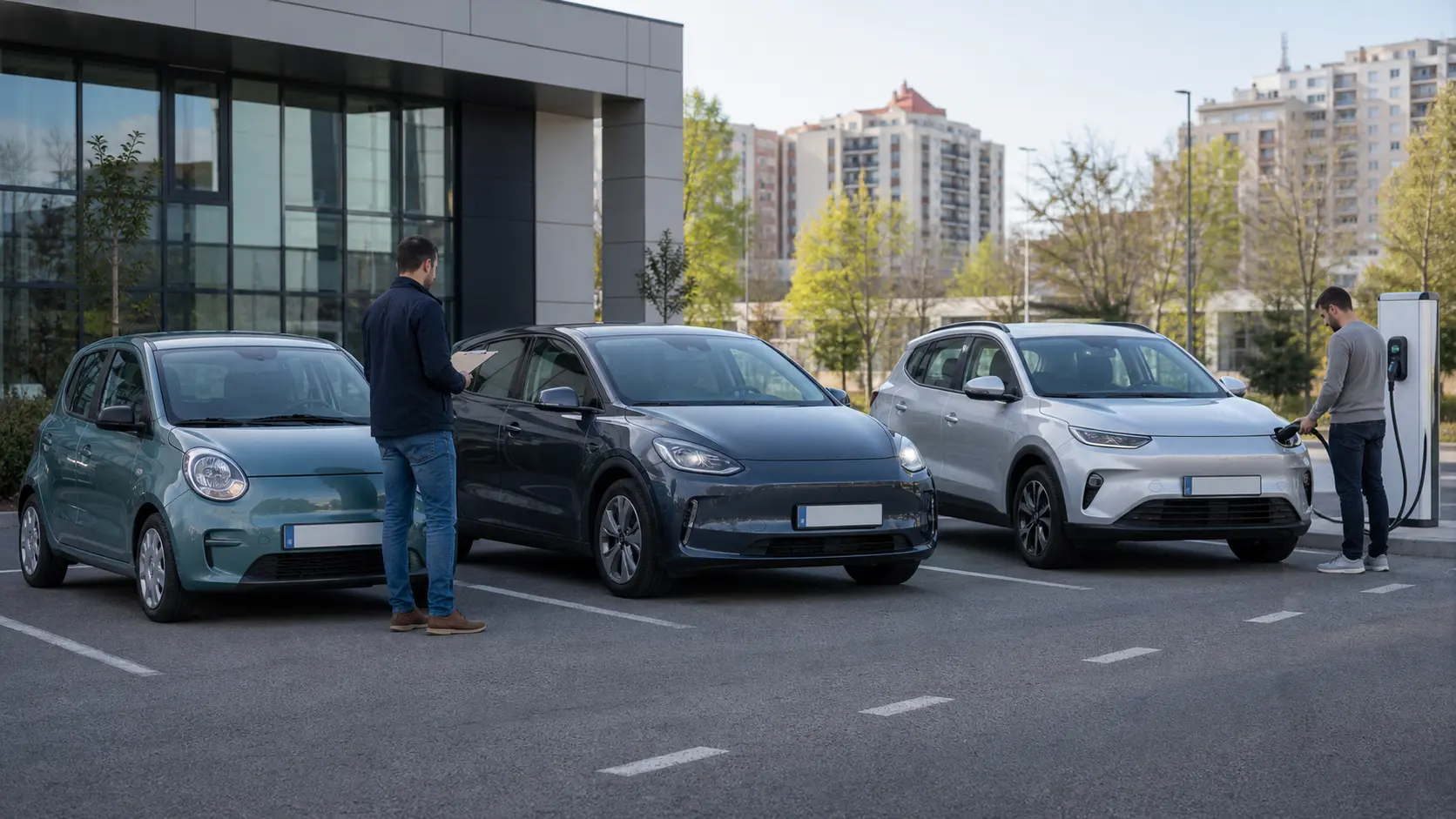
Start with home charging. A qualified installer should assess the consumer unit, cable route, earthing, parking arrangement and any permission requirements. Do not buy a car that depends on a driveway charger you cannot safely install. If you rely on public charging, check networks on regular routes, payment methods, idle fees, connector type and live reliability.
AC overnight charging is usually the convenient pattern. DC is for journeys, and its speed depends on battery temperature, state of charge, the vehicle and the charger. A peak figure is not the average power across a session. The European Alternative Fuels Observatory map is useful for a European overview, but check the operator’s own status and tariff before setting off.
V5C, MOT and imports
Before buying a UK-registered car, check that the seller’s details match the V5C, the registration and VIN match the car, and the green new-keeper slip is available. GOV.UK advises checking MOT history and recalls before purchase. An MOT record is useful evidence, but it is not a battery-health certificate and does not replace an EV inspection.
If the car is imported, the paperwork is a separate project. GOV.UK says a permanently imported vehicle must be registered with DVLA; the process can involve HMRC notification, VAT or customs duty, vehicle approval, registration and tax. Do not accept “it only needs plates” without seeing the original foreign registration and approval documents. A missing V5C is a serious warning: resolve it before payment.
VED, clean-air zones and insurance
Electric cars are no longer automatically free of Vehicle Excise Duty. GOV.UK states that electric and zero-emission cars have been subject to VED changes from 1 April 2025, with rates depending on registration date. Check the current rate for the exact car instead of repeating old tax-free advice.
Clean-air rules are local. London’s ULEZ is not a general national EV benefit and its rules and charges should be checked directly with Transport for London. Other cities can have different schemes, parking rules or future plans. Confirm the destination’s policy before choosing a car for a regular commute.
Get insurance quotes before buying. Performance, battery size, postcode, repair history, imported status and driver-assistance equipment can affect the premium. Ask what happens after battery damage, whether the cable is covered and whether the insurer uses approved repairers. The cheapest quote is not necessarily the most useful EV cover.
Resale and the final inspection
Keep the battery report, MOT history, invoices, software records, charging cables and warranty documents together. At resale, clear evidence is worth more than a claim that the car “has never had a problem”. A future buyer will want the exact battery version, usable range in ordinary conditions, charging behaviour and any repaired damage.
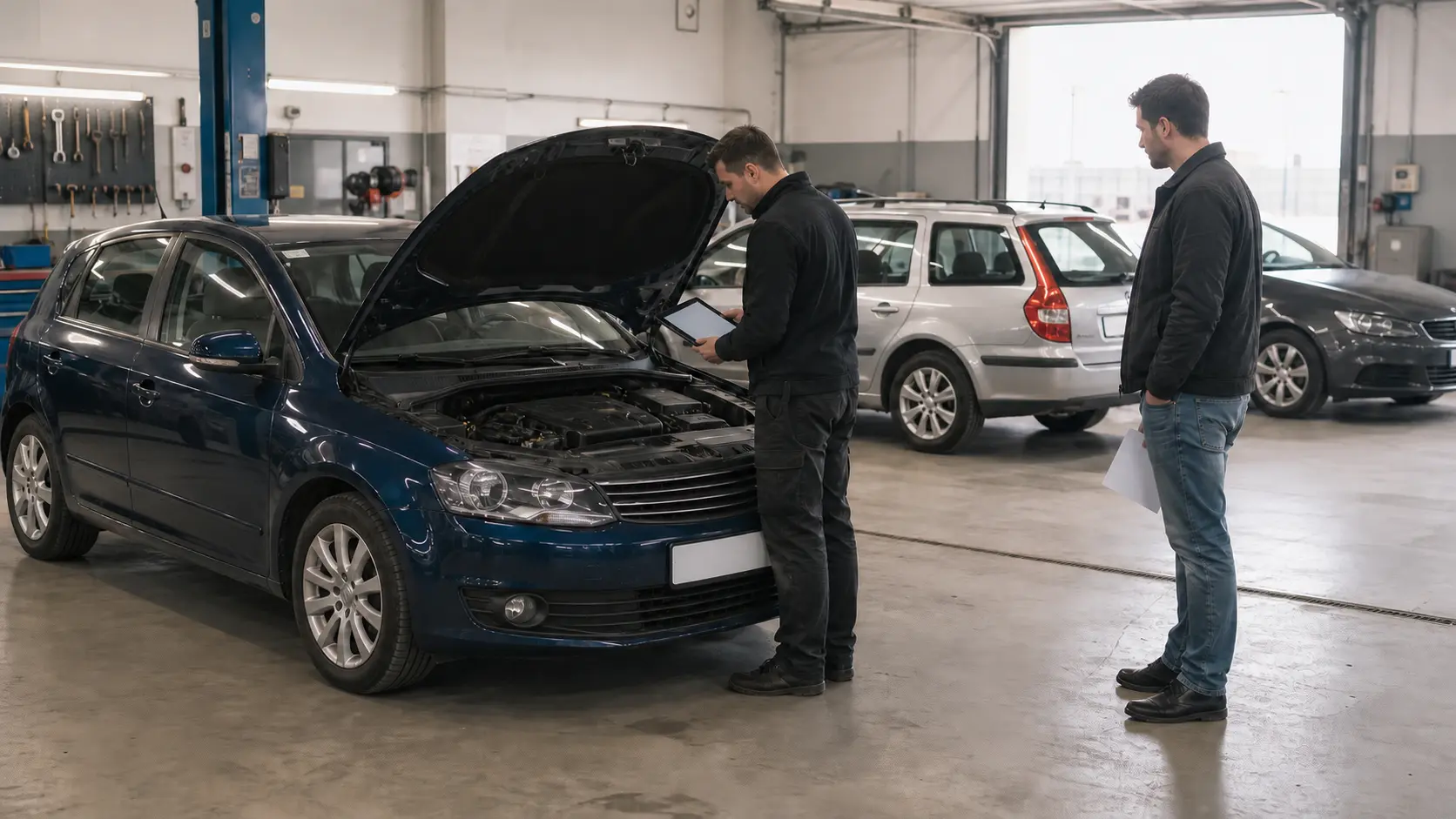
Pay for an independent inspection before the deposit becomes non-refundable. It should cover the battery and high-voltage system, charging, brakes, tyres, suspension, alignment, body repairs, underbody and diagnostic faults. Walk away if the seller refuses the VIN, a cold start, a charge test or an inspection.
The viewing-day checklist
Arrange the viewing while the car is cold and ask for the registration number and VIN before travelling. Match the VIN on the body, windscreen, documents and history report. Record the mileage before the test drive, photograph the tyres and compare wear on the steering wheel, pedals and driver’s seat with the claimed use. For an imported car, keep copies of the foreign registration, purchase invoice, export evidence and transport paperwork. A gap in the ownership trail can complicate registration, insurance and resale even when the car itself appears sound.
During the electric test, connect the car to an AC charger using the supplied or compatible cable. Confirm that the session starts, that power remains stable and that the dashboard or app records it correctly. If the model supports DC charging, a short session can reveal warnings or repeated interruptions, but do not treat peak charging speed as an expected average. Note the battery temperature, messages on the display and any unusual heat around the port or cable. Test cabin heating, air conditioning, demisting, windows, cameras, parking sensors, driver assistance and scheduled pre-conditioning.
Before paying a deposit, obtain two insurance quotes for the exact registration or VIN and ask an EV-capable repairer for a diagnostic price. Find out the cost of a 12-volt battery, onboard charger, charging cable and underbody protection, even if no immediate fault is present. Put the independent inspection and the documents to be supplied into the sales agreement. A used EV is ready to buy when its battery, charging routine, paperwork and repair support can all be checked rather than assumed.
Verdict
For British buyers, Kona Electric, e-Niro, ID.3 and Model 3 can cover mixed use, while Leaf, Zoe, i3, e-208 and Corsa Electric are strong urban candidates when their range and connectors fit. MG4 is a value-led family option; I-Pace is a premium choice needing a larger repair reserve. The correct purchase is the one with a verifiable battery, a charging plan, clean documents and affordable insurance.
Direct sources: GOV.UK used-vehicle checks, GOV.UK imported-vehicle registration, GOV.UK electric vehicle tax, GOV.UK MOT history, Transport for London ULEZ and European Alternative Fuels Observatory.