Britain’s battery recycling challenge extends beyond collecting and shredding old electric-car packs. Altilium is trying to build the domestic refining capacity needed to turn their contents back into battery materials, rather than exporting the resulting powder for processing abroad. Its commercial expansion remains a project under construction, alongside a much smaller permitted pilot operation in Plymouth.
That distinction is central to assessing what the company can do today. Altilium describes its ACT2 pilot as processing material equivalent to roughly one EV battery per day. ACT3 is designed for 24,000 batteries annually, but the company’s 6 October 2026 update still described it as under construction. The commissioning timetable announced in April points to the end of 2027.
Why producing black mass is only one stage
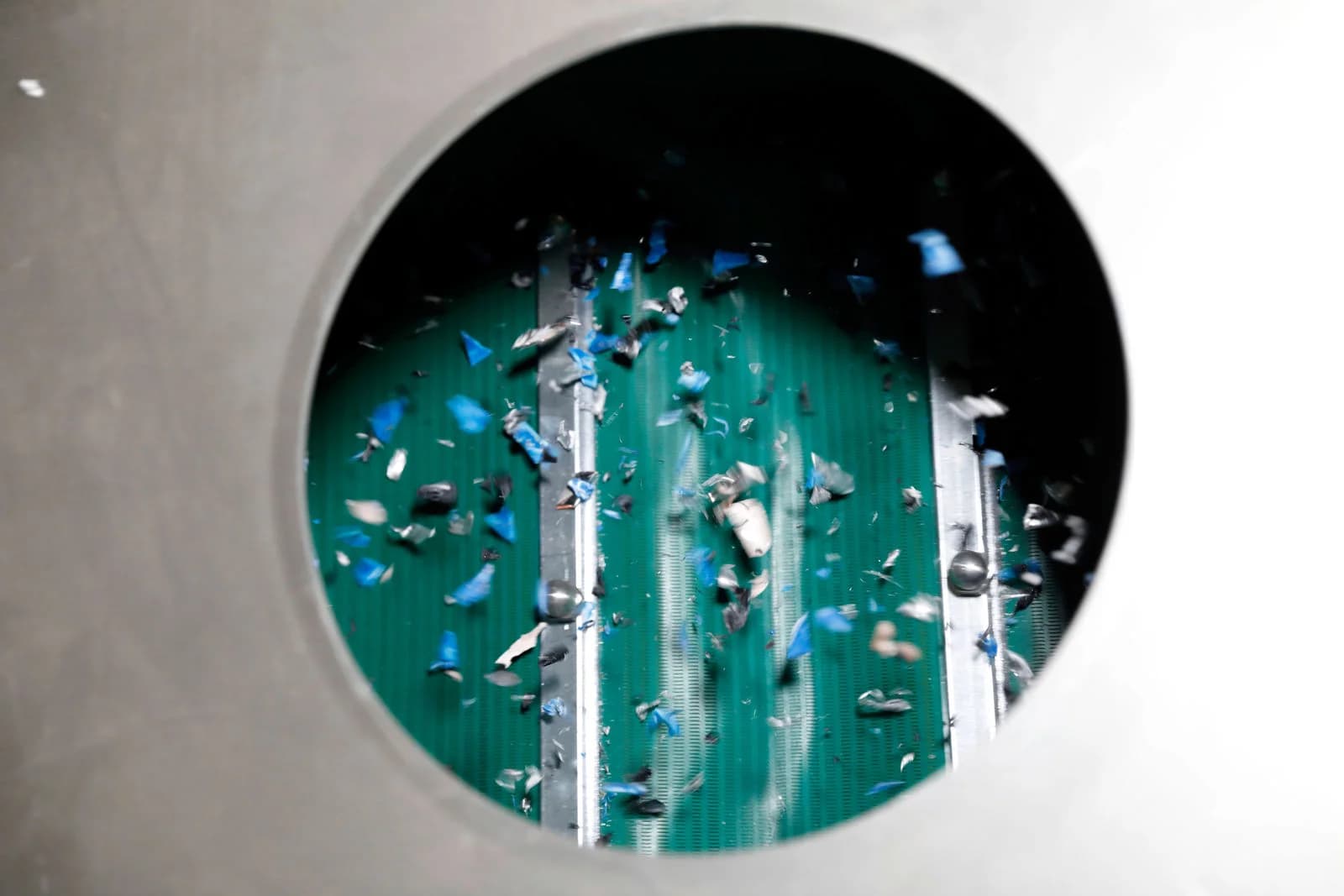
Dismantling and shredding batteries produces a mixture known as black mass. Recovering useful battery materials from that mixture requires further processing. A shipment of black mass is therefore different from a shipment of cathode active material ready to be used in a new cell.
In its September announcement about the ACT2 environmental permit, Altilium said UK-generated black mass is exported overseas for further processing before refined materials are imported back into the supply chain. This is the company’s account of the domestic industrial gap. It does not establish that every British shipment follows an identical commercial route or returns to its original producer.
The international concentration is independently documented by the International Energy Agency. Its Global Critical Minerals Outlook 2026 puts China’s share at more than three-quarters of worldwide battery pre-treatment capacity and 90% of material recovery capacity. These are capacity measures, rather than percentages of actual recycling throughput or a breakdown of Britain’s exports.
Altilium’s EcoCathode and EcoAnode processes address the chemical stages needed to recover materials for cathodes and anodes. The hydrometallurgical approach uses processing in solutions. Its purpose in the proposed domestic supply chain is to keep more of that conversion in Britain, rather than ending local activity when the mixed powder is dispatched.
What the ACT2 permit establishes
The Environment Agency published the issue of permit EPR/AP3728SG/A001 for Altilium Metals Ltd in Plymouth on 15 September 2026. Altilium subsequently identified the authorisation with ACT2 and said it provides the regulatory framework for the EcoCathode and EcoAnode processes.
The company describes the facility as taking black mass through to anode active material and cathode active material at approximately one battery-equivalent per day. Before the full permit, ACT2 had operated under a Local Enforcement Position, with controlled operation and regulatory oversight. The September document should therefore not be presented as the first evidence that any processing had occurred.
Nor does the permit mean ACT3 has opened. Authorisation of the identified pilot, its design capability and actual commercial output are separate facts. None of them alone confirms vehicle production contracts or proves the performance of a complete battery fitted to a series-production car.
ACT3 is designed to recover intermediate products
The Plymouth expansion will produce nickel mixed hydroxide precipitate, usually shortened to MHP, lithium sulphate and graphite, according to Altilium’s project announcement. MHP is an intermediate used in making battery-grade nickel sulphate. Refining beyond black mass therefore does not mean that every output leaving the facility will already be a finished cathode material.
The April release lists expected annual production of approximately 5,200 tonnes of nickel MHP, 8,000 tonnes of lithium sulphate and 5,400 tonnes of graphite once ACT3 is operational. Those are different products with different compositions. The lithium sulphate figure cannot be relabelled as an equal mass of pure lithium, and the three figures should not be combined into a single cathode-production claim.
Altilium expects the expansion to create 70 jobs in Plymouth. That is a project forecast, not confirmation that all the positions have already been filled. The Advanced Propulsion Centre officially included Altilium among the first recipients of DRIVE35 Scale-up Fund support on 9 April 2026, alongside the programme’s government and Innovate UK partners.
Recycled material has already reached cell manufacturing
There is a demonstrated manufacturing step behind the larger plans. On 18 March 2025, the UK Battery Industrialisation Centre announced successful production of pouch cells in Coventry using Altilium’s recycled EcoCathode NMC 811-2036 cathode active material, made at the company’s Devon facilities.
UKBIC said the cells would proceed to comprehensive validation studies with an automotive manufacturer. The achievement establishes that cells were manufactured with the specified recycled material in an industrial environment. It does not establish series supply for a named JLR or Nissan model, a new-car launch, or a published driving-range result.
This boundary also applies to recovery percentages. A chemical process recovering a high share of metals is not, by itself, a measurement of the resulting vehicle’s range, charging time or battery lifespan. Those require their own test conditions and results.
Further investment supports a larger planned step
On 6 October 2026, Altilium announced additional investment from existing shareholders SQM and Marubeni as part of its Series B2 round. The announcement did not disclose the amount of the new contribution. It linked the funding to ACT3 development and the longer-term domestic battery-materials programme.
ACT4 in Teesside is the subsequent planned industrial facility, designed for material from 150,000 EV batteries annually and 30,000 tonnes of cathode active material a year. These are proposed capacities, not Britain’s current output. For the Plymouth expansion, the published operational milestone remains planned commissioning at the end of 2027, after which achieved production can be assessed against the design figures.
Illustrative archive image: Volkswagen battery recycling in Salzgitter, 2021. This is not an Altilium facility. © Volkswagen AG, DB2021AL00105. Free editorial use under Volkswagen’s image-page terms.
Sources
- IEA: global pre-treatment and material recovery capacity in its 2026 outlook.
- Environment Agency: Altilium Metals environmental permit documents.
- Altilium: ACT2 permit, processes and pilot scale.
- Altilium: ACT3 design capacity, outputs and planned commissioning.
- UKBIC: production of cells using recycled cathode active material.
- Altilium: SQM and Marubeni investment and ACT3 construction status.
- APC: first DRIVE35 Scale-up Fund recipients.