BMW Brilliance Automotive has reportedly begun cutting approximately 1,800 jobs in Shenyang, China, with production workers said to account for most of those affected. CnEVPost's November 3 coverage attributes the information to AI4Robo and employee accounts. The reported November 2 start date, total and severance terms have not been publicly confirmed by the company in the material cited.
BMW has separately confirmed a wider acceleration of structural and portfolio measures. Its November 4 financial announcement provides important context, but does not identify the reported 1,800 Chinese positions or establish that they form part of a particular global programme. The distinction separates a local employment report from documented group financial decisions.
What the employee-sourced report describes
According to CnEVPost's account of AI4Robo's reporting, the reductions span production roles, classified as P positions, and office or management roles, classified as G positions. Most are said to be on the production side. These are descriptions attributed to employees, rather than a published company list of departments and positions.
The reported compensation formula is N+5. The N component would use monthly pretax pay, while the additional five months would be calculated from basic salary, excluding performance-related and other compensation. Without the employer's actual documents, that description should not be treated as a verified offer applying uniformly to every worker.
The frequently cited figure of roughly 10% is also approximate. CnEVPost mentions a pre-reduction union roster with more than 19,000 employees. That context does not turn the rounded percentage into an exact company statistic. The original employment information and its subsequent coverage also should not be counted as multiple independent confirmations of the same total.
China deliveries show a separate, measurable decline
BMW's October 13 sales release reported 376,128 BMW and MINI deliveries in the China sales region during January–September 2026, down 21.8% from a year earlier. Third-quarter deliveries there totalled 114,355, a 24.8% decline. Those figures describe the two brands' regional deliveries, not output at a single BBA factory.
The release labelled the delivery numbers provisional and subject to revision before the annual BMW Group Report. Its scope matters: regional customer deliveries cannot be used directly as a plant productivity measure or as a calculation of how much work a particular employee performs. They also do not reveal which individual production lines would lose staff.
For global automotive deliveries, BMW's November 4 results use updated totals of 551,075 vehicles in the third quarter and 1,707,802 over nine months. Those represent declines of 6.3% and 4.9%, respectively. Nine-month growth of 4.5% in Europe and 3.4% in the US offset only part of the pressure from China.
A lower annual margin forecast is not a quarterly loss
BMW now forecasts an Automotive segment EBIT margin between negative 0.5% and positive 0.5% for 2026, compared with the previous range of 1–3%. The company attributes the adjustment to expanded portfolio and structural measures affecting fourth-quarter earnings. Before those measures, the full-year margin is still expected to exceed 2%.
That forecast should be kept separate from results already reported. The Automotive segment's third-quarter EBIT margin was 3.4%, while the nine-month figure was 3.5%. EBIT is profit before the financial result, and its margin expresses that figure relative to revenue. A revised annual range is not a statement that every operation is currently losing money.
Group earnings before tax were €2.083 billion in the third quarter and €6.128 billion over nine months. These group-level EBT figures use a different scope and measure from Automotive EBIT. They cannot be presented as the accounts of the Shenyang plant or as a calculation of savings from the reported local job reductions.
Shenyang is also adding new battery technology
On October 15, BMW announced the start of series production of Gen6 high-voltage batteries in Shenyang. It is the third location in that global battery network, following Debrecen in Hungary and Irlbach-Straßkirchen in Germany. The locally assembled batteries are intended for Neue Klasse vehicles built in China.
BMW describes a cell-to-pack design, placing cylindrical cells directly inside the battery housing without a conventional module layer. The Energy Master control unit sits on the battery and combines power-supply and battery-management functions. Manufacturing includes cell inspection, joining cells with cooling components, welding and a final test of each completed battery.
This confirms new industrial activity, but does not disclose the distribution of employees between old and new lines. Nor does it prove that automation caused the reported job cuts. BMW describes digital twins, data analysis and AI-supported inspection in battery manufacturing without publishing a numerical link between those processes and the employment report.
What remains unconfirmed
The November 4 announcement says BMW is preparing the Chinese market launch of the long-wheelbase iX3 in November. At group level, it also describes a faster Neue Klasse ramp-up and the earlier phase-out of some previous vehicle and technology generations. It does not announce the closure of the Shenyang production location.
A definitive account of the local workforce programme would need confirmation of its scale, timetable and compensation conditions from BMW Brilliance. Until then, the employment figures remain reported claims alongside confirmed sales and investment disclosures. No changes to road-car warranty terms, individual orders or European retail prices are announced by the employee-sourced story.
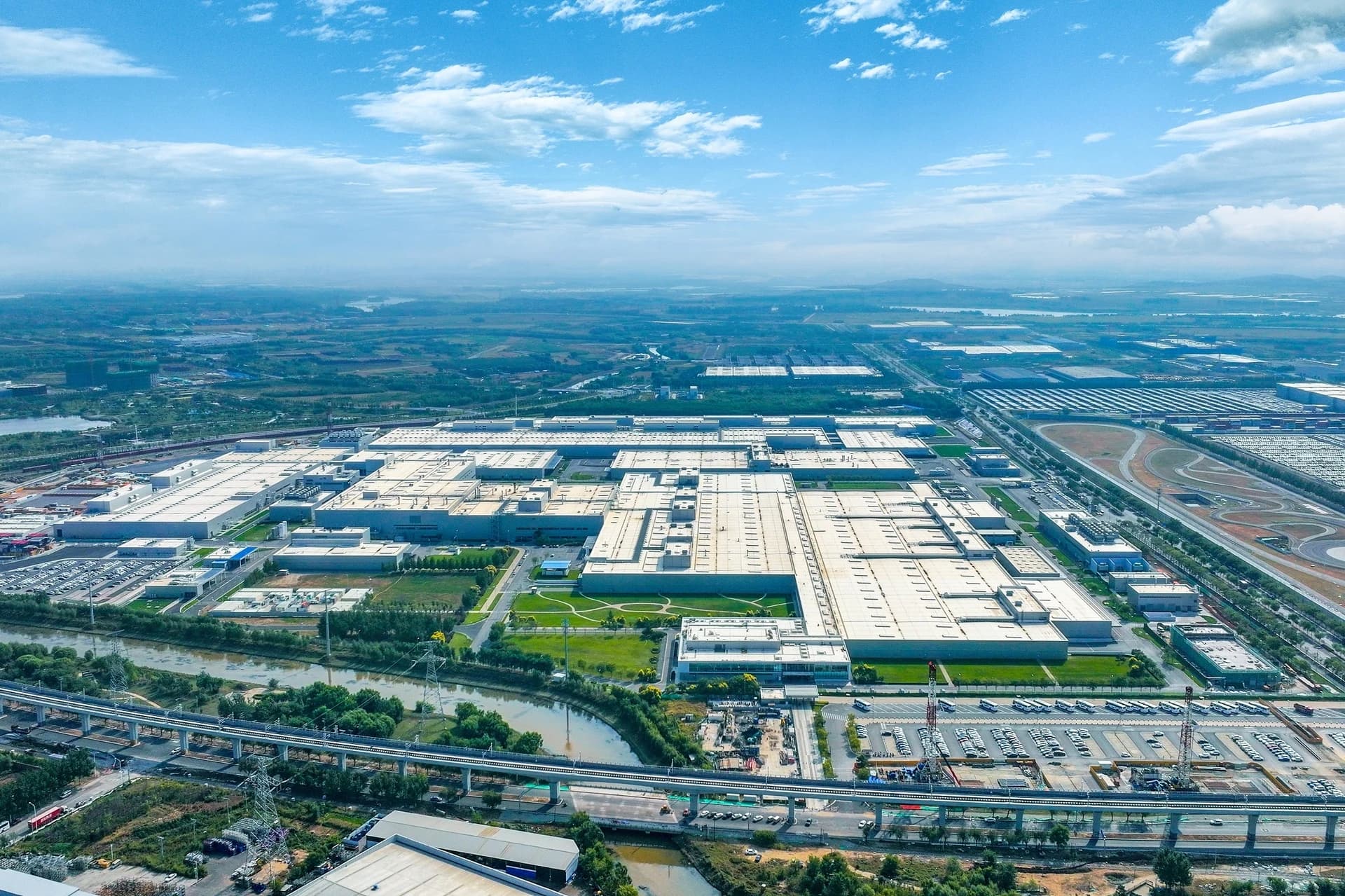
Image: BMW Group, aerial view of the Shenyang engine and high-voltage battery site, October 2026. Official press image converted to WebP.