BMW Group has cut its 2026 automotive EBIT margin forecast to between −0.5% and +0.5%, from 1–3%, as it accelerates restructuring and changes to its vehicle portfolio. The revision, announced on 3 November, reflects charges affecting the fourth quarter. Before the structural and portfolio measures, BMW still expects the automotive margin to exceed 2%.
Results published on 4 November show a profitable third quarter, with group earnings before tax of €2.083 billion, down 10.6% from a year earlier. That reported quarterly result is separate from the full-year automotive forecast. The warning does not mean the entire BMW Group has already moved into a loss.
What is changing in the annual outlook
The board has decided to expand and intensify structural and portfolio measures. BMW puts their expected effect on the full-year automotive EBIT margin at approximately 2.5 percentage points. The reported margin includes those expenses; the figure before the measures removes them. They are two differently defined views of the same business, not interchangeable targets.
The annual outlook also includes about 1.25 percentage points of adverse effects from increased tariffs and 1.2 percentage points from depreciation and amortisation of BMW Brilliance Automotive assets following purchase price allocation. These are impacts on margin, not percentage reductions in deliveries or the selling price of a car.
BMW has lowered the Automotive segment’s return on capital employed forecast to −1% to +1%, from 1–5%. It nevertheless retains its expectation of more than €2.5 billion in automotive free cash flow for 2026. That cash-flow target remains a forecast, rather than money already generated by the end of September.
A 3.4% automotive margin in the third quarter
Automotive revenue reached €26.669 billion in July–September, down 6.5%. Segment EBIT was €901 million, a decline of 39.7%, leaving an EBIT margin of 3.4%. The comparable margin a year earlier was 5.2%. For the first nine months of 2026, the margin was 3.5%.
At group level, quarterly revenue fell 5.8% to €30.452 billion. Net profit declined 14.7% to €1.448 billion. The group’s pre-tax profit margin was 6.8%. The 10.6% fall in pre-tax earnings therefore cannot be substituted for either the net-profit change or the automotive margin.
For January–September, group earnings before tax totalled €6.128 billion, down 23.9%. BMW identifies lower sales volumes, intense competition, particularly in China, and adverse currency effects as pressures on automotive revenue. Lower manufacturing costs helped reduce the cost of sales, but did not prevent the reported decline in segment earnings.
China outweighs growth in Europe and the US
BMW Group delivered 551,075 cars in the third quarter, down 6.3%, and 1,707,802 over the first nine months, down 4.9%. These are group figures, including the BMW Brilliance Automotive joint venture. They should not be described as deliveries of the BMW brand alone.
Europe increased 2.6% in the quarter and the US 2.5%. BMW says China was down by around a quarter, so growth in the other regions only partly offset the weakness there. The full-year automotive delivery outlook is now for a moderate decline, compared with the previous expectation of a slight decline.
Fully electric cars accounted for 20% of global quarterly deliveries. Including plug-in hybrids takes the electrified share to 27.4%. In BMW’s Europe sales region, the corresponding proportions were 34.7% for battery-electric cars and 46.9% including plug-in hybrids. Regional powertrain shares should not be applied to worldwide volumes or read as powertrain profit margins.
Neue Klasse brings an earlier production transition
BMW says sustained demand for Neue Klasse models has enabled it to introduce additional production shifts earlier. Faster expansion of output creates an opportunity to phase out previous vehicle and technology generations sooner, including selected models using Gen5 battery technology.
The announcement does not provide a complete model-by-model withdrawal schedule. It consequently cannot establish a last-order date for a particular car. BMW describes Gen6 and other Neue Klasse technology clusters as future contributors to profitability through improved efficiency and costs. Those expected benefits are management’s outlook, not a completed financial result across every model.
On organisation, the company plans to reduce management functions faster than previously announced. The latest warning describes an acceleration of the realignment, rather than establishing a new, separately quantified round of job reductions in these releases. It also does not announce a plant closure.
The second revision follows June’s warning
On 16 June, BMW had already reduced the automotive margin range from 4–6% to 1–3%. That disclosure cited deterioration in China, tougher competition and the Middle East conflict’s effects on energy costs and consumer confidence. It also said additional structural measures would have a one-time negative effect in the second half of 2026.
The new outlook makes that annual earnings pressure more visible while the operating business remains profitable in the reported quarter. Automotive free cash flow was €724 million after nine months, including a negative €566 million in the third quarter. Those actual results are distinct from the retained annual target above €2.5 billion and do not, by themselves, prove that the target will be missed.
For a buyer, the warning does not announce a general price reduction, a change in warranty cover or the immediate cancellation of a particular BMW. The concrete product issue is the faster transition between technology generations, for which individual model timing still needs a specific manufacturer announcement.
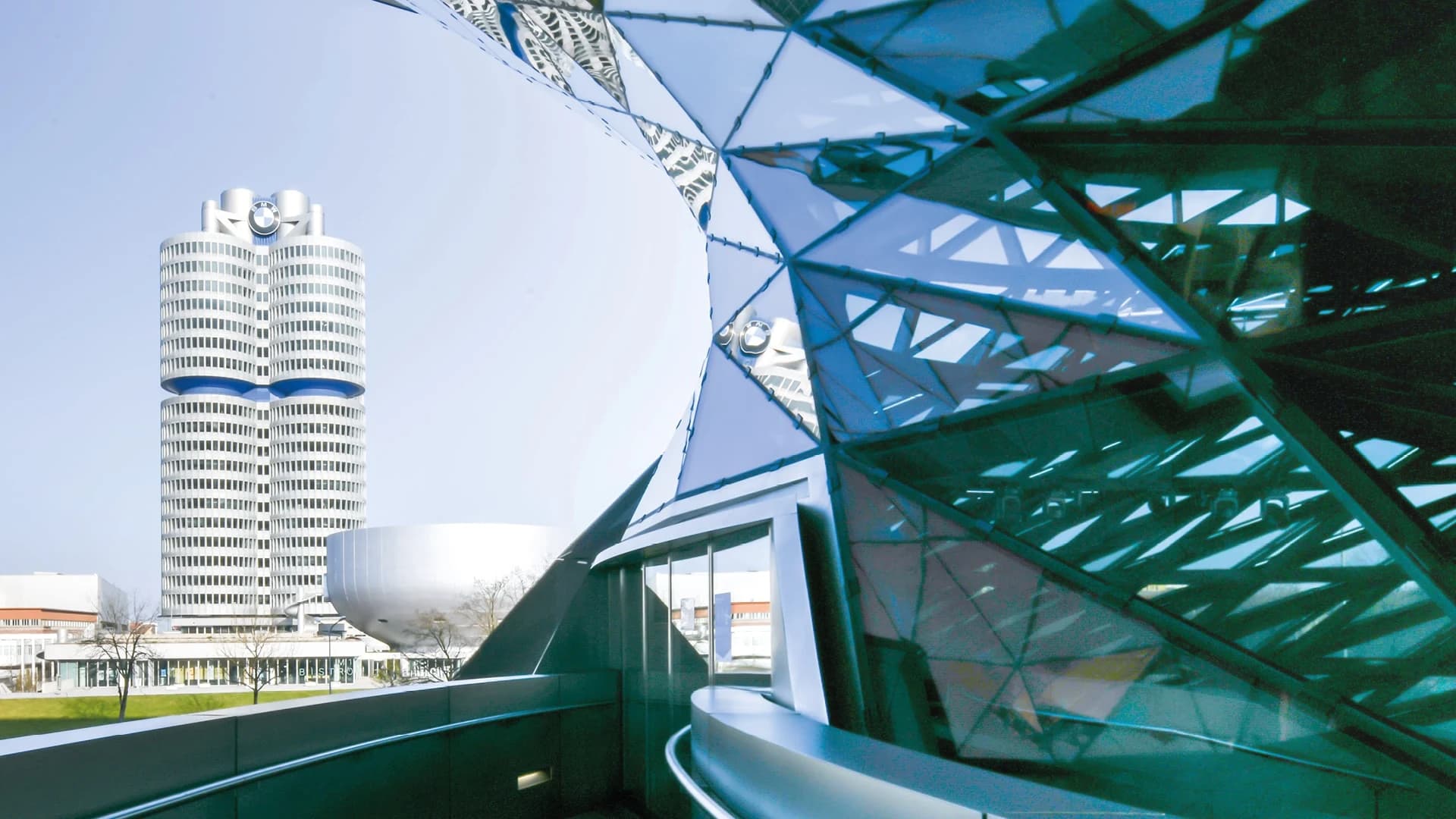
Photo: BMW AG / BMW Group. Munich headquarters, official illustration used in the financial release; not a photograph of job reductions. Converted to WebP for press use.