The European Parliament’s environment committee has backed softer proposed CO₂ rules for new cars from 2035, but the vote has not changed EU law. On 4 November, MEPs approved draft rules by 48 votes to 30, with two abstentions. Their proposal would allow an 87.5% reduction in fleet-wide tailpipe emissions, with qualifying EU-made low-carbon steel credits contributing towards a 95% overall requirement.
Parliament’s negotiating mandate is expected to go to a plenary vote in December 2026. Agreement with EU governments and final legislative adoption still lie ahead. The committee outcome is therefore a position in an ongoing process, rather than a completed reversal of the rules currently in force.
Three different positions on 2035
Current legislation sets a 100% CO₂ reduction target for new cars and vans from 2035, against the 2021 reference. The European Commission describes the fleet-wide target as 0g CO₂/km. That remains the legal framework unless and until an amendment is adopted through the legislative process.
In December 2025, the Commission proposed a 90% tailpipe reduction, with remaining emissions compensated through eligible mechanisms involving low-carbon steel or renewable fuels. The environment committee, ENVI, has now supported a different structure. The existing law, Commission proposal and committee position should not be merged into one supposedly settled rule.
These standards concern new vehicles. The committee vote does not require an owner to scrap an existing petrol or diesel car in 2035, nor does it introduce a new ban on driving that car. It also does not establish a particular model’s availability or a new fuel price.
Why 87.5% is not an EV sales quota
The proposed percentage concerns average emissions across a manufacturer’s new-vehicle fleet. It does not mean precisely 87.5% of sales must be electric, or that exactly 12.5% can be any combustion vehicle regardless of its emissions. The permitted product mix would depend on vehicle performance and the final compliance rules.
Parliament’s statement says manufacturers would compensate for emissions capped at 7.5% of the 2021 EU fleet-wide reference target using credits for low-carbon steel made in the EU, bringing the overall requirement to 95%. The 7.5% cap refers to that baseline, rather than 7.5% of the emissions left after the reduction.
Steel credits recognise an industrial-production contribution. Granting a credit does not physically remove CO₂ from a car’s exhaust. Keeping that distinction explains why the proposal contains both a tailpipe reduction figure and a broader compliance figure, without treating them as the same measurement.
Eligible-fuel vehicles would receive a new treatment
MEPs also propose changing the definition of zero-emission vehicles for this framework. Alongside vehicles with no tailpipe CO₂ emissions, it would include vehicles running exclusively on eligible fuels, described as VEEFs. The fuels would have to be renewable or low-carbon and meet specified criteria.
That is proposed regulatory classification, not a claim that burning a qualifying fuel produces no physical tailpipe CO₂. The exclusive-use condition also matters. It is not automatic permission for every conventional petrol or diesel car simply because it can accept a familiar fuel blend.
Rapporteur Massimiliano Salini, an Italian EPP member, argues that the agreement preserves technological options and supports the automotive supply chain. That is the case made by a supporter of the compromise. It does not settle the commercial or technical eligibility of an individual car after 2035.
Vans follow a separate trajectory
For new vans, ENVI proposes a 35% emissions reduction target for 2030, compared with 40% in the Commission proposal and 50% under existing rules. The proposed 2035 target would fall from 100% to 80%, with low-carbon steel credits available subject to a 7.5% cap.
There is also an earlier limit on steel credits. From any entry into force until the end of 2034, they could count for no more than 3% towards meeting specific targets for cars and vans. This is part of the proposed framework, not a benefit manufacturers can already claim solely because the committee has voted.
Extra weighting for selected electric vehicles
Small EVs made in the EU and no longer than 4.2 metres would count as 1.4 vehicles in the calculation of a manufacturer’s average specific emissions. Highly efficient EU-made EVs meeting strict electricity-consumption thresholds would count as 1.2. Registration under a social-leasing scheme would increase those multipliers to 1.5 and 1.3 respectively.
Pure-electric vans made in the EU would count as 1.2 vehicles until the end of 2034 and 1.4 from 2035. These are compliance weights. They do not describe physical deliveries, and they do not automatically grant a buyer a subsidy or a second vehicle.
The reactions reflect an unresolved debate. Manufacturer association ACEA sees additional flexibility but says the passenger-car provisions remain too limited in scope and duration. Greens/EFA MEP Michael Bloss argues that changing policy direction threatens investment and jobs. Those are attributed assessments, rather than demonstrated future outcomes. Parliament’s next stated step is the expected December plenary vote on its negotiating mandate.
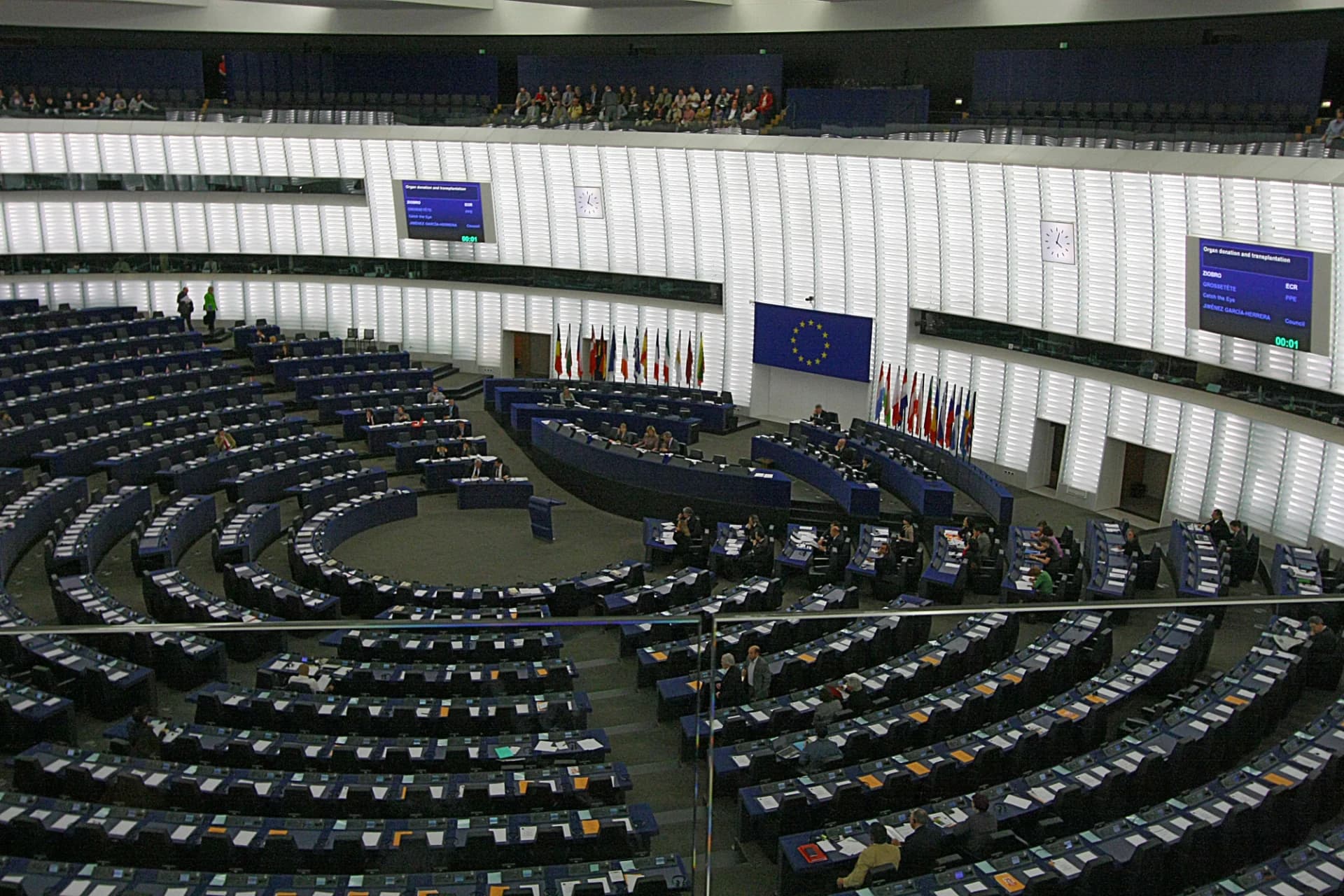
Archive: Strasbourg hemicycle, 18 May 2010; not the ENVI vote of 4 November 2026. Resized and converted to WebP. jeffowenphotos / Wikimedia Commons, CC BY 2.0.