The best 4x4 SUV for Britain is the one that matches the road, trailer and weather you actually face. An all-wheel-drive system can help on wet grass, snow and loose gravel, but it does not replace good tyres, sensible speed or ground clearance. A low-range 4WD with locking differentials is useful for serious work, but it adds mass, fuel use and expensive hardware. This is a buying guide, not a reliability ranking.
A UK shortlist, split by job
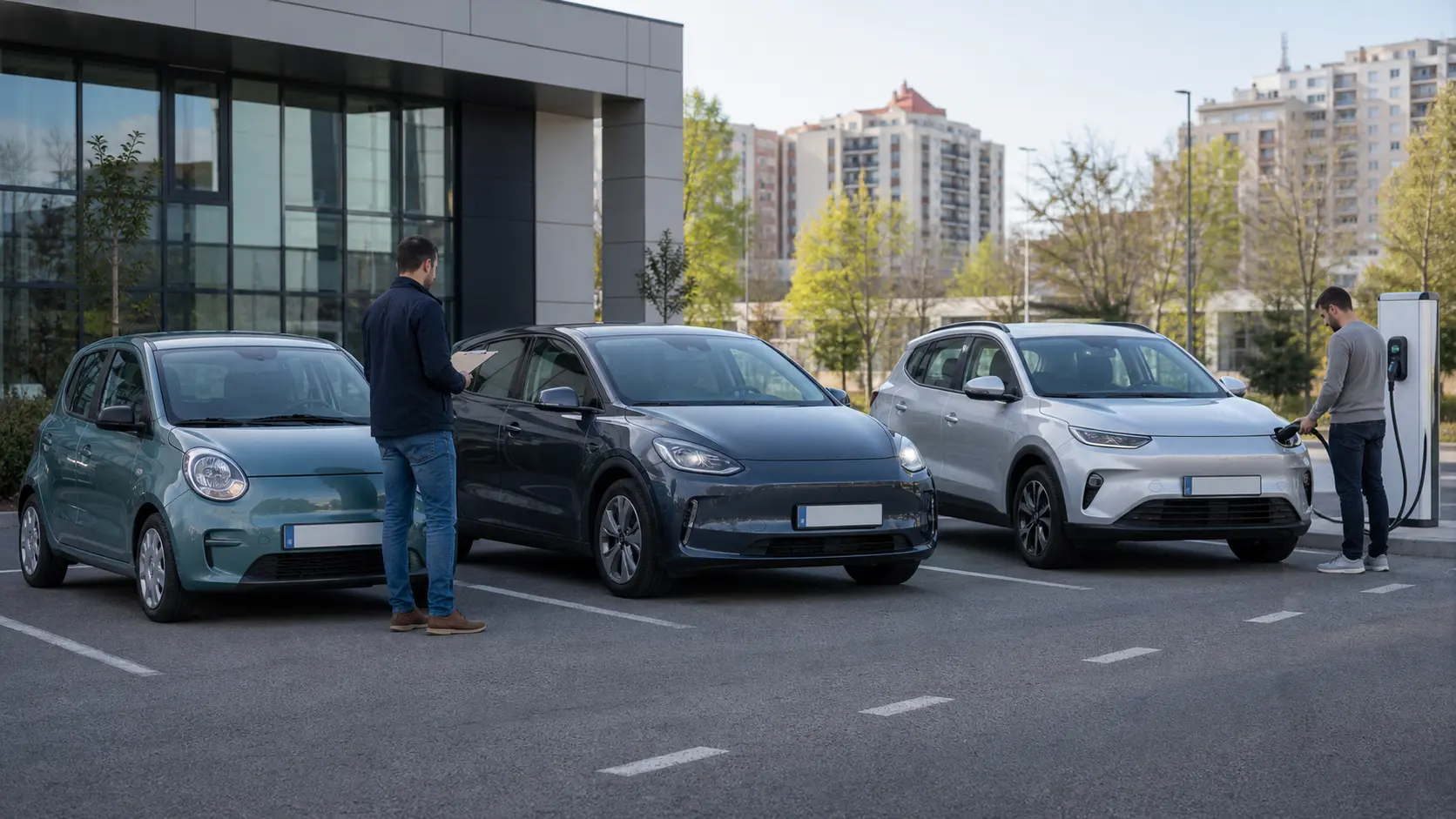
For a new compact SUV, start with the Dacia Duster 4x4, Suzuki S-Cross AllGrip and Suzuki Vitara AllGrip. They are easier to place on narrow lanes than a large off-roader. Toyota RAV4 AWD-i, Honda CR-V AWD, Subaru Forester and Nissan X-Trail e-4ORCE are family-sized choices for long trips and winter roads. Skoda Kodiaq 4x4 and Volkswagen Tiguan 4MOTION are worth comparing when motorway comfort, luggage and a braked caravan matter.
For genuinely difficult tracks, investigate the Toyota Land Cruiser, Land Rover Defender, Jeep Wrangler and KGM Rexton. Their hardware is more relevant to towing, mud and steep ground than a road-biased AWD crossover. The trade-off is size, running cost, tyre price and manoeuvrability in town.
The used shortlist is wider: previous-generation Duster 4x4, Vitara and S-Cross; Toyota RAV4 AWD; Honda CR-V AWD; Subaru Forester; Mazda CX-5 AWD; Tiguan 4Motion; Kodiaq 4x4; BMW X3 xDrive; Land Cruiser; Mitsubishi Shogun/Pajero; Wrangler and Defender. Treat these as models to research, not promises about every example. Engine, gearbox, age, corrosion and service history change the decision.
Do not use an online “most reliable” list as a substitute for a vehicle inspection. Ask for the registration number and VIN, check the MOT history, obtain invoices and compare the seller’s description with the V5C and the car itself. A less fashionable car with four matching tyres and complete records can be the better purchase.
AWD, 4WD and low range
AWD is not a single mechanical design. One SUV may use a front-drive platform with an electronically controlled multi-plate clutch; another may use a centre differential; a hybrid may drive the rear axle with an electric motor. The system can distribute torque when slip is detected, but many are designed for road use and can reduce output when hot. Ask how the system behaves after repeated wheelspin and whether the handbook specifies a towing or traction limit.
A traditional 4WD may offer 2H, 4H and 4L, plus a centre or rear lock. Low range reduces the gearing so the driver can crawl with better control and less clutch abuse. It does not increase tyre grip and it does not make a heavy vehicle immune to cross-axle situations. Check whether the mode can be selected while moving, which surfaces are permitted and whether the car has a real spare wheel.
Ground clearance, approach and departure angles, axle articulation and underbody protection matter on rutted lanes. A large SUV on 21-inch road tyres may have an impressive drive mode but be less useful on stones than a smaller vehicle on taller sidewalls. Do not test a locked driveline on dry tarmac if the manufacturer says not to.
Tyres matter more than the badge
Four-wheel drive helps a car pull away; it does not shorten braking distance. Use four tyres with the correct size, load index and speed rating. On a clutch-based AWD system, large differences in tread depth or rolling circumference can heat the coupling or stress the differential. Inspect the inner shoulders, date codes, puncture repairs and sidewall damage. A car advertised as a 4x4 with mixed brands and mismatched wear needs an explanation.
For a UK winter, a quality all-season tyre with the 3PMSF mountain-and-snowflake marking can be a sensible compromise for a car that sees occasional snow. Dedicated winter tyres are more appropriate for regular trips to the Highlands or continental ski areas. Mud-terrain tyres can be noisy and less secure in heavy rain; they are not automatically an upgrade for a commuter.
The legal minimum tread depth is not a recommendation for a family SUV or towing vehicle. Replace tyres before they become marginal, follow the load pressure in the handbook and remember that a trailer changes the rear axle load. Carry chains only where the vehicle, tyre clearance and road conditions allow them.
Snow, lanes and local roads
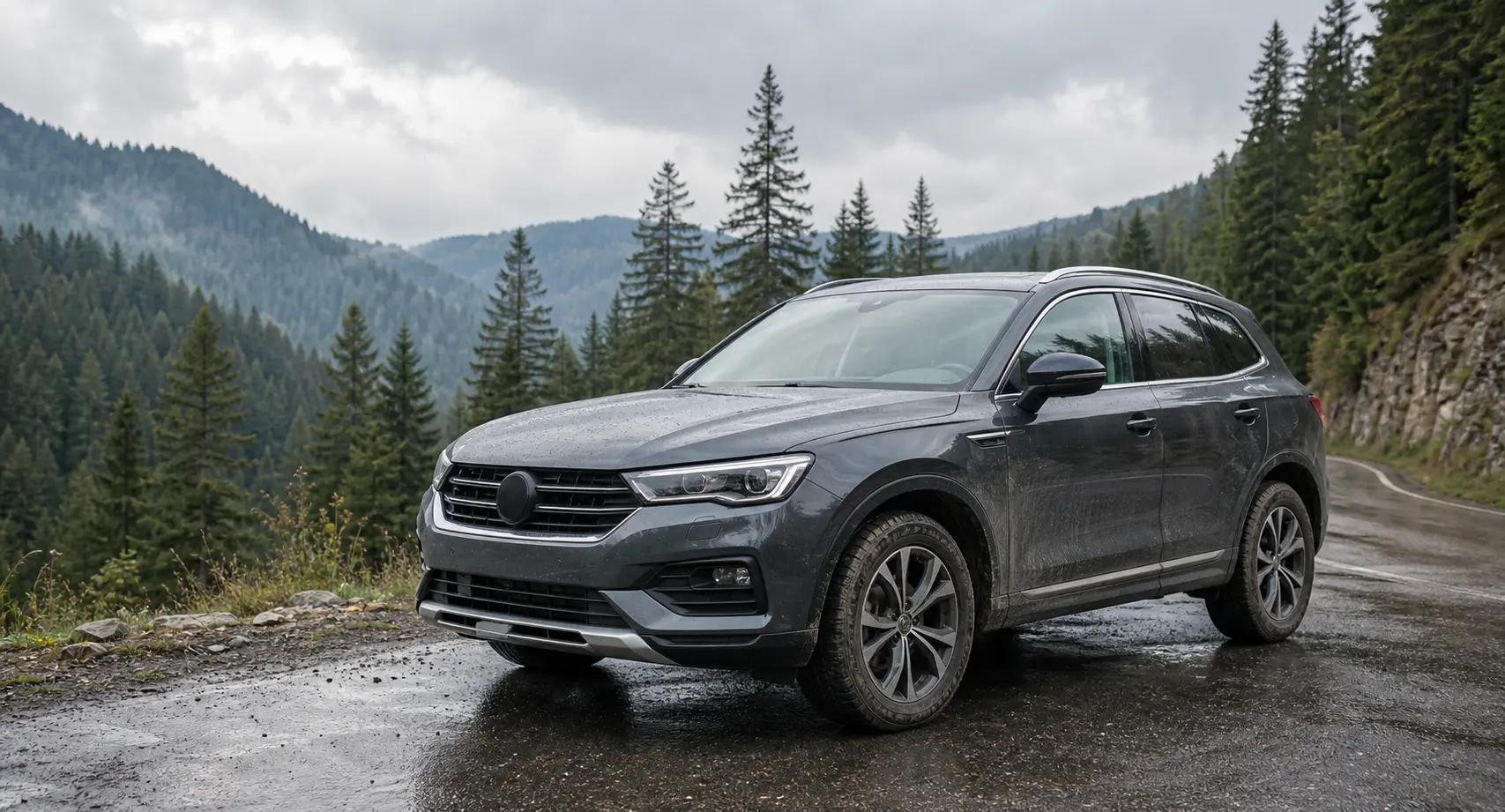
Britain’s winter problem is often standing water, slush, mud and untreated lanes rather than deep powder. Look for predictable throttle control, hill descent assistance, heated screens where relevant and a stability system that can work with the chosen traction mode. An AWD badge is of little benefit if the tyres are worn or the driver cannot see the road edge.
Green lanes are not a general invitation to drive off-road. Check the legal status of the route, local restrictions and seasonal closures. On a farm track or private land, obtain permission. Protect the surface and avoid driving when the ground is saturated. Recovery points, a tow rope rated for the vehicle and a full-size spare can be more useful than a decorative roof bar.
On used cars, look underneath for packed mud, bent protection, water marks, damaged exhausts and scuffed sills. Inspect suspension arms, wheel bearings, propshaft joints and the transfer case. Corrosion around brake pipes, subframes and towbar mounts deserves an independent opinion, especially on cars that have lived near salted roads or the coast.
Towing: use the actual plated limits
The headline towing figure is not enough. Check the VIN plate, handbook and V5C for the exact vehicle’s gross train weight, maximum authorised mass, axle limits and braked trailer capacity. The UK government says the gross train weight is the fully loaded car plus fully loaded trailer and must not be exceeded; its towing weight guidance also sets width and length limits.
Your licence matters too. Rules differ according to when the driving test was passed, so use the official DVSA towing guidance rather than an old forum post. Check the towball load, caravan nose weight, cooling system and trailer stability assistance. Fit the correct electrics and test every lamp, brake and breakaway cable before setting off. A 4x4 does not excuse an overloaded trailer.
Examine a used towbar for bent metal, poor wiring and fresh underseal hiding damage. Ask whether the car regularly towed a horsebox or caravan. A worn clutch, dual-mass flywheel, automatic transmission, rear differential or cooling system can be expensive even when the MOT certificate is current.
Inspection before buying used
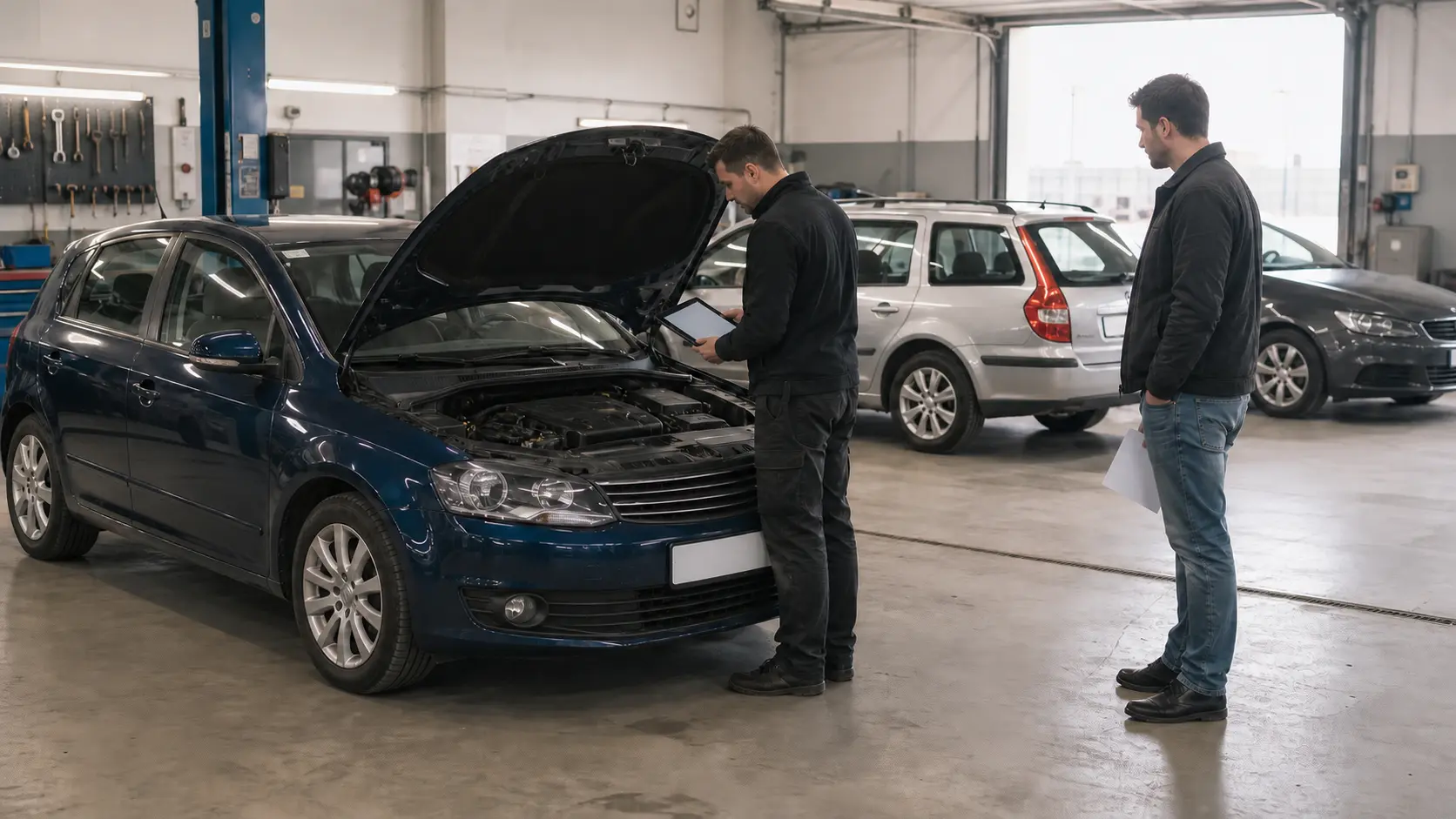
See the car cold. Confirm that warning lights illuminate at the ignition check and go out after starting. Scan the engine, ABS, stability, airbag, hybrid and AWD modules. Drive slowly in a tight circle on an appropriate surface and listen for clicking, binding or shuddering. At higher speed, note a vibration that follows road speed rather than engine speed. Test reverse, parking sensors, cameras, hill descent and every selectable mode.
On a lift, check leaks at the gearbox, transfer unit and differentials; propshaft bearings and universal joints; CV boots; subframes; brake pipes; suspension bushes; steering joints and jacking points. Compare the four tyres. Check that the spare, jack and locking-wheel-nut key are present. For a hybrid, request the manufacturer’s battery-health information where available and inspect the cooling vents.
An MOT is useful evidence, not a full pre-purchase report. The GOV.UK MOT test explanation says the test covers important roadworthiness items but does not cover the condition of the engine, clutch or gearbox. Use the MOT history to identify repeated advisories, then investigate them physically. The current maximum car MOT fee is published by GOV.UK, but the price of a proper inspection and repairs is separate.
Registration, MOT and urban zones
For an imported or modified SUV, confirm its registration route, type approval, emissions data, insurance and tax position before paying a deposit. A winch, suspension lift, different wheels or lighting changes may affect legality, insurance or testability. Keep receipts for approved parts and ask an MOT station familiar with the vehicle.
Private cars normally need their first MOT when they are three years old and then annually, but check the exact date through the government service. A valid MOT does not prove that a used 4x4 is mechanically healthy. It also does not guarantee access to every city. London’s ULEZ rules are based mainly on emissions and vehicle type, not on whether a vehicle has AWD; check the registration number with Transport for London’s official ULEZ service.
Other cities may have clean-air or parking restrictions with different boundaries and hours. Check the council website before buying a large diesel 4x4 for daily central-city use. The UK does not have a single national “4x4 exemption” from urban charges. A towbar, roof rack or off-road ability does not alter the emissions category.
Service and ownership cost
Budget for four matching tyres, seasonal storage if you run two sets, alignment and occasional wheel damage. Large wheels and low-profile tyres cost more and are less forgiving on potholes. AWD adds fluids, couplings, bearings, shafts and control units; low-range hardware adds more inspection points. A hybrid AWD may reduce mechanical complexity in one area but still needs specialist diagnosis and a healthy high-voltage system.
Ask a dealer or independent specialist for the scheduled service items for the exact VIN. Do not assume that “sealed for life” means no inspection. A car that tows should have a documented plan for transmission, differential and cooling-system checks. Diesel SUVs used mainly for short urban trips need particular attention to DPF and emissions-system history; a petrol or hybrid may fit that duty better.
Insurance, vehicle tax, fuel, MOT, tyres, breakdown cover and depreciation should be considered together. I am not assigning prices because they vary by postcode, driver, insurer, engine, trim and parts choice. Obtain written quotes for the actual registration number, not a generic model page.
Buying conclusion
For wet roads, occasional snow and narrow lanes, Duster, Vitara, S-Cross or a well-maintained compact AWD SUV is often enough. For a family that tows or travels long distances, RAV4, CR-V, Forester, X-Trail, Tiguan or Kodiaq deserve a version-by-version comparison. For repeated heavy towing or difficult ground, Land Cruiser, Rexton, Defender or Wrangler make sense only when their extra hardware will be used.
The final decision should come from the route, tyres, trailer and service network. Check the VIN, MOT history, plated weights, underside and cold start. Do not pay a premium for a label that your roads and weather will not use.
The inspection-day checklist
Arrange to see the car cold. Record the registration number and VIN, compare the VIN with the V5C and body stamp, and ask for both keys, invoices and the handbook. Check the first registration date, imported status, number of keepers and any recorded modifications. A history report can reveal mileage or insurance clues, but it cannot tell you whether a transfer case is noisy today.
Walk around the body in daylight. Look for paint differences, displaced seals, uneven panel gaps, moisture in lamps and boot wells, and towbar or recovery-point damage. Inside, compare the wear on the steering wheel, pedals, driver’s bolster and switches with the claimed mileage. Test heating, air conditioning, heated screens, cameras, parking sensors, cruise control and every warning-light check.
Drive for at least twenty minutes. Include a cold pull-away, gentle braking, a tight turn on a suitable surface, speed bumps and a steady motorway-speed section if possible. Listen for clicking, rumbling, shuddering and a vibration that follows road speed. Select each permitted drive mode according to the handbook. After the drive, look for fresh leaks, hot smells or cooling-fan behaviour that seems abnormal.
Put the exact VIN, mileage, included wheels and tyres, keys, accessories and known faults in the sale paperwork. Do not accept “no issues” when the dashboard shows a warning or the car has a documented advisory. Pay for an independent inspection before a deposit; the fee is small compared with replacing an AWD coupling, differential or automatic gearbox.
New or used?
A new SUV brings a clear warranty and predictable history, but depreciation, finance, insurance and large-wheel options can dominate the first years. A used SUV may offer more space and towing capacity for the same cash, but it needs a repair reserve. Ask a local specialist how long common transmission parts take to arrive and whether they can diagnose hybrid rear-axle systems. Compare written quotes for the exact registration number rather than generic model prices.
For a rural buyer, parts access and recovery support may be more valuable than a premium audio system. For an urban buyer, a smaller body, better tyres and an emissions-compliant engine may matter more than low range. The right 4x4 is the one whose capability you will use without carrying unnecessary weight and maintenance.