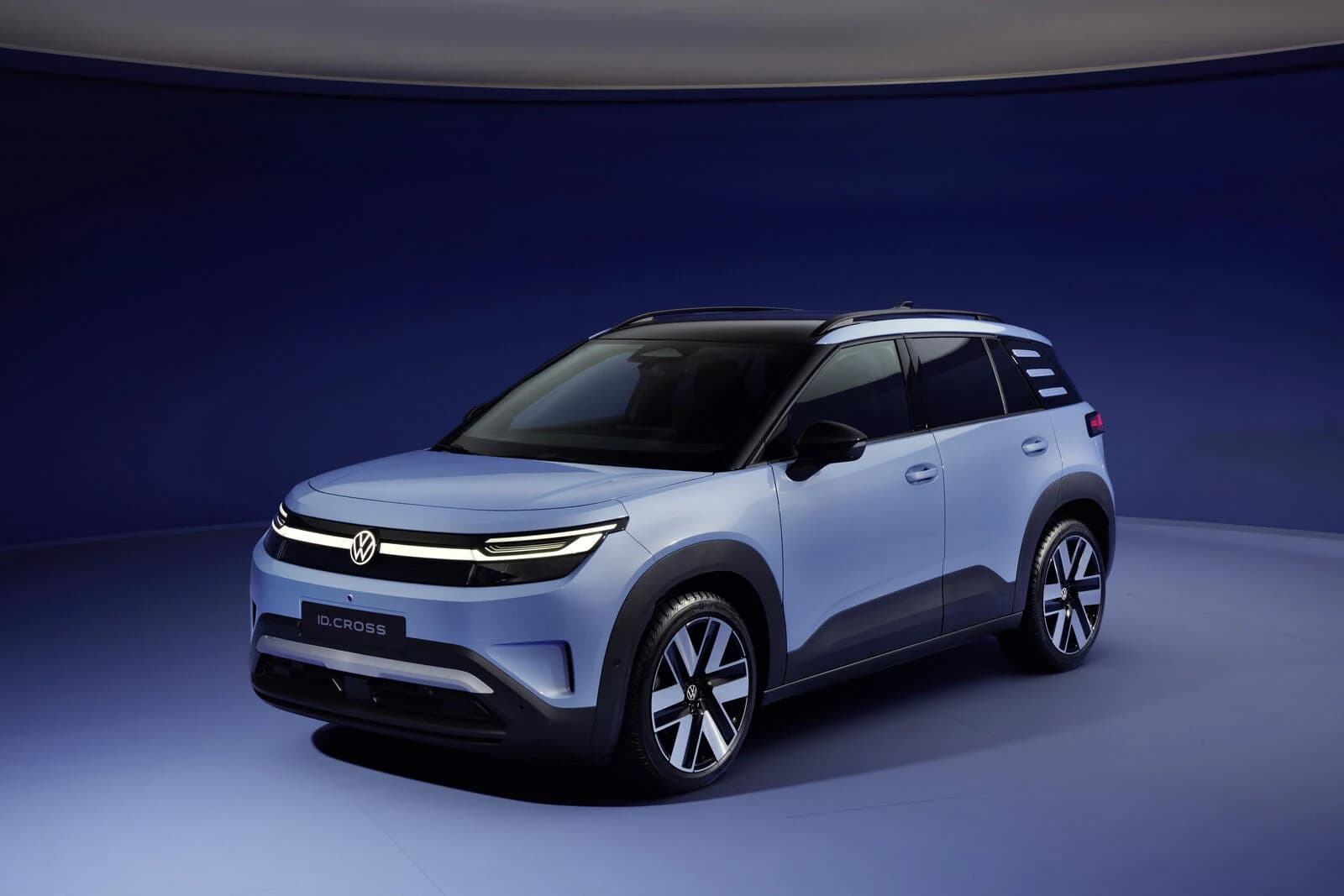
Volkswagen’s ID. Cross is now available to order in Germany with a 37 kWh battery, bringing the announced entry price of €27,995 into the ordering programme. The manufacturer confirmed the addition on 19 October 2026, following the production model’s world premiere on 15 July. The smaller battery joins the 52 kWh version offered at launch.
The distinction matters when looking at the reveal photographs. The entry price, the highest power output and the maximum advertised range belong to different configurations. Volkswagen explicitly says the commercial information in its October announcement concerns Germany. It does not establish an identical price or delivery schedule elsewhere in Europe.
The smaller battery changes the entry point
The new 37 kWh battery has a stated net, or usable, capacity. Buyers can pair it with an 85 kW motor, equivalent to 116 PS, or a 99 kW motor producing 135 PS. Volkswagen quotes a WLTP range of up to 324 km and a maximum speed of 160 km/h. Trend, Life and Style equipment lines are included in the German offering described in the announcement.
The €27,995 starting figure refers specifically to the 85 kW Trend. It should not be attached to the 155 kW car or to an extensively equipped vehicle shown in publicity photography. Volkswagen positions the smaller battery primarily for urban journeys and commuting. That is the manufacturer’s intended use case, rather than an independent assessment of its motorway range.
The 52 kWh battery supports the range’s advertised maximum of 427 km WLTP. At the July premiere, customers in some markets could order Life and Style models with this battery and a 155 kW, 211 PS motor. The announced starting price for that initial ordering phase was €36,525. This is a dated launch reference, rather than a current quotation for every country.
Compact body, separate luggage compartments
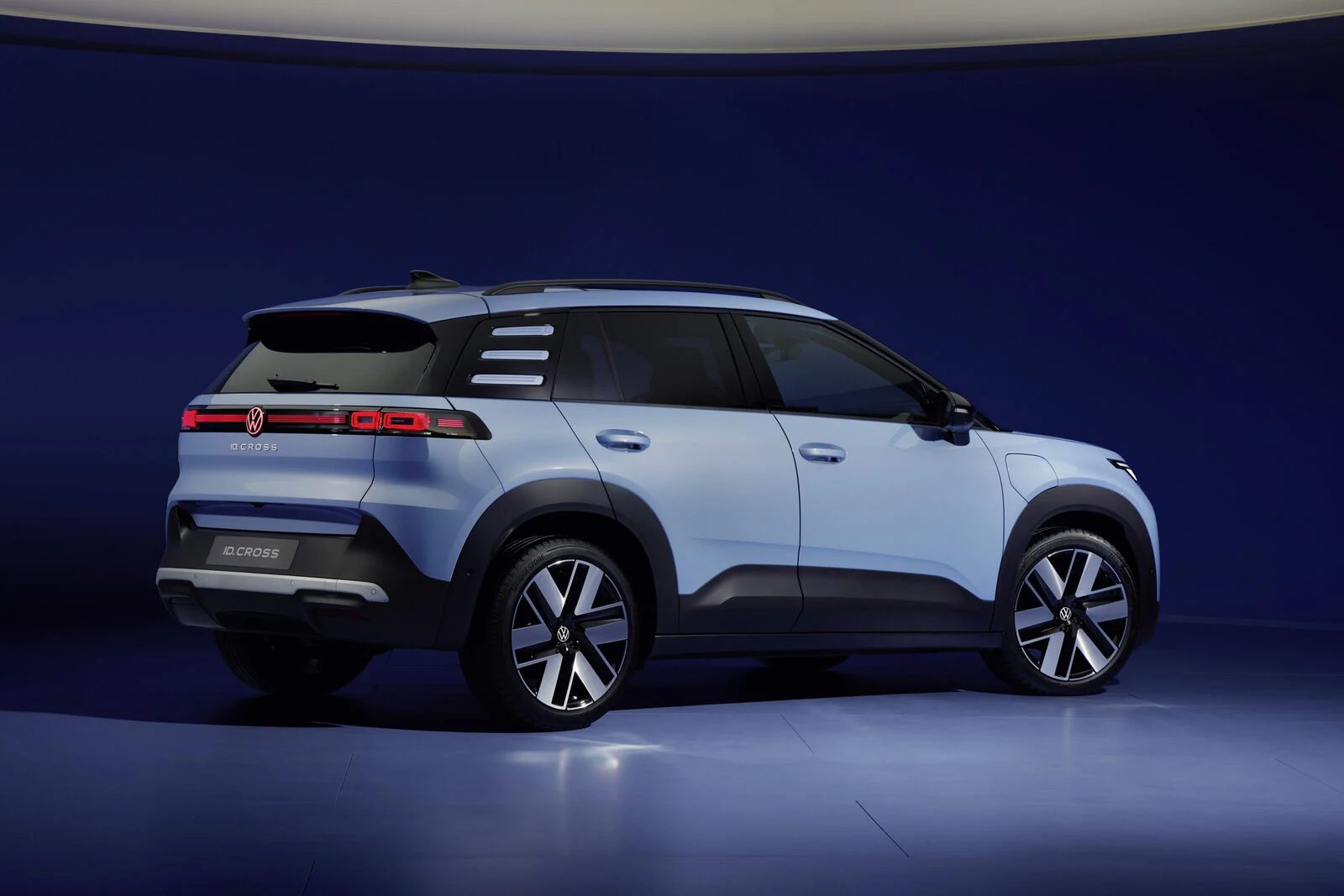
The ID. Cross measures 4,153 mm long, 1,794 mm wide and 1,581 mm tall, with a wheelbase of 2,601 mm. It seats five and uses the MEB+ electric platform. Its APP290 drive system powers the front wheels, so the SUV body shape should not be taken as evidence of four-wheel drive.
Volkswagen gives the rear luggage compartment a capacity of 475 litres, which it describes as 20 litres more than the T-Cross in its comparison. Storage beneath the variable boot floor contributes to that figure. A separate 25-litre compartment under the bonnet provides a place for the charging cable and smaller items. These are two distinct storage spaces, rather than a single 500-litre boot.
© Volkswagen AG.
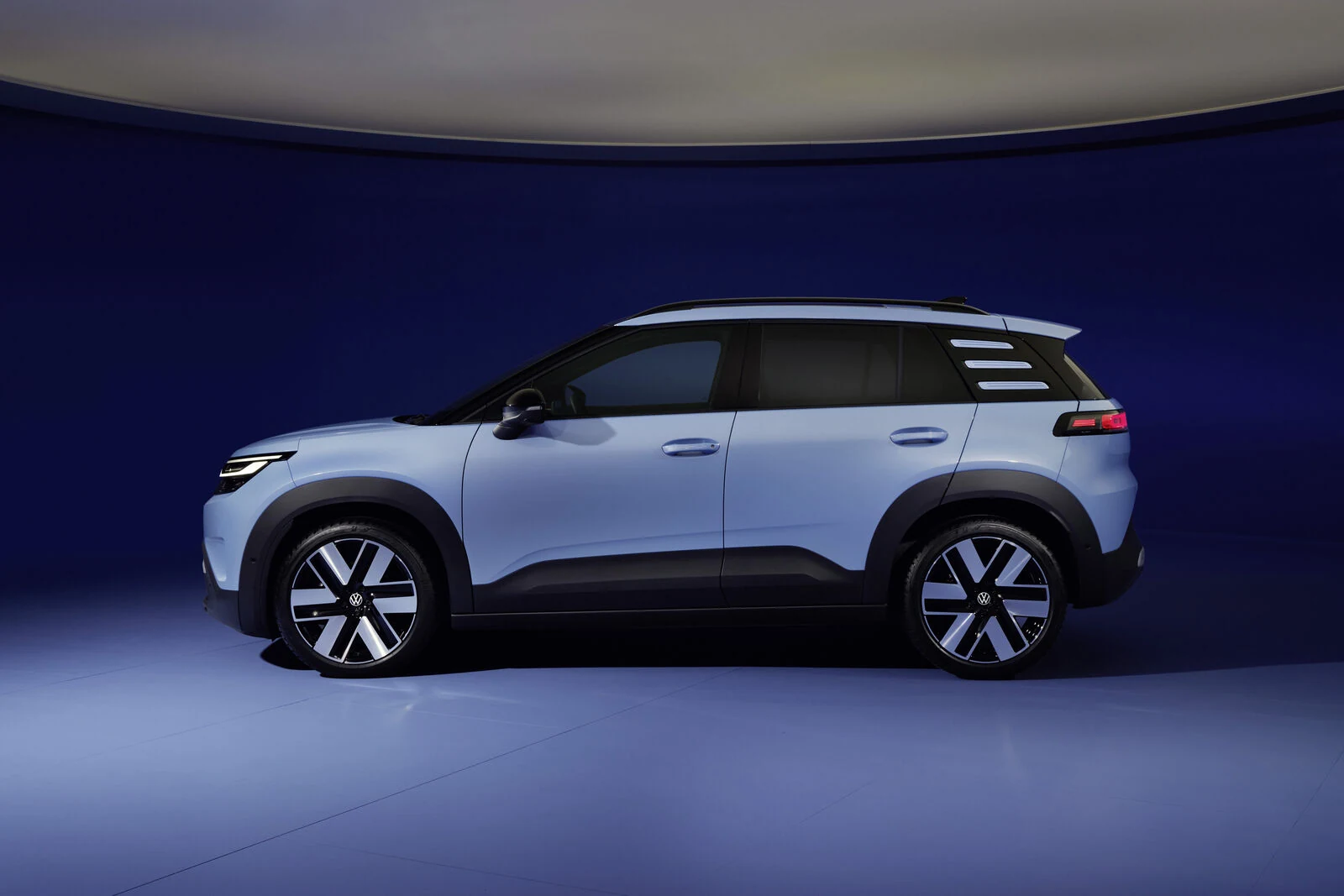
The side view shows a broad rear pillar and a roof visually extended over the glazing. Volkswagen calls the styling approach Pure Positive. Horizontal lighting signatures give the front and rear a related appearance, while matrix IQ.LIGHT headlights, three-dimensional rear lights and illuminated badges depend on equipment. Their appearance in the gallery does not make them standard on the entry version.
© Volkswagen AG.
Charging figures cover 10 to 80 per cent
AC charging is supported at up to 11 kW. The smaller battery accepts DC charging at a maximum of 90 kW, with Volkswagen quoting approximately 23 minutes from 10 to 80 per cent. For the 52 kWh battery, the stated peak is 105 kW and the equivalent interval takes about 24 minutes.
Similar elapsed times do not mean identical quantities of energy are added. The larger battery takes in more energy across the same percentage window. Nor does a peak rating describe the power delivered throughout the session. These figures concern a defined charging interval, rather than an empty-to-full stop, and they exclude time spent locating, connecting to or waiting for a charger.
The range figures also need their test context. WLTP values are homologation data supplied by Volkswagen, not Carboratory measurements. The manufacturer notes that equipment, tyres, weather, traffic and driving behaviour affect consumption. The maximum 427 km figure therefore cannot be transferred to the smaller battery or treated as a motorway-distance guarantee.
Screens share the dashboard with physical controls
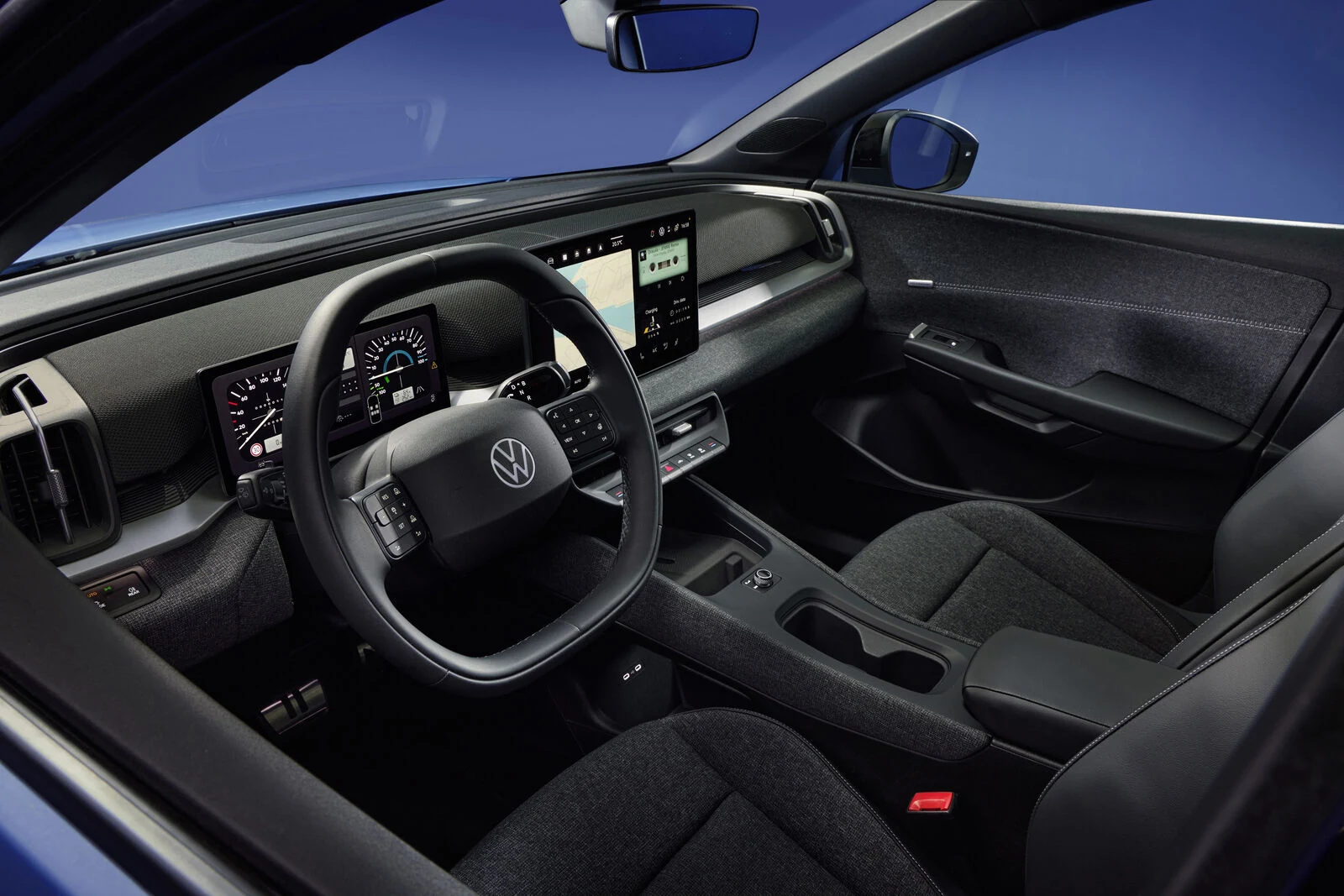
The cabin combines a Digital Cockpit Pro instrument display measuring approximately 26 cm diagonally with a 32.8 cm central touchscreen. Buttons remain on the steering wheel and physical controls are provided in the centre console. A retro instrument view draws on the Golf I, adapting the familiar dial format to electric power delivery and energy consumption.
© Volkswagen AG.
Volkswagen lists fabric-covered dashboard surfaces and several optional upgrades. These include a 425 W Harman Kardon sound system, electrically adjustable front seats with 12-way adjustment and pneumatic massage, and a panoramic roof. Adaptive DCC suspension is an announced option for the 155 kW version. These are equipment details, rather than evidence from a road test about ride comfort, seat support or noise levels.
The October announcement identifies front and rear parking sensors and App Connect smartphone integration among the Trend model’s standard features. Life and Style add equipment, but a buyer still needs the specification for the chosen market. A photograph showing illuminated badges or a panoramic roof cannot establish what is included in a particular price.
Assistance, towing and external power
Connected Travel Assist uses online data and can respond to traffic lights, including braking to a standstill within its operating limits. Volkswagen also offers Area View surroundings cameras and Park Assist Pro parking functions, depending on specification. The traffic-light feature remains driver assistance; the announcement does not describe an autonomous vehicle.
For the 52 kWh version, Volkswagen quotes a towing capacity of up to 1,200 kg. The towbar has a stated vertical load limit of 75 kg. Vehicle-to-load functionality can supply external devices at up to 3.6 kW, although the Schuko adapter described by Volkswagen is an optional accessory. These details add practical uses beyond passenger transport, while remaining subject to the exact vehicle and equipment selected.
The next useful document for a prospective buyer is the local order specification. It should identify battery capacity, motor output, included assistance systems and delivery terms alongside the final price. The German 37 kWh ordering announcement establishes the entry model’s availability there; it does not turn the July launch specification into a €27,995 package.
Photos: © Volkswagen AG. Volkswagen Newsroom image records permit editorial use free of charge.
Sources
- Volkswagen: production-model premiere, 15 July 2026
- Volkswagen: 37 kWh ordering announcement, 19 October 2026
DB2026AU00513 · DB2026AU00514 · DB2026AU00515 · DB2026AU00516