Adaptive cruise control (ACC) is an advanced driver-assistance system that maintains a driver-selected speed while automatically adjusting to keep a pre-set following distance from the vehicle ahead. It enhances conventional cruise control by integrating sensor data to manage vehicle speed dynamically, reducing driver workload in varying traffic conditions.
How adaptive cruise control operates
ACC systems typically employ a forward-facing radar sensor, sometimes supplemented by cameras, to detect vehicles in the lane ahead. When the lane is clear, ACC functions like conventional cruise control, maintaining the driver's set speed. If a slower vehicle is detected, the system automatically reduces the vehicle's speed, either by lifting off the accelerator or applying the brakes, to maintain the pre-set following distance. Once the path ahead clears, the system accelerates back to the driver's set speed.
The driver can usually select from several following distance settings, often represented by bars or a numerical value on the instrument cluster. These settings typically correspond to time gaps, such as 1.0, 1.5, or 2.0 seconds, rather than fixed distances in metres, to ensure the gap scales with speed. For instance, a 1.5-second gap at 50 km/h is shorter in metres than the same 1.5-second gap at 120 km/h.
Some ACC systems incorporate 'stop-and-go' functionality, allowing the vehicle to come to a complete stop and then automatically resume travel when traffic moves again, provided the stop duration is brief. For longer stops, or if the vehicle ahead moves off too slowly, the driver may need to briefly press the accelerator or a 'resume' button to reactivate the system. This feature is particularly useful in congested urban or motorway traffic.
Distinguishing ACC from other driver-assistance systems
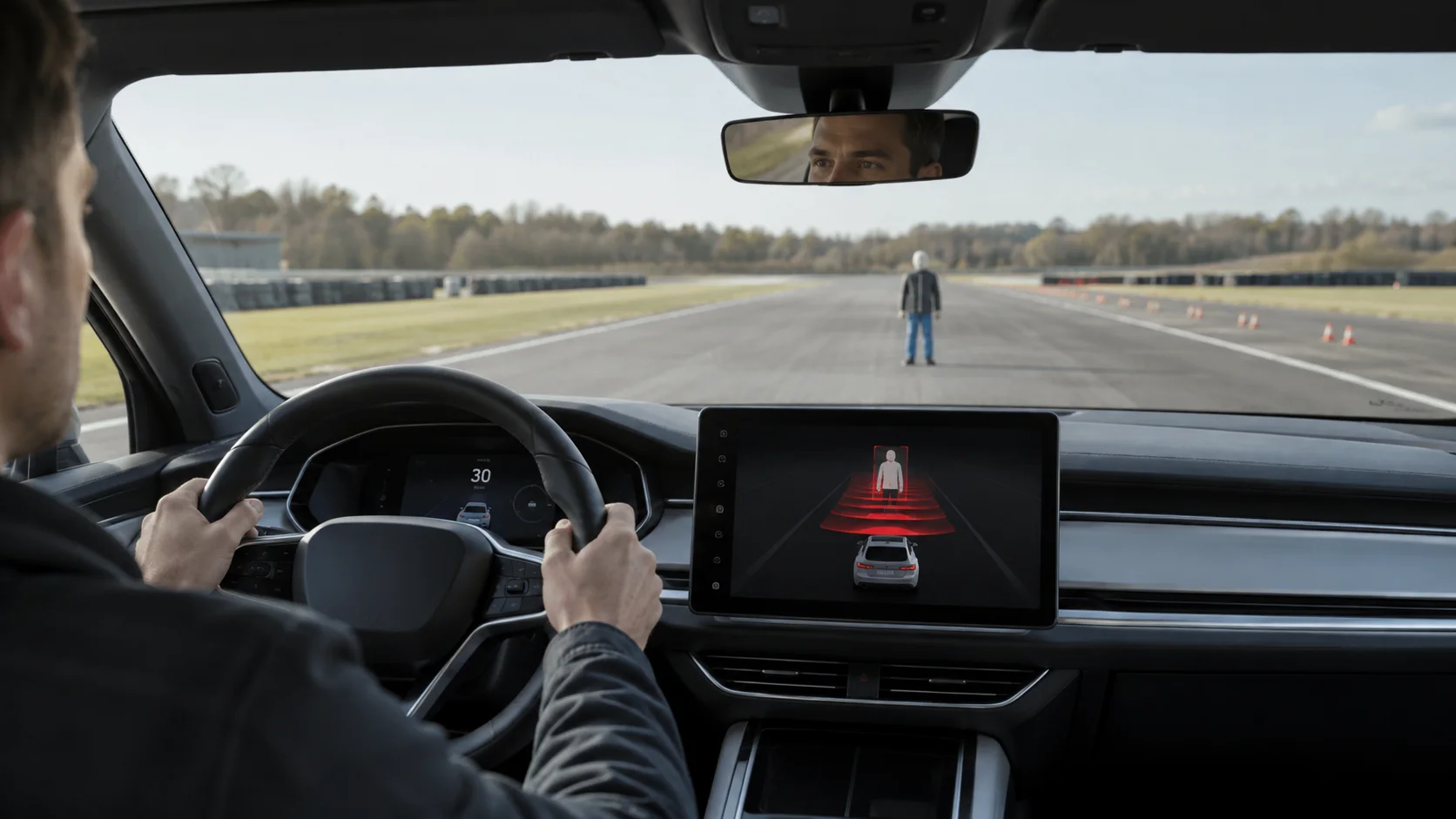
ACC is often confused with or integrated into broader driver-assistance packages. It is distinct from conventional cruise control, which only maintains a set speed and requires driver intervention for braking. ACC also differs from autonomous emergency braking (AEB) systems. While both use forward-facing sensors and can apply brakes, AEB is a safety system designed to prevent or mitigate collisions by intervening only when a crash is imminent, often with greater braking force than ACC. ACC, conversely, is a convenience system focused on maintaining flow and distance.
Lane keeping assist (LKA) or lane centring assist (LCA) systems work in conjunction with ACC in more advanced packages, often termed 'Traffic Jam Assist' or 'Highway Assist'. LKA actively steers the vehicle to keep it within its lane markings, while ACC manages speed and distance. When combined, these systems offer a higher level of driving automation, though the driver remains responsible for monitoring the road and intervening as necessary. UNECE Regulation No. 171 outlines the requirements for driver-control assistance systems, including provisions for how these systems must interact with the driver and ensure driver readiness to take over.
Limitations and driver responsibilities
Despite its benefits, ACC has inherent limitations. The sensors can be affected by severe weather conditions such as heavy rain, snow, or fog, which may obscure the radar or camera's view, leading to reduced performance or temporary deactivation. Dirt or ice accumulating on the sensor housing can also impair functionality. Drivers should consult their vehicle's manual for specific operational limits and cleaning instructions.
ACC systems are designed to react primarily to vehicles directly ahead in the same lane. They may not detect stationary objects, pedestrians, or vehicles cutting in sharply from adjacent lanes. They also typically do not account for traffic lights, stop signs, or complex intersections. The driver remains fully responsible for monitoring the road, steering, and braking when necessary. The EU General Safety Regulation (GSR) mandates certain safety features, but ACC is a convenience system, and its operation does not absolve the driver of their primary responsibility.
Drivers must understand that ACC is not an autonomous driving system. It is an aid that reduces workload but requires constant driver supervision. Euro NCAP's Safety Assist protocols evaluate the performance of ACC and other assistance systems, including how well they support the driver and how clearly they communicate their status and limitations.
Practical scenarios for ACC use
ACC is most effective on motorways and multi-lane roads with relatively consistent traffic flow. For a hypothetical cross-border European journey, such as driving from Brussels to Berlin, ACC can significantly reduce fatigue. On long stretches of motorway, it maintains a steady pace, automatically adjusting for slower traffic or roadworks, allowing the driver to focus more on steering and surroundings.
In stop-and-go traffic, particularly with 'stop-and-go' functionality, ACC can alleviate the constant need to accelerate and brake. This can be particularly beneficial during peak hours in urban areas or congested motorway sections. However, in complex urban environments with frequent turns, intersections, and varied road users (pedestrians, cyclists), ACC's utility diminishes, and manual driving is often more appropriate.
For instance, navigating a city centre with numerous roundabouts and traffic lights would typically require the driver to override or deactivate ACC frequently. In contrast, on an open rural road with minimal traffic, conventional cruise control might be sufficient, as there is less need for dynamic speed adjustments. The choice between ACC and conventional cruise control, or no cruise control, depends on the specific driving environment and traffic conditions.
Verifying system compatibility and features
Before purchasing a vehicle or relying on its ACC system, buyers should consult the official vehicle manual. This document provides detailed information on the specific ACC variant installed, its operational parameters, limitations, and any integrated features like stop-and-go functionality or predictive capabilities. The manual will also outline how to adjust settings, interpret warning messages, and troubleshoot common issues.
Official manufacturer websites and brochures also offer insights into the ACC system's capabilities. Euro NCAP's website publishes detailed test results for various vehicle models, including their Safety Assist scores, which cover ACC performance. These reports can provide an independent assessment of how effectively the system performs in controlled scenarios.
For vehicles equipped with eCall, as mandated by the European Commission, the integration of advanced driver assistance systems like ACC is part of a broader safety ecosystem. While eCall focuses on automatic emergency calls after a serious accident, the underlying sensor data used by ACC can also contribute to the vehicle's overall understanding of its environment, though this is not a direct functional link. Understanding these interconnected systems helps drivers appreciate the full scope of their vehicle's technological capabilities and limitations.