Honda could consider making cars in Europe again if the European Union’s proposed industrial rules change the case for local production. It has not approved a factory or announced a manufacturing partnership. Hans De Jaeger, president of Honda Motor Europe, outlined the possibility in a Bloomberg interview at the EICMA motorcycle show in Milan on 3 November 2026.
His comments cover two potential routes: Honda building locally itself or working with another carmaker. Neither route is currently a project, according to the interview. No country, plant, partner, model allocation or production date has been identified. This is a conditional discussion about Honda’s future industrial footprint, rather than a restart announcement for an existing assembly line.
The sales scale behind the discussion
De Jaeger said the present size of Honda’s European business would not justify a factory, Bloomberg reported. Higher sales could alter that calculation. He did not specify a break-even volume or commit Honda to an annual production target, so the comments do not establish how large an operation would need to be.
ACEA’s January–September 2026 registration tables put Honda at 58,961 new cars across the EU, EFTA markets and the United Kingdom. That was 3.7% above the same period in 2025, with a regional market share of roughly 0.6%. The current-year figures are provisional and can be revised.
The EU-only table records 39,344 Honda registrations, up 18%, and a market share of approximately 0.5%. Those are different geographical totals. The almost 59,000 cars cited in the wider European discussion should not be described as sales within the EU alone, particularly when the policy under consideration is an EU measure.
Registrations also measure a different activity from factory output. They describe cars entering the reported markets, not orders for a proposed Honda production operation. A historical export factory could serve buyers elsewhere as well, making a direct comparison between old plant output and current European registrations misleading without that qualification.
What the EU proposal would do
The European Commission presented its Industrial Accelerator Act proposal on 4 March 2026. It seeks to strengthen manufacturing in strategic sectors, including the automotive value chain, using public procurement and certain public incentives to encourage European-made and low-carbon products. It also proposes changes to industrial permitting.
For Honda, the relevant issue is how the final rules would define eligibility for the affected support and procurement arrangements. A manufacturer’s nationality does not by itself answer where a vehicle or its components originate. Equally, the proposal is not an announcement of a general ban on imported cars: its local-content conditions apply through specified policy instruments.
De Jaeger hopes Japan will be recognised as a trusted partner, citing Japanese companies’ investment in Europe. That is Honda’s position in the discussion, not confirmation that all Japanese-built Honda vehicles will qualify under the eventual legislation. The Commission’s explanation describes reciprocity for countries offering EU businesses market access through trade agreements, rather than a blanket promise to a particular manufacturer.
The legislative position remains open. On 4 November, the European Parliament’s Legislative Observatory listed procedure 2026/0068(COD) as awaiting a committee decision. It is an ordinary legislative procedure involving Parliament and the Council. The Commission’s proposal should therefore not be presented as an adopted regulation with settled conditions for Honda.
A return would follow the Swindon exit
Honda’s official record establishes when its former British car operation ended. In February 2019 it proposed closing Swindon vehicle manufacturing in 2021, linking the restructuring to electrification and a focus on regions where it expected high production volumes. The announcement put the workforce at around 3,500 at that time. That historical figure is not a jobs forecast for a possible future operation.
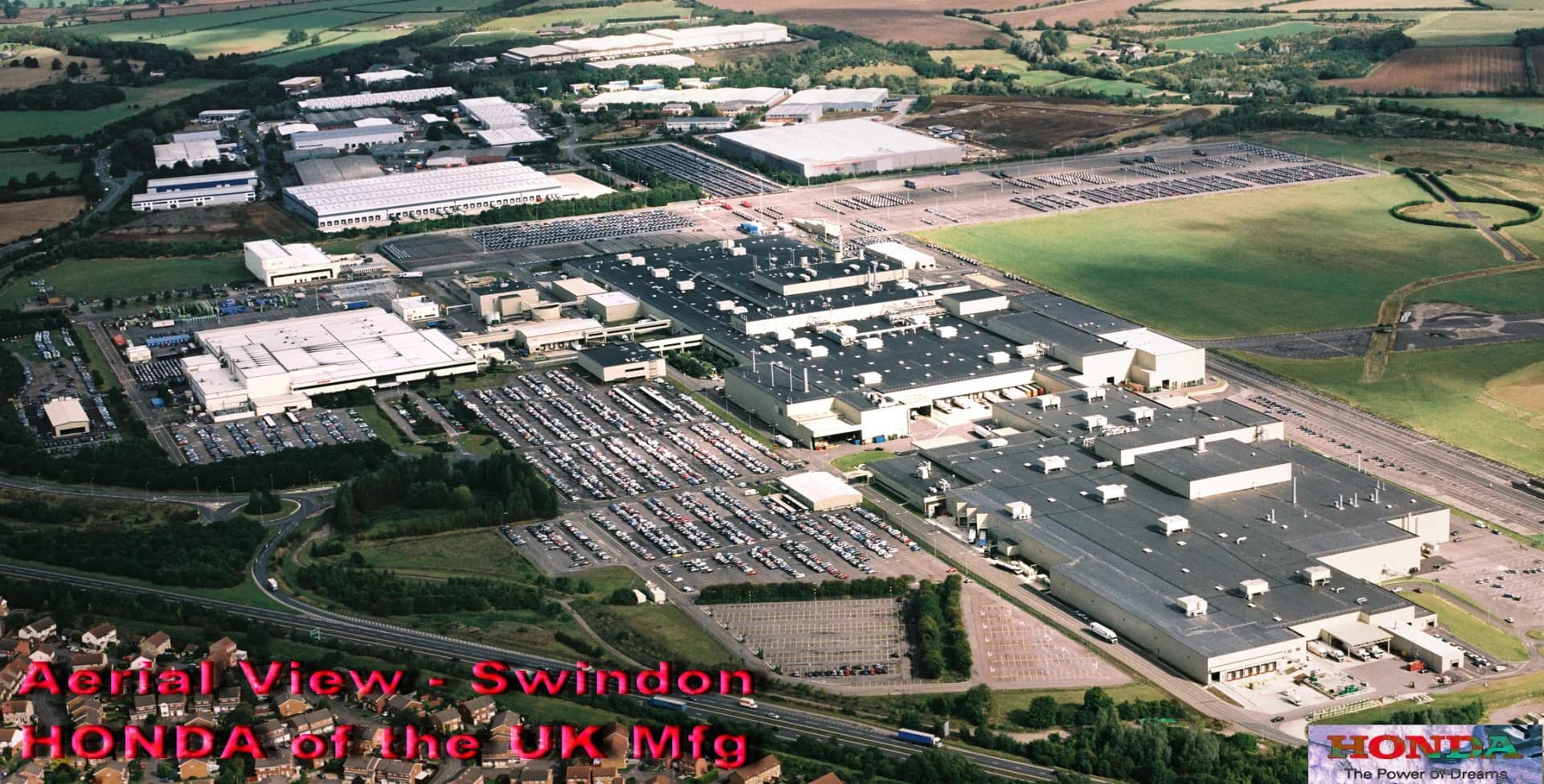
Swindon began car production in 1992, according to Honda’s published chronology, and Civic production followed in 1994. For 2018 the company reported 160,075 cars built and exports to more than 70 countries. Its role was consequently wider than supplying Honda’s customers in the European Union.
Honda’s later official modern-slavery statement dates the end of automobile manufacturing at Honda of the UK Manufacturing in Swindon to 30 July 2021. The Milan interview does not announce that site’s reopening. It also leaves the location of any future manufacturing entirely unspecified.
There is a geographical distinction here as well as an industrial one. The United Kingdom is outside the EU. A discussion of production somewhere in Europe cannot automatically establish compliance with future EU-origin rules. The location, products, components and final legal provisions would need to be considered together before drawing an eligibility conclusion.
Who is setting out Honda’s position
Honda appointed De Jaeger president and director of Honda Motor Europe with effect from 1 April 2026. Its official announcement also gave him responsibility for the Europe, Africa and Middle East regional unit and identified him as Honda’s first non-Japanese regional leader. His remit covers several Honda businesses; the manufacturing possibility discussed in Milan concerns cars.
He also made clear in the Bloomberg interview that Honda intends to remain in Europe. Continued market participation and a new local factory are separate commitments. The first is the position he expressed; the second still depends on the commercial case and the final policy framework.
For buyers, these comments do not announce a locally built Honda, a revised price or a new incentive entitlement. For suppliers and potential host locations, they provide no tender or confirmed investment timetable. A concrete return would require further information about the manufacturing arrangement and its scale, followed by an actual Honda decision. None of those details accompanies the current statement of interest.
Archive photograph of Honda’s former Swindon plant, originally uploaded in 2008. It does not depict an announced future production site. Resized and converted to WebP. krzyszkk / Wikimedia Commons, CC BY 3.0.
Sources
- Honda: appointment of Hans De Jaeger.
- Honda: 2019 closure proposal and Swindon chronology.
- Honda: official statement dating the end of Swindon car production.
- ACEA: September 2026 registration report, EU and EU+EFTA+UK tables.
- European Commission: Industrial Accelerator Act proposal explained.
- European Parliament: procedure 2026/0068(COD).