Volkswagen Group has acknowledged a problem that is easy to miss when looking only at electric-vehicle sales: its battery-powered cars are gaining demand in Europe, but they still make less money than combustion-engine vehicles. Arno Antlitz, the group’s chief financial and operating officer, made the point when Volkswagen published its results for the first nine months of 2026.
A weak reported result, with large special items
Volkswagen Group recorded €233.378 billion in sales revenue from January to September, down 2.2% from the same period in 2025. Deliveries to customers fell 9% to 6.011 million vehicles. Reported operating profit was €71 million, compared with €5.408 billion a year earlier.
The headline operating figure was heavily affected by special items. Volkswagen said the first nine months included about €8.7 billion in special effects. The largest item was a roughly €6.4 billion impairment of Porsche goodwill. The group also recorded other adjustments linked to China and restructuring. Before special items, operating profit was about €8.8 billion and the operating return on sales was 3.8%.
That distinction matters. Volkswagen is not saying that every electric model loses money, nor that the group’s entire operating business produced only €71 million before costs. It is reporting a consolidated result that includes the special items, while also warning that the underlying margin is too low to support its investment plans comfortably.
Why a growing EV mix can dilute profit
Electric vehicles carry a different cost structure. The manufacturer has to recover spending on batteries, power electronics, software, platforms and production changes. Those costs can fall as volumes increase, but the benefit takes time. Vehicle prices are also under pressure because customers compare range, charging performance, equipment and price across a growing number of European and Chinese models.
Volkswagen has not published a profit margin for every ID. model in the nine-month release. Antlitz’s statement is a group-level comparison: the company currently earns less from electric vehicles than from combustion-engine vehicles. That wording does not prove that all EVs have the same economics, and it does not identify one single technical reason for the gap.
The transition also creates a manufacturing problem. Volkswagen still carries factories, suppliers and engineering programmes serving more than one type of powertrain. A larger share of EVs can improve scale over time, but the company must manage that ramp while older, more profitable combustion volumes decline. In the short term, the mix can move in the wrong direction even when the electric order book is healthy.
European demand is rising
The group’s figures show that the profitability warning is not simply a story about customers rejecting EVs. Volkswagen said European battery-electric order intake rose 39% in the first nine months of 2026 compared with the same period in 2025. Electric vehicles represented 40% of the group’s order bank at the end of September.
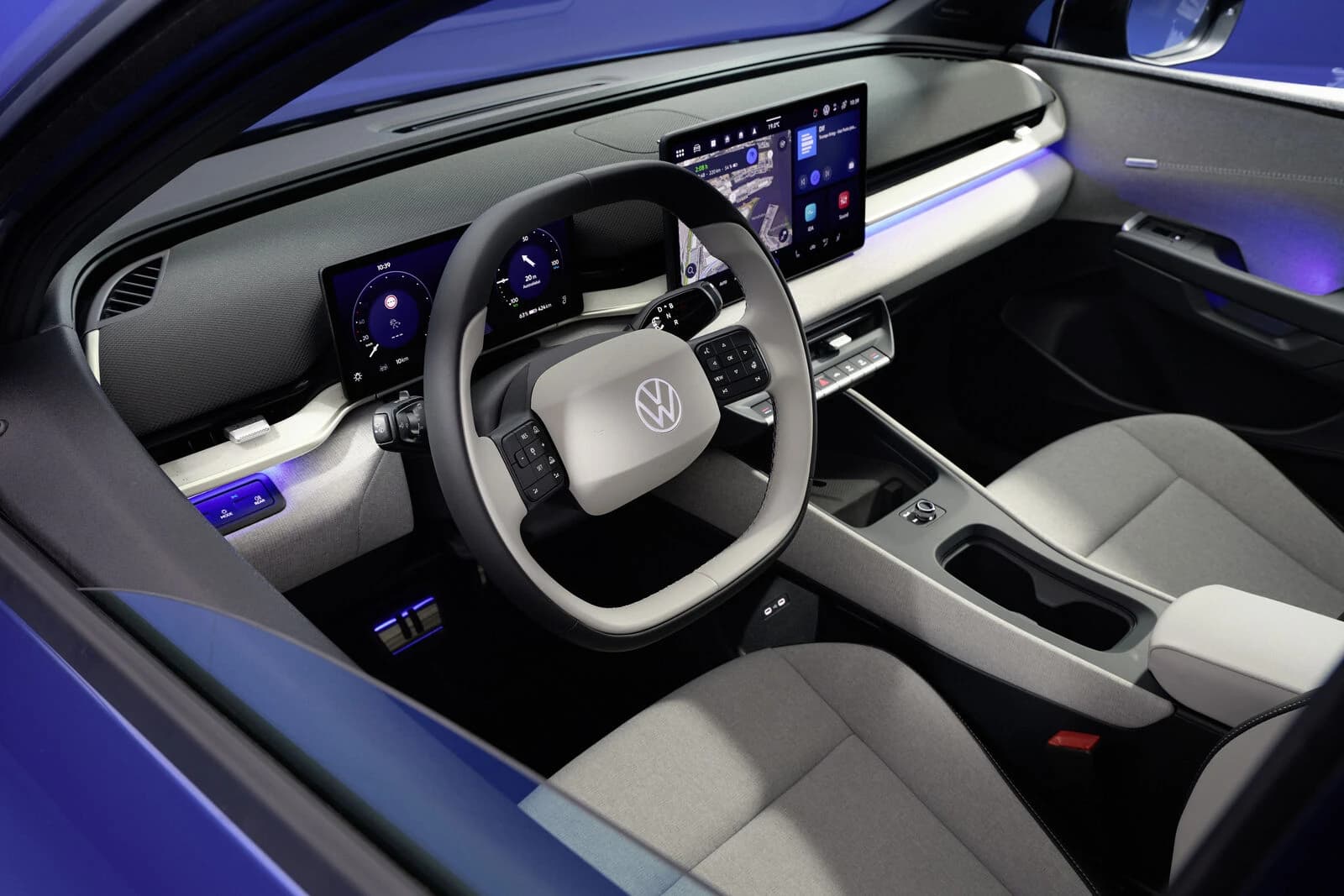
The Electric Urban Car Family is a major part of that order story. It brings together the Volkswagen ID. Polo, Volkswagen ID. Cross, CUPRA Raval and Škoda Epiq on the MEB+ architecture. Volkswagen Group said the four-model family had attracted around 150,000 orders. These are orders, not deliveries, and the figure says nothing by itself about the margin on each car.
The ID. Polo illustrates the group’s attempt to move electric cars into smaller and more price-sensitive segments. Volkswagen lists a German starting price of €24,995 for the Trend version. Its official figures include a WLTP range of up to 329 km with the 37-kWh battery and up to 454 km with the 52-kWh battery, depending on configuration. Those are homologated manufacturer figures, not independent road-test results.
China, tariffs and competition add pressure
Volkswagen also pointed to a shrinking Chinese market, US tariffs and stronger competition in Europe. The group’s nine-month delivery decline combines several regions and powertrains, so it cannot be read as an EV-only result. China has become more difficult for established international brands as local manufacturers compete on price, software and launch speed. In Europe, the arrival of more affordable EVs gives buyers more alternatives around the same price points.
The third quarter ended with a €5.822 billion loss after tax. That number was shaped by the special items, including the Porsche impairment, rather than by the electric mix alone. Still, the company’s own wording makes the commercial tension clear: successful EV sales increase the share of vehicles with a lower current margin.
The €31 billion response
Volkswagen Group’s Future Plan includes a cost programme worth around €31 billion. The measures described by the company cover a shorter and simpler model range, less complicated structures, lower vehicle costs, reduced overheads, more efficient plants and faster technology development.
The logic is straightforward. The group needs to improve the economics of the vehicles it sells today while lowering the cost of the next generation of EVs. Common platforms and parts can spread development spending across Volkswagen, Škoda, CUPRA and other brands, but shared architecture does not guarantee a profit. The cars still have to be priced competitively and built at a cost that supports the group’s investment plans.
For buyers, Volkswagen’s results do not automatically predict a price change for the ID. Polo or any other model. They do show why the company is talking about volume and cost at the same time. Electric demand is no longer the only question. The harder test is whether that demand can produce margins comparable with the combustion vehicles it is replacing.