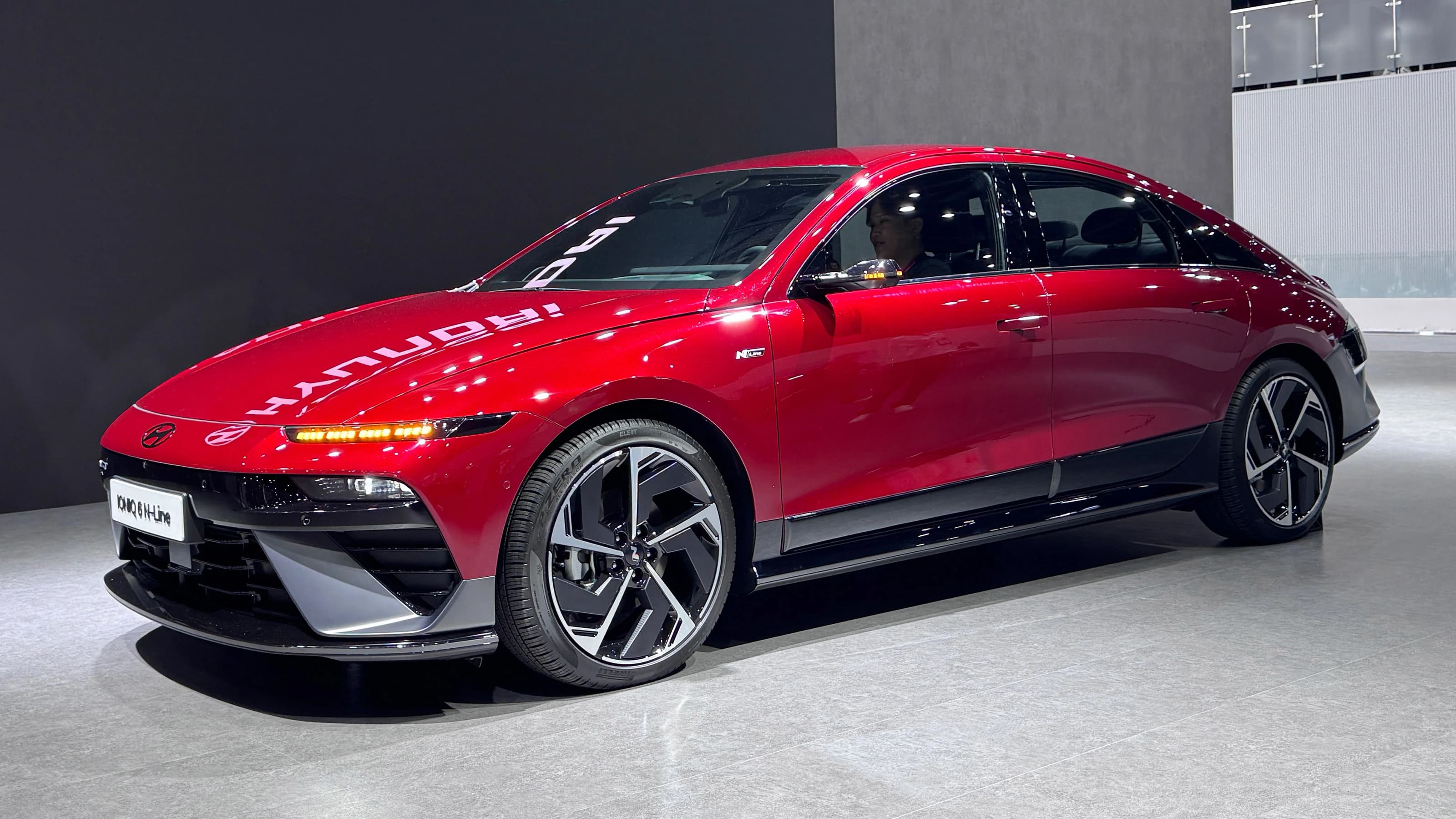
The facelifted Hyundai Ioniq 6 is now on sale in the United Kingdom from £33,240 after the full Electric Car Grant is applied. That figure is market-specific: it depends on the UK grant and should not be converted directly into a Romanian retail price. Auto Express reports that deliveries are expected to begin in spring next year.
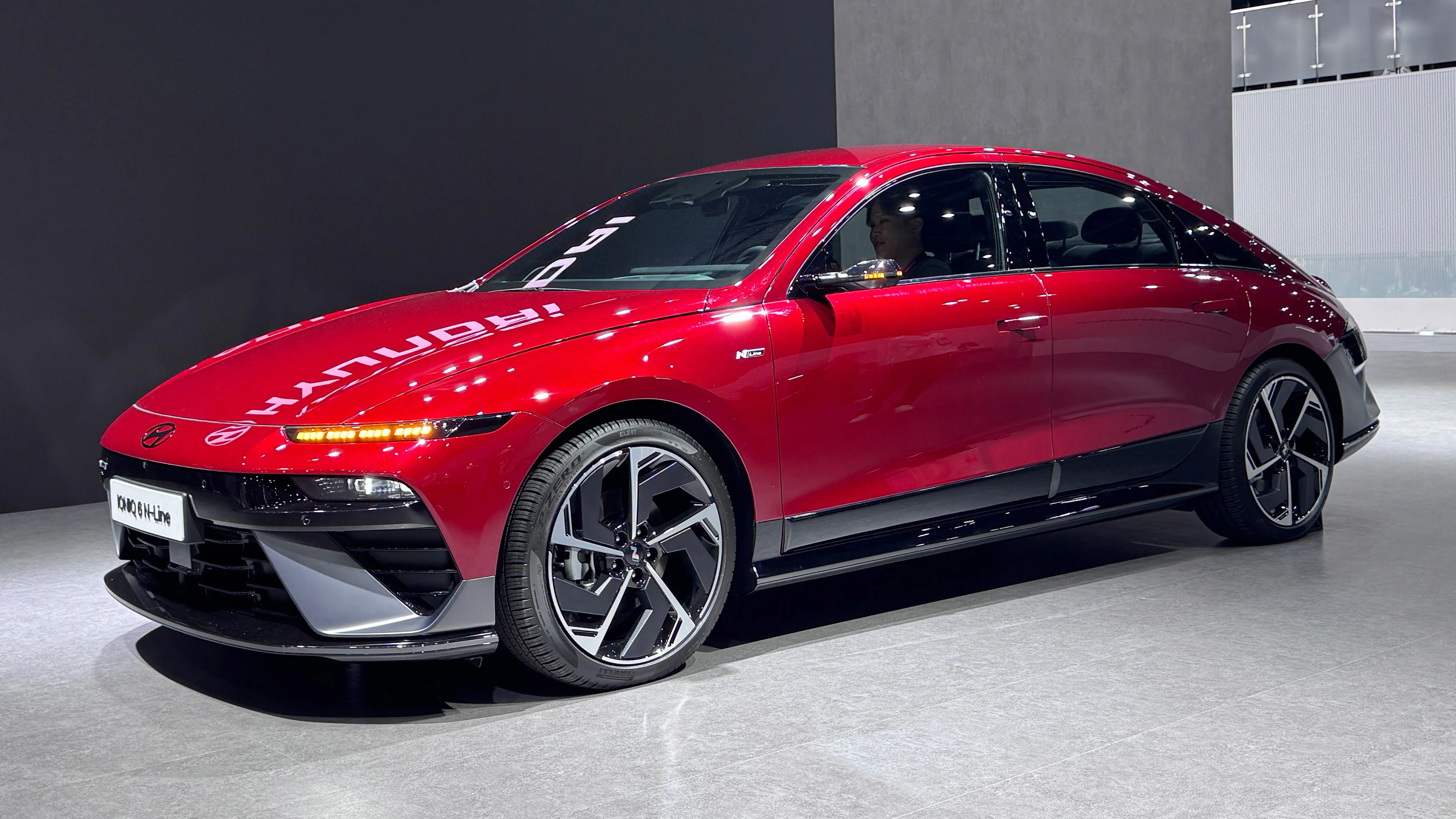
Image from the Auto Express gallery, attributed on the source page to Auto Express/Hyundai; reuse rights were not independently verified.
Why the entry price matters
The headline price is not simply the manufacturer’s unadjusted European list price. Auto Express says the facelifted Ioniq 6 qualifies for the UK government’s full £3,750 Electric Car Grant. The grant reduces the advertised entry point for the Premium version and puts the car almost £5,000 below the Tesla Model 3 in the comparison made by the publication.
That comparison needs context. It depends on the exact specification, the grant rules and the price displayed at the time of ordering. A buyer in Romania would need to check Hyundai’s local range, taxes, equipment and any Romanian incentive scheme separately. The UK number is useful as a market signal, not as a Romanian quotation.
The UK range includes a rear-wheel-drive car with a rear-mounted electric motor and an all-wheel-drive version with two motors. The entry Premium model uses an 84-kWh battery. Auto Express gives it a 0–62 mph time of 7.4 seconds and a maximum claimed range of 422 miles, or roughly 679 km, under the relevant test conditions. Hyundai’s European press material gives a maximum of up to 680 km WLTP for a specific battery and wheel configuration.
A cleaner front and a simpler rear
Hyundai has not abandoned the Ioniq 6’s streamliner shape. The facelift keeps the low roof, long body and aerodynamic profile that made the saloon unusual when it was launched. Hyundai quotes a drag coefficient of 0.21 for the new car, although the final consumption and range depend on battery size, wheels, equipment and homologation.
The most visible changes are at the ends of the car. The former rounded headlamps have been replaced by narrow daytime-running lights in separate upper housings, with the main lamps positioned lower in the front bumper. A sharper bonnet edge and a cleaner opening give the nose a more defined appearance. Parametric Pixel lighting remains part of the Ioniq identity, but the graphics are arranged across a wider, more horizontal face.
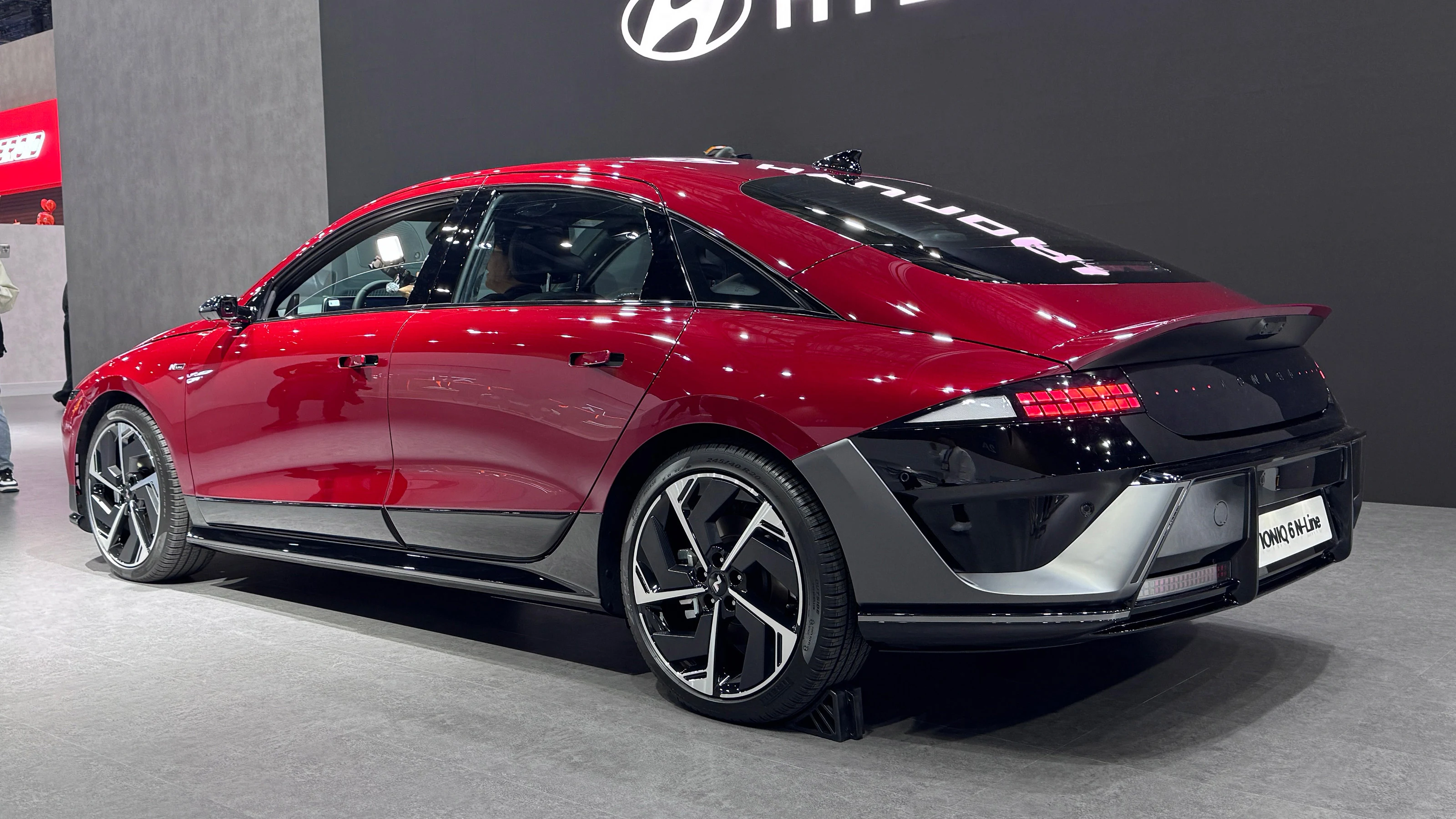
At the back, the previous dual-spoiler arrangement has been replaced by a single extended ducktail above the rear light bar. The change reduces visual complexity while preserving the aerodynamic theme. The rear bumper has been redrawn, and the N Line adds darker lower sections, sportier details and a more assertive interpretation of the same body.
The side profile remains recognisable. New wheel designs are shaped with aerodynamic efficiency in mind, while lower skirts and trim details vary between the standard car and the N Line. Auto Express also lists three new colours for the UK: Transmission Blue Matte, Celadon Grey Matte and Sunset Brown Pearl. Colour availability is market-dependent.
Interior updates focus on usability
The cabin retains the twin 12.3-inch display layout, but the software and interface are updated. Hyundai’s Connected Car Navigation Cockpit supports navigation, media functions and over-the-air updates. Apple CarPlay and Android Auto remain available. Unlike some newer electric cars, the Ioniq 6 still uses physical controls for heating and air conditioning.
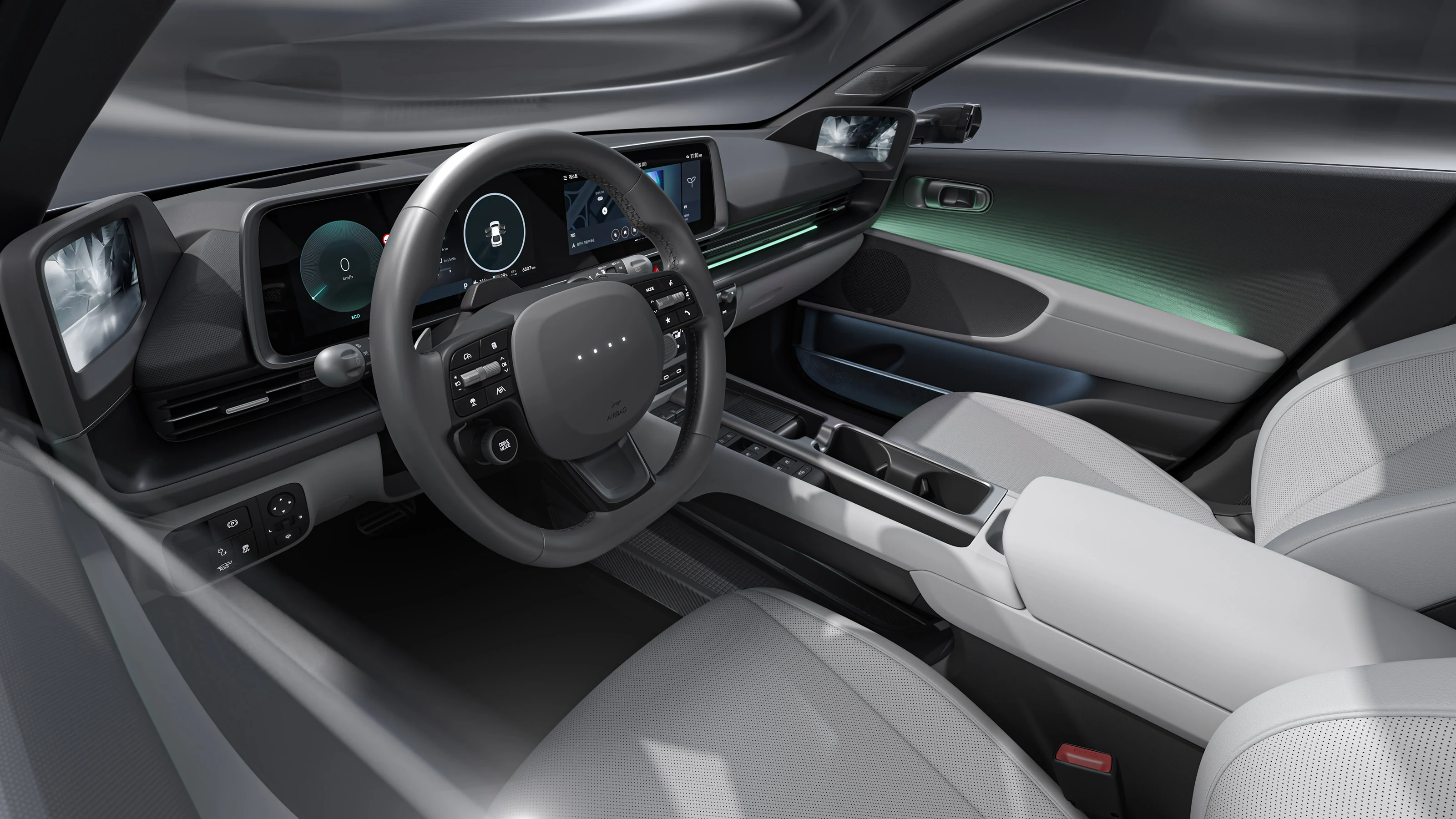
Auto Express lists satellite navigation, dual-zone climate control, a heated steering wheel, heated front seats, wireless phone charging, 18-inch wheels and a heat pump among the standard equipment for the UK Premium model. Driver assistance equipment includes adaptive cruise control with lane centring, blind-spot monitoring and a reversing camera. Exact equipment can vary by country and trim.
The Ioniq 6 N Line is positioned as a styling and equipment derivative rather than the high-performance Ioniq 6 N. Auto Express says it adds £3,000 to the UK price structure and brings 20-inch wheels, N-specific exterior details, red stitching, sportier upholstery, heated rear seats and extra passenger-seat support. It should not be confused with the separate 6 N performance model.
Battery choices and charging
Hyundai’s European press kit describes two battery capacities for the facelift: 63 kWh and 84 kWh. The car remains based on the company’s E-GMP architecture, with rear- or all-wheel drive and an 800-volt charging system. The 84-kWh rear-wheel-drive version produces 168 kW, or 229 PS, and the dual-motor all-wheel-drive car produces 239 kW, or 325 PS, with 605 Nm of torque.
The official figures put 0–100 km/h at 7.4 seconds for the long-range rear-wheel-drive car and 5.1 seconds for the all-wheel-drive version. Top speed is listed at 185 km/h. Hyundai says a 350-kW charger can take the battery from 10 to 80 per cent in about 18 minutes, although real charging depends on the station, battery temperature and state of charge.
The claimed 680-km WLTP range therefore belongs to a particular configuration. It is not a promise that every Ioniq 6 facelift, N Line car or all-wheel-drive version will cover that distance. The 63-kWh version and larger wheels will produce different official figures.
The facelift is consequently a substantial update rather than a new generation. It keeps the E-GMP platform, flat floor and 800-volt system, while revising the bodywork, cabin controls, software and battery choices. For buyers outside the UK, the next useful information will be the local Hyundai price list, equipment breakdown and delivery schedule.