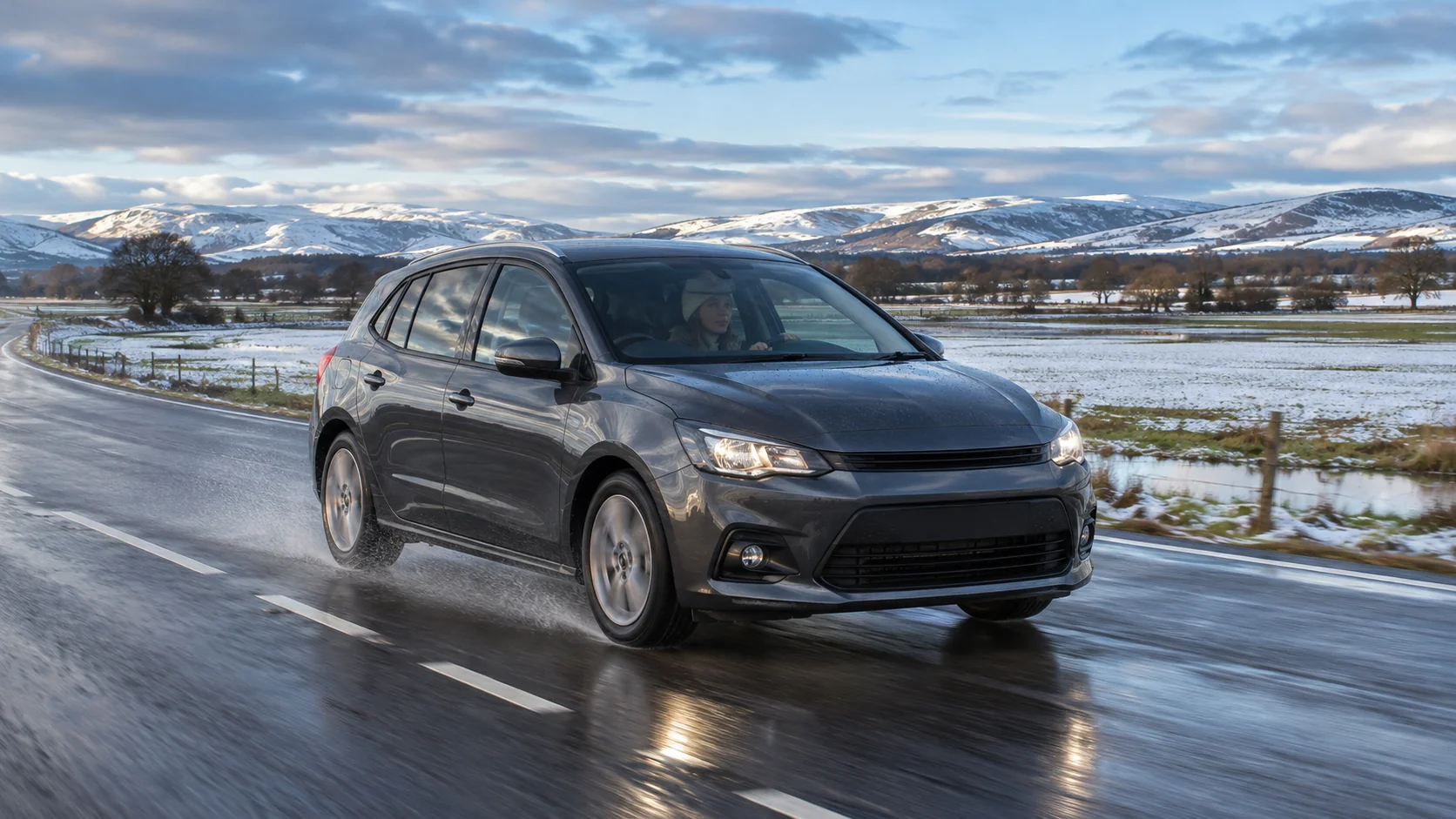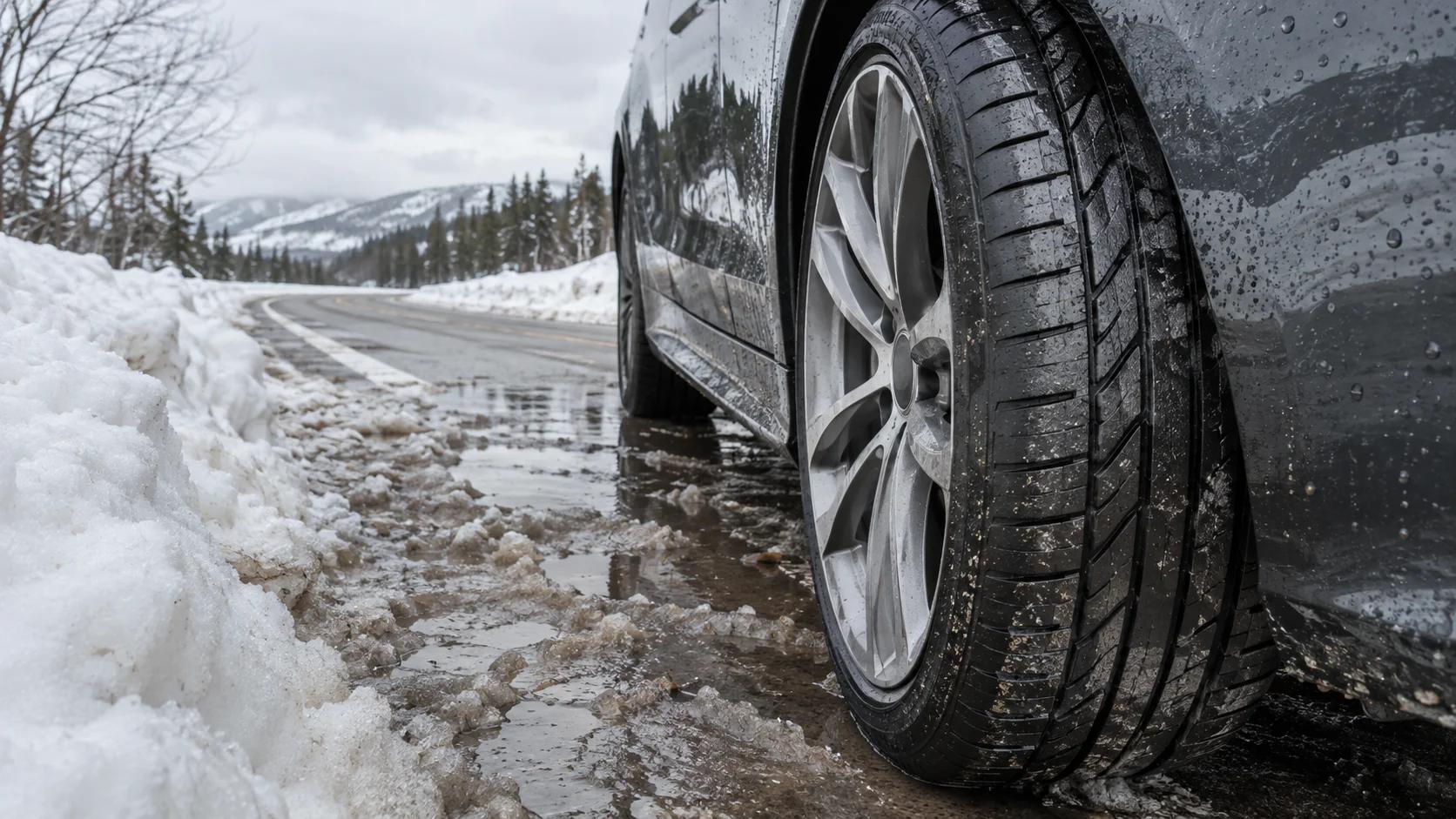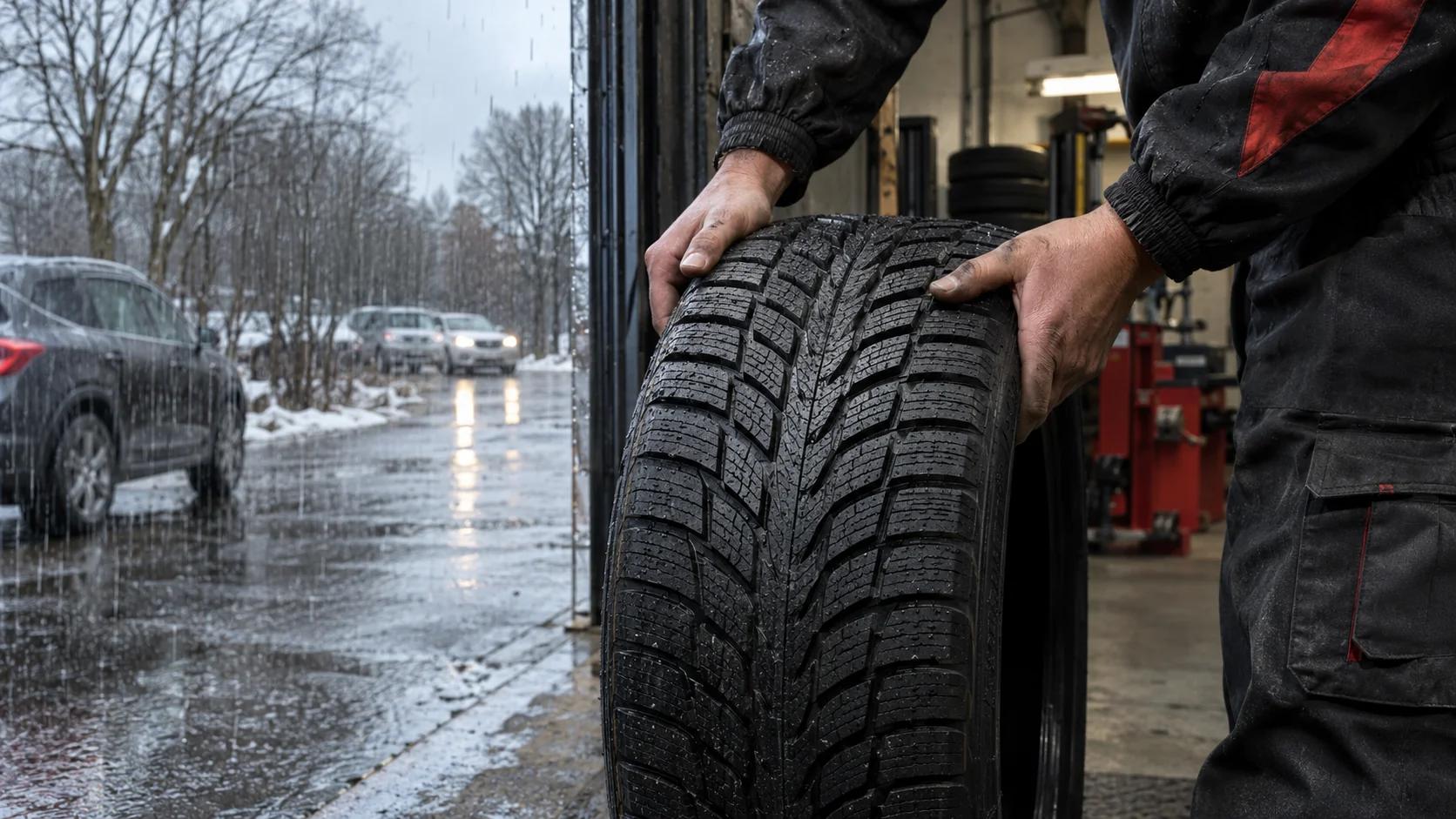
On many lowland winter journeys, the road is wet rather than snow-covered. That makes wet-road performance a central part of the all-season decision.
All-season tyres must balance grip across cold wet roads, occasional snow and warmer dry days. Michelin recommends the category for less severe winters with occasional snowfall. It does not mean any tyre sold under the label will handle rain well. In ADAC's 2025 test of 16 all-season tyres in 225/45 R17, the spread was wide: four scored good overall, four failed, and four were only adequate.
ADAC's result is useful because it weighs performance across conditions instead of treating snow as the sole test. A tyre that pulls away on snow but brakes poorly in rain can be the wrong purchase for a city where winter precipitation is mainly rain. Inspect the independent wet-braking and handling results in the correct tyre size. The EU tyre label gives a wet-grip class, but it does not replace a full comparative test of behaviour across surfaces.
Dedicated winter tyres make more sense when persistent snow and ice are expected, especially on untreated routes. If those conditions are rare and you can postpone travel during a storm, a balanced all-season model can better match the mix of days the car actually sees.
Sources: Michelin; ADAC 2025 test; European Commission tyre labels.