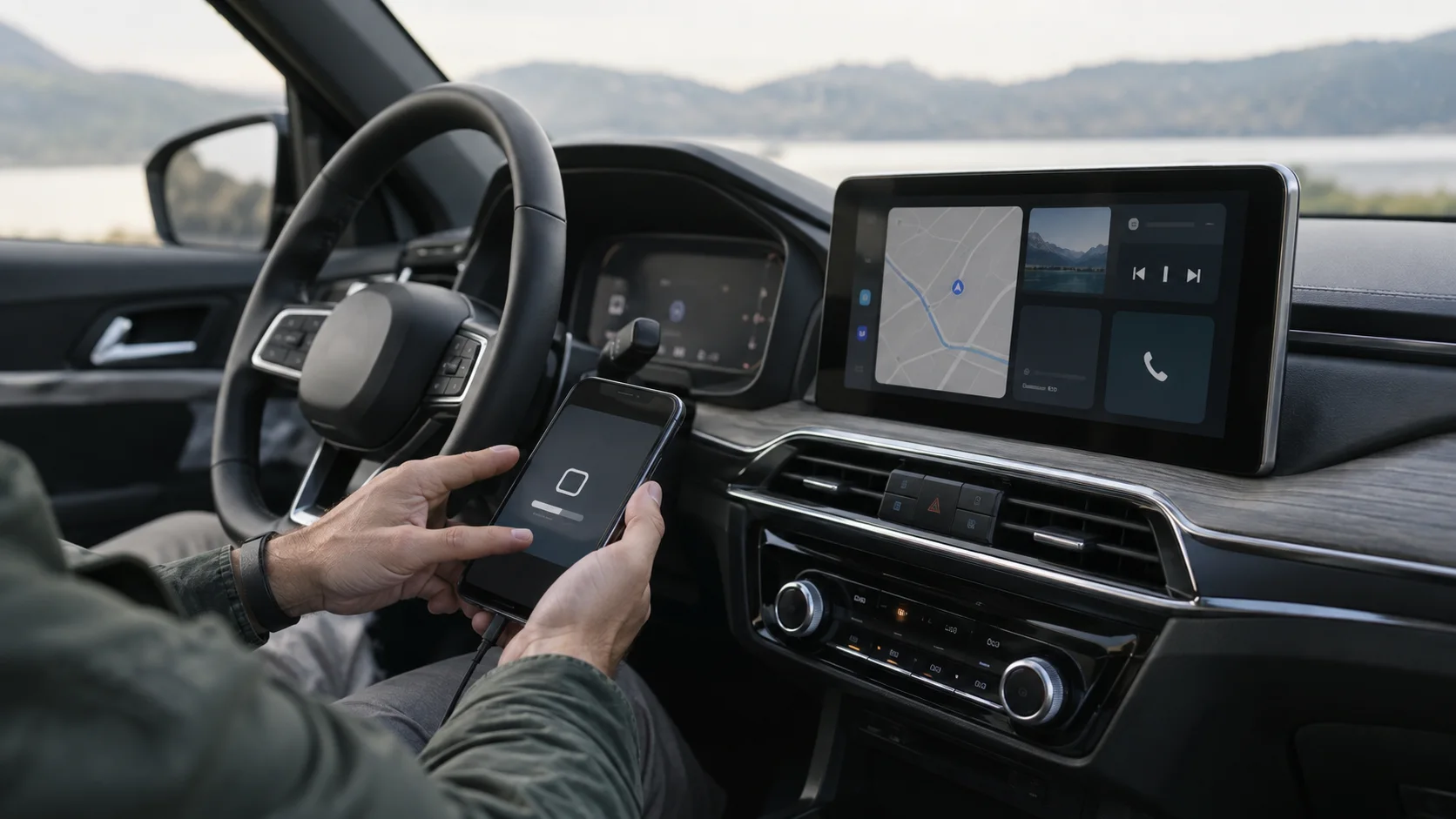
The 112 eCall system automatically or manually contacts emergency services following a serious road incident, transmitting a minimum set of data to facilitate a rapid and informed response. This system is mandated in all new type-approved passenger cars and light commercial vehicles sold in the European Union since April 2018.
How the eCall system is activated
eCall can be activated in two ways: automatically or manually. Automatic activation occurs when the vehicle's sensors detect a severe collision. These sensors, often linked to the airbag deployment system, trigger the eCall unit. Manual activation is initiated by pressing a dedicated button within the vehicle, typically marked with an SOS symbol. This allows occupants to request assistance for themselves or others, even if the vehicle has not sustained damage sufficient to trigger an automatic alert, such as witnessing an incident or experiencing a medical emergency while driving.
Upon activation, the in-vehicle system (IVS) establishes an audio connection with the nearest Public Safety Answering Point (PSAP) that handles 112 calls. Simultaneously, it transmits a Minimum Set of Data (MSD). This data packet includes the vehicle's precise location (derived from GNSS satellite navigation systems like Galileo, GPS, or GLONASS), the direction of travel, a timestamp of the incident, the vehicle identification number (VIN), and the type of propulsion (e.g., petrol, diesel, electric). The PSAP operator can then speak directly with the vehicle occupants to assess the situation and dispatch appropriate emergency services, such as ambulances, fire brigades, or police.
The Minimum Set of Data and its purpose
The MSD is crucial for enabling a swift and effective emergency response. The location data, including the direction of travel, helps emergency services pinpoint the exact crash site, which is particularly valuable on motorways or in remote areas where precise location information might otherwise be difficult to convey. Knowing the direction of travel can also assist in determining which side of a divided highway the incident occurred on, preventing emergency responders from being dispatched to the wrong carriageway.
The timestamp helps PSAPs understand the recency of the incident, while the VIN allows for vehicle identification and access to relevant technical specifications, which can be important for extrication efforts. The propulsion type is increasingly vital, especially for electric and hybrid vehicles, as it informs first responders about potential high-voltage hazards or specific fire suppression techniques required. This standardized data transmission ensures that critical information is consistently available to emergency services across different EU member states, regardless of the vehicle's origin or the incident's location.
Cross-border functionality and interoperability
A key design principle of the 112 eCall system is its seamless cross-border functionality within the European Union. This means that if a driver experiences a serious incident while travelling, for example, from Germany through Austria to Italy, their vehicle's eCall system will connect to the appropriate PSAP in the country where the incident occurs. The system is designed to automatically detect the local mobile network and route the call to the relevant 112 emergency centre.
This interoperability is achieved through standardization at both the technical and operational levels. The use of the single European emergency number 112 ensures that the call is directed to the correct services regardless of the country. The MSD format is also standardized, guaranteeing that PSAP operators can interpret the transmitted data consistently across the EU. This eliminates the need for drivers to know specific emergency numbers for each country they visit, providing a uniform safety net across the entire bloc.
Privacy considerations and data protection
Privacy was a significant consideration in the development and implementation of the 112 eCall system. The system is designed to be dormant and does not continuously track vehicle location or activity. It only becomes active and transmits data when an incident triggers it, either automatically or manually. Before an incident, the eCall unit does not store location data or monitor driving behaviour.
The transmitted MSD is limited to the essential information required for emergency response. It does not include personal data beyond what is necessary for identification of the vehicle itself. Once an emergency call is concluded, the data transmitted for that specific incident is not retained by the PSAP beyond what is legally required for emergency service operations. This "privacy by design" approach ensures that the benefits of rapid emergency response are balanced with the protection of individual privacy.
Verifying eCall compatibility and status
For vehicle owners, verifying eCall compatibility and ensuring its operational status is straightforward. All new type-approved passenger cars and light commercial vehicles sold in the EU since April 2018 are legally required to be equipped with the 112 eCall system. This means that if a vehicle was purchased new after this date, it should have the system installed.
The presence of the eCall system is typically indicated by a dedicated SOS button within the vehicle, often located near the rearview mirror or in the overhead console. This button usually has an indicator light, which, when green, signifies that the system is operational. A red or unlit indicator may suggest a fault, which should be addressed by a qualified service centre.
Further details on the eCall system, its operation, and troubleshooting can be found in the vehicle's owner's manual. This documentation will provide specific instructions on how to use the manual activation button, interpret indicator lights, and understand any system limitations. Euro NCAP also includes eCall functionality as part of its Safety Assist protocols, assessing the system's performance in crash scenarios. While Euro NCAP does not directly test the 112 eCall system in isolation, its presence and proper functioning contribute to a vehicle's overall safety rating. UNECE Regulation No. 171, which governs driver-control assistance systems, also touches upon the integration and reliability of such safety features.
Limitations and scenarios where eCall may not function
While the 112 eCall system significantly enhances road safety, it does have limitations. The system relies on mobile network coverage to establish a connection with the PSAP. In areas with poor or no mobile signal, such as very remote regions or tunnels, the eCall system may be unable to transmit data or establish an audio link. This is a fundamental constraint of any mobile communication-dependent system.
Furthermore, severe damage to the vehicle's electrical system or the eCall unit itself during an incident could impair its functionality. While the system is designed to be robust, extreme impacts might compromise its ability to operate. The system also requires power, typically from the vehicle's battery, and a completely drained or damaged battery could prevent it from working.
In scenarios where the eCall system might not function, such as in areas without mobile coverage, alternative methods of emergency communication remain important. These include carrying a fully charged mobile phone, informing others of travel plans, or using personal locator beacons in extremely remote areas. The eCall system is a critical safety layer, but it does not negate the importance of general preparedness for unforeseen circumstances.