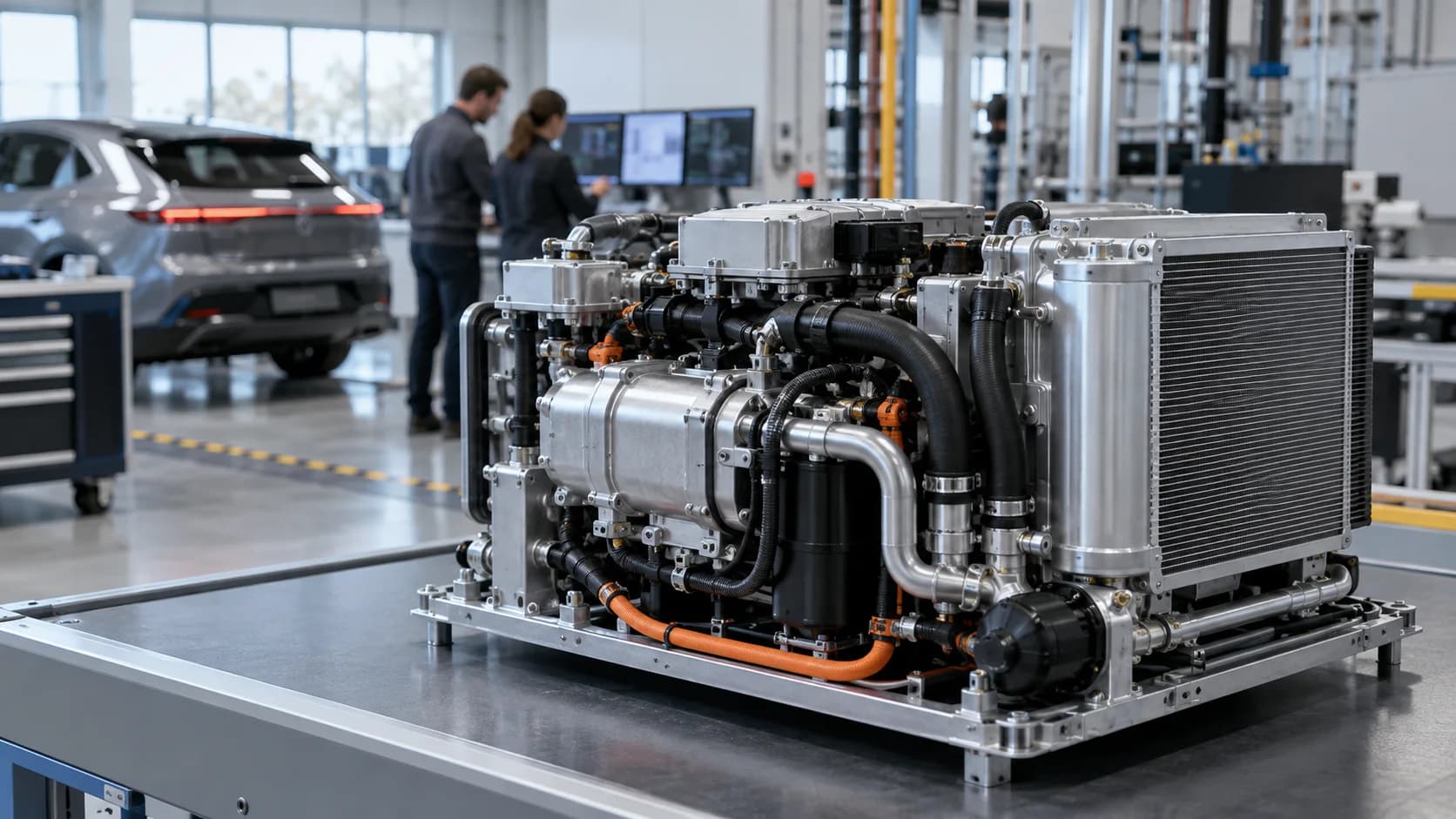
A heat pump in an electric vehicle (EV) transfers thermal energy from one area to another, rather than generating heat directly, improving efficiency for cabin climate control. This system can warm the cabin by extracting heat from the ambient air or powertrain components, and cool it by reversing the process.
How a heat pump operates in an EV
Conventional EV cabin heating relies on resistive heaters, which convert electrical energy directly into heat. While effective, this process can be energy-intensive, drawing significant power from the high-voltage battery. A heat pump, by contrast, functions on principles similar to a domestic refrigerator or air conditioner. It uses a refrigerant that cycles through evaporation and condensation, absorbing and releasing heat.
In heating mode, the heat pump extracts thermal energy from sources such as the outside air, the electric motor, or the battery. This low-grade heat is then compressed, raising its temperature, before being transferred to the cabin via a heat exchanger. For cooling, the cycle reverses: heat is extracted from the cabin and expelled. Because a heat pump moves existing heat rather than creating it, its energy consumption for a given thermal output can be lower than a resistive heater, particularly in moderate ambient temperatures.
Impact on real-world range
The primary benefit of a heat pump in an EV is its potential to reduce energy consumption for cabin climate control, which can translate into an extended driving range. Resistive heating can significantly impact range, especially in colder conditions where the battery is also less efficient. A heat pump's efficiency, often expressed as a Coefficient of Performance (COP), indicates how many units of heat energy are moved per unit of electrical energy consumed. A COP greater than one means the heat pump is more efficient than a resistive heater.
However, the efficiency of a heat pump is not constant. It decreases as the temperature difference between the heat source and the desired cabin temperature increases. In very cold ambient conditions, a heat pump may struggle to extract sufficient heat from the outside air, and its COP can drop. In such scenarios, a supplemental resistive heater may activate to maintain the desired cabin temperature, reducing the overall efficiency advantage. Conversely, in mild temperatures, a heat pump can offer substantial energy savings. For a hypothetical journey from Brussels to Luxembourg City, covering approximately 200 km, a heat pump could contribute to maintaining a consistent range, particularly if the ambient temperature is above freezing.
When a heat pump is preferable
A heat pump is generally preferable in climates with moderate to cold winters and warm summers. Its ability to both heat and cool efficiently makes it a versatile solution. For drivers who frequently undertake longer journeys, the cumulative energy savings from a heat pump can be significant, potentially reducing the frequency of charging stops. It is also beneficial for those who prioritize maximizing their vehicle's range, especially in conditions where resistive heating would otherwise consume a substantial portion of the battery's capacity.
Consider a driver who regularly travels across Europe, encountering varied weather conditions. A heat pump system would offer a more energy-efficient solution for cabin comfort across a broader range of temperatures compared to a resistive-only system. The benefit is less pronounced for drivers who primarily make short urban trips, where the system may not operate long enough to demonstrate its full efficiency advantage, or in consistently extreme cold where its COP diminishes.
Limitations of heat pump systems
Despite their advantages, heat pumps have limitations. Their efficiency is highly dependent on ambient temperature. In very low temperatures, typically below -10°C, the COP can drop significantly, sometimes approaching or even falling below that of a resistive heater. This is because there is less heat available to extract from the outside air, and the system has to work harder to achieve the desired cabin temperature. Frost buildup on the outdoor heat exchanger can also reduce efficiency, requiring periodic defrost cycles that consume energy.
Another factor is the initial cost. Vehicles equipped with heat pumps often have a higher purchase price than those with resistive heating systems. Buyers must weigh the potential long-term energy savings against this upfront investment. The complexity of a heat pump system, involving refrigerants and multiple components, can also lead to higher maintenance costs compared to a simpler resistive heater, though this varies by manufacturer.
Verifying heat pump compatibility
To determine if a specific EV model is equipped with a heat pump, buyers should consult the vehicle's official documentation. The owner's manual is the primary source for detailed technical specifications, often listing climate control system components. Manufacturer websites and brochures also typically highlight significant features like a heat pump, especially if it is an optional extra or part of a specific trim level.
When reviewing documentation, look for terms such as "heat pump," "thermal management system with heat pump," or "highly efficient climate control." Some manufacturers may also specify the type of refrigerant used, which can be an indirect indicator. If the information is not immediately clear, contacting an authorized dealership or the manufacturer directly can provide definitive confirmation. It is important to verify this information for the exact model year and trim level, as specifications can vary.