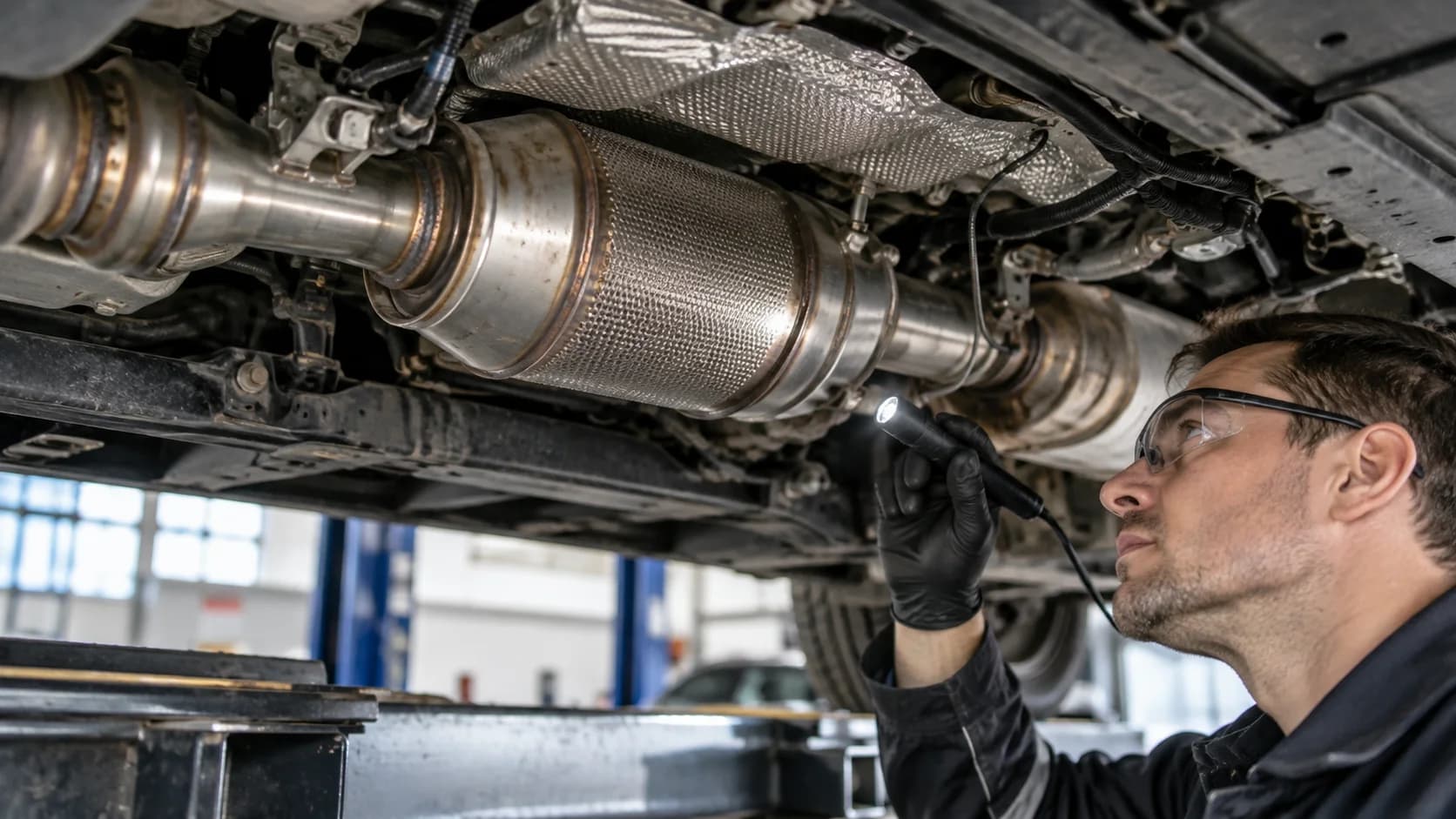
Petrol particulate filters (PPFs) capture fine soot particles from exhaust gases, preventing their release into the atmosphere. Their operation relies on periodic regeneration to burn off accumulated particulates, maintaining filter efficiency.
How petrol particulate filters operate
PPFs are ceramic filters with a honeycomb structure, similar to diesel particulate filters (DPFs). The filter material is porous, allowing exhaust gases to pass through while trapping solid particulate matter. These particles, primarily soot, accumulate on the filter walls over time.
To prevent the filter from becoming blocked and restricting exhaust flow, the accumulated soot must be periodically removed. This process is known as regeneration. During regeneration, the temperature of the exhaust gas is elevated to approximately 550-650 °C, which is sufficient to oxidise the trapped soot into ash and carbon dioxide. Ash, a non-combustible residue, remains within the filter and gradually accumulates over the vehicle's lifespan.
There are two primary types of regeneration: passive and active. Passive regeneration occurs naturally during normal driving conditions, particularly at higher engine loads and speeds, where exhaust gas temperatures are already elevated. Active regeneration is initiated by the engine control unit (ECU) when passive regeneration conditions are not met and the filter's soot load reaches a predetermined threshold. The ECU achieves this by injecting small amounts of fuel into the exhaust stream, or by adjusting engine timing, to increase exhaust gas temperature.
Why petrol particulate filters became necessary
The introduction of PPFs was a direct response to increasingly stringent European emissions regulations. While earlier regulations focused heavily on nitrogen oxides (NOx) and carbon monoxide (CO), later standards, particularly Euro 6, placed greater emphasis on particulate matter (PM) emissions from direct-injection petrol engines.
Direct injection, while improving fuel efficiency and power output, can sometimes lead to the formation of fine particulate matter, especially during cold starts and under certain operating conditions. Unlike port-injected engines, where fuel mixes with air before entering the cylinder, direct injection sprays fuel directly into the combustion chamber, which can result in localised fuel-rich zones and incomplete combustion, contributing to particulate formation.
The General Safety Regulation (EU) 2019/2144, while primarily focused on vehicle safety systems, underscores the broader regulatory push for cleaner vehicles. The requirement for PPFs on new direct-injection petrol vehicles sold in Europe since around 2018 is a key measure to meet the particulate number (PN) limits stipulated by Euro 6d-TEMP and subsequent Euro 6d emissions standards. These standards mandate a significant reduction in the number of ultrafine particles emitted from vehicle exhausts.
Driving conditions and regeneration
Effective PPF operation is closely linked to driving patterns. Vehicles primarily used for short journeys or in urban traffic, where engine speeds and loads are consistently low, may not reach the necessary exhaust gas temperatures for passive regeneration. In such scenarios, the ECU will frequently initiate active regeneration.
A typical cross-border European journey, such as driving from Brussels to Munich, often involves extended periods at motorway speeds. These conditions are generally favourable for passive regeneration, as the engine operates at higher loads and temperatures. Conversely, a vehicle used exclusively for city commuting in, for example, Rome, might experience frequent active regeneration cycles due to lower average speeds and stop-start driving.
During an active regeneration cycle, drivers might notice a slight change in engine note, a temporary increase in fuel consumption, or a smell of hot exhaust. The engine idle speed may also be slightly elevated. It is important to allow the regeneration cycle to complete once it has started. Interrupting regeneration repeatedly, for instance by switching off the engine during the process, can lead to soot accumulation and potential filter blockage.
Maintenance and potential issues
PPFs are designed to be largely maintenance-free over the vehicle's expected lifespan. However, certain factors can affect their performance and longevity. The primary non-combustible residue from regeneration is ash. Over many tens of thousands of kilometres, this ash gradually accumulates within the filter, reducing its effective volume and eventually leading to permanent blockage. When ash loading becomes excessive, the filter's back pressure increases beyond acceptable limits, requiring replacement.
The use of incorrect engine oil can also impact PPF performance. Oils with high levels of sulphated ash, phosphorus, and sulphur (SAPS) can contribute to ash accumulation in the filter. Vehicle manufacturers specify low-SAPS oils (often referred to as "low-ash" oils) for vehicles equipped with PPFs to minimise this issue. Adhering to the manufacturer's recommended oil specification is crucial.
Modifications to the exhaust system or engine tuning that alter combustion characteristics can also negatively affect PPF operation and may invalidate the vehicle's warranty and type approval. Tampering with or removing the PPF is illegal in Europe and will result in vehicle failure during mandatory technical inspections.
Driver indications and troubleshooting
Modern vehicles with PPFs typically provide dashboard indications related to filter status. A warning light, often resembling a filter or exhaust symbol, may illuminate if the filter's soot load is high and regeneration is required. In some cases, the vehicle's infotainment system may display a message advising the driver to continue driving at a suitable speed to allow regeneration to complete.
If the warning light remains illuminated, or if additional warning lights appear (such as an engine malfunction indicator), it suggests that the regeneration process has failed or that the filter is becoming excessively blocked. In such situations, it is advisable to consult a qualified workshop. Forced regeneration, using diagnostic equipment, may be possible if the blockage is not severe. However, if the filter is heavily clogged with ash or irreparably damaged, replacement will be necessary.
Vehicle manuals provide specific information regarding PPF operation, warning lights, and recommended driving practices. Drivers should consult their vehicle's official documentation for precise details pertaining to their specific model. This information will outline the manufacturer's guidelines for maintaining the PPF and addressing any related issues.