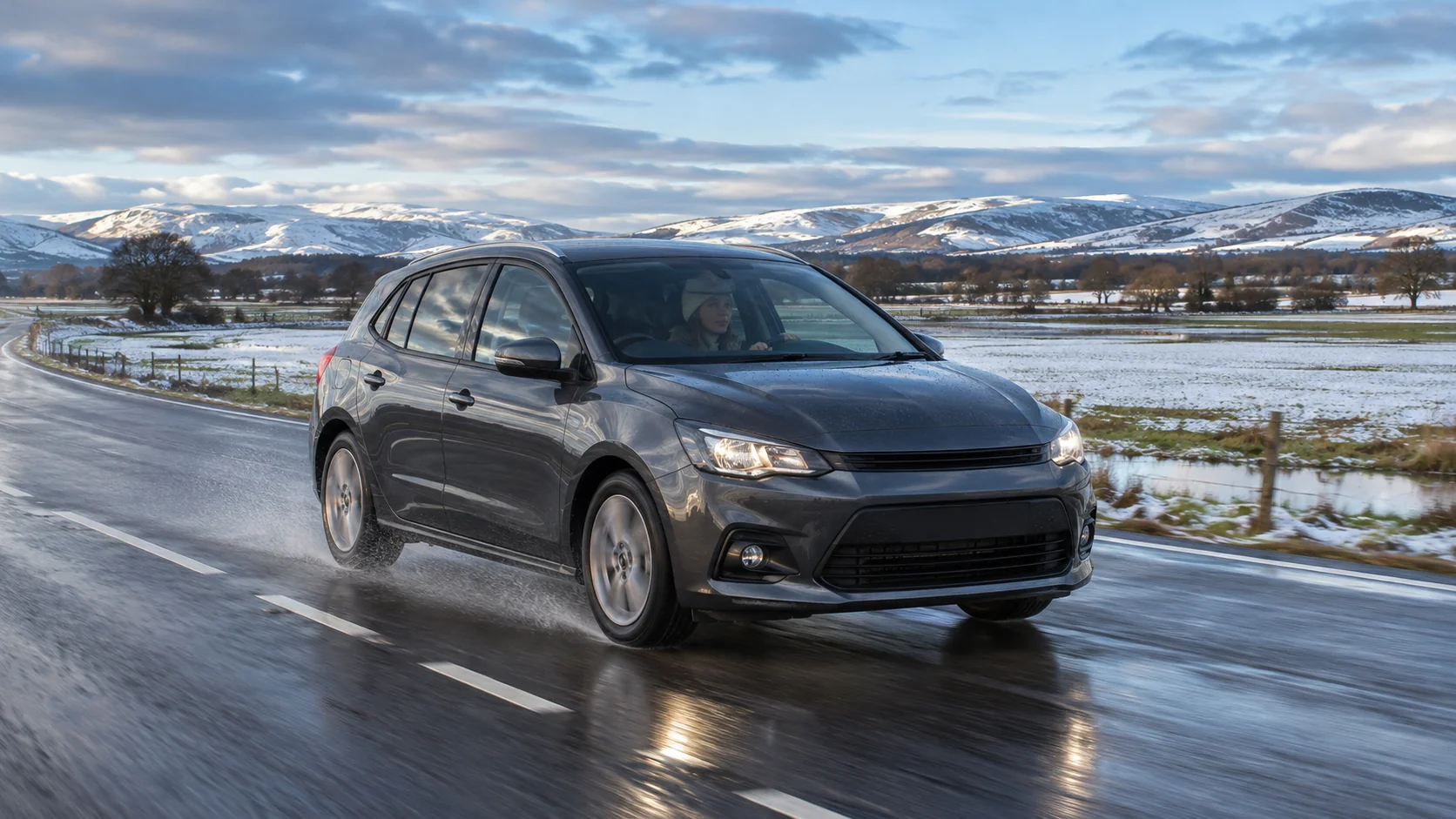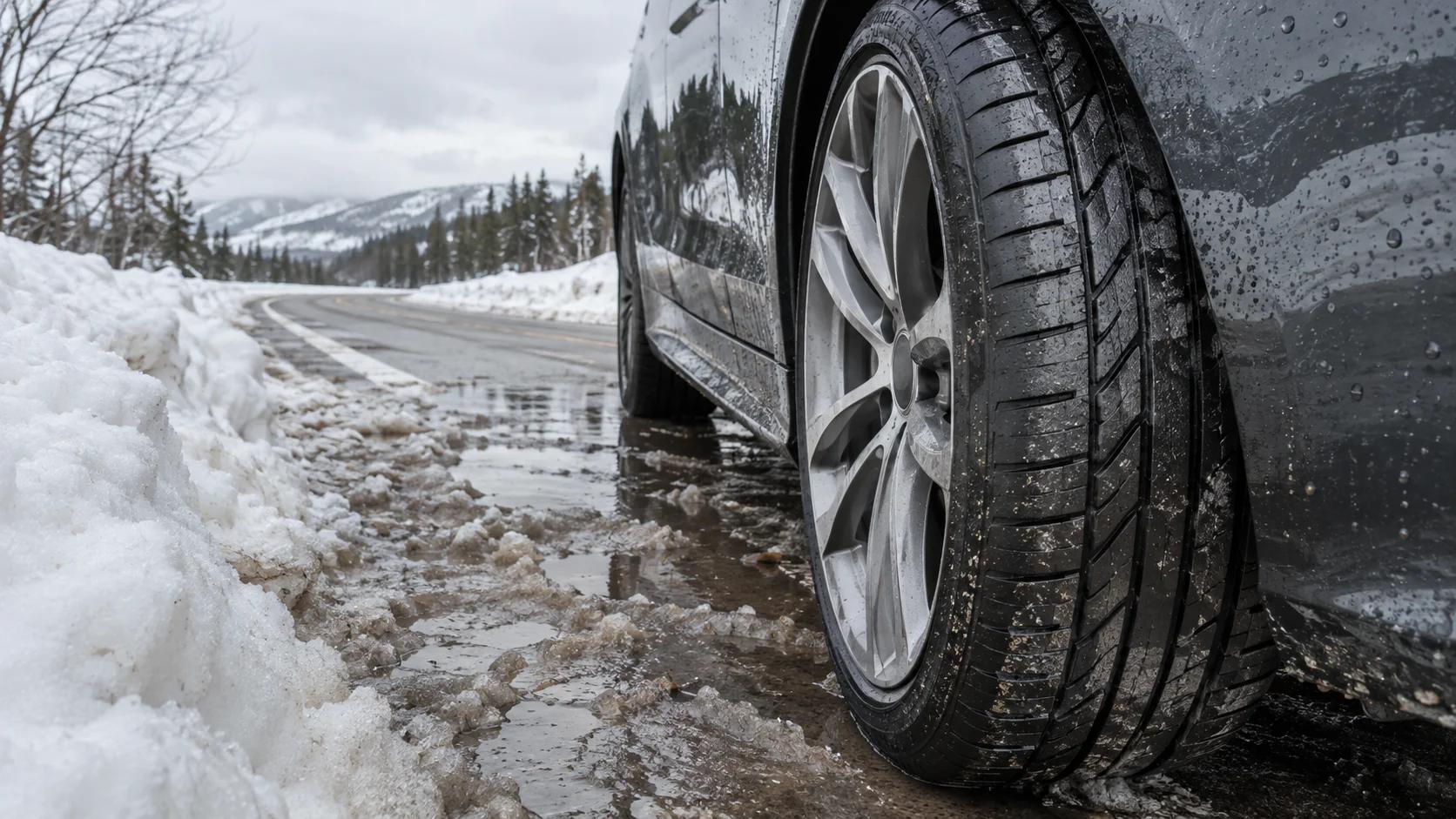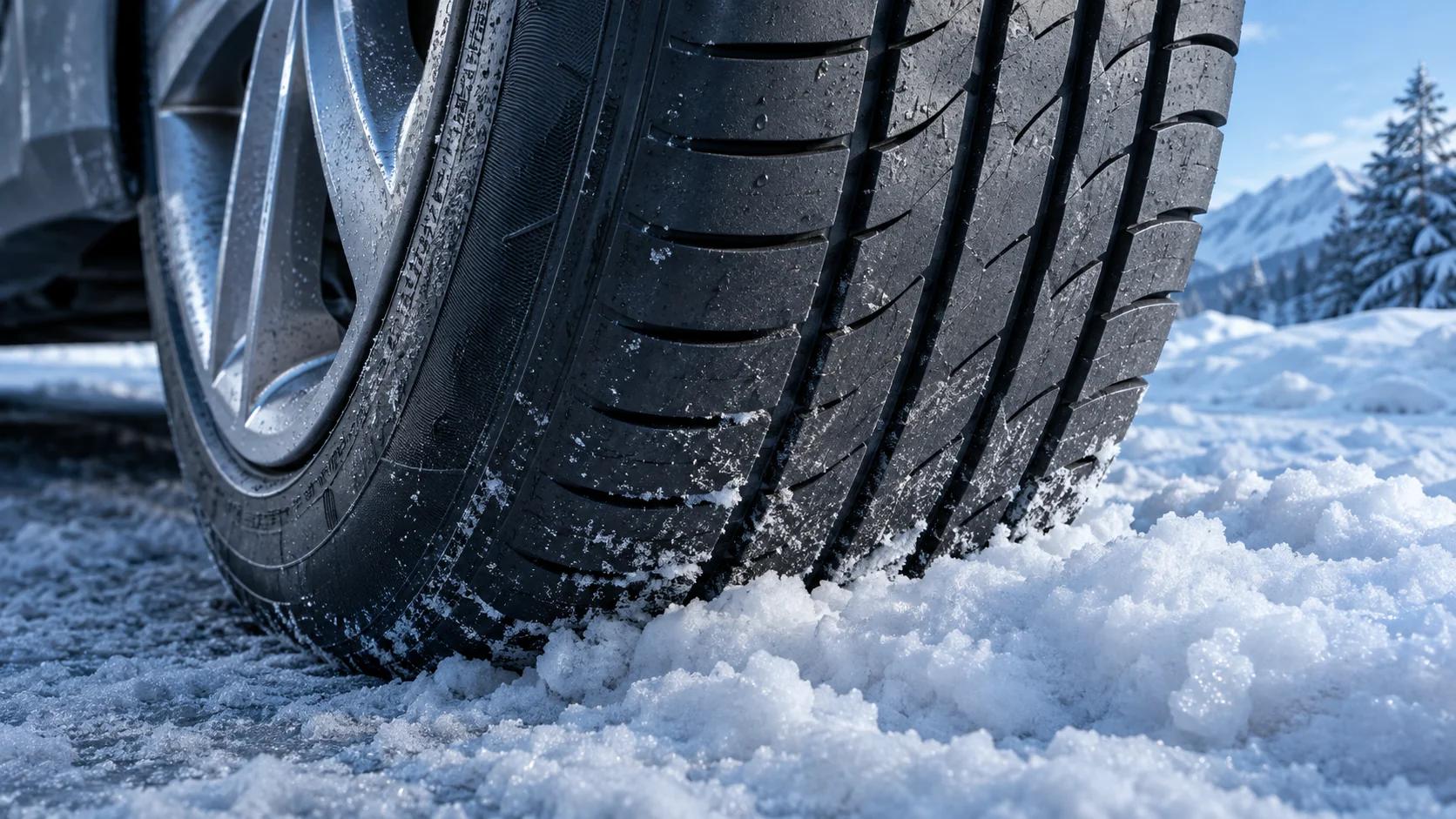
The problem with summer tyres on snow is not simply that a car feels less settled. It may still be moving quickly after a winter-tyred car has stopped.
What the test actually measured
ADAC compared tyres in the same 175/65 R14 size on a snow-covered surface with asphalt at −3 °C. From 50 km/h to a standstill, the winter tyre took 29.1 m; the summer tyre took 63.1 m. That is a 34 m difference in this test. It should not be applied as a prediction for another tyre size, snow depth or vehicle.
Braking distance begins after the brakes are applied. A driver also travels during perception and reaction, so the total stopping distance is longer than either figure. Doubling speed can sharply increase the energy the tyres must shed, which is why entering a snowy street at a seemingly modest urban speed can leave little margin.
ABS prevents wheel lock and helps retain some steering ability; it cannot raise the friction available at the contact patch. Continental says the summer compound stiffens in low temperatures and its tread is less able to bite into snow. If the tyre cannot generate enough grip, pressing harder on the brake pedal does not restore the missing friction.
What to do with the finding
Use the comparison as a reason to choose winter-capable tyres before snow arrives, rather than as a formula for choosing a safe following distance. Conditions vary continuously. Slow early, increase the gap and avoid driving on summer tyres where snow is expected.
Sources: ADAC tyre comparison; Continental, summer tyres in winter.