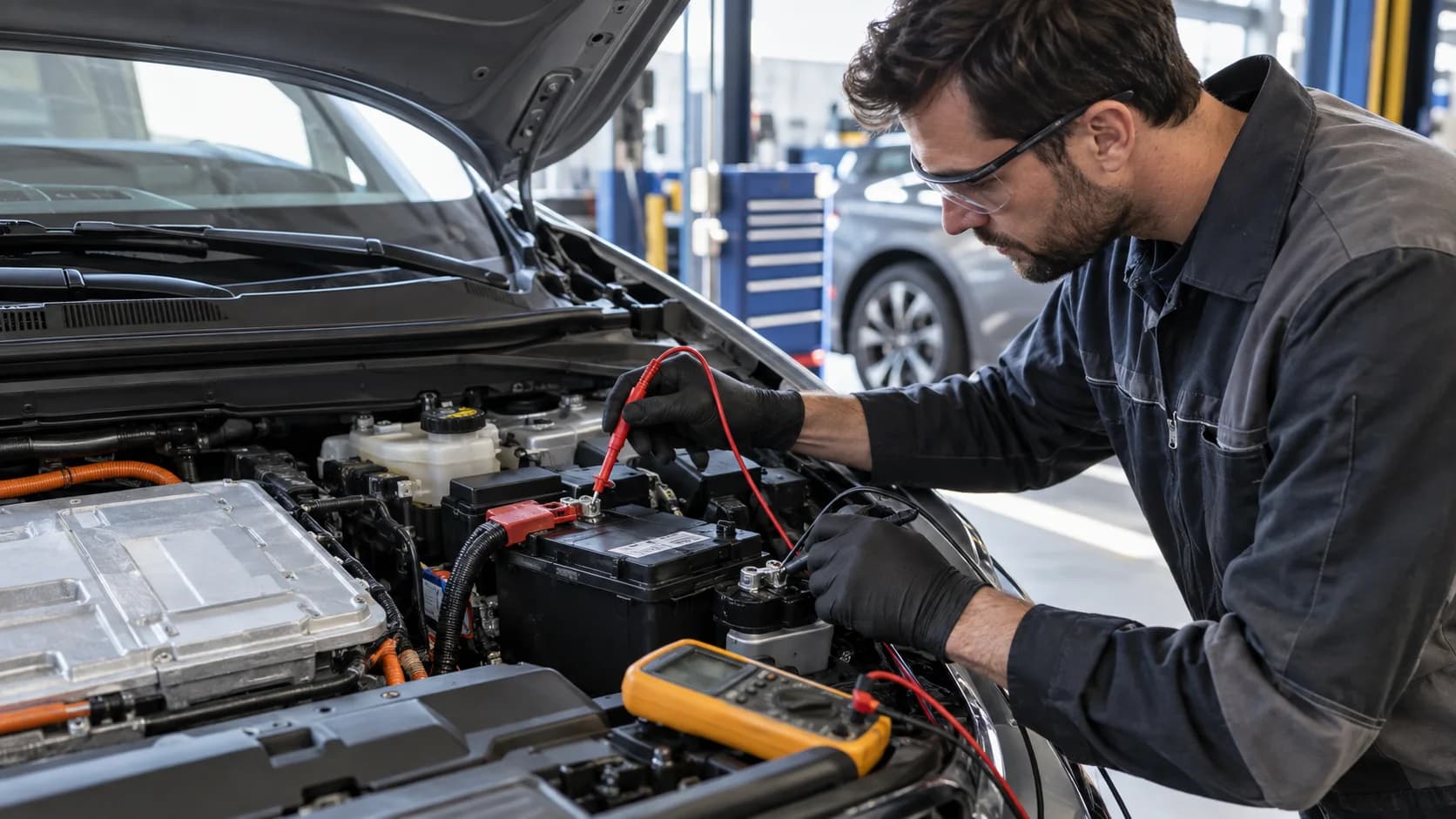
Modern cars, including electric vehicles, still require a 12-volt battery primarily to power critical low-voltage systems and to provide a robust, isolated power source for safety functions. This architecture ensures that essential systems, such as those for vehicle access, safety, and regulatory compliance, remain operational even if the main high-voltage traction battery is depleted or isolated.
The enduring role of 12-volt systems
The 12-volt electrical system has been a standard in automotive design for decades, powering a wide array of components from lighting and infotainment to engine control units (ECUs) and sensors. While the introduction of high-voltage (HV) traction batteries in hybrid and electric vehicles (EVs) might suggest a move away from 12-volt, its fundamental role persists. The HV battery typically operates at several hundred volts and is dedicated to propulsion. A DC-DC converter steps down this high voltage to recharge the 12-volt battery, which then powers the auxiliary systems. This separation is crucial for safety and operational reliability.
One primary reason for the 12-volt system's continued use is its ability to provide power independently of the HV system. In an EV, if the HV battery is fully discharged or if there is a fault that causes it to be disconnected for safety, the 12-volt battery can still power essential functions. These include unlocking doors, activating hazard lights, and maintaining communication systems. This isolation is a critical safety feature, ensuring that occupants can exit the vehicle and emergency services can access it, even in adverse conditions.
Powering critical safety and convenience features
Many safety and convenience features rely exclusively on the 12-volt system. For instance, the vehicle's central locking system, alarm, and interior lighting are typically 12-volt powered. These systems need to function even when the vehicle is parked and the HV system is inactive. Imagine a scenario where a driver needs to unlock their car after it has been parked for an extended period, and the HV battery has self-discharged to a point where it cannot power the DC-DC converter. The 12-volt battery ensures that the remote key fob can still communicate with the vehicle and unlock the doors.
Furthermore, critical safety systems mandated by regulations often depend on the 12-volt supply. The eCall system, for example, which automatically dials 112 in the event of a serious road accident, requires a continuous power supply. The European Commission mandates eCall in all new type-approved cars and light vans since March 2018. This system must remain operational even if the main power supply is compromised during a collision. A dedicated 12-volt battery provides the necessary resilience for such life-saving technology.
Regulatory compliance and driver assistance systems
Automotive regulations play a significant role in perpetuating the 12-volt system. The EU General Safety Regulation (Regulation (EU) 2019/2144) mandates a range of advanced driver assistance systems (ADAS) for new vehicles. These systems, such as Automatic Emergency Braking (AEB) and Lane Keeping Assist (LKA), rely on numerous sensors, ECUs, and actuators. While the processing power for complex ADAS might draw from the HV system via the DC-DC converter when the vehicle is operational, the initialisation and fail-safe modes often fall back to the 12-volt system.
For example, Euro NCAP's Safety Assist protocols, which assess the effectiveness of ADAS, implicitly rely on the underlying electrical architecture to ensure these systems are robust. Similarly, UNECE Regulation No. 171, concerning driver-control assistance systems, outlines requirements for their reliable operation. The 12-volt system provides a stable and predictable power environment for these sensitive electronic components, reducing the risk of interference or power fluctuations that could impair their performance.
The challenge of parasitic loads and vehicle dormancy
Modern vehicles, whether internal combustion engine (ICE) or electric, have numerous "parasitic loads" – electrical consumers that draw power even when the vehicle is switched off. These include the vehicle's immobiliser, remote keyless entry receiver, memory for infotainment settings, and various control modules that remain in a low-power state. For an EV, the telematics unit, which might communicate with a smartphone app for charging status or pre-conditioning, also draws continuous power.
The 12-volt battery is designed to handle these sustained, low-level draws over extended periods of vehicle dormancy. If a driver leaves their EV parked for several weeks, for instance, while on a cross-border journey from Berlin to Rome, the 12-volt battery ensures that the vehicle can still be accessed and started when they return. Relying solely on the HV battery for these functions would necessitate keeping the DC-DC converter active, which would be less efficient and could lead to a more rapid depletion of the main traction battery.
Verification for buyers and drivers
For vehicle owners, understanding the role of the 12-volt battery is important for maintenance and troubleshooting. While the HV battery in an EV is typically maintenance-free for the user, the 12-volt battery still requires periodic checks and eventual replacement, similar to an ICE vehicle. The vehicle's manual will provide specific guidance on the 12-volt battery's location, type, and recommended maintenance schedule.
Drivers can verify the compatibility and operational requirements of various systems by consulting the official documentation provided by the manufacturer. This includes the owner's manual, which details the electrical system architecture, and any supplementary guides for specific features like eCall or ADAS. These documents will often explain which systems are powered by the 12-volt battery and how to address issues related to its charge level. For example, if a vehicle cannot be unlocked remotely, the manual will typically suggest checking the 12-volt battery's state of charge.
In essence, the 12-volt battery remains an indispensable component in modern vehicles, providing a dedicated, reliable, and isolated power source for critical low-voltage systems, safety features, and regulatory compliance, ensuring operational continuity and user convenience across all vehicle types.