Windscreen wipers are for water, not ice. If a blade is frozen to the glass, switching it on can tear its rubber edge or strain the motor and linkage. Even if it moves, dragging it over a crust of ice can damage the edge that should clear rain and road spray.
Two ways ice damages wipers
A frozen blade may remain stuck while the arm tries to move. RAC warns that this can damage the mechanism or blow a fuse. Pulling the blade free by hand is also risky: AAA says the rubber, frame or joints can be damaged.
Once the blade is free, ice still presents a problem. AAA advises against running wipers over a frozen windscreen because the ice can chip the rubber. The result may be streaks or missed areas when the screen gets wet. A wiper that moves is not necessarily a wiper that still cleans properly.
Clear the screen first
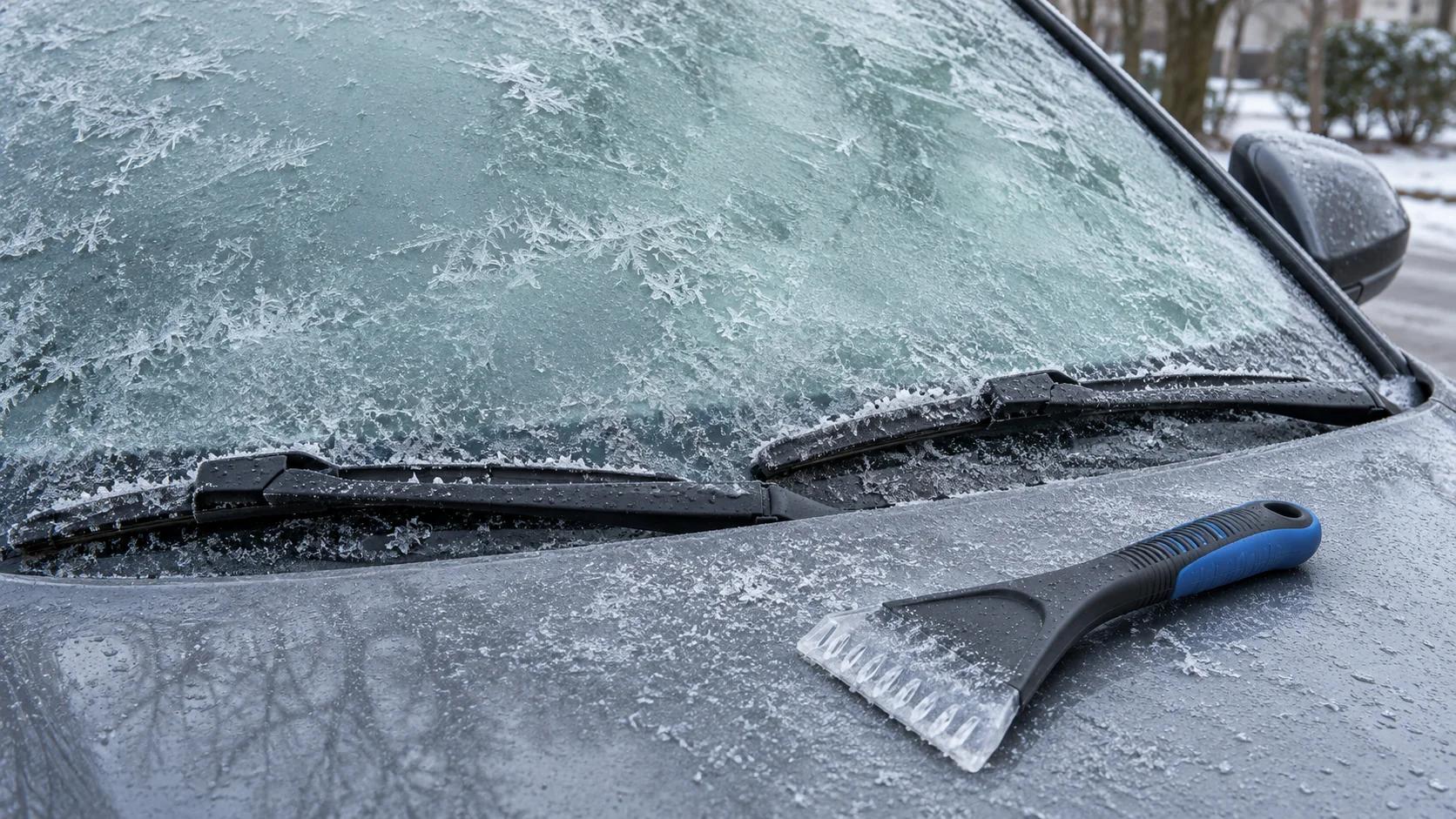
Check the wiper switch before starting the car, especially if automatic wiping was left on. Run the front demister, brush off loose snow and use a plastic ice scraper or a suitable de-icer to clear the glass. Let ice around the blades thaw before lifting them. AAA warns against pouring hot water onto frozen glass because a rapid temperature change can crack it.
Only test the wipers after the windscreen and blades are free of ice, preferably on wet glass. Replace a torn blade or one that leaves persistent streaks. If the arms still will not move when they are free, stop trying the switch and have the fuse and mechanism checked. Clear the side windows and mirrors before driving, too.
Sources: AAA Oregon/Idaho; RAC; RAC winter driving.