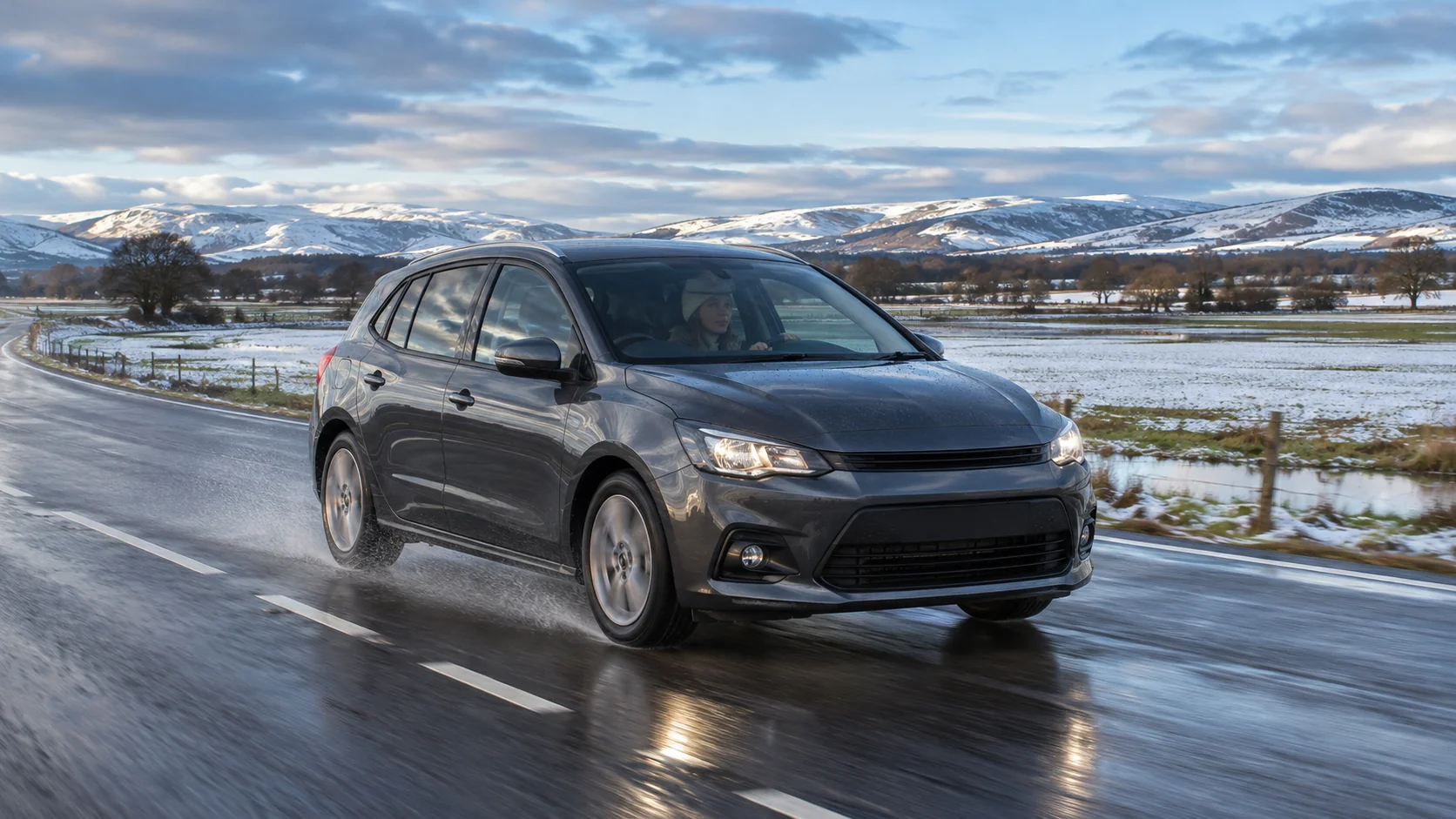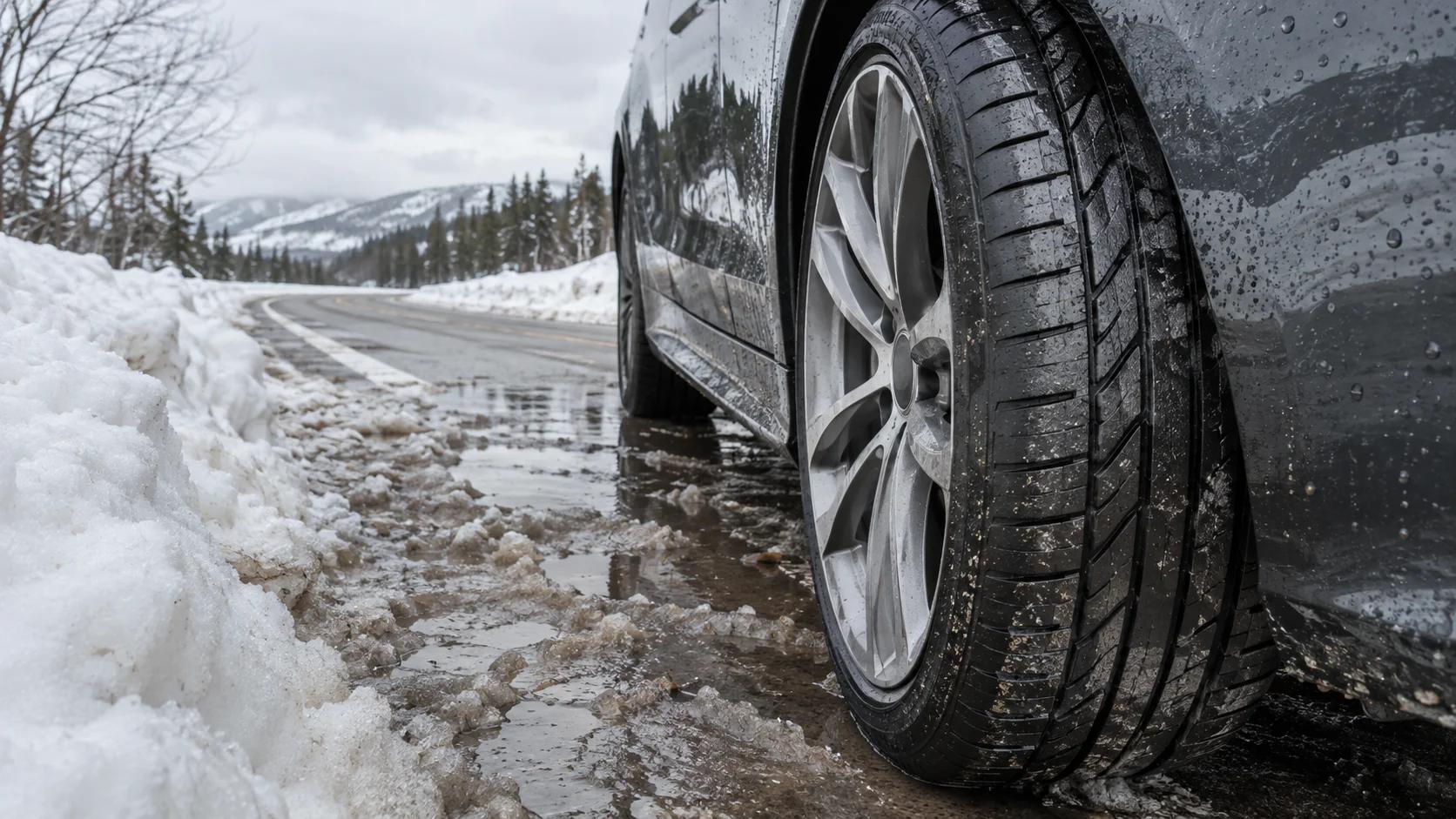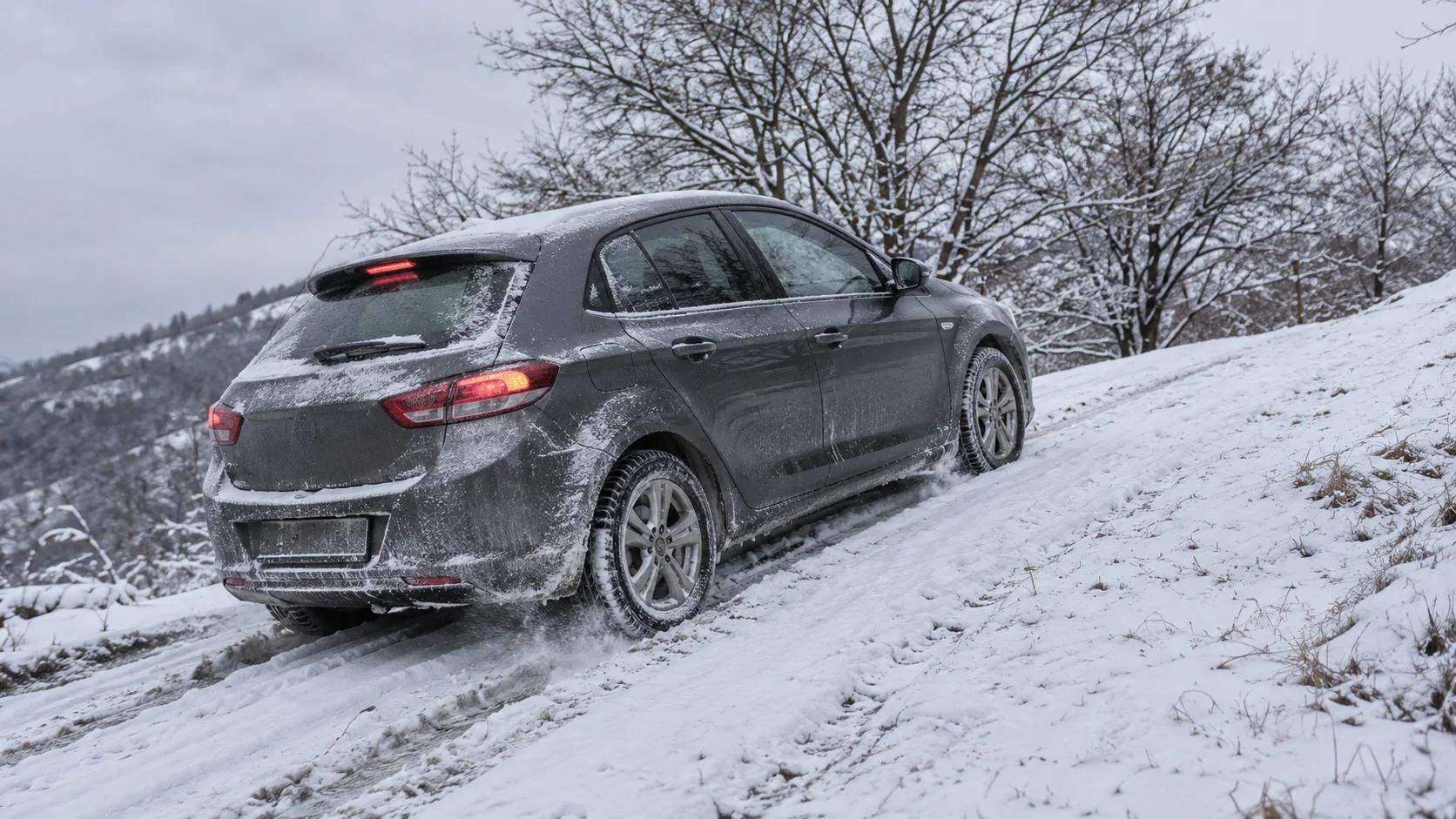
A summer tyre can have plenty of tread depth and still perform poorly on snow. Its shape and rubber compound were designed for different conditions.
Compound and contact patch
Continental explains that summer tyre rubber becomes stiffer as temperatures fall. The tyre then struggles to conform to the small irregularities in a cold road surface. The problem is stronger on snow, where the surface itself moves under load. Winter tyres use compounds and patterns designed to keep working in these conditions.
Tread blocks and sipes
Summer tyres generally use larger, more stable blocks to support steering and braking on warm dry or wet asphalt. Winter patterns have many narrow cuts, called sipes, and deeper channels that can engage with snow and clear slush. A deep summer tread is therefore not equivalent to a winter tread. Nor does four-wheel drive turn a summer tread into a snow tyre: drive layout changes where torque goes, not the grip available at each wheel.
ADAC's controlled 175/65 R14 comparison illustrates the combined effect. On snow at −3 °C, braking from 50 km/h took 63.1 m on summer tyres against 29.1 m on winter tyres. Other models and surfaces will produce different figures, but the direction of the risk is clear.
If you expect snow, look for a suitable winter or all-season tyre with the Alpine snow symbol and verify an independent test in the exact size you need. The symbol shows a minimum snow performance standard; it does not rank every tyre's braking ability.
Sources: Continental technical explanation; ADAC braking comparison; European Commission tyre label guidance.