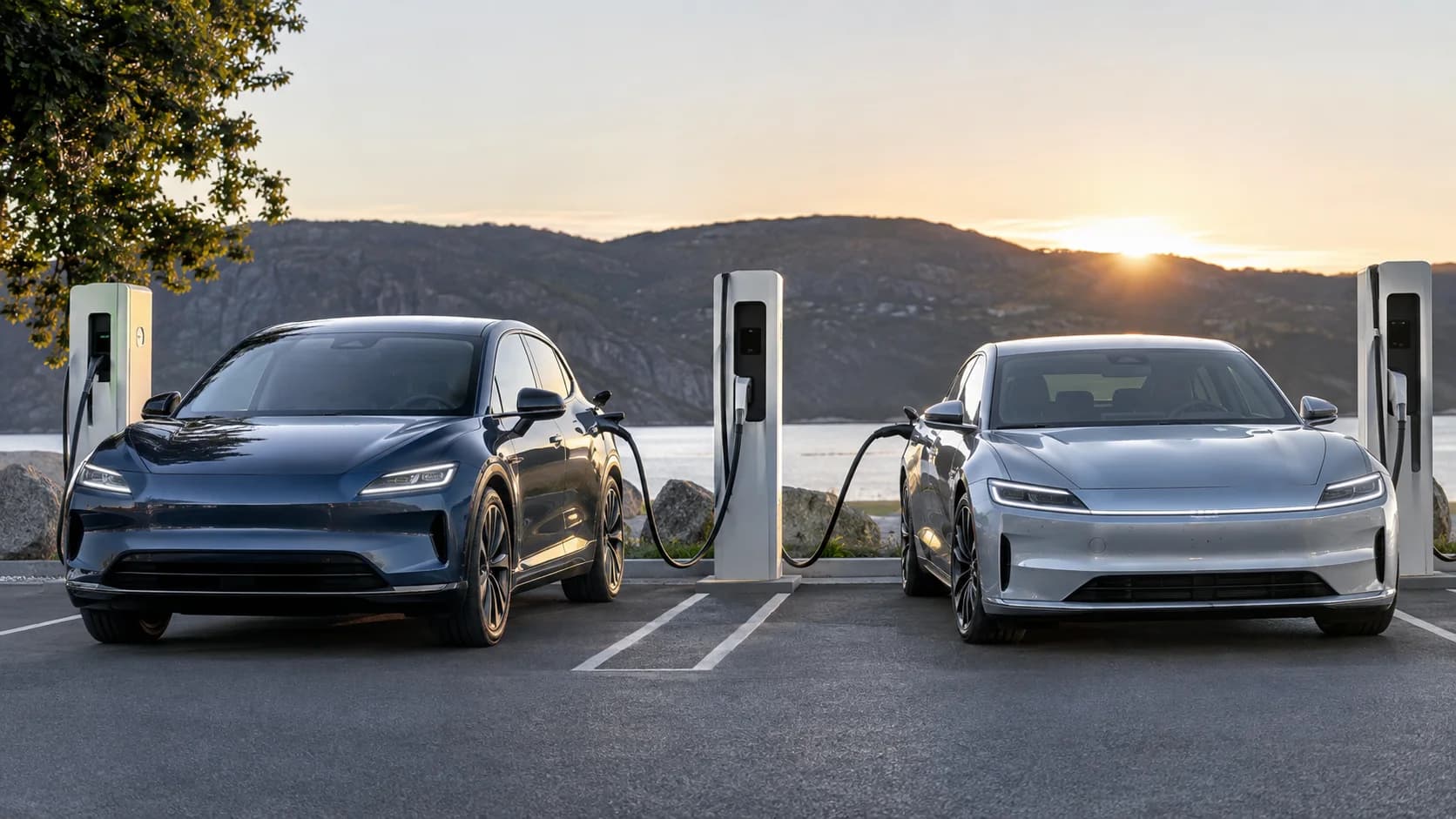
The choice between 400-volt and 800-volt electric vehicle architectures primarily affects charging speed and system efficiency. While 800-volt systems generally permit faster DC charging and can offer marginal efficiency gains, 400-volt systems remain prevalent and capable, particularly with widespread charging infrastructure.
Understanding the voltage difference
Electric vehicles (EVs) operate with high-voltage battery systems. The nominal voltage of these systems is typically around 400 volts or 800 volts. This refers to the maximum operating voltage of the battery pack and the associated electrical components, including the motor, inverter, and on-board charger. An 800-volt architecture effectively doubles the system voltage compared to a 400-volt design, allowing for a reduction in current for a given power output (Power = Voltage × Current). Lower current can lead to thinner cables, reduced heat generation, and potentially lighter components within the vehicle's high-voltage system.
Impact on DC fast charging
The most significant practical difference for drivers lies in DC fast charging capability. High-power DC chargers deliver electricity directly to the vehicle's battery, bypassing the on-board AC/DC converter. The charging power (measured in kilowatts, kW) is a product of the charger's output voltage and current.
An 800-volt vehicle can accept higher power from compatible DC fast chargers by drawing less current than a 400-volt vehicle for the same power level. For example, to achieve 200 kW, a 400-volt system would require approximately 500 amps, while an 800-volt system would need around 250 amps. This reduced current requirement can mitigate thermal stress on the vehicle's battery and charging cables, potentially allowing for sustained high-power charging.
However, the actual charging speed experienced by a driver depends on several factors:
- Charger compatibility: The charging station must be capable of delivering the required voltage and current. Many existing DC fast chargers are designed primarily for 400-volt vehicles, with maximum output voltages around 500 volts. While an 800-volt vehicle can still charge at these stations, it will typically do so by converting the charger's output voltage down to its own battery voltage, which can introduce some efficiency losses and may limit the maximum charging power. Newer high-power chargers, often labelled as "HPC" (High Power Charging), are increasingly designed to support 800-volt vehicles, offering output voltages up to 1,000 volts.
- Vehicle's maximum charging rate: The EV itself has an internal limit on the maximum power it can accept, determined by its battery management system and thermal limits. This figure is specified by the manufacturer.
- Battery state of charge (SoC): Charging power typically tapers off as the battery approaches full capacity to protect the battery and extend its lifespan.
- Battery temperature: Optimal charging occurs within a specific temperature window. Both very cold and very hot batteries will charge more slowly.
For a hypothetical cross-border journey from Berlin to Rome, covering approximately 1,500 km, drivers of both 400-volt and 800-volt vehicles would rely on the European DC fast charging network. The Alternative Fuels Infrastructure Regulation (AFIR) mandates that public charging points capable of at least 150 kW for light-duty vehicles must be deployed along the TEN-T network. While these chargers are becoming more common, their ability to deliver peak power to 800-volt vehicles depends on their specific voltage capabilities. A driver of an 800-volt vehicle would benefit most from stations explicitly designed for high-voltage charging, often found at newer, high-power charging hubs.
Efficiency and performance considerations
Beyond charging, 800-volt architectures can offer marginal improvements in overall system efficiency. By reducing current, resistive losses (I²R losses) in the wiring and components are lowered. This can translate into slightly better energy consumption, potentially extending the vehicle's WLTP-rated range or reducing energy costs. However, these gains are often small in real-world driving compared to factors like aerodynamic drag, vehicle weight, and driving style.
Performance, such as acceleration, is less directly tied to the voltage architecture. Both 400-volt and 800-volt systems can deliver substantial power to the electric motors. The motor design, inverter capabilities, and battery's power delivery capacity are more critical determinants of acceleration figures.
Verifying compatibility and specifications
To understand a specific vehicle's charging capabilities and system voltage, drivers should consult the official documentation:
- Vehicle manual: The owner's manual typically details the maximum DC charging power, recommended charging protocols, and sometimes the nominal battery voltage.
- Manufacturer's specifications: The vehicle manufacturer's official website or technical data sheets will provide detailed specifications, including battery voltage and maximum charging rates.
- Type-approval documents: For vehicles sold in the EU, the WLTP type-approval certificate (Regulation (EU) 2025/1706) includes information on energy consumption and range, which indirectly reflects system efficiency. While it does not explicitly state the voltage architecture, it provides official consumption figures.
When planning a journey, drivers can use charging network apps or in-car navigation systems that display charger specifications. These often indicate the maximum power output and sometimes the voltage capabilities of individual charging points. Drivers of 800-volt vehicles should look for chargers advertising high power (e.g., 250 kW, 350 kW) and, ideally, those explicitly stating 800-volt or 1,000-volt compatibility to fully leverage their vehicle's rapid charging potential.
Scenarios for preference
Neither 400-volt nor 800-volt is universally superior; the preferred architecture depends on individual priorities:
400-volt systems are often preferable for:
- Cost-conscious buyers: Vehicles with 400-volt architectures can sometimes be less expensive to produce, potentially leading to lower purchase prices.
- Drivers with access to home charging or primarily using lower-power public AC/DC chargers: If rapid DC charging is not a frequent necessity, the benefits of 800-volt systems are less pronounced.
- Drivers prioritising widespread charging availability: The vast majority of existing DC fast chargers can accommodate 400-volt vehicles effectively, ensuring broad compatibility across the European network.
800-volt systems are often preferable for:
- Frequent long-distance travellers: The ability to accept higher charging powers can significantly reduce stop times on extended journeys, such as the hypothetical Berlin to Rome trip.
- Drivers prioritising future-proofing: As high-power charging infrastructure expands, 800-volt vehicles are well-positioned to take full advantage of these developments.
- Performance enthusiasts: While not exclusive to 800-volt, some high-performance EVs adopt this architecture to manage power delivery more efficiently.
Both architectures are safe and compliant with EU General Safety Regulation (EU) 2019/2144 and meet Euro NCAP safety standards. The choice between them is primarily an engineering decision impacting charging dynamics and, to a lesser extent, overall efficiency. The practical benefits of 800-volt systems are most evident when paired with a compatible high-power charging infrastructure.