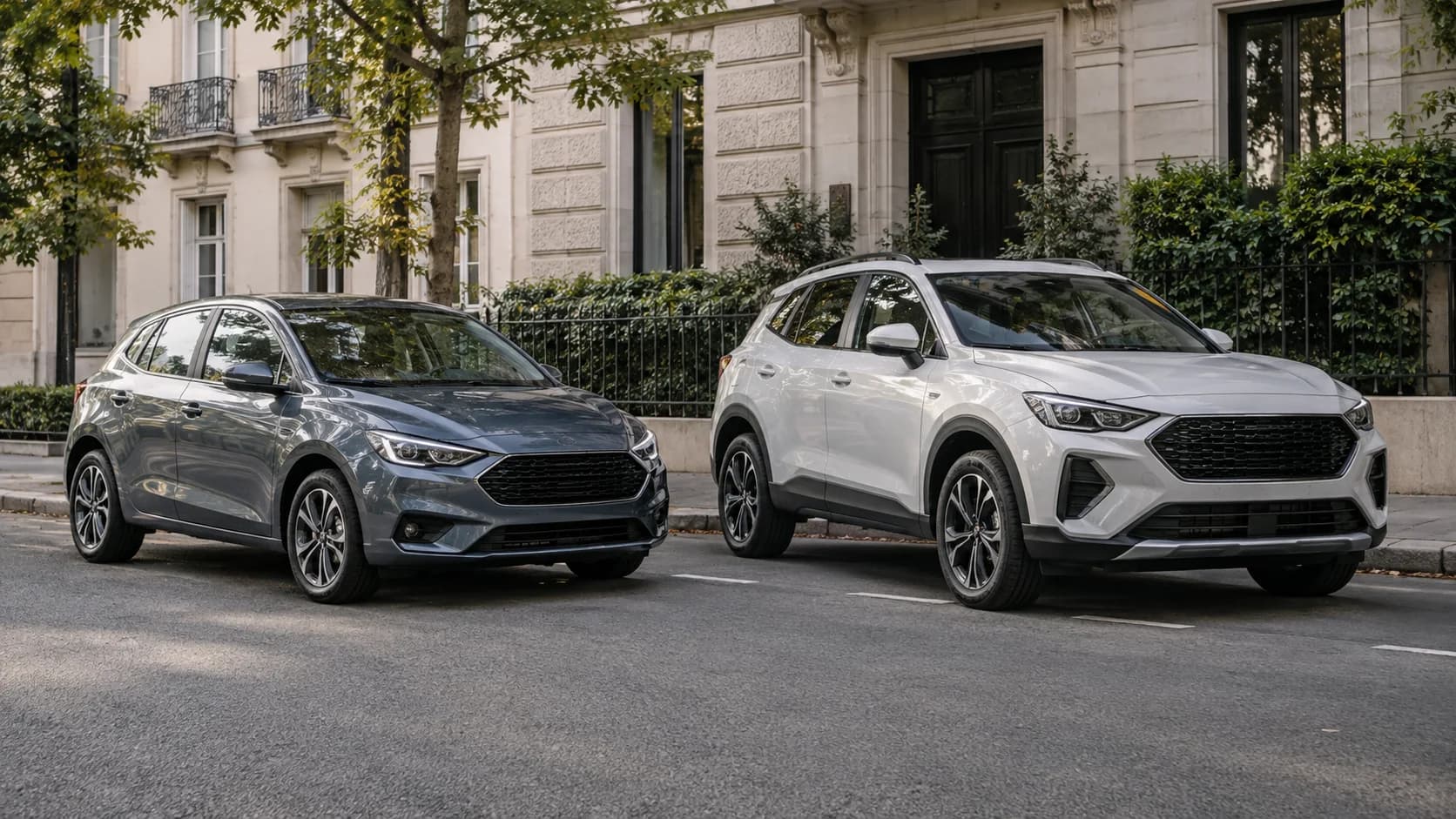
For many European buyers, the choice between a hatchback and a small SUV often comes down to perceived utility versus established efficiency. While small SUVs offer a higher driving position and often greater cargo volume, hatchbacks typically maintain an advantage in fuel economy and dynamic handling.
Vehicle architecture and its implications
The fundamental difference between a hatchback and a small SUV lies in their architecture. Hatchbacks are typically built on a car platform, featuring a lower centre of gravity and a body designed for aerodynamic efficiency. Small SUVs, often referred to as crossovers, frequently share platforms with hatchbacks but incorporate design modifications such as increased ground clearance, larger wheel arches, and a taller body. These changes contribute to a higher seating position, which some drivers prefer for improved visibility. However, the increased frontal area and greater vehicle mass inherent in most small SUVs lead to higher aerodynamic drag and rolling resistance. This directly impacts energy consumption, particularly at higher speeds.
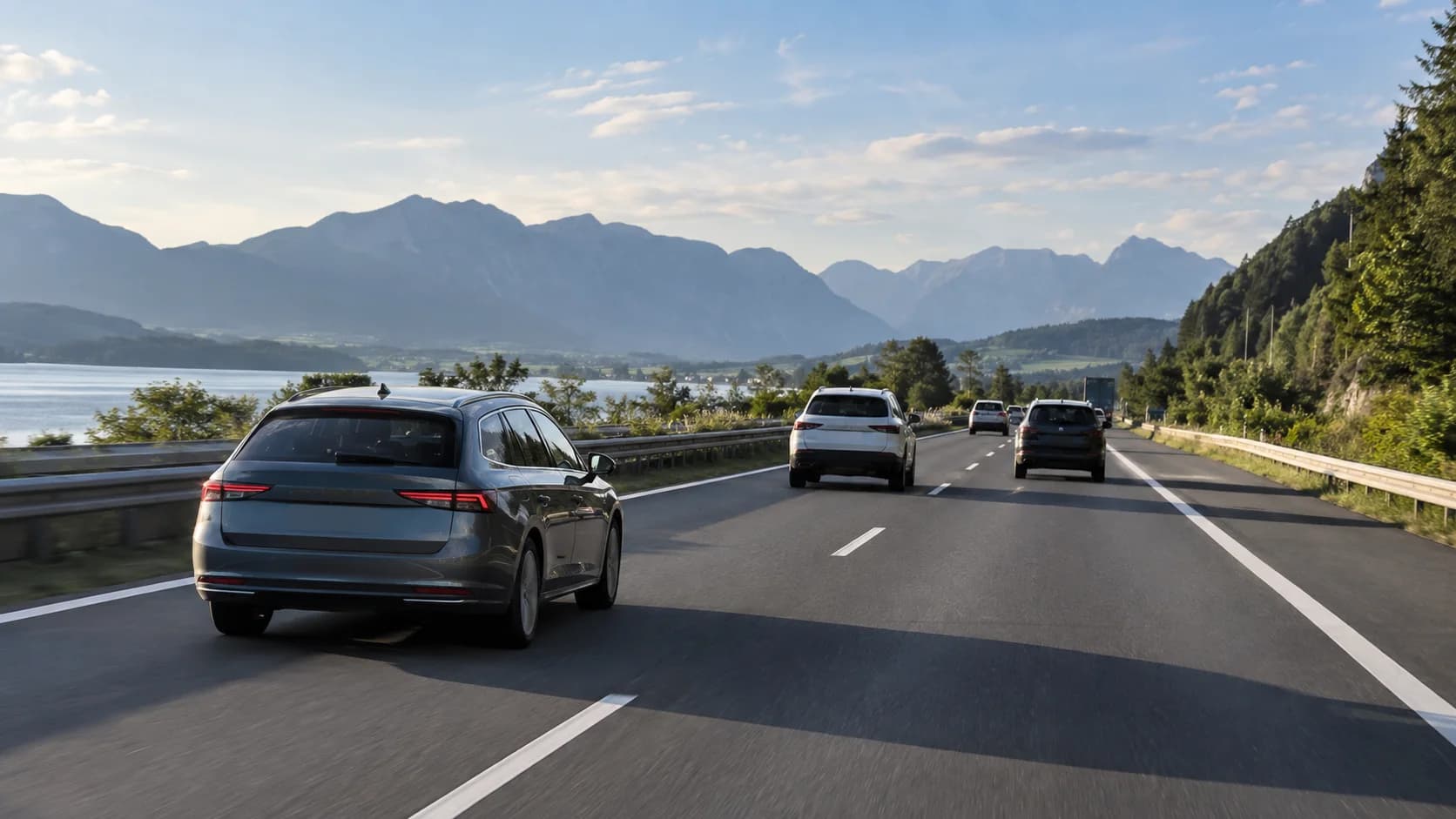
For a hypothetical journey from Brussels to Luxembourg City, a distance of approximately 210 km, the aerodynamic differences become noticeable. A hatchback, with its lower drag coefficient, will generally require less energy to maintain motorway speeds compared to a small SUV of similar power output. This translates to lower fuel consumption for internal combustion engine (ICE) vehicles and potentially extended range for electric vehicles (EVs).
Fuel efficiency and emissions
Official fuel consumption and CO2 emissions figures are determined through the Worldwide Harmonized Light Vehicles Test Procedure (WLTP), as outlined in EU Regulation 2025/1706. This laboratory test cycle provides a standardized comparison point. Across comparable powertrain options, hatchbacks consistently demonstrate lower WLTP figures than small SUVs due to their more aerodynamic profiles and often lower mass.
In real-world driving, the disparity can be more pronounced. Factors such as driving style, traffic conditions, ambient temperature, and the use of auxiliary systems like air conditioning all influence actual consumption. While a small SUV might offer a marginally larger fuel tank, its higher consumption rate can negate any perceived advantage in range. For EVs, higher energy consumption in a small SUV translates to either a shorter range from the same battery capacity or the need for a larger, heavier, and more expensive battery to achieve comparable range to a hatchback. Buyers can verify WLTP figures in the vehicle's Certificate of Conformity or official manufacturer specifications.
Cargo capacity and practicality
Small SUVs often present an advantage in cargo volume, particularly with the rear seats folded. The taller body allows for a more upright load space, which can be beneficial for transporting bulkier items. However, the usable cargo space in a hatchback can be surprisingly competitive, especially when considering the length of items that can be accommodated with the rear seats down. The lower loading sill of a hatchback can also make it easier to load heavy items compared to the higher sill of many small SUVs.
For families, the rear passenger space is a key consideration. While small SUVs often provide a perception of more space, the actual legroom and headroom can be similar to a well-designed hatchback. The higher seating position in a small SUV can make child seat installation and access easier for some parents. Buyers should consult the vehicle's manual for specific cargo dimensions and weight limits, and physically test the loading of typical items if possible.
Driving dynamics and comfort
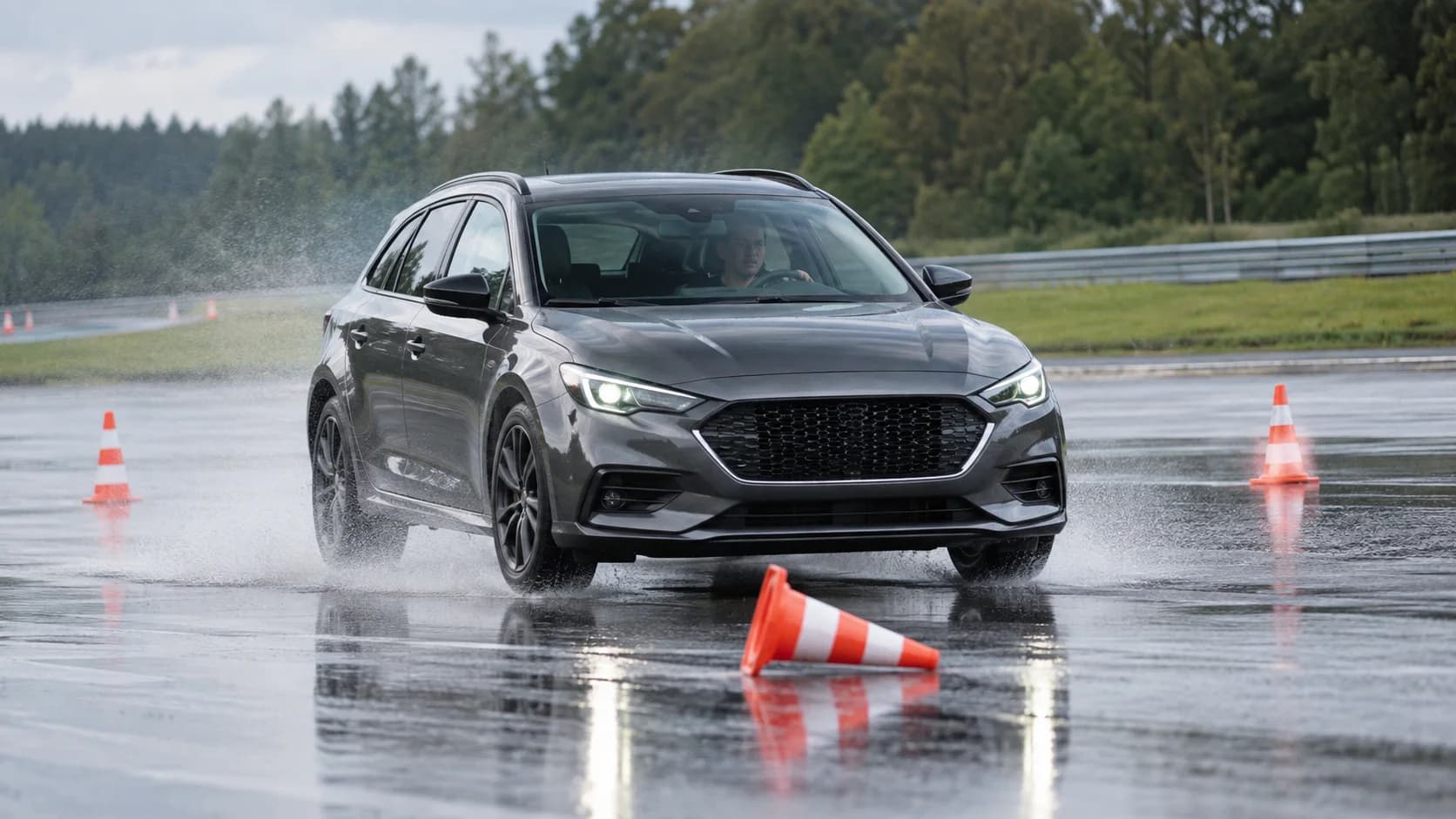
The lower centre of gravity of a hatchback generally contributes to more agile handling, reduced body roll in corners, and a more direct steering feel. This can make hatchbacks feel more engaging to drive and more stable at higher speeds. Small SUVs, with their higher centre of gravity and often softer suspension settings, tend to exhibit more body roll and a less precise feel through corners.
Ride comfort is subjective and depends heavily on suspension tuning, wheel size, and tyre profile. While some small SUVs offer a more compliant ride over rough surfaces due to longer suspension travel, others can feel less composed than a well-tuned hatchback. The higher seating position in a small SUV can provide a commanding view of the road, which some drivers find reassuring, but it does not inherently improve overall visibility, particularly to the rear or sides.
Safety and driver assistance systems
Both hatchbacks and small SUVs are subject to the same stringent safety regulations in the EU, including the General Safety Regulation (EU Regulation 2019/2144), which mandates a range of advanced driver assistance systems (ADAS). These include features such as intelligent speed assistance, lane keeping assistance, and advanced emergency braking. Euro NCAP protocols also assess the effectiveness of these safety assist systems.
Modern vehicles, regardless of body style, are designed to achieve high levels of occupant protection in crash scenarios. While the perception might be that a larger, heavier small SUV offers greater protection, the reality is that sophisticated crumple zones, high-strength steel, and advanced airbag systems are standard across both segments. The primary safety advantage often comes from the implementation and calibration of ADAS, which aims to prevent accidents altogether. Buyers can find detailed information on specific safety features and Euro NCAP ratings for individual models on the Euro NCAP website.
Charging infrastructure and range considerations for EVs
For electric versions of hatchbacks and small SUVs, the considerations shift towards charging infrastructure and range. The EU's Alternative Fuels Infrastructure Regulation (EU Regulation 2023/1804) mandates the deployment of publicly accessible charging points, ensuring a minimum density across the road network. However, the energy consumption differences between an electric hatchback and an electric small SUV remain.
An electric small SUV, due to its higher energy demand, will either offer a shorter range than an electric hatchback with the same battery capacity or require more frequent charging stops. Conversely, to achieve a comparable range, an electric small SUV typically needs a larger, heavier, and more expensive battery pack. This increased battery weight further impacts efficiency and can affect charging times, as larger batteries generally take longer to fully charge, even with fast charging capabilities. Drivers should consult the vehicle's manual for specific charging protocols, maximum charging rates, and estimated range figures. These figures are often based on WLTP and real-world range can vary.